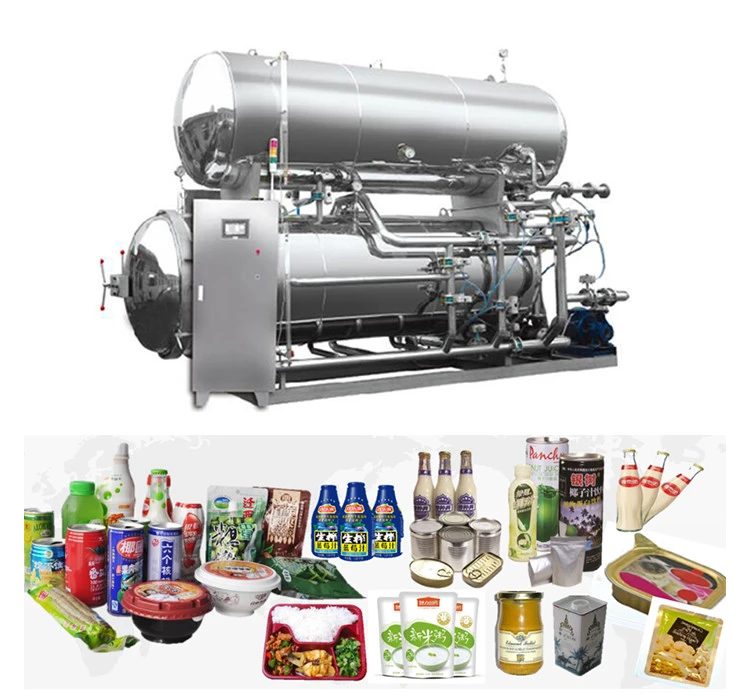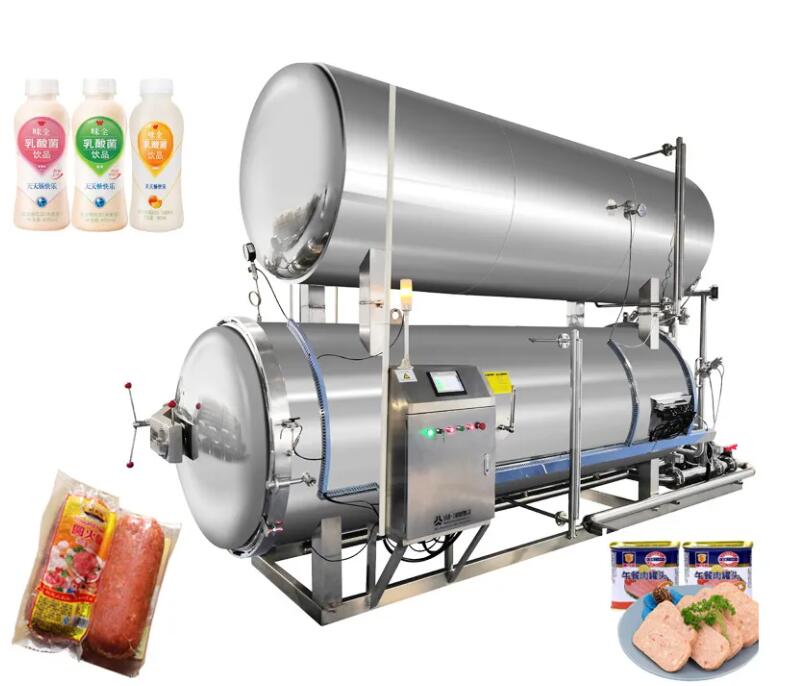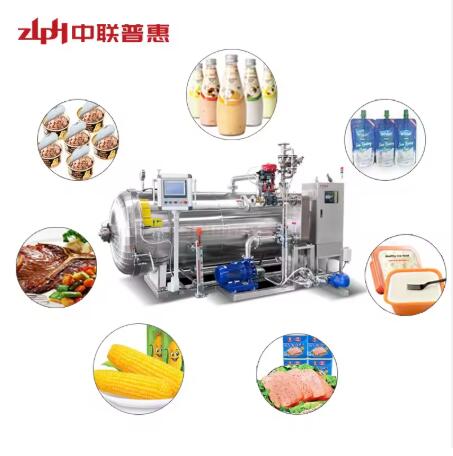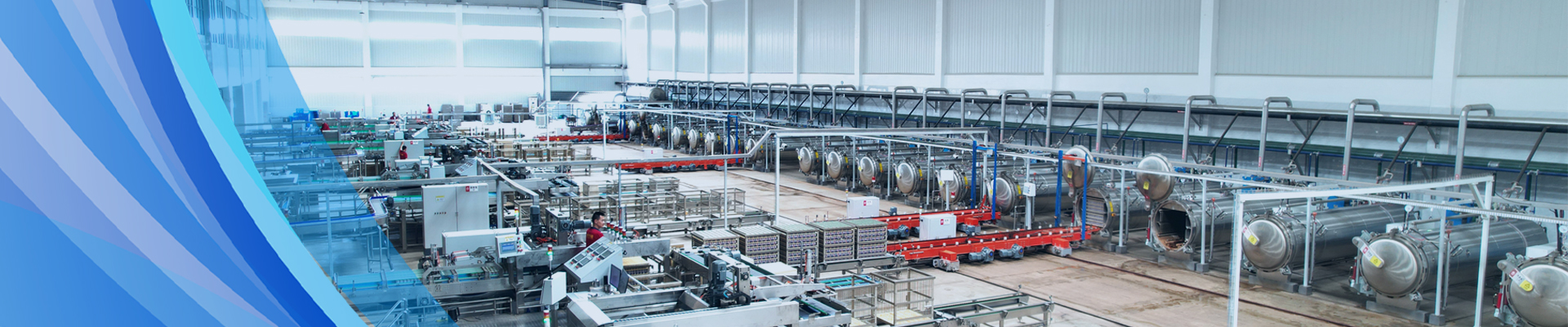

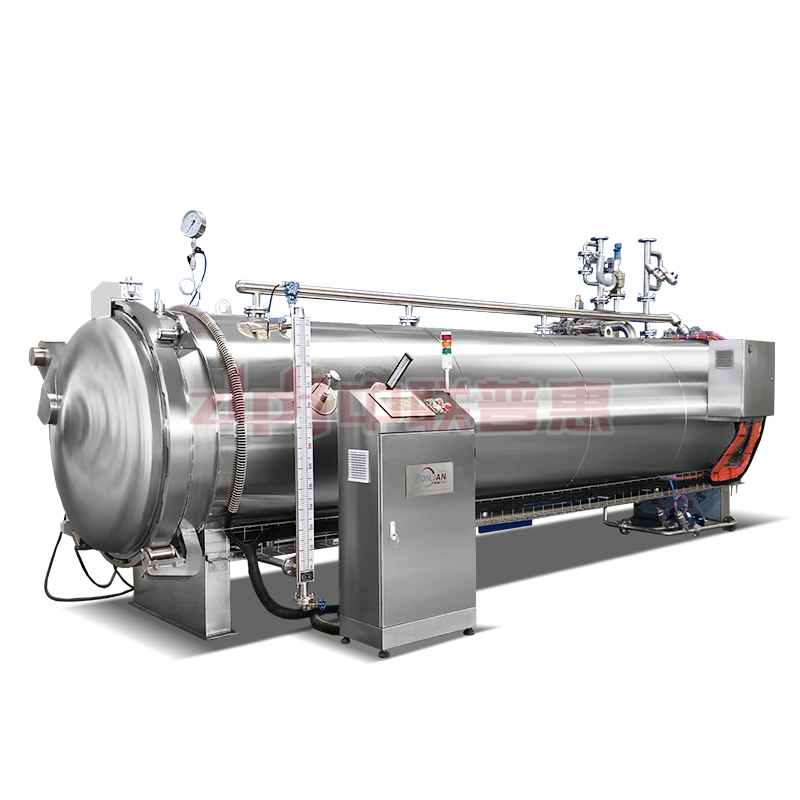
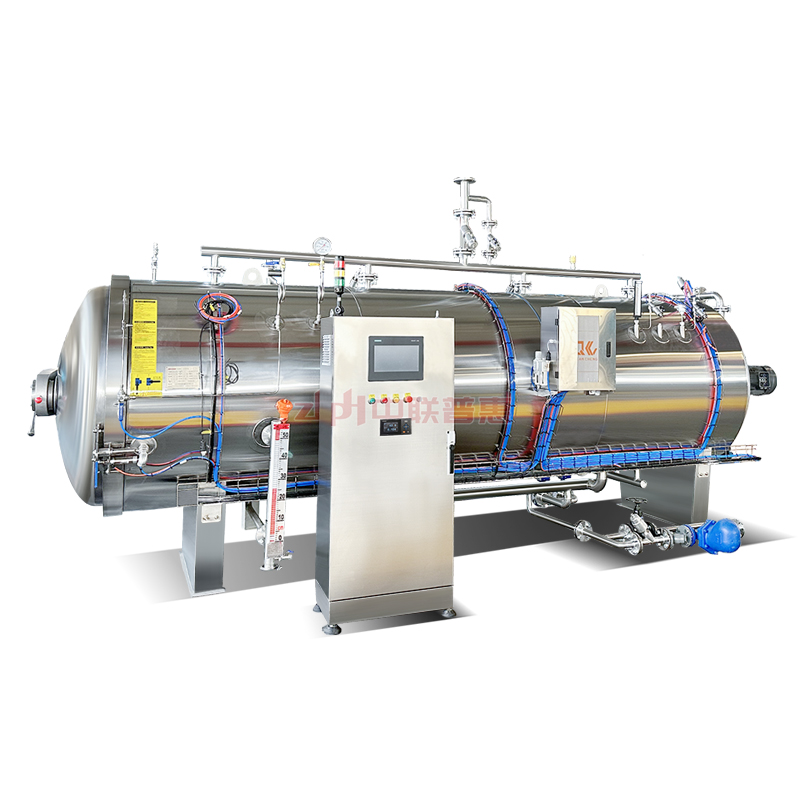
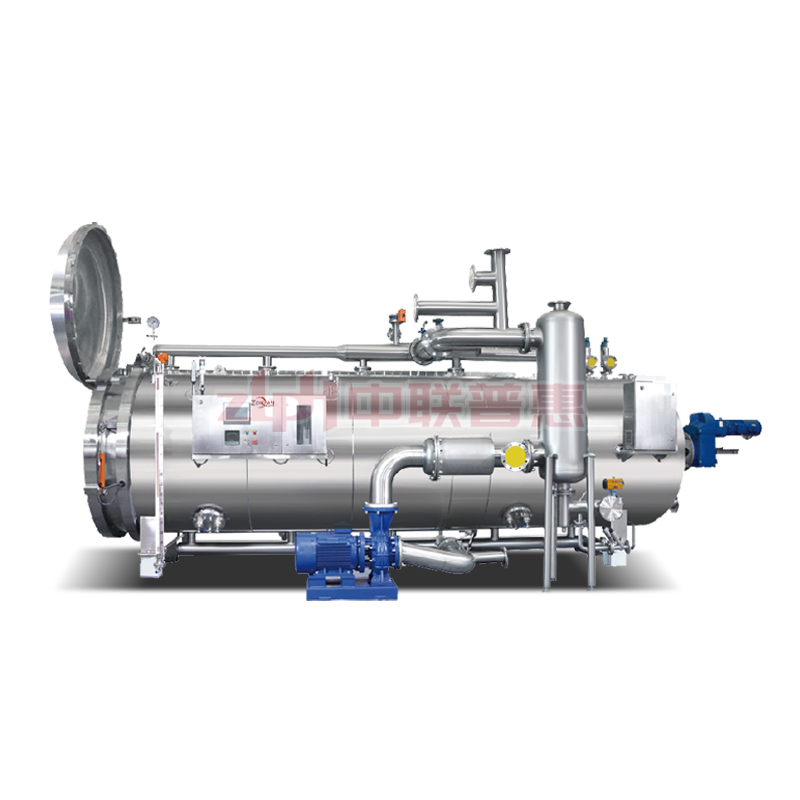
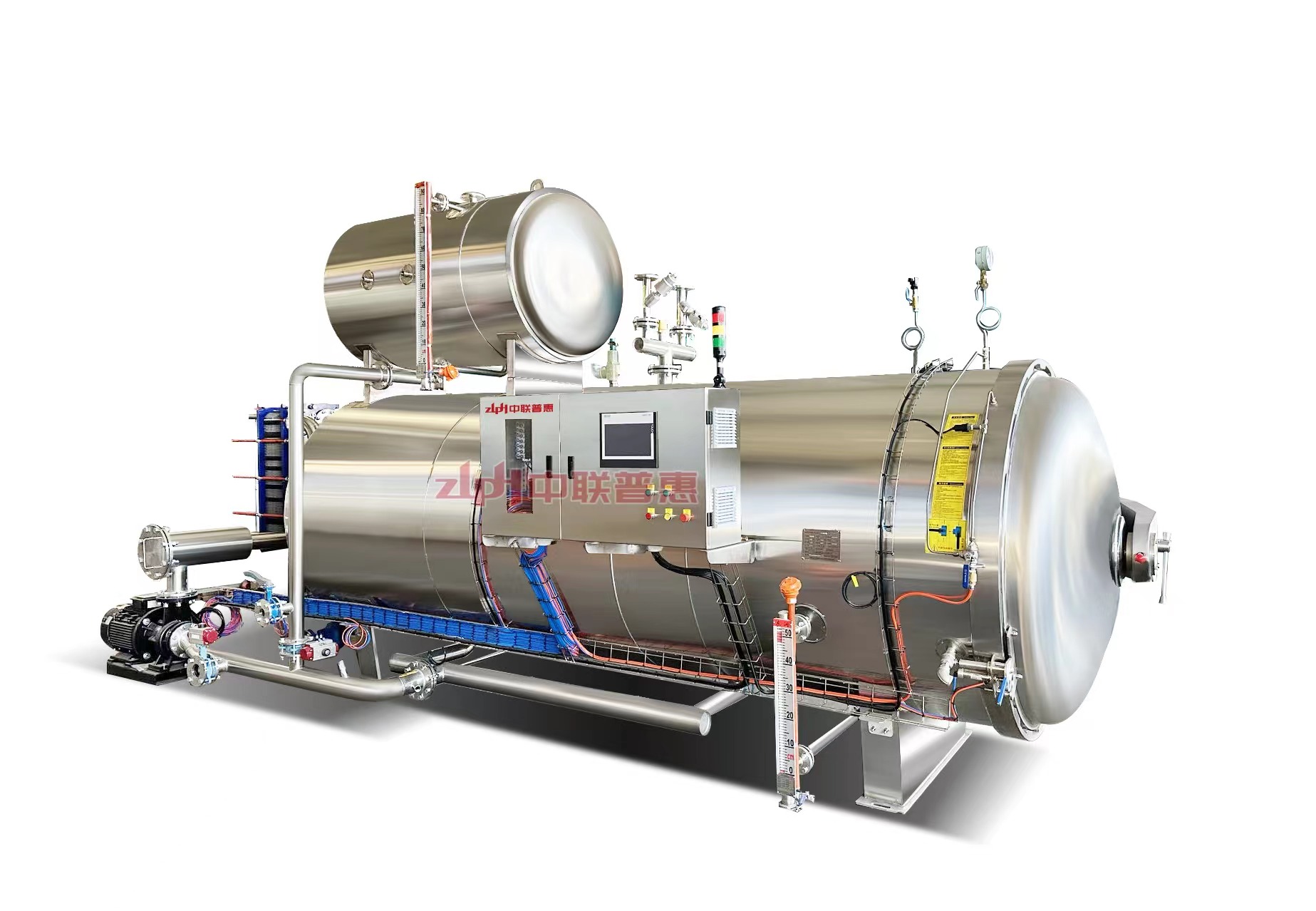
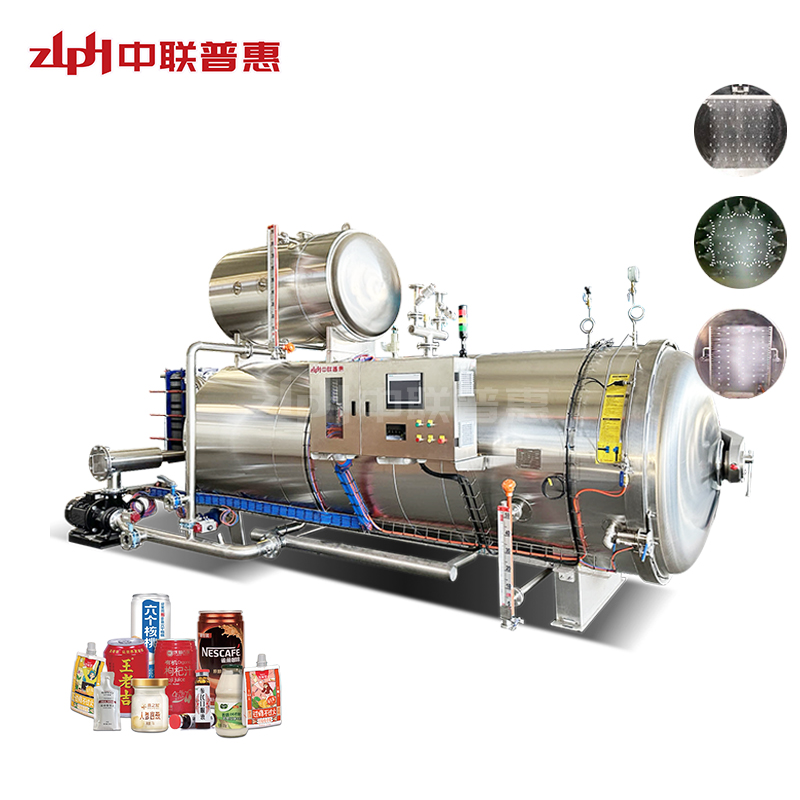
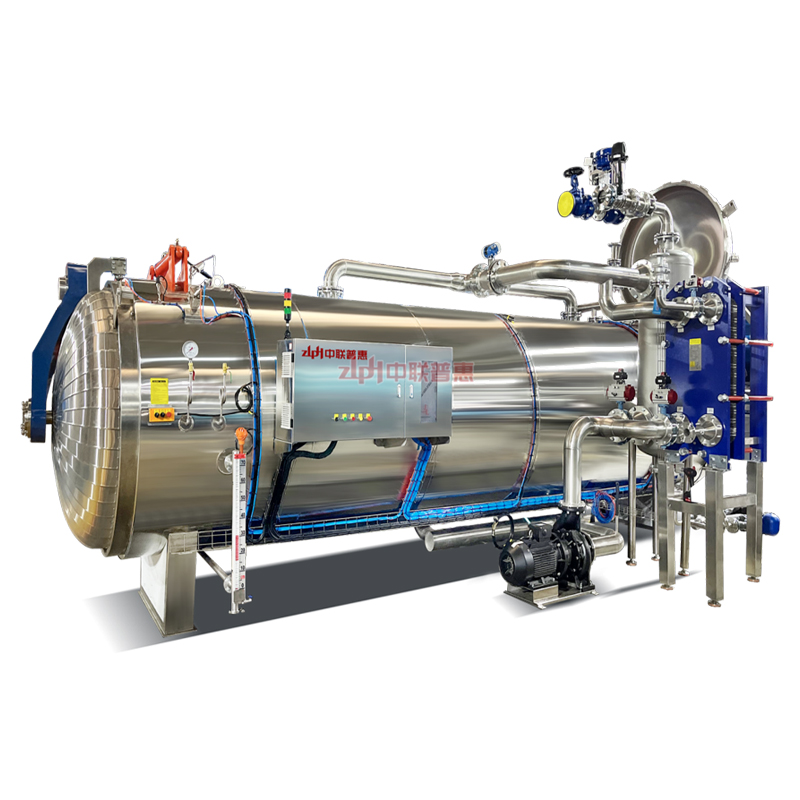
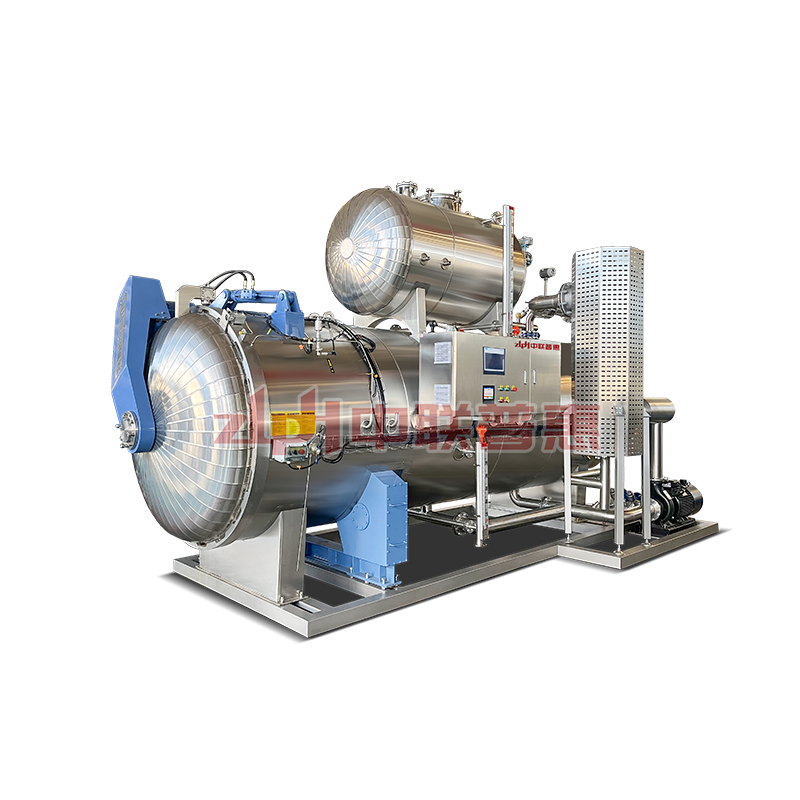
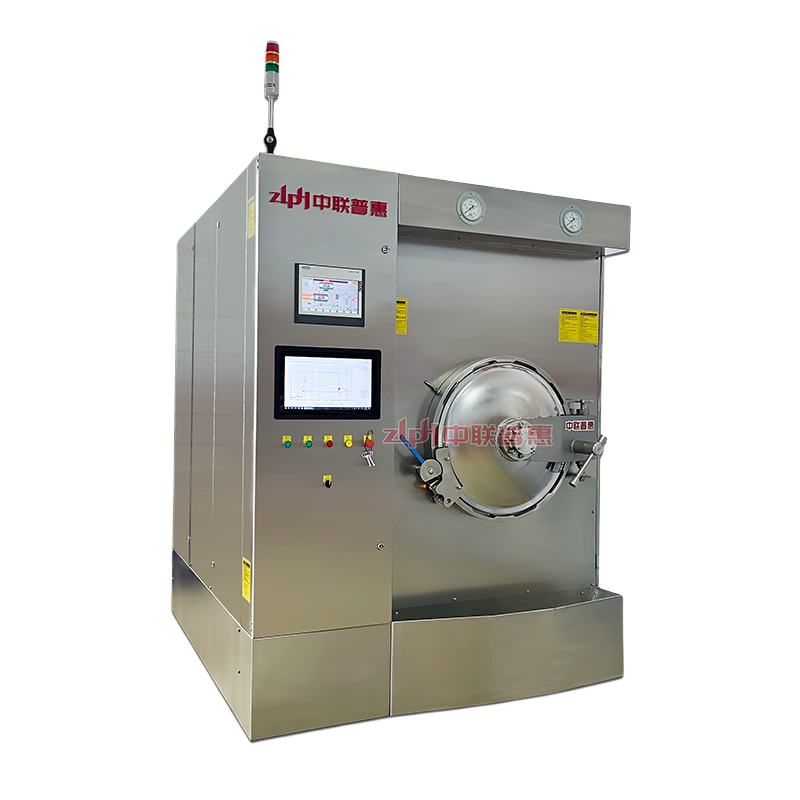
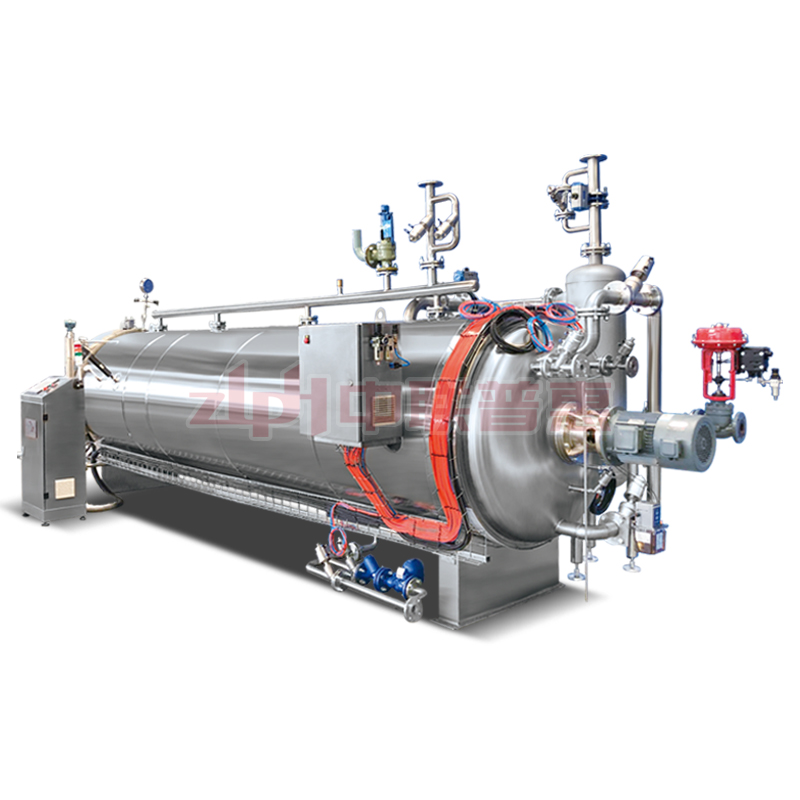
In an era where manufacturing intelligence and food safety are paramount, our latest innovation—a fully automated sterilization production line for canned goods—represents a quantum leap in processing technology. This seamlessly integrated system, engineered around our cutting-edge retort autoclave, has been meticulously designed to automate the entire pre- and post-sterilization material handling process, effectively realizing a vision of lights-out production within the food processing sector.
System Architecture: A Symphony of Automation and Precision Engineering
The production line commences its operation at the cage-filling station, where hermetically sealed cans are conveyed with precision. Employing an advanced magnetic levitation and suction transfer mechanism, each container is gently and accurately positioned within multi-layered sterilization baskets. This contact-minimized methodology is critical for preserving the integrity of can seams and preventing surface abrasions, thereby upholding the highest standards of container quality prior to entering the core thermal processing stage.
Following meticulous loading, the basket, now containing unsterilized products, is autonomously transported via an intelligent conveyor system to the staging area of our industrial-grade autoclave retort sterilizer. Here, an automated guided vehicle (AGV) or rail-guided trolley system assumes control, seamlessly transferring and inserting the loaded cage into the sterilization chamber. This initiates the pivotal phase orchestrated by the retort machine, where sophisticated algorithms govern critical parameters including temperature gradients, pressure differentials, and process time. Utilizing optimal media—be it superheated water spray, steam-air mixtures, or full-water immersion—the food retort machine delivers a lethality (F0) process that scientifically guarantees the complete eradication of microbiological contaminants, ensuring uncompromised product safety and stability.
Post-Process Handling and Intelligent Quality Integration
Upon the successful completion of the sterilization cycle within the retort autoclave, the AGV system executes a synchronized retrieval sequence. The cage, now containing commercially sterile products, is transported to a dedicated cooling and handling loop. The cans undergo a meticulously controlled multi-stage cooling process, often involving a cascading water curtain or air-knife system. This step is vital for arresting the cooking process, preserving the organoleptic properties—such as texture, flavor, and color—of the delicate food contents, and reducing the container temperature to levels suitable for safe downstream mechanical handling.
The conditioned basket then proceeds to the automated unloading station. A robotic or servo-driven unloader meticulously discharges the cans layer by layer onto a sanitary conveyor belt. This gentle decanting process is paramount to prevent any post-sterilization damage that could compromise the container's hermetic seal. The individual cans are then automatically routed through a series of integrated downstream modules. These typically include high-speed optical inspection systems for seal integrity and fill-level verification, automated labeling and coding stations, and finally, robotic palletizing or case-packing units. The entire sequence, from initial infeed to final pallet dispatch, is governed by a centralized Manufacturing Execution System (MES). This system provides unparalleled real-time oversight, complete electronic batch record (EBR) traceability, predictive analytics for maintenance, and seamless data exchange for compliance with global food safety standards (e.g., FDA, FSMA, BRCGS), all achieved without a single point of manual intervention.