
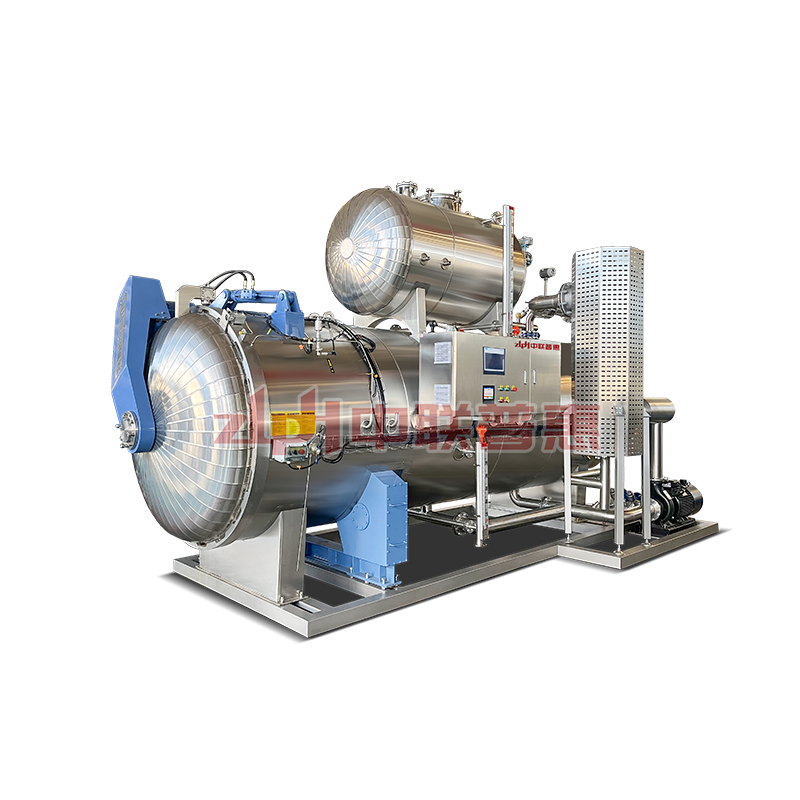
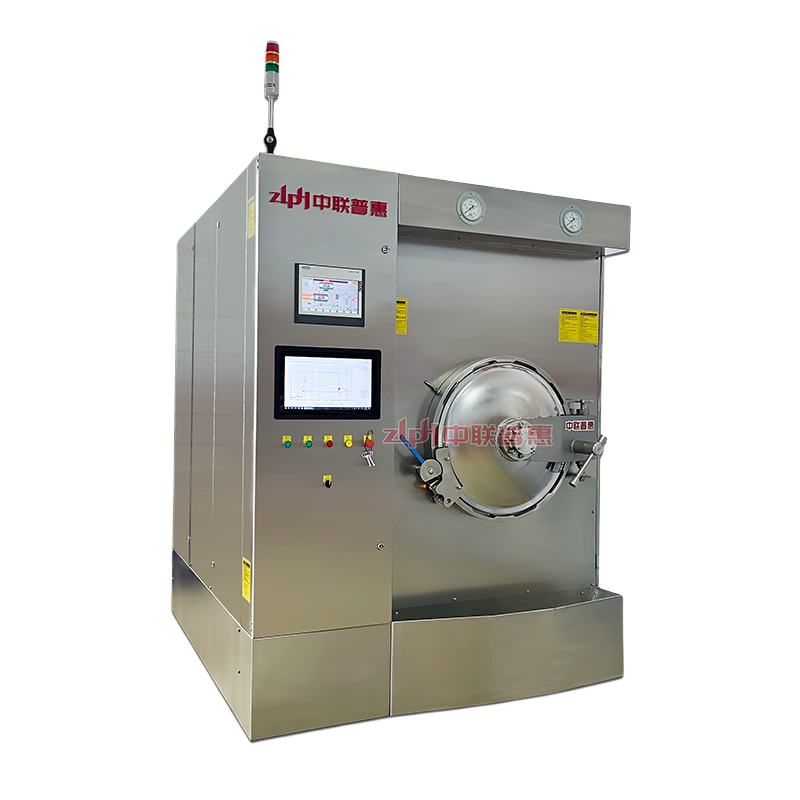
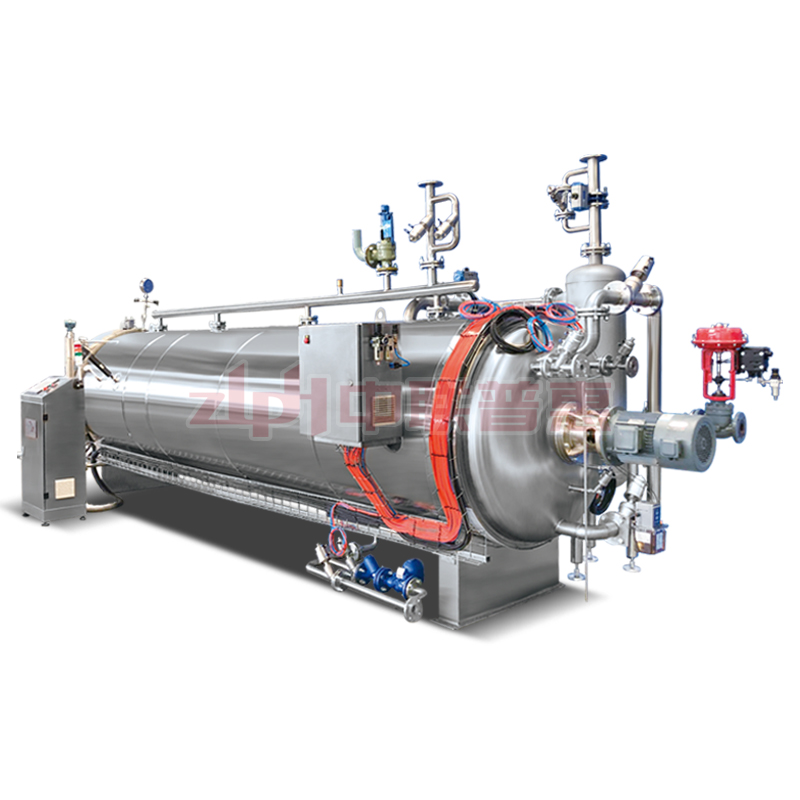
This guide is authored by a senior food processing engineer with over 10 years of experience at ZLPH MACHINERY TECHNOLOGY CO., LTD., a globally recognized provider of advanced sterilization solutions. It addresses a critical challenge faced by food manufacturers worldwide: identifying reliable, high-quality suppliers of food retort autoclaves that ensure product safety, operational efficiency, and regulatory compliance. The selection of an inadequate retort system often stems from three core issues: lack of technical transparency, insufficient validation of sterilization performance, and poor after-sales support in international markets. Drawing on more than 5,000 global installations and extensive field validation across meat, seafood, ready meals, and pet food sectors, we present a proven, step-by-step framework to help you select a supplier that delivers consistent thermal lethality, minimizes downtime, and supports long-term production scalability. In this guide, we break down real-world scenarios, root causes of common failures, validated selection criteria, and practical verification steps—empowering procurement teams and plant engineers to make confident, data-driven decisions.

How do I verify if a retort autoclave supplier offers genuine thermal process validation?
1. Scenario & Pain Point
Many food processors—especially those exporting to the EU or North America—discover too late that their retort system lacks proper thermal validation documentation. This leads to failed audits, shipment rejections, or even product recalls. The core issue isn’t just equipment functionality, but whether the supplier can provide scientifically backed proof that every batch achieves the required F₀ value (sterilization lethality) under real production conditions.

2. Root Cause Analysis
This problem arises primarily due to: (a) suppliers using generic thermal models without actual heat distribution mapping; (b) absence of third-party validation reports; and (c) lack of integration between control systems and thermal data loggers for real-time F₀ calculation.

3. Step-by-Step Solution
Request a full thermal validation package including cold spot identification, heat penetration studies, and F₀ consistency reports across multiple load types. Ensure the supplier uses calibrated data loggers (e.g., Ellab or Dickson) during validation. Confirm their control system calculates and logs F₀ in real time—not just temperature and pressure. Prioritize suppliers whose retorts are designed with uniform water spray nozzles and precise flow control to eliminate cold zones.

4. Pitfall Avoidance Guide
Never accept “theoretical” validation based solely on simulation. Insist on test reports from your specific product type (e.g., solid-packed vs. liquid-filled containers). Verify that the supplier follows ASTM F2834 or EN 13409 standards for thermal processing validation. Avoid vendors who cannot demonstrate repeatable F₀ variation within ±5% across 10 consecutive cycles.
5. Real-World Validation
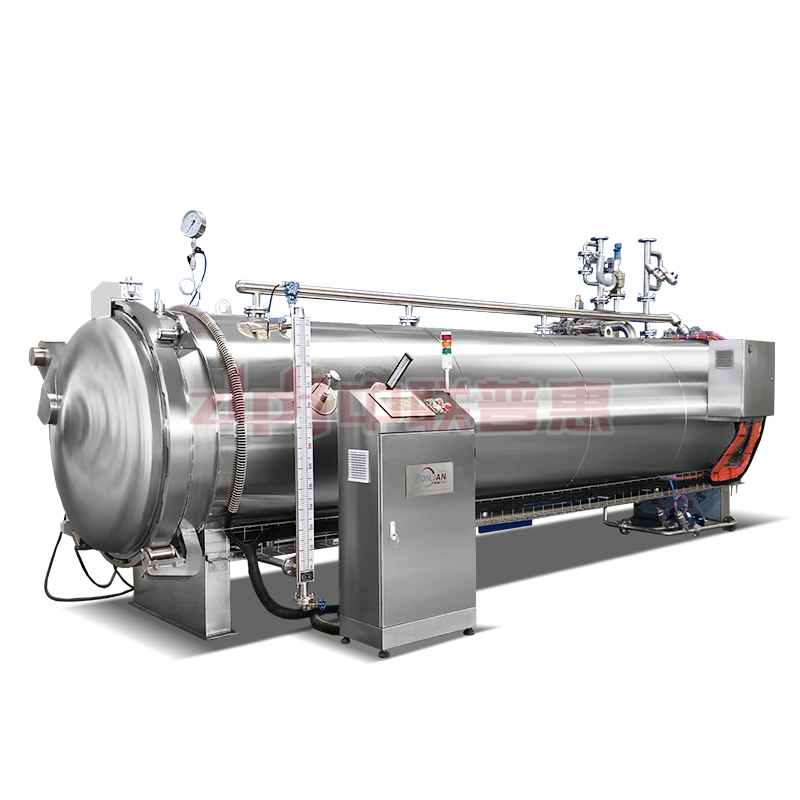
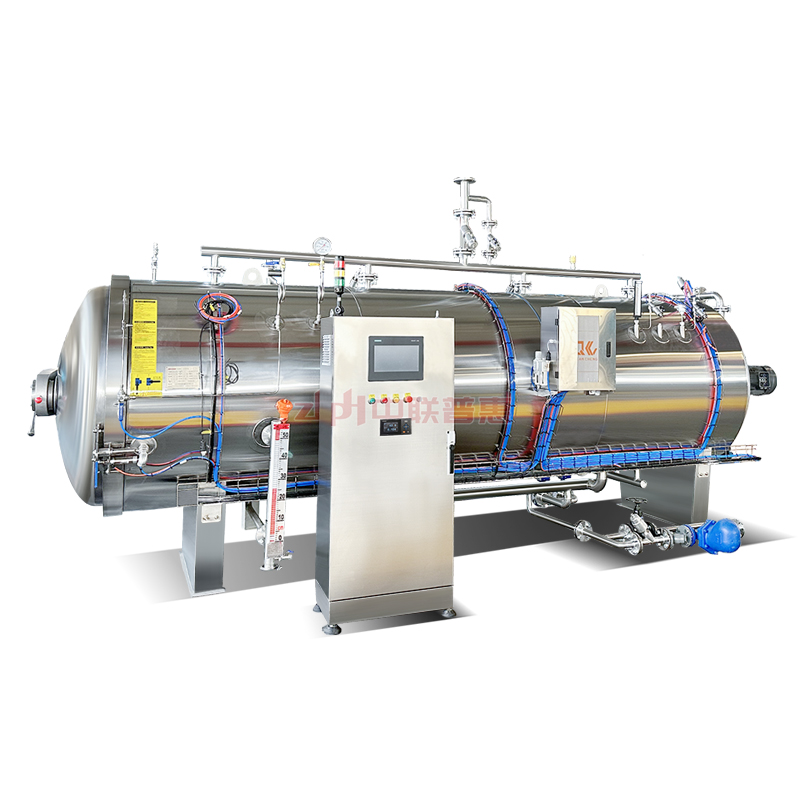
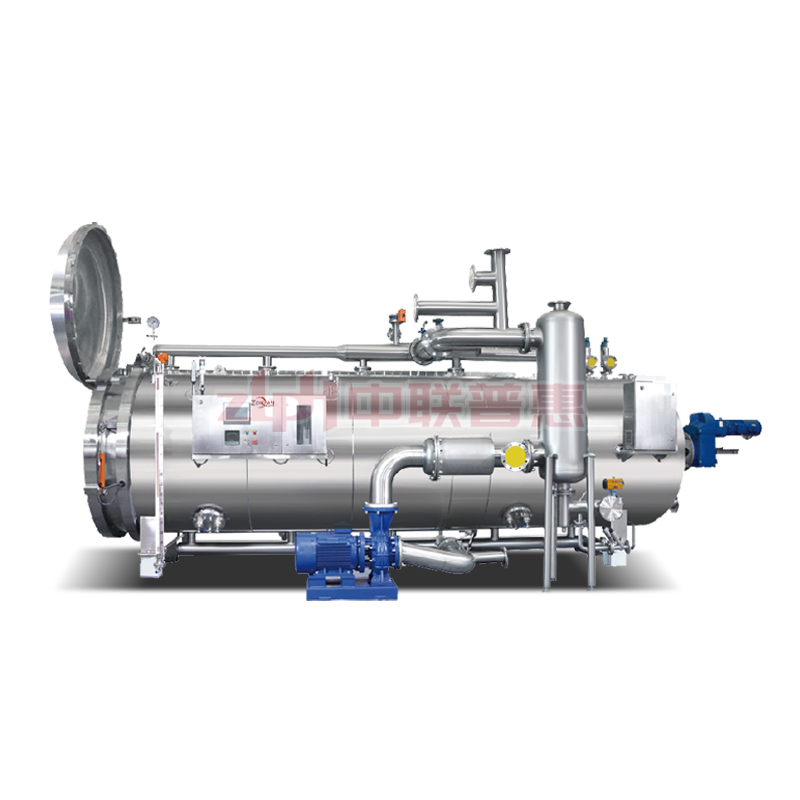
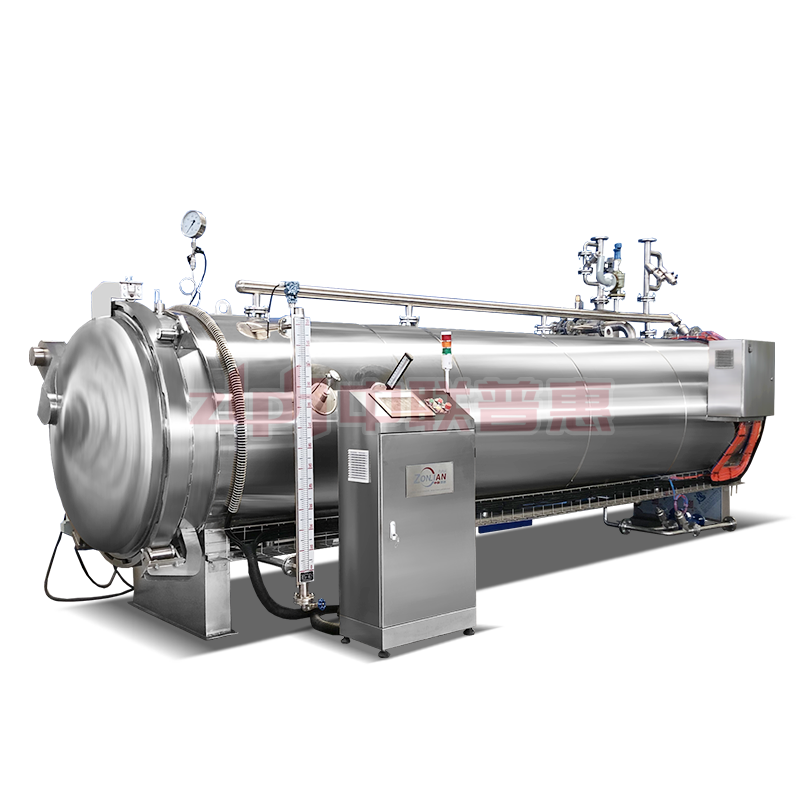
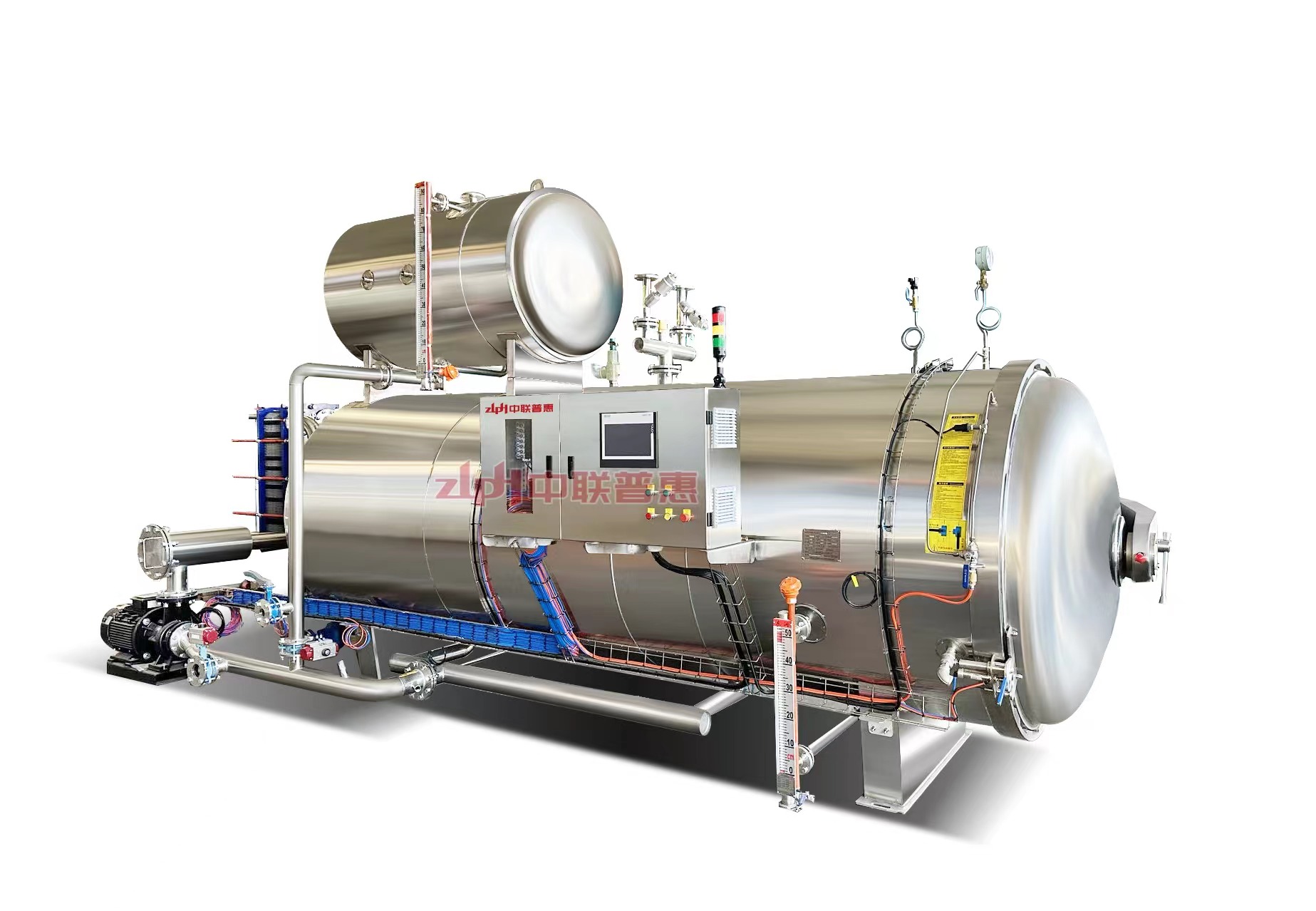
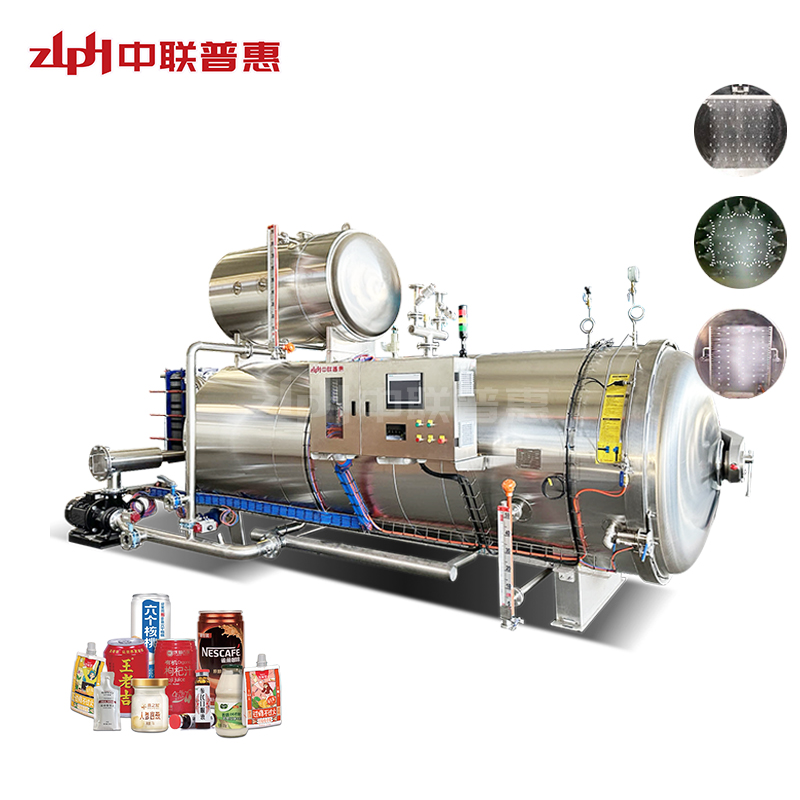
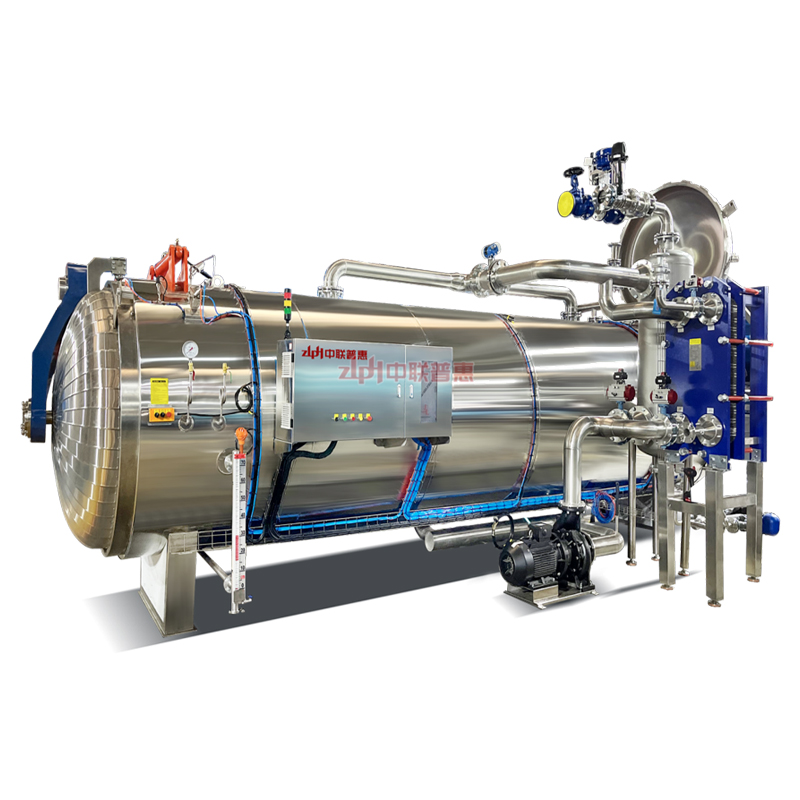
ZLPH’s intelligent top-opening water spray retorts have undergone rigorous thermal validation for clients in Germany, Brazil, and Japan. In a recent seafood export project, our system maintained F₀ = 7.2 ± 0.3 across 500 cycles using tuna pouches, satisfying EU Regulation (EC) No 852/2004 requirements and enabling seamless market entry.
What should I look for in a supplier’s manufacturing capability and quality control?
1. Scenario & Pain Point
A European pet food manufacturer invested in a low-cost retort, only to face chronic seal failures and pressure leaks within six months—tracing back to substandard welding and uncalibrated pressure vessels. This highlights the risk of choosing suppliers without robust in-house manufacturing oversight.
2. Root Cause Analysis
Key failure points include: use of non-certified pressure vessel steel, inadequate weld inspection (e.g., no X-ray or dye-penetrant testing), and lack of integrated quality control during assembly.
3. Step-by-Step Solution
Verify the supplier owns a modern factory with certified pressure vessel fabrication capabilities. Request ISO 9001 certification and ASME or PED compliance documentation. Confirm they employ dedicated QC engineers who inspect every weld seam, pressure test each chamber to 1.5x working pressure, and validate control system logic before shipment.
4. Pitfall Avoidance Guide
Avoid trading companies posing as manufacturers. Visit the factory virtually or in person—observe workshop organization, equipment calibration records, and material traceability. Ensure all critical components (valves, sensors, PLCs) are from reputable brands like Siemens or Danfoss.
5. Real-World Validation
ZLPH operates a 15,000 m² production facility with 21 mechanical designers and 5 QC engineers overseeing every build. Each retort undergoes hydrostatic testing and 72-hour continuous run validation before delivery, ensuring zero leakage and stable performance under 121°C/3 bar conditions.
How can I ensure long-term technical support for overseas retort operations?
1. Scenario & Pain Point
A Southeast Asian ready-meal producer experienced 14 days of downtime when their retort’s control system failed—only to learn the supplier offered no remote diagnostics or local service partners.
2. Root Cause Analysis
Many suppliers lack multilingual engineering teams, fail to provide remote access capabilities, or have no spare parts inventory outside China.
3. Step-by-Step Solution
Choose suppliers with a documented global support network. Confirm availability of 24/7 remote troubleshooting via secure VNC or TeamViewer. Ensure they stock critical spares (seals, solenoid valves, temperature probes) in regional hubs. Verify their team includes PLC programmers who understand local electrical standards (e.g., CE, UL).
4. Pitfall Avoidance Guide
Ask for a sample service-level agreement (SLA). Test response time by sending a mock inquiry. Prefer suppliers who offer operator training videos in your language and provide digital manuals with interactive schematics.
5. Real-World Validation
ZLPH maintains 14 after-sales engineers fluent in English, Spanish, and Russian, with WhatsApp and WeChat support available 24/7. During the 2023 AGROPRODASH exhibition in Moscow, clients praised our rapid remote resolution of control logic errors within 2 hours of reporting.
Industry Best Practices for Selecting Retort Suppliers
Based on 6 years of global deployments and 500+ installations, we recommend this 5-step evaluation framework:
1. Define Worst-Case Operating Conditions
Specify max product load, container type, required cycle time, and ambient temperature—not ideal lab conditions.
2. Demand Full Technical Transparency
Require P&ID diagrams, material certificates, control logic flowcharts, and thermal validation protocols upfront.
3. Validate Through Live Demonstration
Run your actual product through the retort at the supplier’s test center. Measure F₀ consistency and cycle repeatability.
4. Assess Lifecycle Cost, Not Just Purchase Price
Factor in energy consumption (water spray vs. steam-air), maintenance frequency, and expected service life (>15 years).
5. Confirm Compliance Readiness
Ensure the system meets FDA 21 CFR Part 113, EU Machinery Directive 2006/42/EC, and local pressure equipment regulations.
Frequently Asked Questions (FAQ)
Q: Can a water spray retort handle both glass jars and flexible pouches?
A: Yes—but only if it features adjustable spray pressure and basket design. ZLPH’s systems use variable-frequency pumps and modular trays to safely process both formats without container damage.
Q: What certifications should a retort supplier have for EU market access?
A: Mandatory CE marking under PED 2014/68/EU, plus compliance with EN 13409 for thermal processing equipment. ISO 9001 and ISO 22000 are strongly recommended.
Q: How often should retort seals be replaced?
A: Every 6–12 months depending on cycle frequency. Suppliers should provide seal life test data and offer quick-change designs to minimize downtime.
Q: Is top-opening better than side-opening for high-mix production?
A: Top-opening enables faster loading/unloading with automated tray handlers—critical for lines running multiple SKUs. ZLPH’s intelligent top-door design reduces cycle time by 18% compared to manual side doors.
Q: Do you offer retort systems for pet food bowl sterilization?
A: Yes. Our automated bowl sterilization line, showcased at Petfair Asia 2023, integrates retort chambers with robotic loaders for sealed pet food bowls—ensuring 121°C sterilization while preserving product texture.
About Our Expertise and Global Support
ZLPH MACHINERY TECHNOLOGY CO., LTD. is a technology-driven food sterilization solutions provider established in 2018. We operate a 50-acre manufacturing base with 15,000 m² of workshop space, housing advanced CNC machining centers and precision welding stations. Our R&D team includes 21 mechanical designers, 4 sterilization process researchers, and 5 quality control engineers—all with 10+ years of industry experience. We hold full compliance with international pressure equipment and food safety standards, and our systems have been deployed in over 30 countries across Europe, Latin America, and Southeast Asia. At major exhibitions like AGROPRODASH 2023 in Moscow and Petfair Asia 2023 in Shanghai, our intelligent retorts received acclaim for reliability and innovation.
We offer customized support including: on-site thermal process validation, automation integration with existing lines, free sample testing with your product, and multilingual operator training. Our commitment is not just to sell equipment—but to ensure your sterilization process runs flawlessly for decades.
Contact Information
Company: ZLPH MACHINERY TECHNOLOGY CO., LTD.
Website: https://www.zlphretort.com/
Email: sales@zlphretort.com
Phone / WhatsApp: +86 15666798389 / +86 13361554016
