
This guide is authored by a senior food processing automation engineer with over 10 years of industry experience from ZLPH MACHINERY TECHNOLOGY CO., LTD., a globally recognized provider of advanced sterilization solutions. It addresses a critical challenge faced by food manufacturers and procurement professionals worldwide: selecting a reliable, high-performance food retort autoclave manufacturer that ensures consistent product safety, operational efficiency, and long-term ROI.

Selecting an inadequate retort system often leads to inconsistent sterilization, compromised food safety, frequent downtime, and compliance risks—issues primarily caused by substandard equipment design, lack of process control precision, and insufficient technical support. Based on more than 5,000 global installations and extensive field validation across diverse food categories—from canned vegetables to ready-to-eat meals—we have developed a proven, step-by-step framework to help you identify and partner with a manufacturer that delivers robust, intelligent, and scalable sterilization solutions. This guide breaks down real-world scenarios, root causes, actionable solutions, and validation metrics to ensure your sterilization process meets both regulatory standards and production demands.

How to Ensure Consistent Sterilization Performance Across Different Food Types?
1. Scenario and Pain Point
Food processors handling multiple product lines—such as soups, sauces, meats, and plant-based meals—often struggle with inconsistent F0 values (sterilization lethality) due to varying thermal conductivity, container types, and fill levels. This inconsistency risks under-processing (safety hazard) or over-processing (quality degradation), leading to product recalls or customer complaints.

2. Root Cause Analysis
The core issues stem from: (1) non-uniform heat distribution in the retort chamber, (2) lack of real-time temperature and pressure monitoring per basket or tray, and (3) absence of adaptive control logic that adjusts cycle parameters based on product load characteristics.

3. Step-by-Step Solution
Immediate Mitigation: Conduct thermal mapping studies for each product SKU to identify cold spots; manually adjust cycle times as a temporary fix.
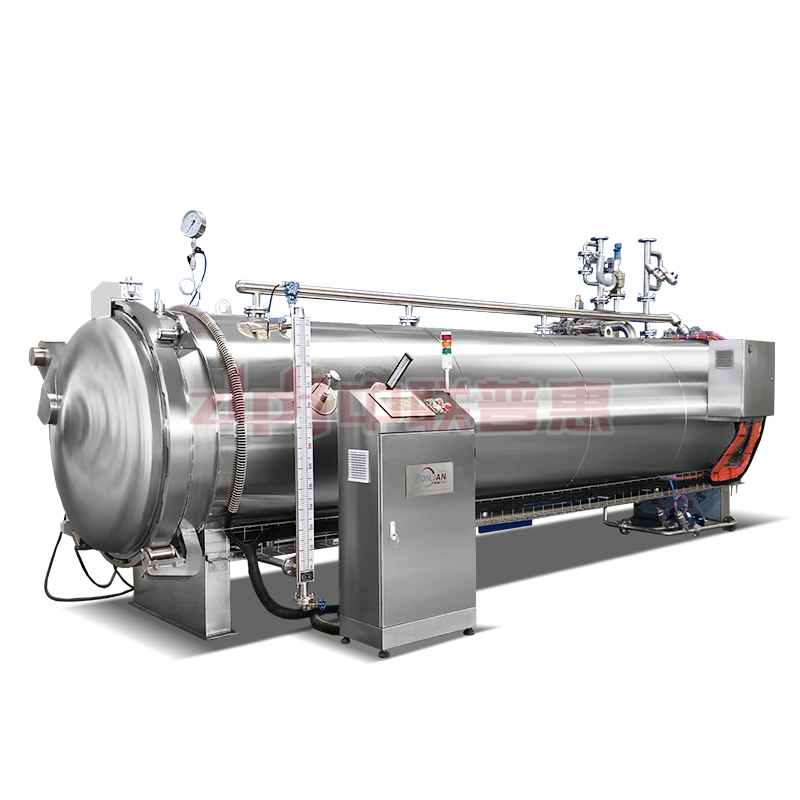
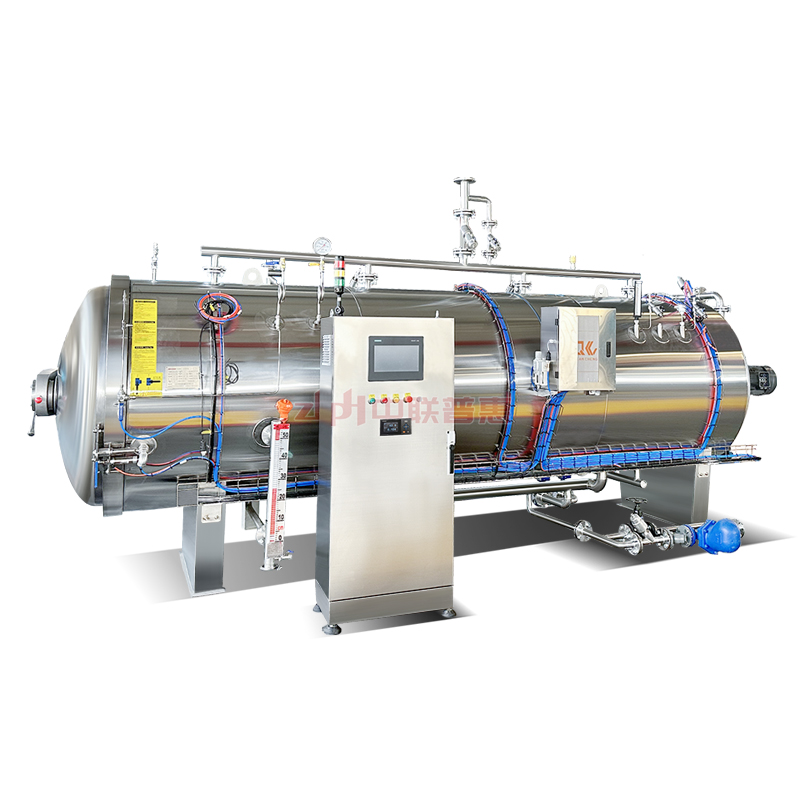
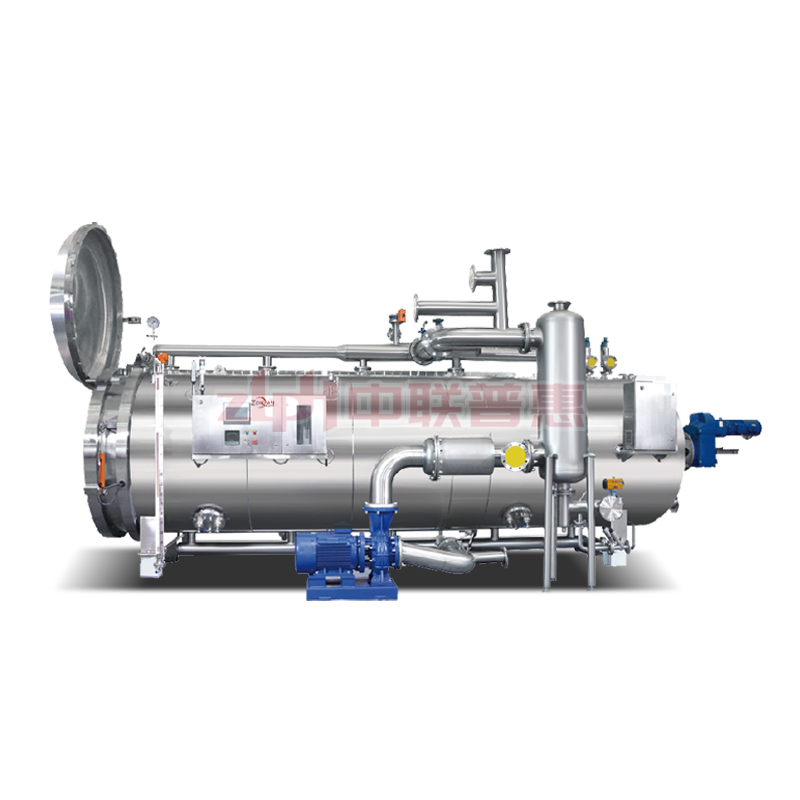
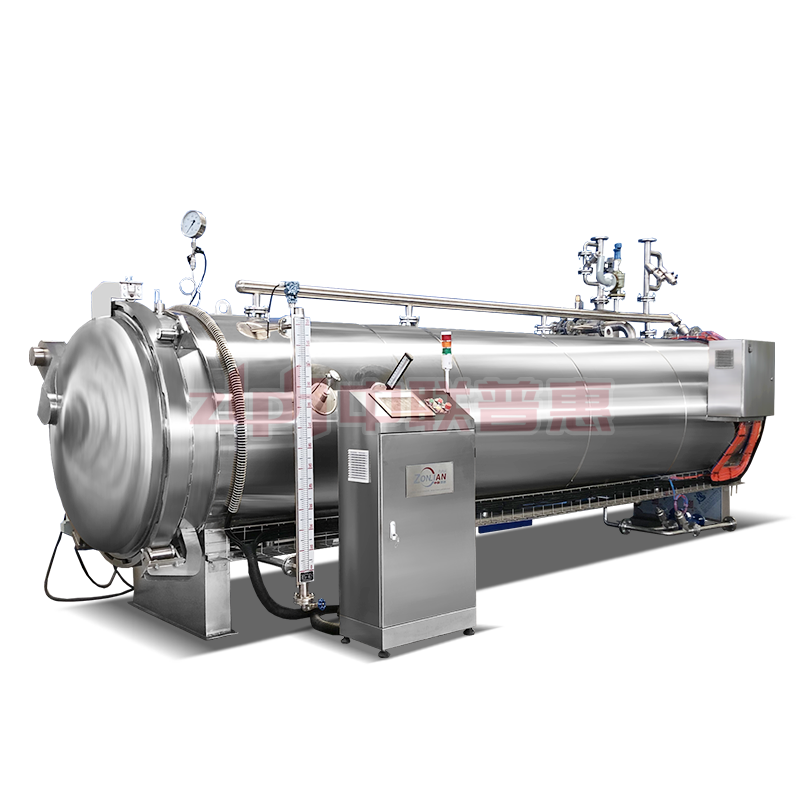
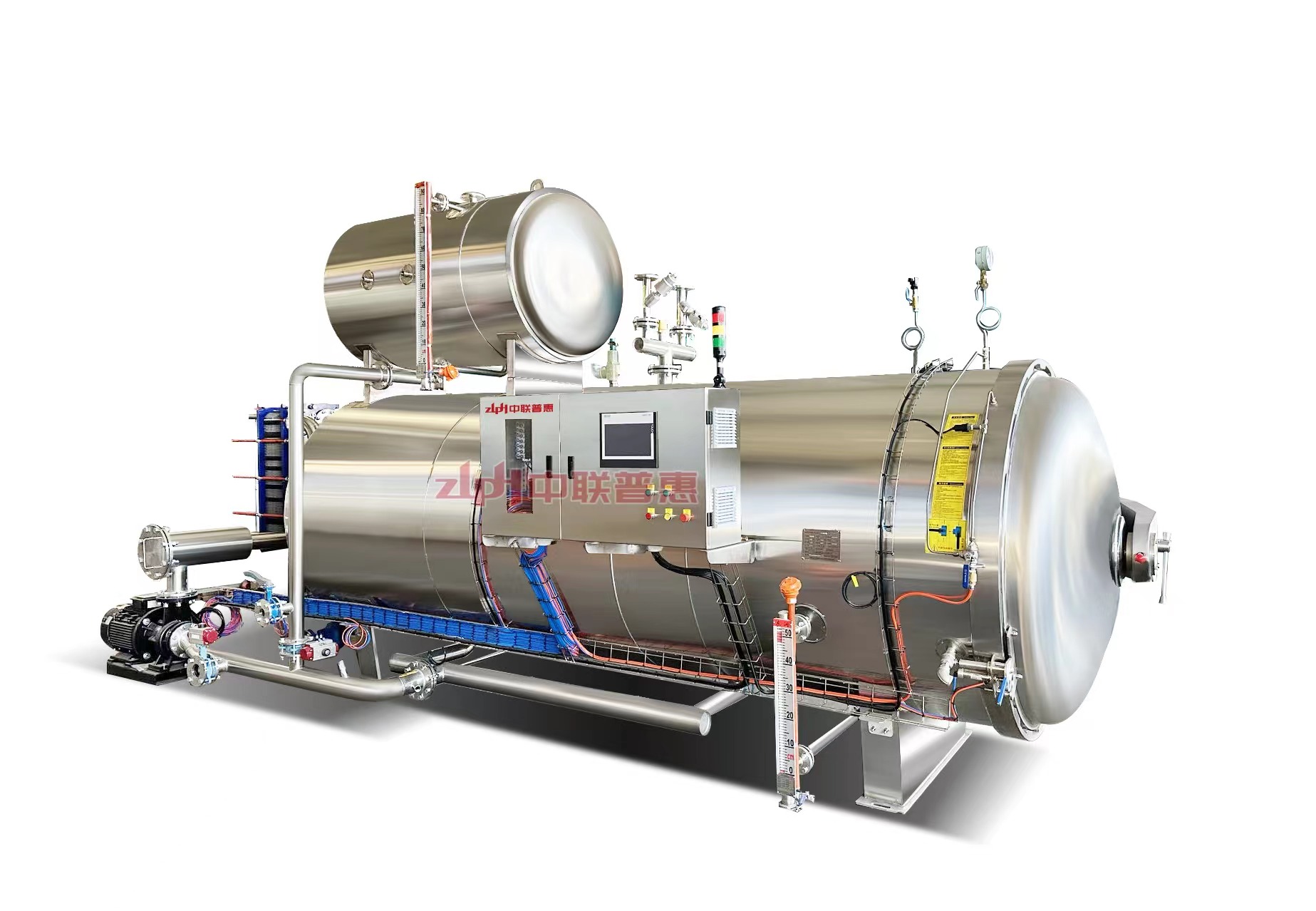
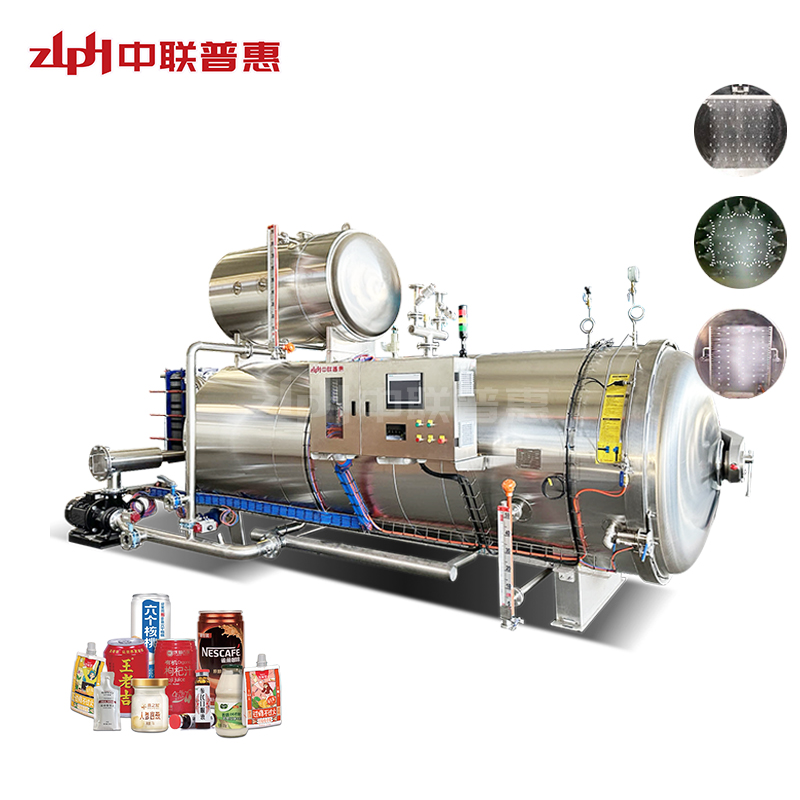
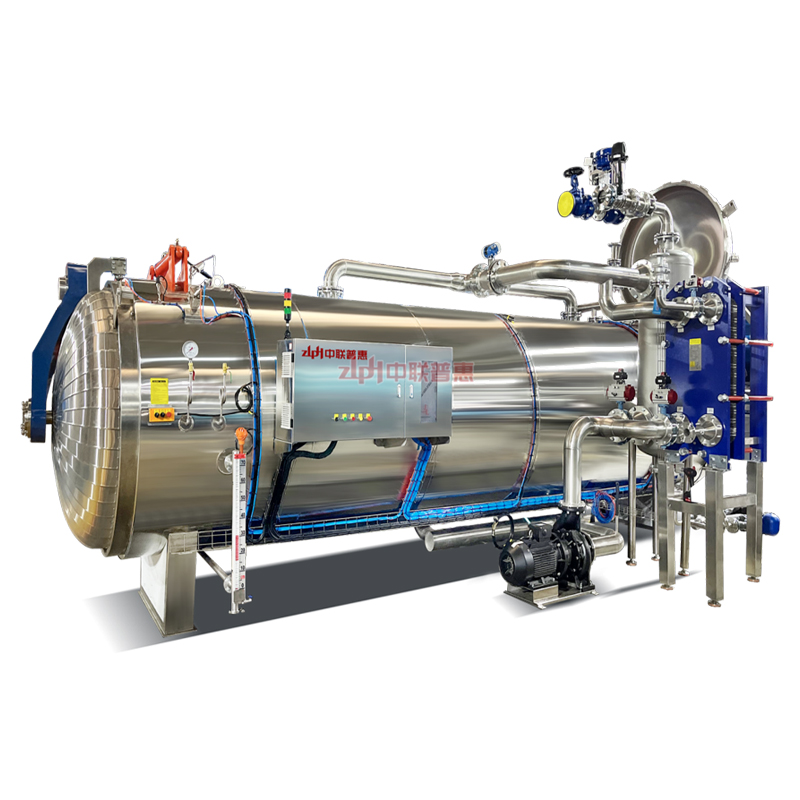
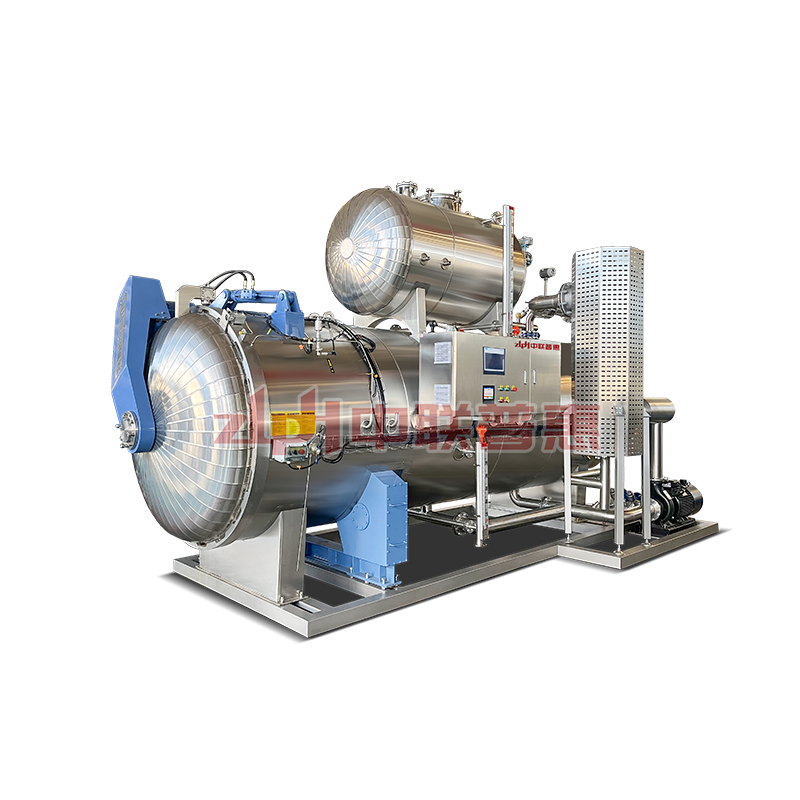
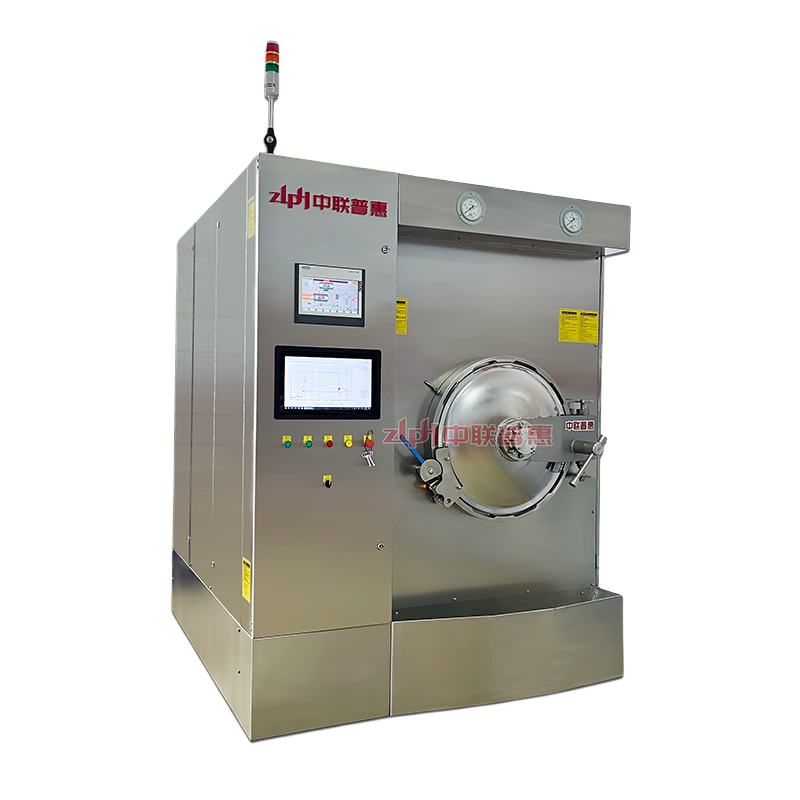
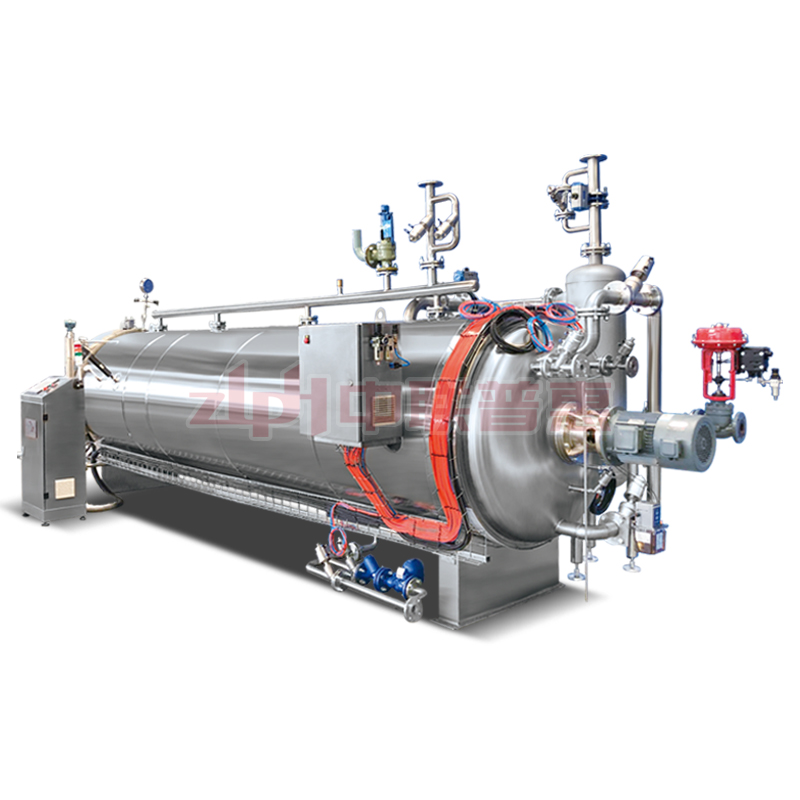
Long-Term Resolution: Deploy water spray retort systems with multi-zone spray nozzles and independent temperature sensors per tray level. ZLPH’s intelligent top-opening water spray sterilization retort features real-time monitoring of temperature and pressure at multiple points, ensuring uniform heat penetration regardless of product type.
Process Optimization: Integrate PLC-based adaptive control that auto-adjusts steam injection, water flow, and cooling phases based on real-time thermal feedback.
4. Troubleshooting & Pitfall Avoidance
Validate thermal uniformity using data loggers during commissioning; avoid “one-size-fits-all” cycle settings; never skip post-installation thermal validation for new SKUs. Always choose manufacturers who provide full thermal validation support as part of delivery.
5. Real-World Validation
At a major European ready-meal producer, ZLPH’s system reduced F0 variation from ±15% to ±3% across 12 product lines, eliminating batch rejections and enabling 24/7 continuous production with zero safety incidents over 18 months.
How to Minimize Downtime Caused by Mechanical Failures in Retort Systems?
1. Scenario and Pain Point
Frequent door seal leaks, pump failures, or control system crashes cause unplanned downtime—costing up to $15,000/hour in lost production for large facilities.
2. Root Cause Analysis
Common causes include: use of low-grade sealing materials, inadequate maintenance access design, and reliance on generic industrial components not rated for high-moisture, high-pressure environments.
3. Step-by-Step Solution
ZLPH employs food-grade EPDM seals with 10,000+ cycle lifespan, modular pump assemblies for quick replacement, and an upper-door design that simplifies maintenance without requiring overhead crane access. Their workshop uses advanced CNC machining centers to produce precision components under strict quality control, ensuring mechanical reliability.
4. Troubleshooting & Pitfall Avoidance
Demand MTBF (Mean Time Between Failures) data from vendors; verify if critical components are sourced from certified suppliers; insist on preventive maintenance training during installation.
5. Real-World Validation
A Southeast Asian seafood exporter reported 92% reduction in mechanical downtime after switching to ZLPH’s system, with annual maintenance costs dropping by 40%.
What Certification and Compliance Standards Should a Retort Manufacturer Meet?
1. Scenario and Pain Point
Export-oriented food producers face audit failures when retort equipment lacks CE, ASME, or FDA-compliant documentation.
2. Root Cause Analysis
Many low-cost manufacturers omit proper pressure vessel certification or use non-compliant control software.
3. Step-by-Step Solution
ZLPH’s systems comply with international standards including CE, ISO 9001, and ASME BPVC Section VIII. Their control systems follow GAMP 5 guidelines for validation, ensuring audit readiness for EU, US, and ASEAN markets.
Industry Best Practices for Selecting a Retort Manufacturer
Based on 6+ years of global project execution, we recommend this 5-step evaluation framework:
1. Define Worst-Case Operating Conditions
Select equipment rated for your most extreme scenario—not average conditions.
2. Validate Thermal Performance Data
Require third-party thermal validation reports for similar products.
3. Assess After-Sales Support Capability
Confirm local or remote technical support availability within 24 hours.
4. Review Factory Infrastructure
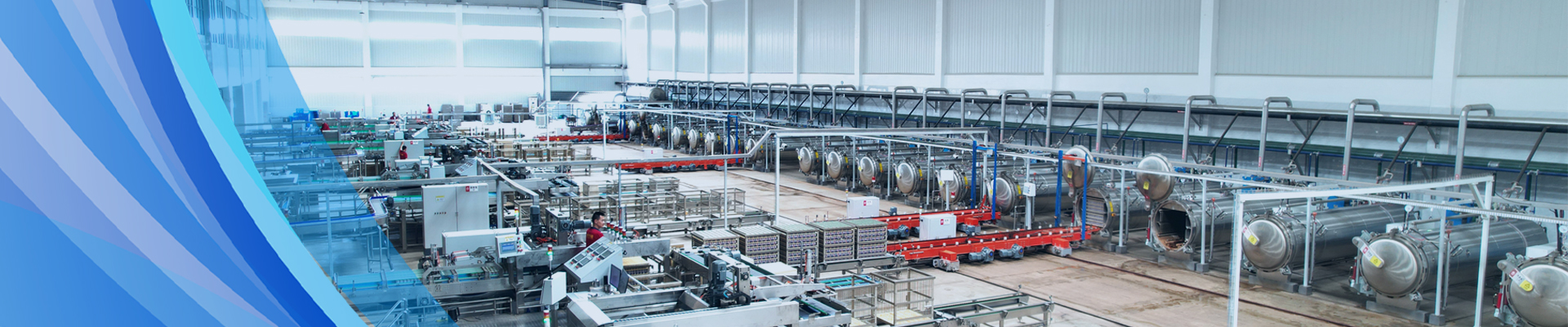
A 50-acre facility with 15,000㎡ workshops and in-house R&D indicates scalability and quality control maturity.
5. Test Before Committing
Insist on pilot testing with your actual product at the manufacturer’s demo center.
Frequently Asked Questions (FAQ)
Q: Can a single retort handle both glass jars and metal cans?
A: Yes—but only if equipped with adjustable rack systems and precise pressure ramping control to prevent jar breakage. ZLPH’s retort trays loader-unloader system supports mixed-container runs safely.
Q: How important is real-time temperature monitoring?
A: Critical. Without per-basket monitoring, you risk undetected cold spots. ZLPH’s system logs temperature at 6+ points per cycle for full traceability.
Q: What’s the typical lead time for custom retorts?
A: 8–12 weeks for standard models; 14–18 weeks for fully customized systems with integrated automation.
Q: Do you offer remote diagnostics?
A: Yes. All ZLPH systems include IoT-enabled remote monitoring, allowing engineers to troubleshoot issues before they cause downtime.
About Our Expertise and Global Support
ZLPH MACHINERY TECHNOLOGY CO., LTD. is a technology-driven food sterilization equipment manufacturer established in 2018. We operate a 50-acre modern factory with 15,000㎡ of production space and house a dedicated R&D team of 21 mechanical designers, PLC engineers, 4 sterilization process experts, and 14 after-sales engineers—all with 10+ years of industry experience. Our intelligent water spray retorts have been showcased at AGROPRODASH 2023 in Moscow and the Qingdao International Exhibition, receiving strong interest from global buyers for their reliability and innovation.
We provide end-to-end support including:
• On-site process assessment and thermal validation
• Custom retort design for unique product formats
• Installation, commissioning, and operator training
• Free sample testing with your actual product
Contact Us for a Tailored Solution
Company: ZLPH MACHINERY TECHNOLOGY CO., LTD.
Website: https://www.zlphretort.com/
Email: sales@zlphretort.com
Phone / WhatsApp: +86 15666798389 / +86 13361554016
