
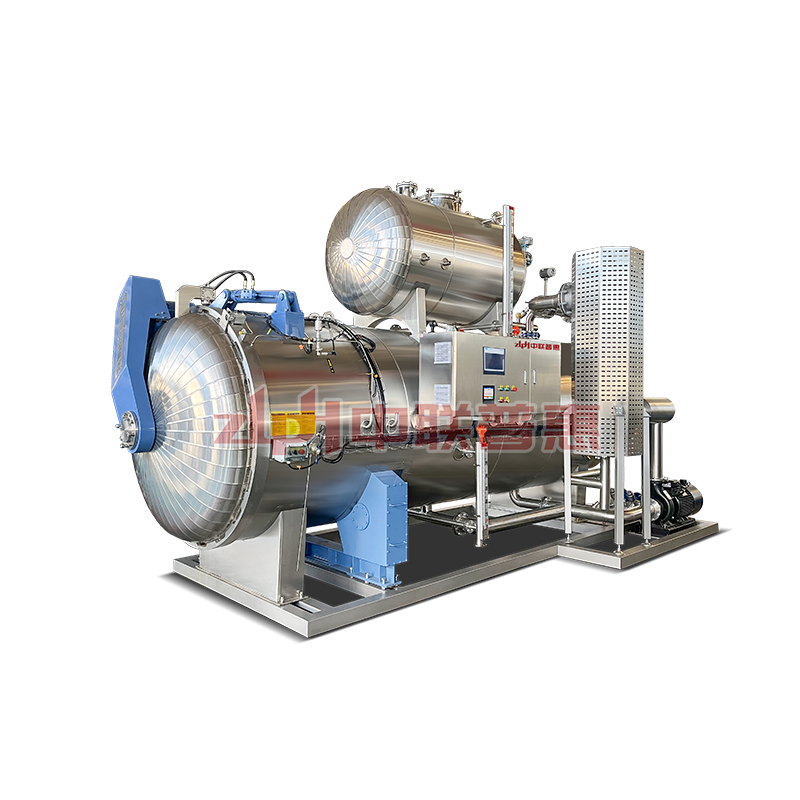
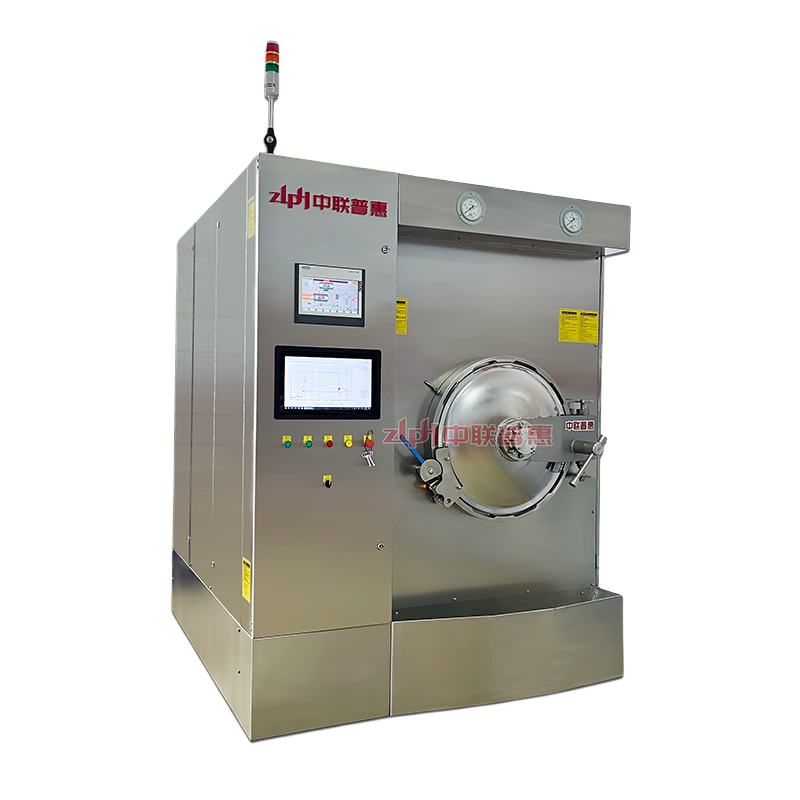
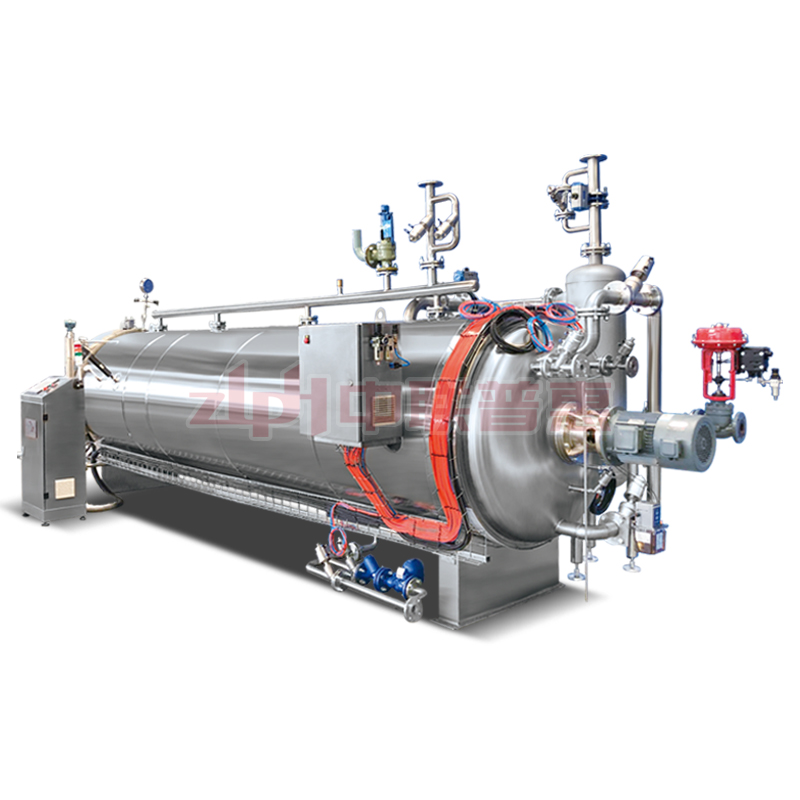
This guide is authored by a senior food processing engineer with over 10 years of experience at ZLPH MACHINERY TECHNOLOGY CO., LTD., a globally recognized provider of intelligent retort sterilization systems. It addresses a critical challenge faced by food manufacturers, pet food producers, and canned goods processors worldwide: selecting a reliable retort autoclave factory that delivers consistent sterilization performance, regulatory compliance, and long-term operational stability.

Selecting the wrong retort supplier often leads to inconsistent sterilization results, frequent equipment downtime, non-compliance with international food safety standards (such as FDA, EU, or EAC), and costly production delays. Based on more than 5,000 global installations and field validations across Asia, Europe, Russia, and Southeast Asia, we have developed a proven, step-by-step framework to help you identify the best retort autoclave factory for your specific application—whether for human food, pet food in bowls, or flexible packaging. This guide covers key evaluation criteria including manufacturing capability, certification compliance, technological innovation, and real-world performance validation.

How to Evaluate a Retort Autoclave Factory’s Manufacturing Capability and Quality Control?
1. Scenario and Pain Point
Many food processors report receiving retort systems that fail pressure tests after installation, suffer from uneven heat distribution, or experience premature seal degradation—issues that trace back to inadequate factory infrastructure and poor process control during manufacturing. These problems result in batch spoilage, regulatory rejection, and extended downtime.

2. Root Cause Analysis
The core issues stem from three factors: insufficient workshop scale leading to rushed assembly; lack of precision machining equipment for critical components like door seals and spray nozzles; and absence of standardized quality control protocols aligned with ASME or PED standards.

3. Step-by-Step Solution
Verify the factory’s physical footprint: a credible manufacturer should operate a dedicated workshop of at least 15,000 square meters with modern CNC and welding equipment.
Confirm in-house production of key components—especially the retort chamber, door mechanism, and piping system—to ensure dimensional accuracy and material traceability.
Request evidence of process documentation, including weld inspection reports, hydrostatic test records, and calibration certificates for temperature/pressure sensors.
4. Pitfall Avoidance Guide
Avoid suppliers who outsource core fabrication or cannot provide third-party inspection reports. Always conduct a virtual or on-site factory audit before placing an order. Prioritize factories with ISO 9001-certified quality management systems and documented traceability for raw materials.
5. Real-World Validation
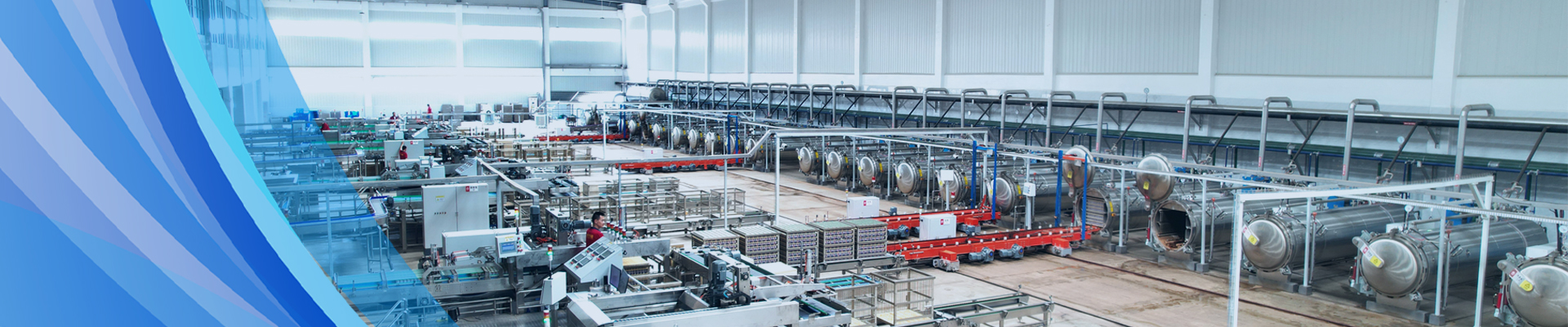
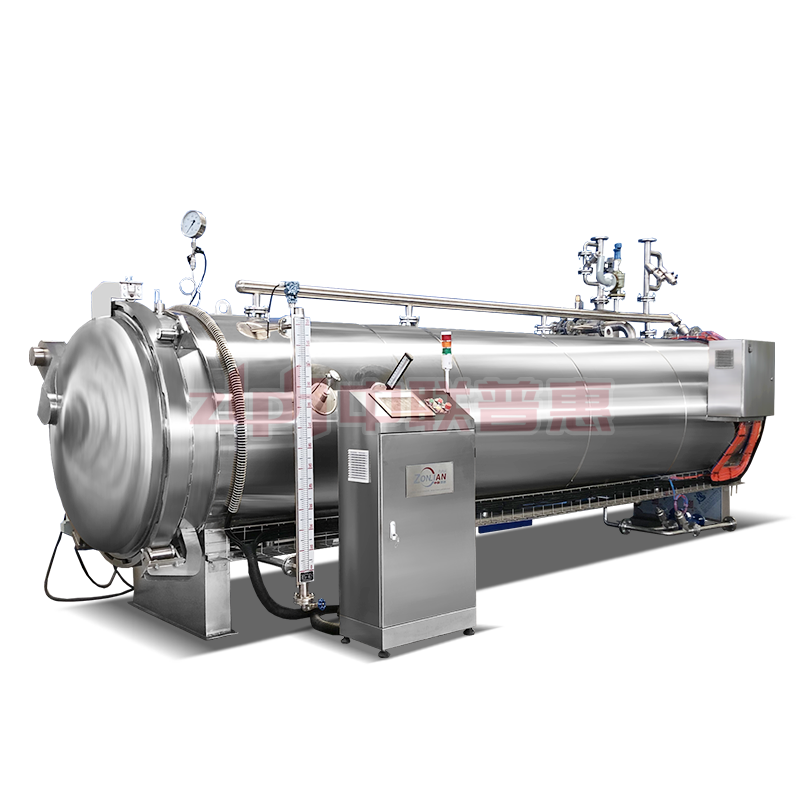
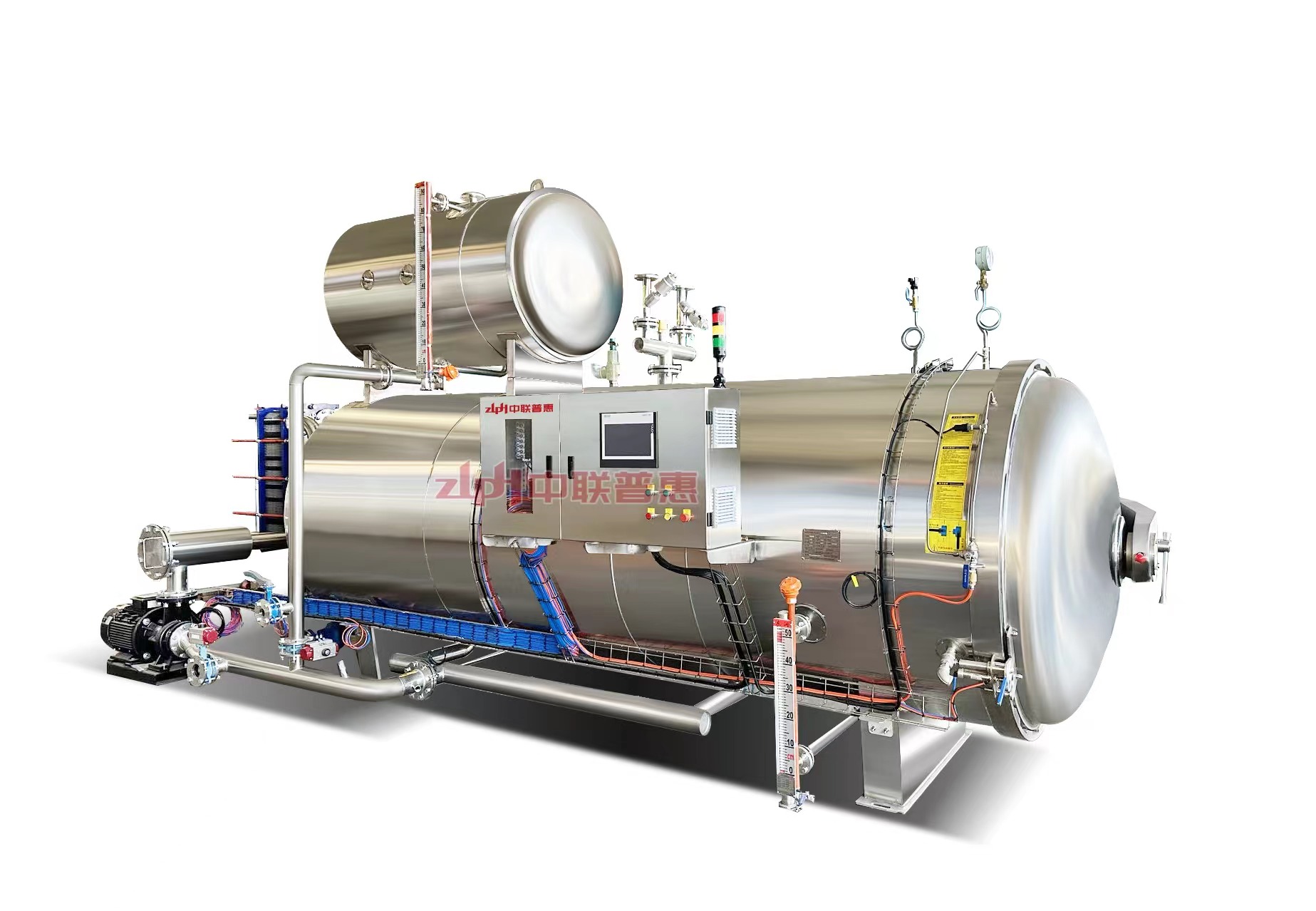
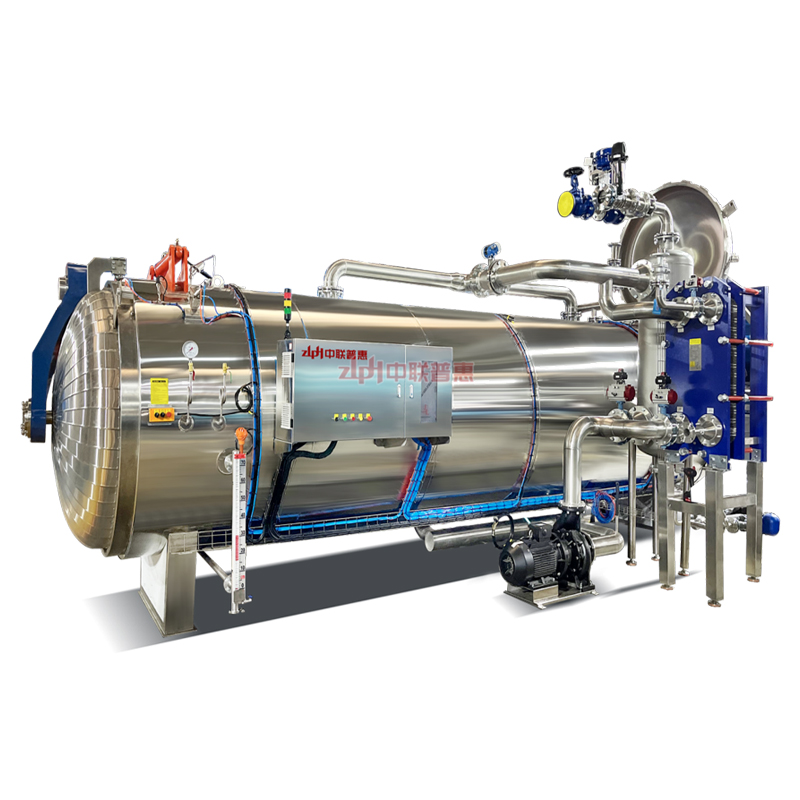
ZLPH’s 50-acre facility includes a 15,000 m² workshop equipped with advanced machining centers that produce all critical retort components in-house. Every sterilizer undergoes rigorous hydrostatic testing at 1.5x working pressure and thermal mapping validation to ensure uniform temperature distribution—resulting in zero field failures due to structural defects across 500+ global installations.
How to Ensure the Retort Meets International Certification Requirements?
1. Scenario and Pain Point
Export-oriented food brands frequently face shipment rejections because their retort equipment lacks valid certifications for target markets—such as CE for Europe, EAC for Russia/CIS, or DOSH for Malaysia—delaying market entry and damaging customer trust.
2. Root Cause Analysis
Many Chinese suppliers claim “CE compliance” without holding an official Certificate of Authorization. Others use generic declarations instead of notified-body certified documentation, which customs authorities reject.
3. Step-by-Step Solution
Demand original copies of: ASME Certificate of Authorization (U Stamp), EU CE Certification issued by a Notified Body, Russian EAC Certification, Malaysia DOSH approval, and Special Equipment Manufacturing License.
Cross-check certificate numbers on official databases (e.g., EU NANDO, EAEU registry).
Ensure the retort’s design code matches your jurisdiction—ASME Section VIII Div. 1 for North America, PED 2014/68/EU for Europe.
4. Pitfall Avoidance Guide
Never accept self-declared CE marks. Verify that the manufacturer is listed as the certificate holder—not a trading company. Confirm that the certification covers the exact model and pressure rating you are purchasing.
5. Real-World Validation
ZLPH holds all major international certifications, including ASME U Stamp, CE, EAC, and DOSH, enabling seamless customs clearance in over 40 countries. Their certifications are regularly audited and publicly verifiable, reducing client procurement risk and accelerating regulatory approvals.
How to Assess Technological Innovation in Retort Systems?
1. Scenario and Pain Point
Traditional bottom-opening retorts require manual loading, cause ergonomic injuries, and suffer from uneven water spray distribution—leading to under-sterilized zones and product recalls.
2. Root Cause Analysis
Legacy designs lack automation integration, rely on gravity-fed water systems, and use basic PID controllers incapable of real-time thermal profiling.
3. Step-by-Step Solution
Prioritize retorts with top-opening doors for automated tray handling.
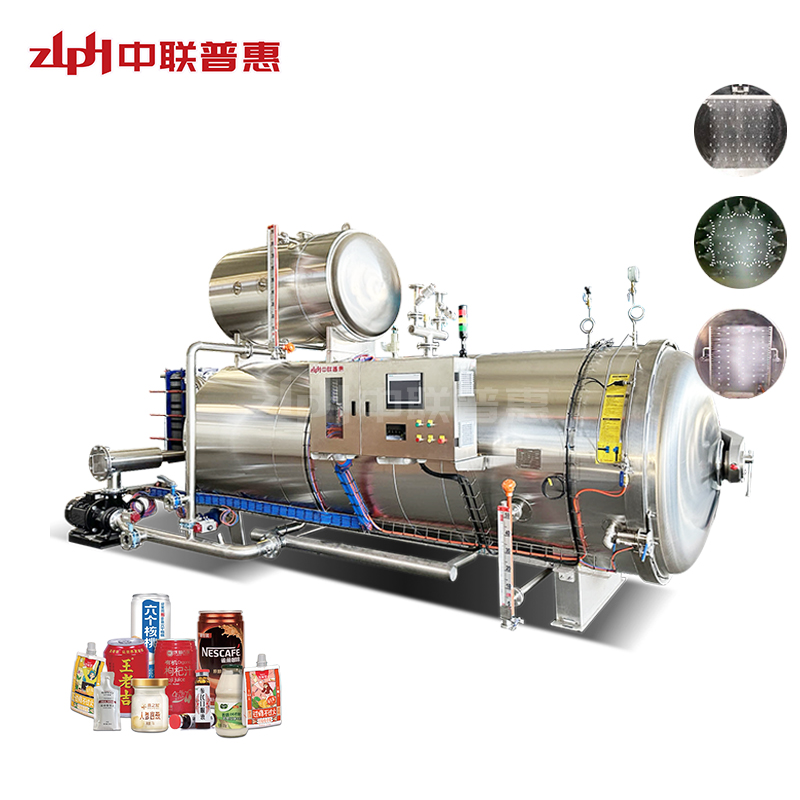
Select models featuring multi-zone water spray nozzles with balanced flow distribution to eliminate cold spots.
Require intelligent PLC control with real-time F₀ monitoring, data logging, and remote diagnostics.
4. Pitfall Avoidance Guide
Test spray uniformity using thermal paper or data loggers during factory acceptance tests (FAT). Avoid systems without F₀ calculation capability—critical for low-acid canned foods.
5. Real-World Validation
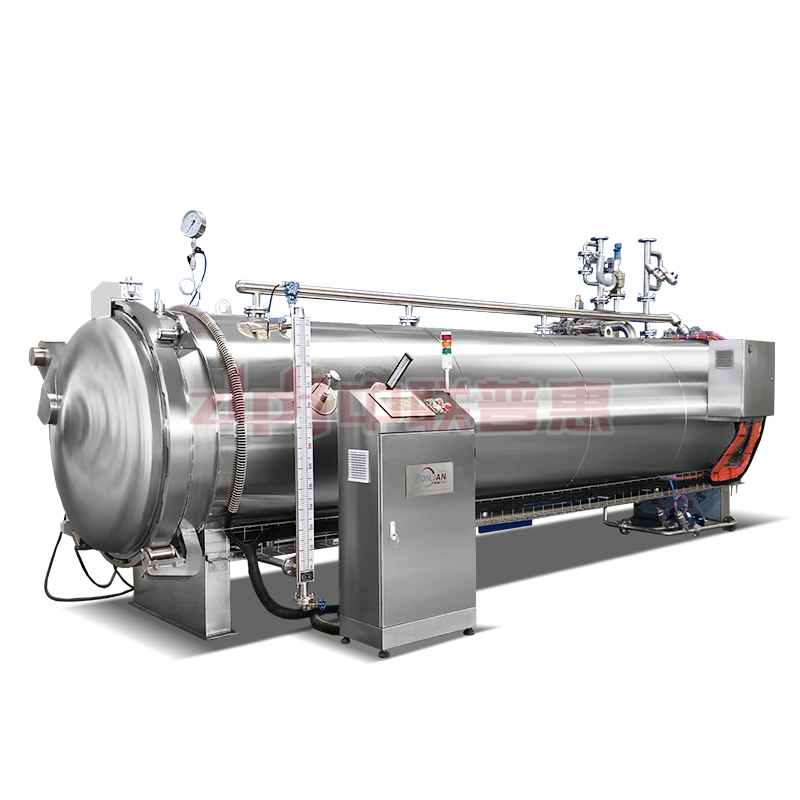
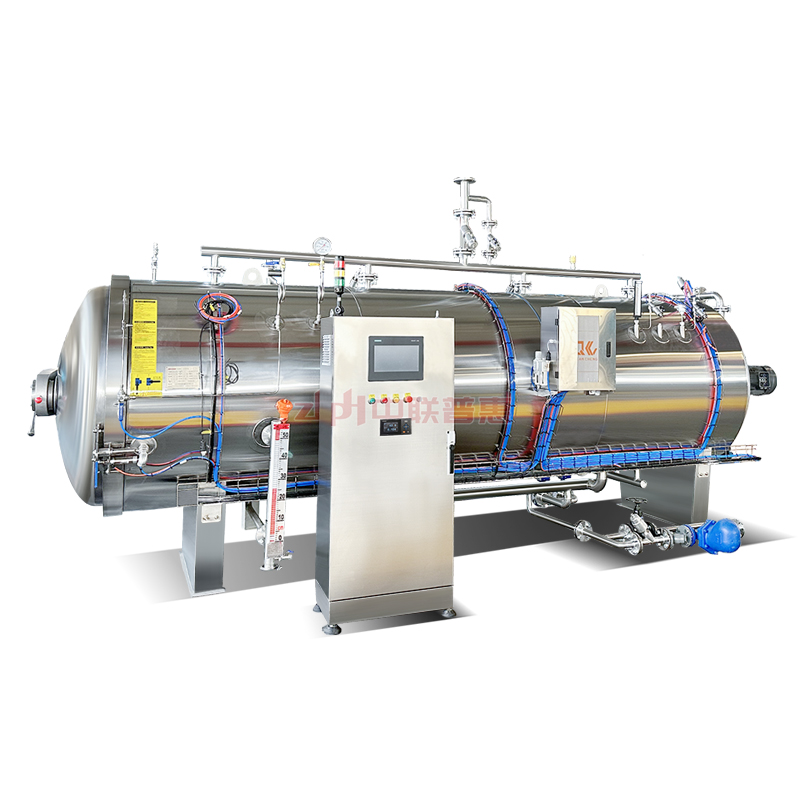
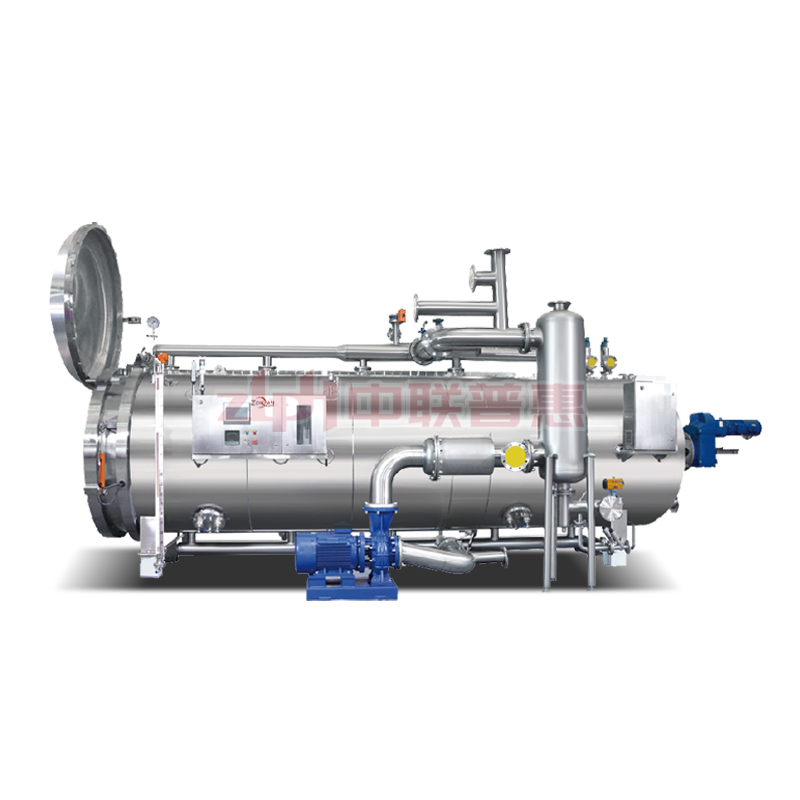
ZLPH’s intelligent top-opening water spray retort, showcased at AGROPRODASH 2023 in Moscow and Petfair Asia 2023 in Shanghai, features automated tray loading/unloading, precision spray manifolds, and real-time temperature/pressure control—validated by customers as “among the most advanced and reliable” in the market.
Industry Best Practices for Retort Selection
Based on 6 years of global project execution and 5,000+ installations, we recommend this 5-step evaluation framework:
1. Define Worst-Case Operating Conditions
Size your retort for peak production volume, highest required F₀ value, and most challenging packaging format—not average conditions.
2. Validate Certifications Early
Confirm all required market-specific certifications before technical evaluation begins.
3. Demand In-House R&D Capability
Choose suppliers with dedicated teams—ZLPH employs 21 mechanical/PLC engineers and 4 sterilization process experts with 10+ years’ experience.
4. Require Performance Guarantees
Insist on thermal mapping reports and F₀ consistency warranties (±0.5 min) in your contract.
5. Evaluate After-Sales Support
Ensure 24/7 technical support and local spare parts availability—ZLPH provides 14 after-sales engineers for global rapid response.
Frequently Asked Questions (FAQ)
Q: Can a standard retort be used for pet food in plastic bowls?
A: Only if it features gentle water spray sterilization and precise temperature control to prevent bowl deformation. ZLPH’s automated bowl sterilization line is specifically engineered for this application.
Q: What certifications are mandatory for selling retorts in Russia?
A: EAC Certification under TR CU 032/2013 is legally required. ZLPH holds valid EAC certification for all pressure-retort models.
Q: How to verify uniform sterilization inside the retort?
A: Conduct thermal mapping with at least 12 data loggers per load. Reputable factories like ZLPH provide this as part of FAT.
Q: Is top-opening design better than side-opening?
A: Yes—for automated lines. Top-opening enables robotic tray handling, reduces operator strain, and improves sealing reliability.
Q: What’s the typical lead time for a custom retort?
A: 60–90 days for certified, tested systems. Beware of suppliers promising delivery in under 45 days—they likely skip critical validation steps.
About Our Expertise and Global Support
ZLPH MACHINERY TECHNOLOGY CO., LTD., established in 2018, is a technology-driven manufacturer specializing in intelligent retort sterilization systems. Our team includes 21 mechanical and PLC engineers, 4 sterilization process researchers, and 14 global after-sales engineers—all with over a decade of industry experience. We hold ASME, CE, EAC, DOSH, and Special Equipment Manufacturing Licenses, ensuring global compliance. Our solutions serve clients in more than 40 countries, with successful exhibitions at AGROPRODASH Moscow and Petfair Asia Shanghai validating our technological leadership.
We offer customized support including: on-site process assessment, thermal validation support, free sample testing, and 24-hour technical response. Our success is built on your success—we don’t just sell equipment; we deliver trusted partnerships.
Contact Information
Company: ZLPH MACHINERY TECHNOLOGY CO., LTD.
Website: https://www.zlphretort.com/
Email: sales@zlphretort.com
Phone / WhatsApp: +86 15666798389 / +86 13361554016
