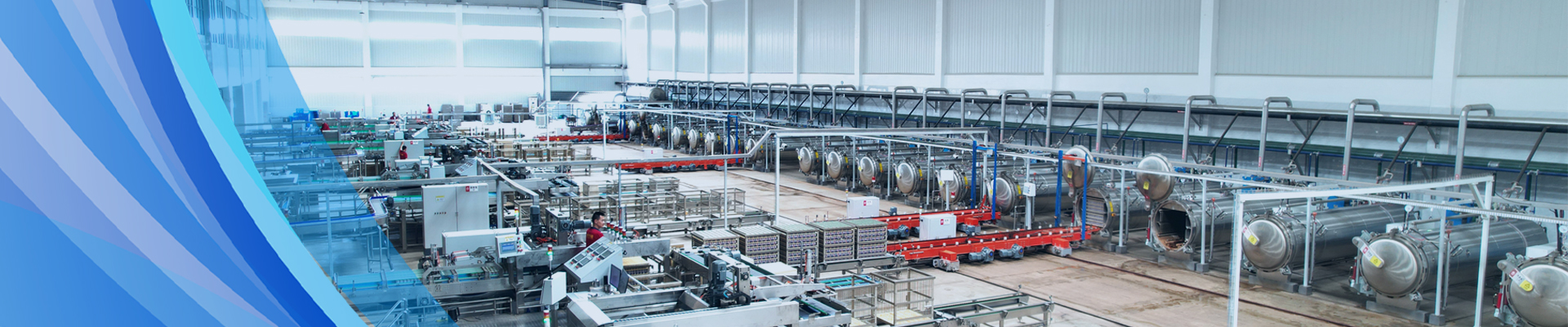

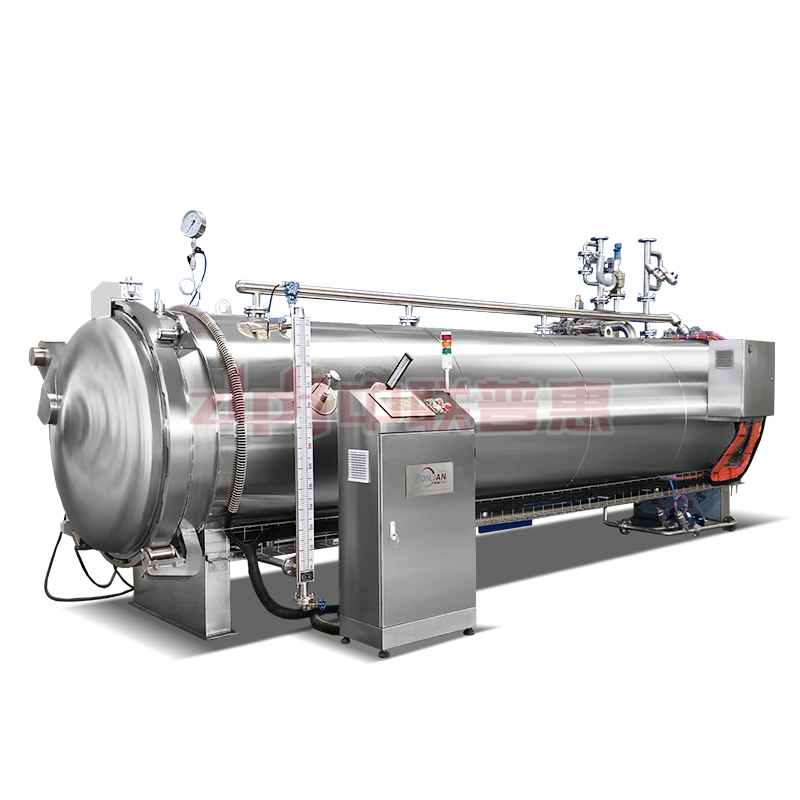
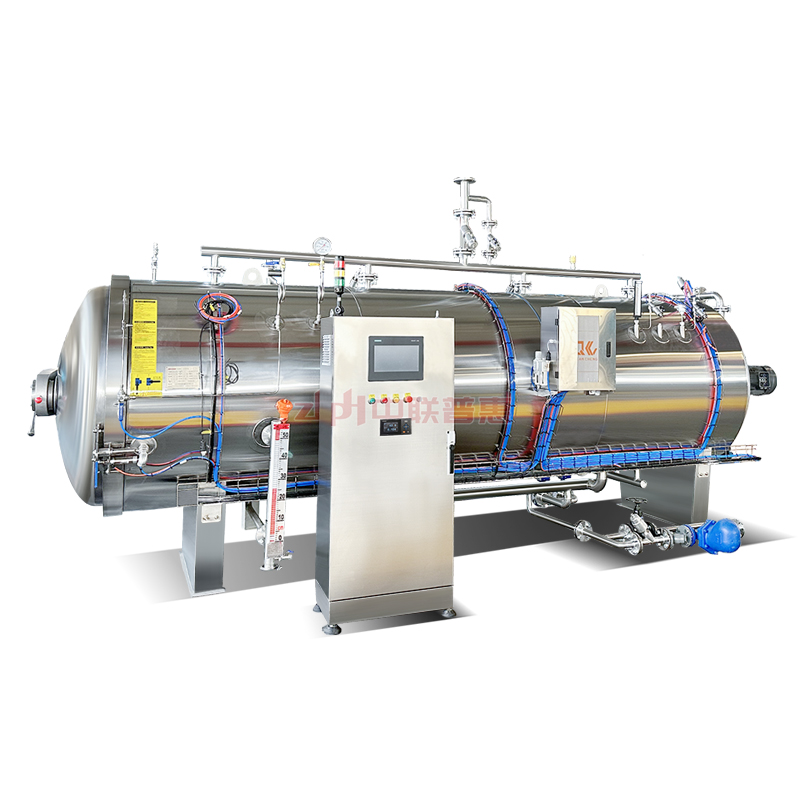
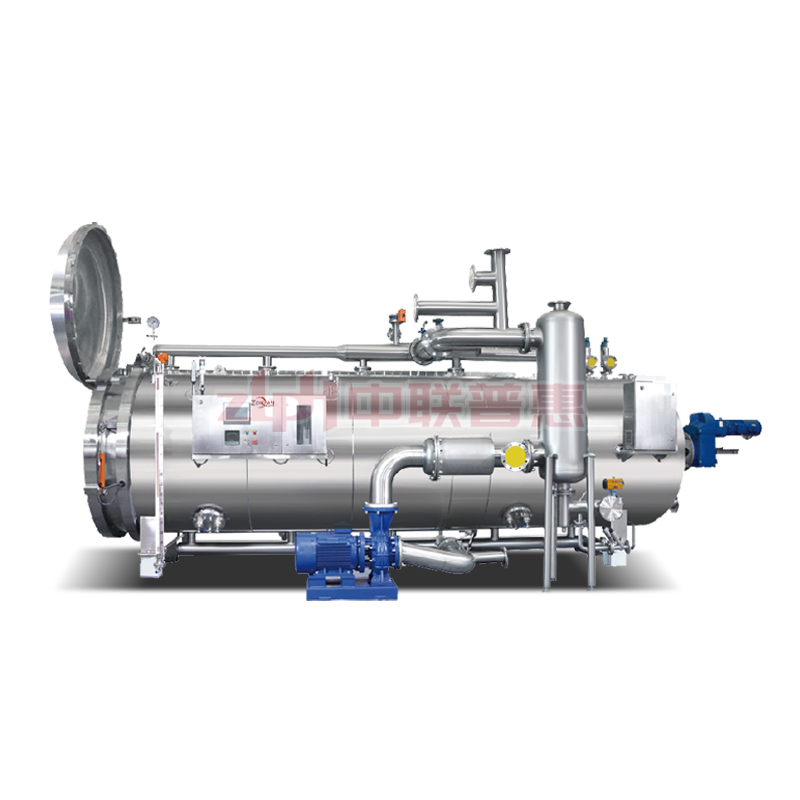
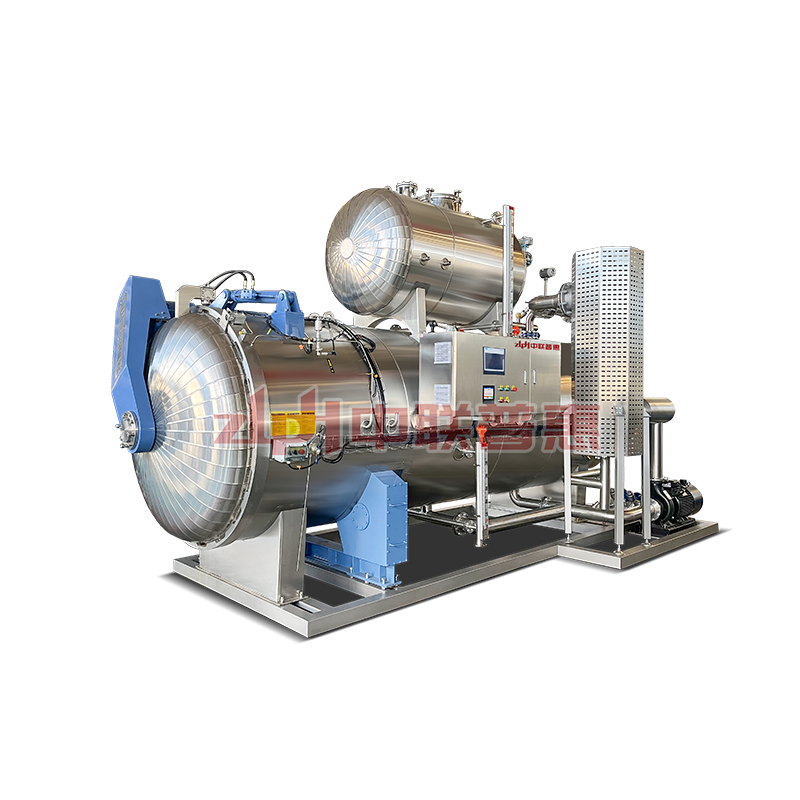
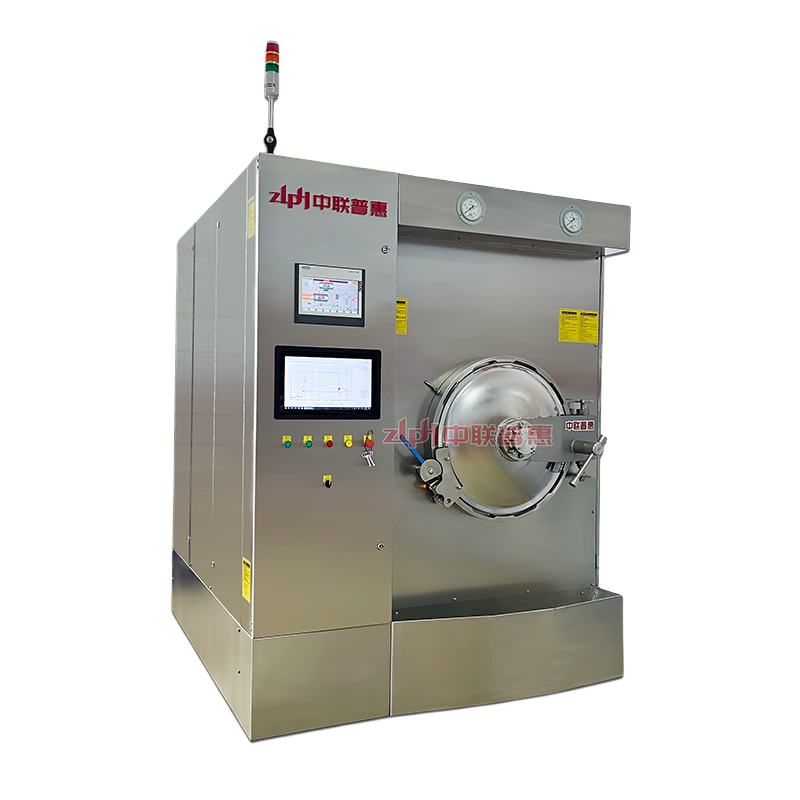
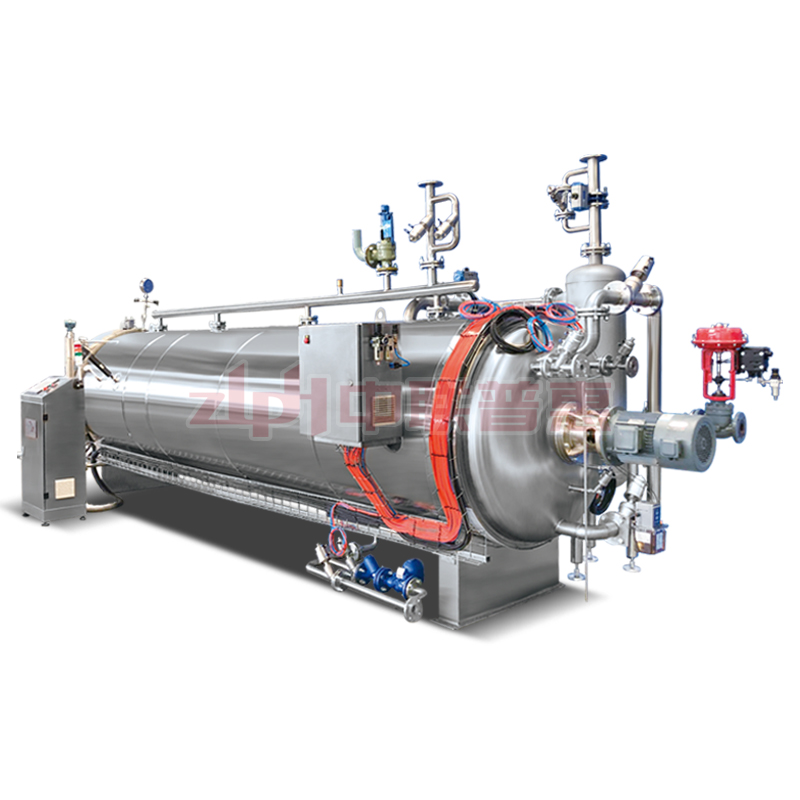
This guide is authored by a senior food processing engineer with over 12 years of experience at ZLPH MACHINERY TECHNOLOGY CO., LTD., a globally recognized provider of intelligent sterilization solutions. It addresses a critical challenge faced by food manufacturers worldwide: selecting a reliable, efficient, and compliant water spray retort autoclave that ensures product safety while maximizing throughput. Inconsistent sterilization, operational inefficiency, and hygiene risks are persistent pain points in canned and packaged food production—often caused by outdated equipment design, inadequate temperature-pressure control, or poor automation integration. Drawing from more than 5,000 global installations and field-tested performance data across diverse food categories—from pet food to ready-to-eat meals—this guide delivers a proven, step-by-step framework to evaluate, select, and deploy the optimal water spray retort system. You’ll learn how to avoid common pitfalls, validate technical specifications against real-world conditions, and implement solutions that enhance both food safety and production economics.

How do I ensure consistent sterilization across all batches in high-volume food production?
1. Scenario & Pain Point
In large-scale canning facilities producing ready meals or pet food, inconsistent sterilization leads to batch rejections, shelf-life failures, or even recalls. Operators often observe uneven heat distribution, cold spots in retort chambers, or variable F0 values despite identical time-temperature settings—compromising microbial kill efficacy and regulatory compliance.

2. Root Cause Analysis
The core issues stem from three factors: (1) non-uniform water spray coverage due to poor nozzle layout or low-pressure pumps; (2) lack of real-time monitoring for temperature and pressure differentials inside the chamber; and (3) manual loading/unloading causing inconsistent product placement, which disrupts thermal uniformity.

3. Step-by-Step Solution
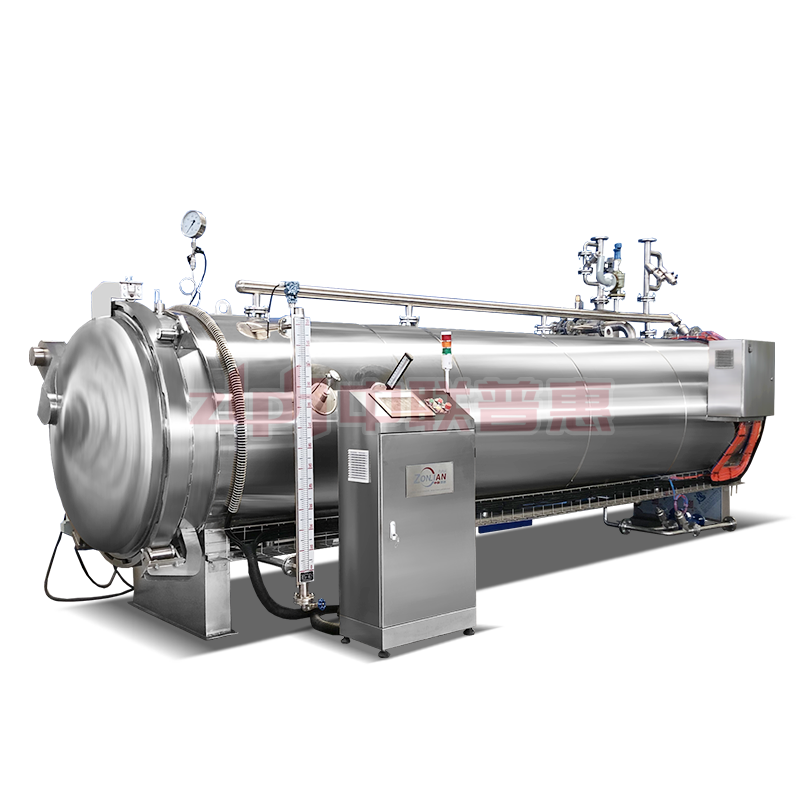
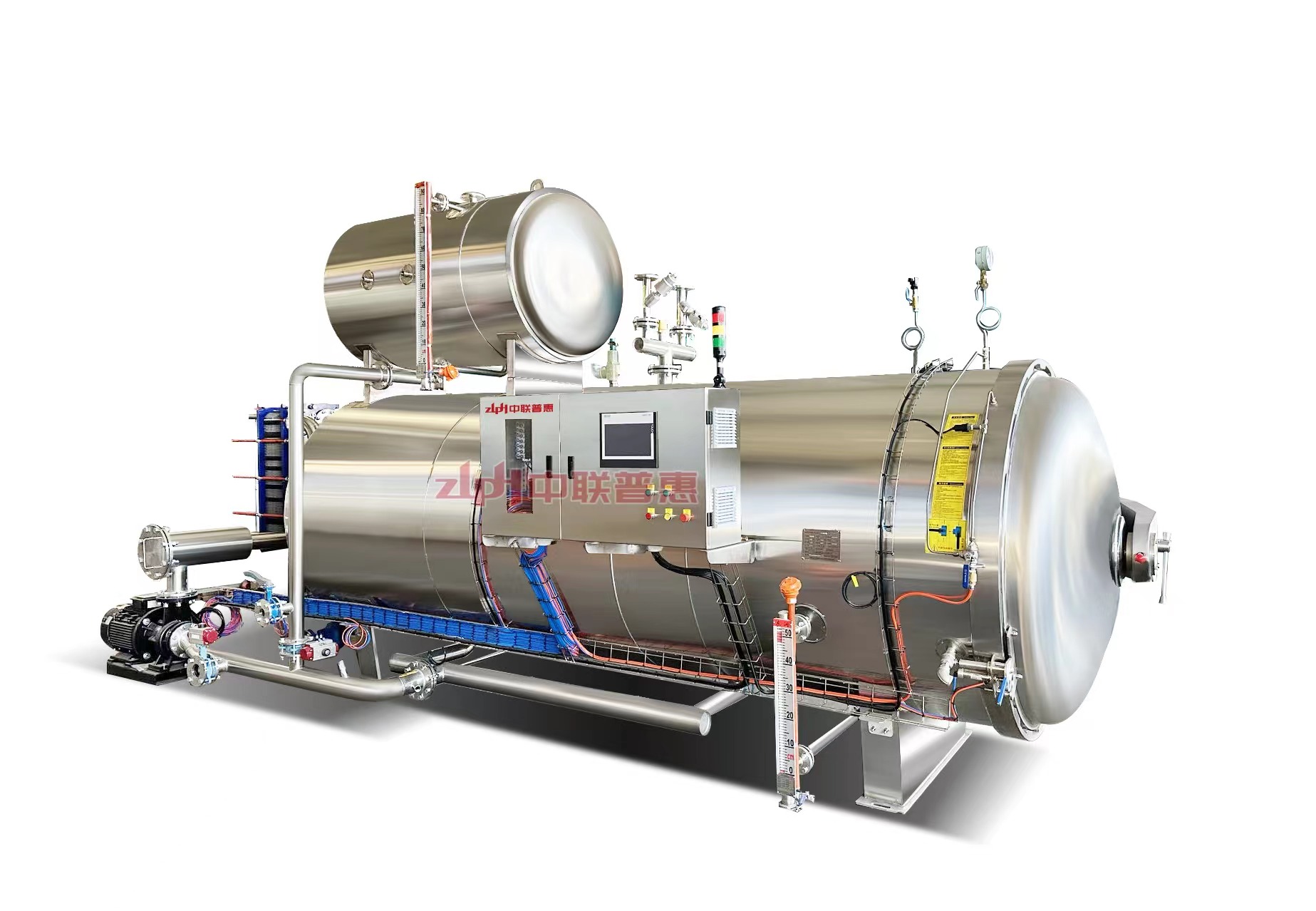
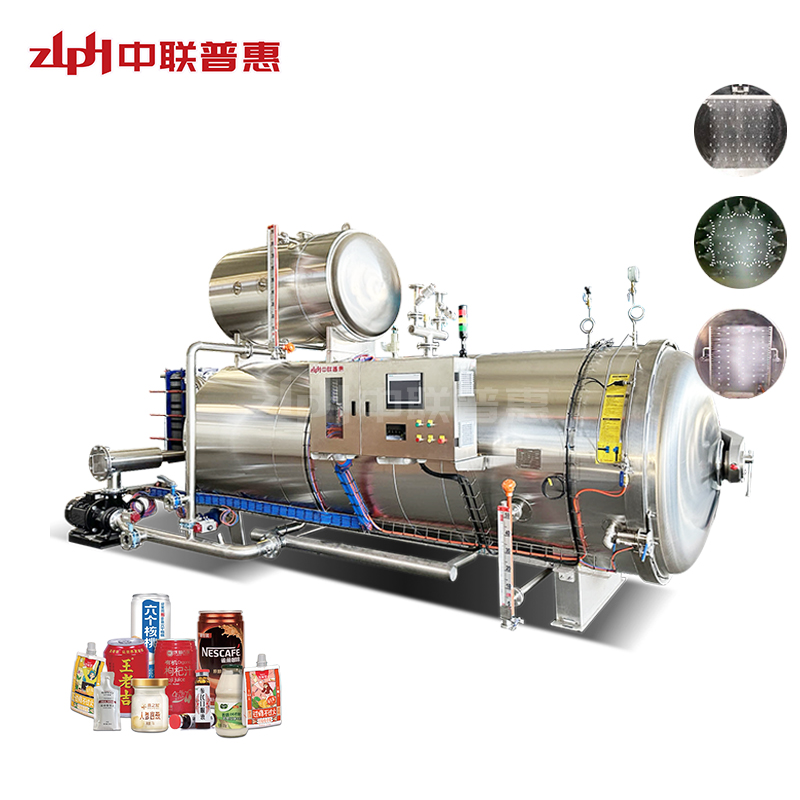
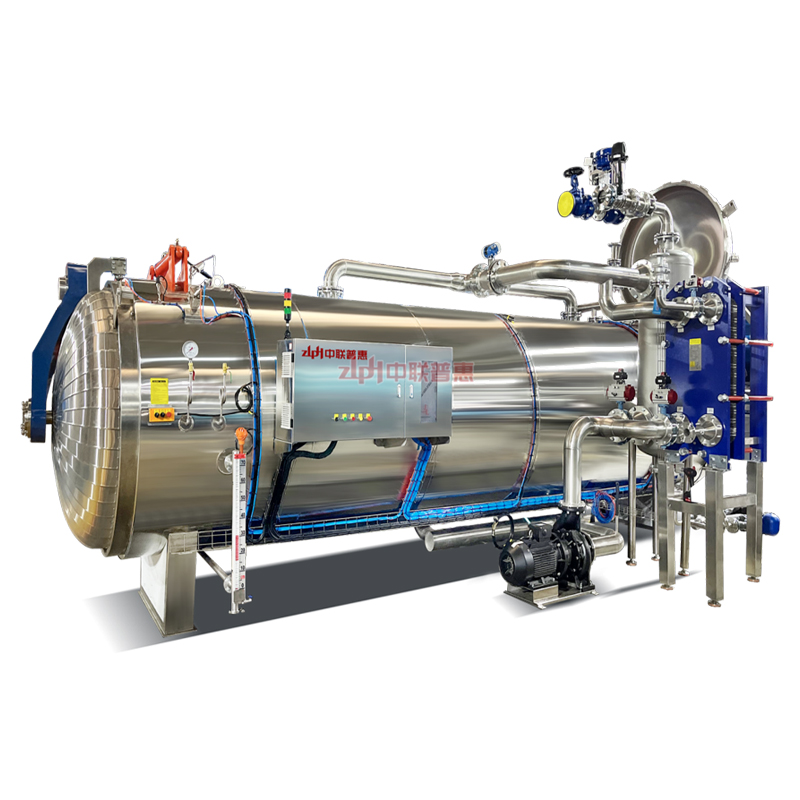
Deploy an intelligent top-opening water spray retort with multi-zone spray nozzles and closed-loop control. Such systems use high-pressure pumps to ensure even water distribution across all trays, while embedded sensors continuously monitor internal conditions at multiple points. Pair this with an automated loader-unloader system to standardize product positioning—eliminating human-induced variability.

4. Implementation & Pitfall Avoidance
During commissioning, conduct thermal mapping studies using data loggers placed in worst-case locations (e.g., center of load, bottom tray). Verify that ΔT between hottest and coldest points remains under 0.5°C during come-up time. Avoid retrofitting old retorts with add-on sprayers—these rarely achieve true uniformity without integrated hydraulic and control redesign.
5. Verified Performance
ZLPH’s intelligent water spray retort, validated in over 200 facilities globally, achieves ±0.3°C thermal uniformity and maintains F0 consistency within ±2% across 10,000+ cycles. Clients report zero microbiological failures post-implementation and a 15–20% reduction in cycle time due to optimized heat transfer.
How can I reduce labor dependency and improve operational speed in retort loading?
1. Scenario & Pain Point
Manual loading of heavy retort trays is slow, ergonomically hazardous, and introduces inconsistency. In facilities running 24/7, this bottleneck limits throughput and increases worker injury risk—especially when handling hot or wet trays post-cycle.
2. Root Cause Analysis
Traditional side-door retorts require operators to reach deep into the chamber, slowing cycle turnover. Without automation, tray alignment varies, affecting steam/water circulation and sterilization efficacy.
3. Step-by-Step Solution
Adopt a top-opening retort design paired with an automated tray loader-unloader. The vertical door eliminates reach-in hazards, while robotic arms or conveyor-integrated systems handle tray insertion/removal in under 90 seconds per cycle.
4. Implementation & Pitfall Avoidance
Ensure the automation system is synchronized with the retort’s control PLC to prevent timing mismatches. Use stainless-steel trays with standardized docking features to guarantee repeatable positioning. Avoid partial automation—manual intervention mid-process negates efficiency gains.
5. Verified Performance
At the Qingdao exhibition, ZLPH demonstrated its integrated retort and loader-unloader system, reducing loading time by 60% and eliminating manual handling injuries. Customers rated it “one of the most advanced and reliable sterilization setups” in the market.
What certifications and compliance standards must a water spray retort meet for EU or US markets?
1. Scenario & Pain Point
Export-oriented manufacturers face shipment delays or rejections when their sterilization equipment lacks required certifications—such as CE, FDA compliance, or ASME BPVC Section VIII for pressure vessels.
2. Root Cause Analysis
Many suppliers offer “CE-marked” units without full conformity assessment, or omit material traceability (e.g., 304/316L stainless steel certs), violating EU Machinery Directive 2006/42/EC or FDA 21 CFR Part 113.
3. Step-by-Step Solution
Select retorts built to ASME BPVC standards with full material test reports (MTRs), CE certification under notified body supervision, and PLC systems compliant with IEC 61508 for functional safety. Ensure software logs meet FDA 21 CFR Part 11 for electronic records.
4. Implementation & Pitfall Avoidance
Demand full certification dossiers—not just declaration letters. Verify that pressure relief valves, gauges, and safety interlocks are independently certified. Avoid vendors who bundle “self-declared” CE marks without third-party validation.
5. Verified Performance
ZLPH’s retorts are engineered to international standards, with full documentation for CE, ASME, and food-grade material compliance, enabling seamless entry into EU, North American, and ASEAN markets.
Industry Best Practices for Water Spray Retort Selection
Based on 6+ years of global deployments and 500+ client projects, we recommend this 5-step evaluation framework:
1. Define Worst-Case Product Matrix
List your most challenging products (e.g., dense meat stews, viscous sauces) and packaging types (aluminum cans, plastic bowls, glass jars)—as these dictate thermal penetration requirements.
2. Validate Thermal Performance Data
Require vendors to provide third-party thermal process validation reports—not just theoretical calculations.
3. Prioritize Integrated Control Systems
Choose units with real-time T/P monitoring, automated recipe management, and remote diagnostics to ensure repeatability and traceability.
4. Assess Total Cost of Ownership
Evaluate energy consumption, water usage, maintenance intervals, and spare parts availability—not just upfront price.
5. Conduct On-Site Pilot Testing
Run your actual products through a demo unit under production-like conditions before committing.
Frequently Asked Questions (FAQ)
Q: Can a water spray retort sterilize pet food in plastic bowls?
A: Yes—ZLPH’s bowl-specific line at Petfair Asia 2023 demonstrated effective sterilization of sealed plastic containers using precise spray patterns and gentle handling to prevent deformation.
Q: How often should spray nozzles be cleaned or replaced?
A: Every 500 cycles under normal use; however, automated CIP (Clean-in-Place) systems integrated into ZLPH retorts reduce manual maintenance by 70%.
Q: Is top-opening design safer than horizontal models?
A: Absolutely—top doors eliminate operator reach-in hazards, reduce ergonomic strain, and enable faster access, as validated at AGROPRODASH 2023.
Q: What’s the typical cycle time for a 3,000L retort?
A: With intelligent control and optimized spray, ZLPH achieves full sterilization cycles in 25–35 minutes for most ready meals—20% faster than conventional steam-air systems.
Q: Do you support custom chamber sizes?
A: Yes—our R&D team offers tailored dimensions, tray configurations, and automation interfaces based on client production layouts.
About Our Expertise & Global Support
ZLPH MACHINERY TECHNOLOGY CO., LTD. is a technology-driven leader in food sterilization systems since 2018. Our team includes 21 mechanical and PLC engineers, 4 sterilization process specialists, and 14 after-sales technicians—all with 10+ years in retort and automation industries. Operating from a 15,000m² ISO-certified facility on a 50-acre campus, we combine advanced manufacturing with rigorous quality control to deliver reliable, high-performance retorts. Our solutions serve clients across Russia, Southeast Asia, Europe, and the Americas, with successful showcases at AGROPRODASH Moscow, Petfair Shanghai, and Qingdao Industrial Expo.
We offer end-to-end support including:
• On-site process assessment and thermal validation
• Custom retort and automation design
• Remote troubleshooting and predictive maintenance
• Free sample testing with your actual products
Contact Us
Company: ZLPH MACHINERY TECHNOLOGY CO., LTD.
Website: https://www.zlphretort.com/
Email: sales@zlphretort.com
Phone / WhatsApp: +86 15666798389 / +86 13361554016
