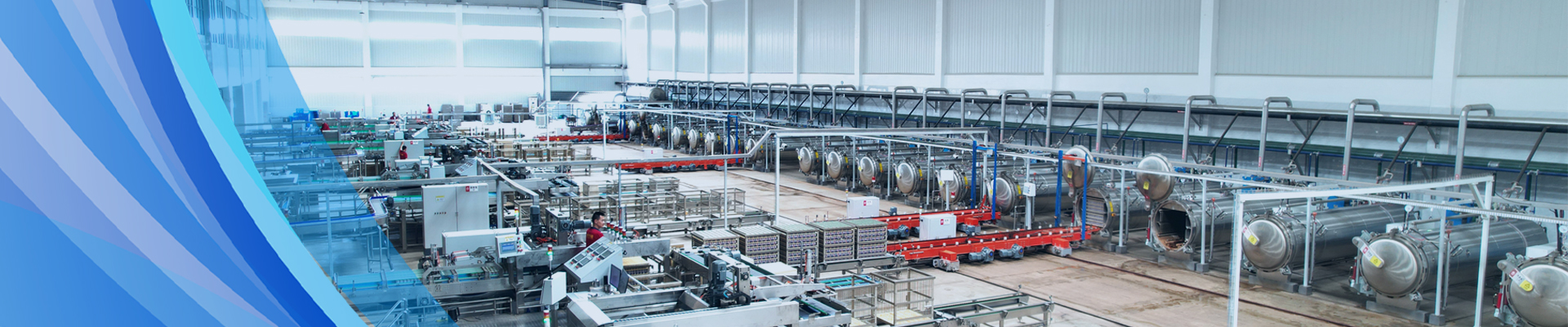

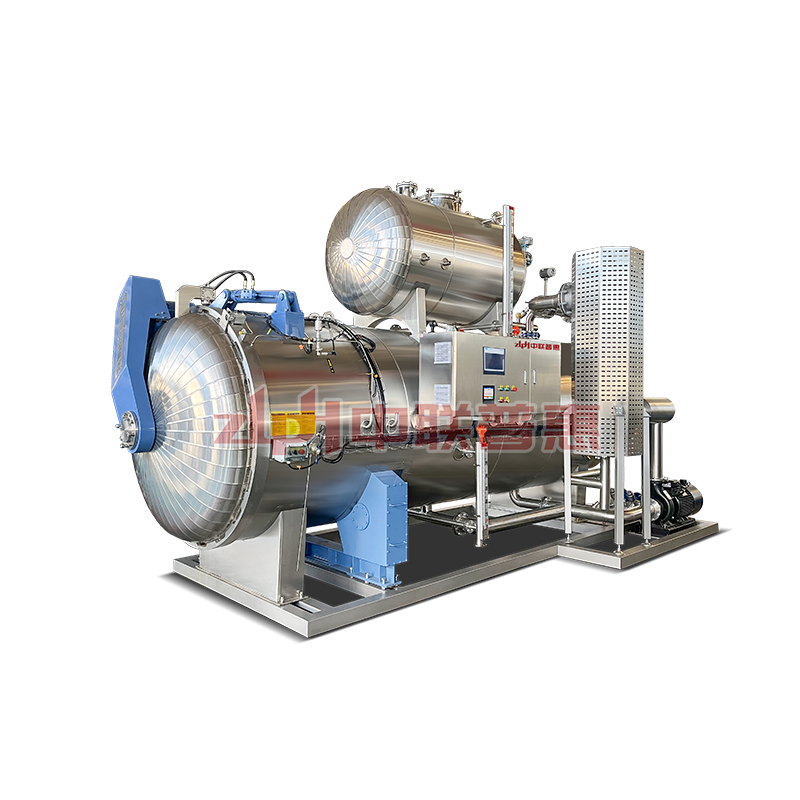
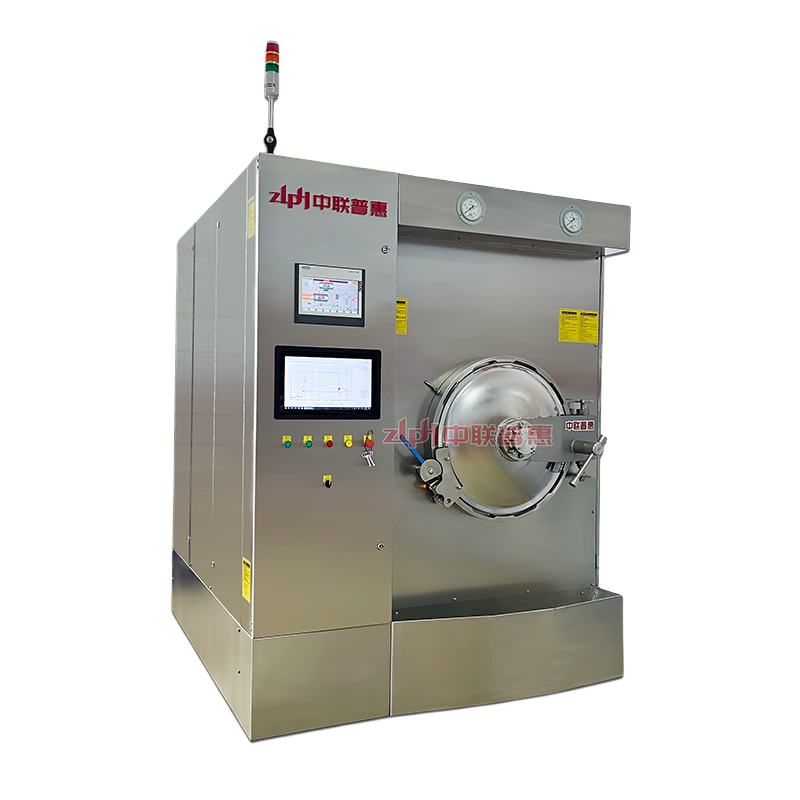
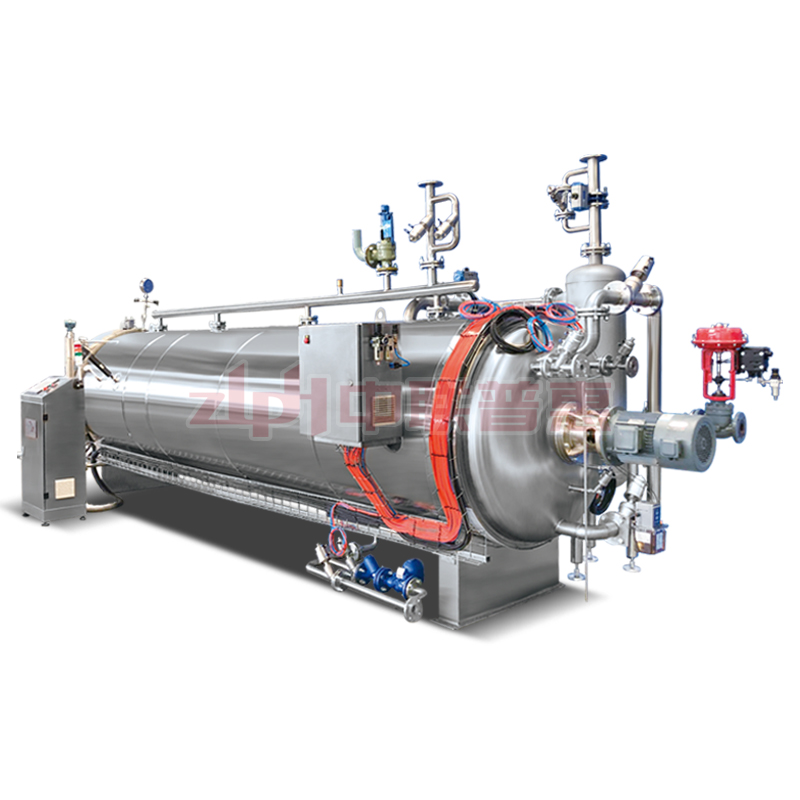
This guide is authored by a senior food processing engineer with over 10 years of experience at ZLPH MACHINERY TECHNOLOGY CO., LTD., a globally recognized provider of intelligent sterilization solutions. It addresses a critical challenge faced by food producers, packaging engineers, and procurement teams worldwide: selecting a reliable water spray retort autoclave manufacturer that ensures food safety, operational efficiency, and compliance across diverse production environments.

Selecting the wrong retort system can lead to inconsistent sterilization, product recalls, extended downtime, and regulatory non-compliance—issues commonly caused by inadequate thermal distribution, poor equipment design, or lack of real-time process control. Based on more than 5,000 global installations and extensive field validation across meat, seafood, canned vegetables, and ready-to-eat meal production lines, we’ve developed a proven, step-by-step framework to help you identify manufacturers capable of delivering robust, scalable, and compliant water spray retort systems. This guide breaks down key selection criteria by real-world scenarios, offers actionable troubleshooting insights, and highlights verified performance benchmarks to support confident decision-making.

How do I ensure consistent sterilization in high-volume canned food production?
1. Scenario and Pain Point
In large-scale canning facilities producing thousands of units per hour, uneven heat distribution during retort sterilization often results in under-processed batches (safety risk) or over-processed products (texture and nutrient loss). Traditional steam-air or static water systems struggle to maintain uniform temperature profiles across all layers of the retort basket, especially with mixed-size or dense-packed loads.

2. Root Cause Analysis
The core issues stem from: (1) insufficient circulation of heating/cooling media, leading to cold spots; (2) lack of real-time monitoring of temperature and pressure at multiple points inside the chamber; and (3) manual or semi-automated control systems that cannot dynamically adjust to load variations.

3. Step-by-Step Solution
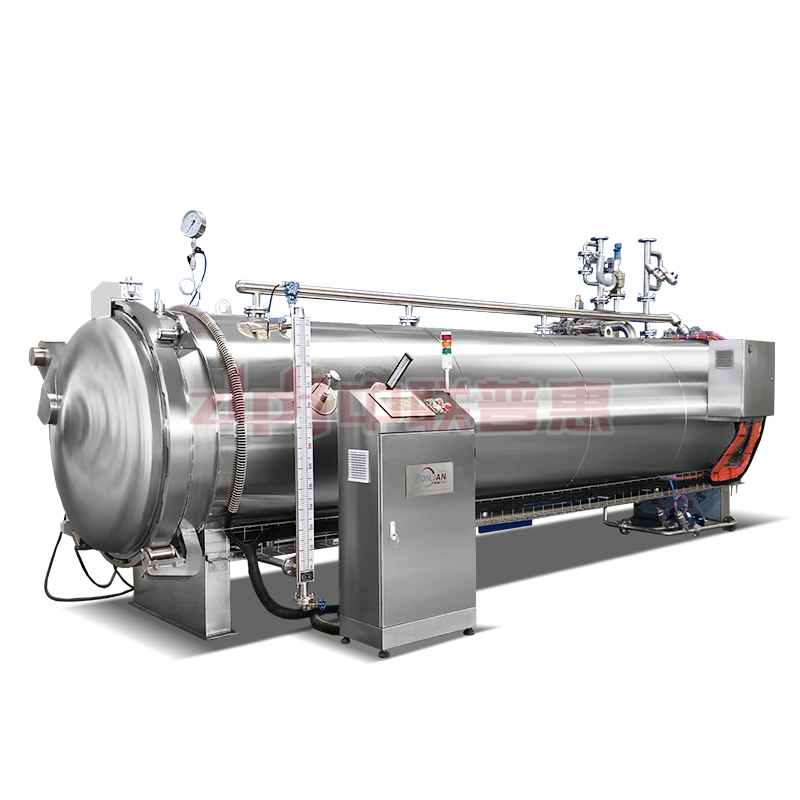
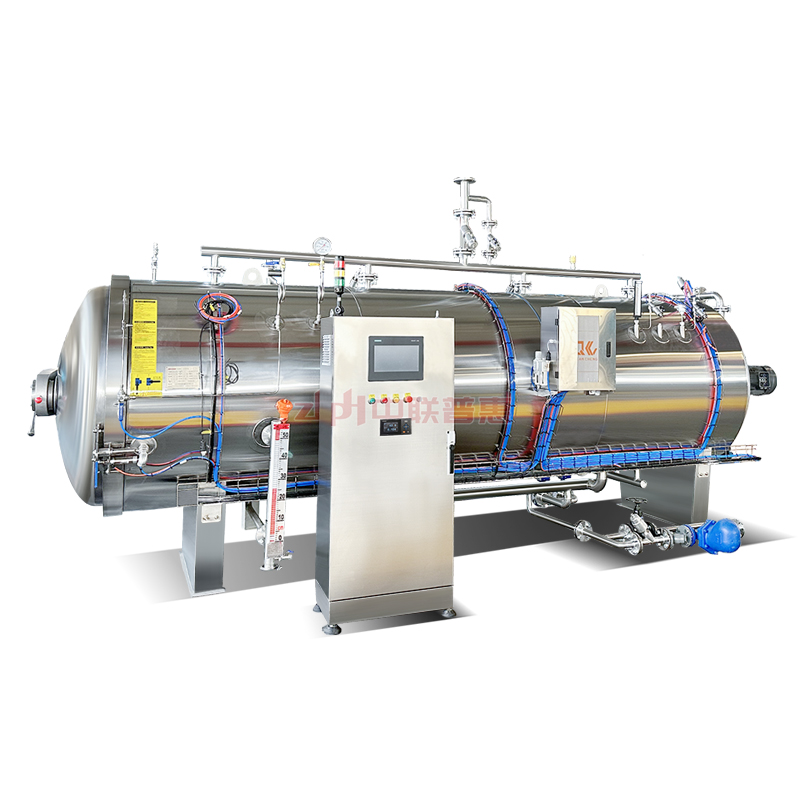
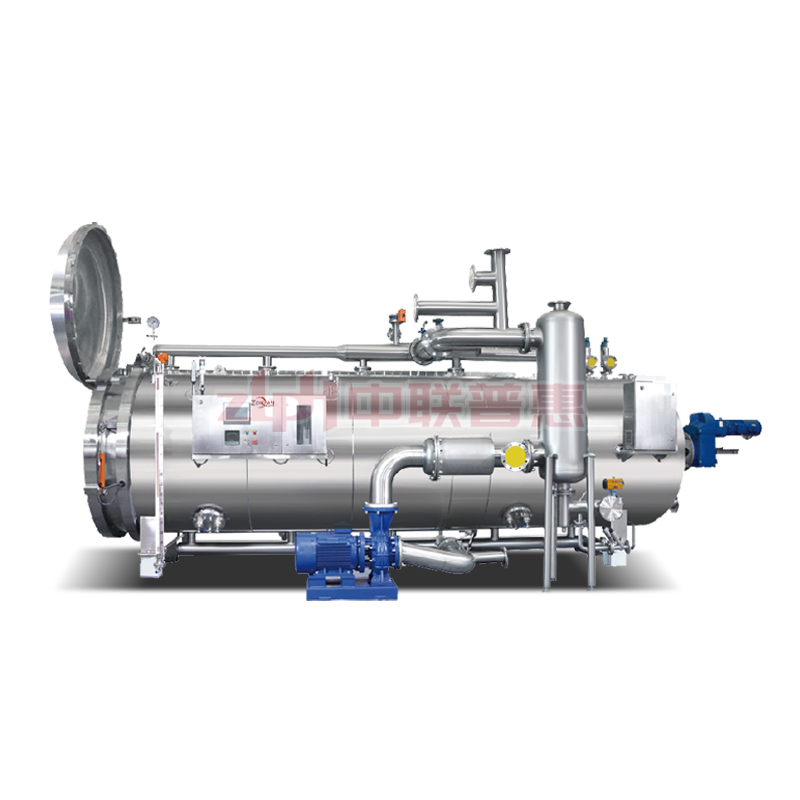
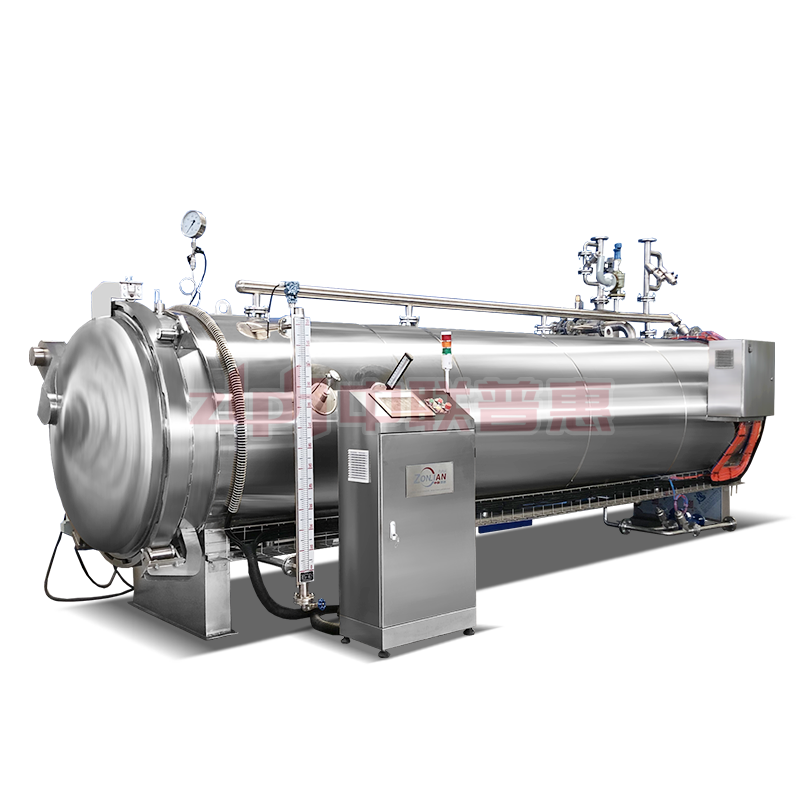
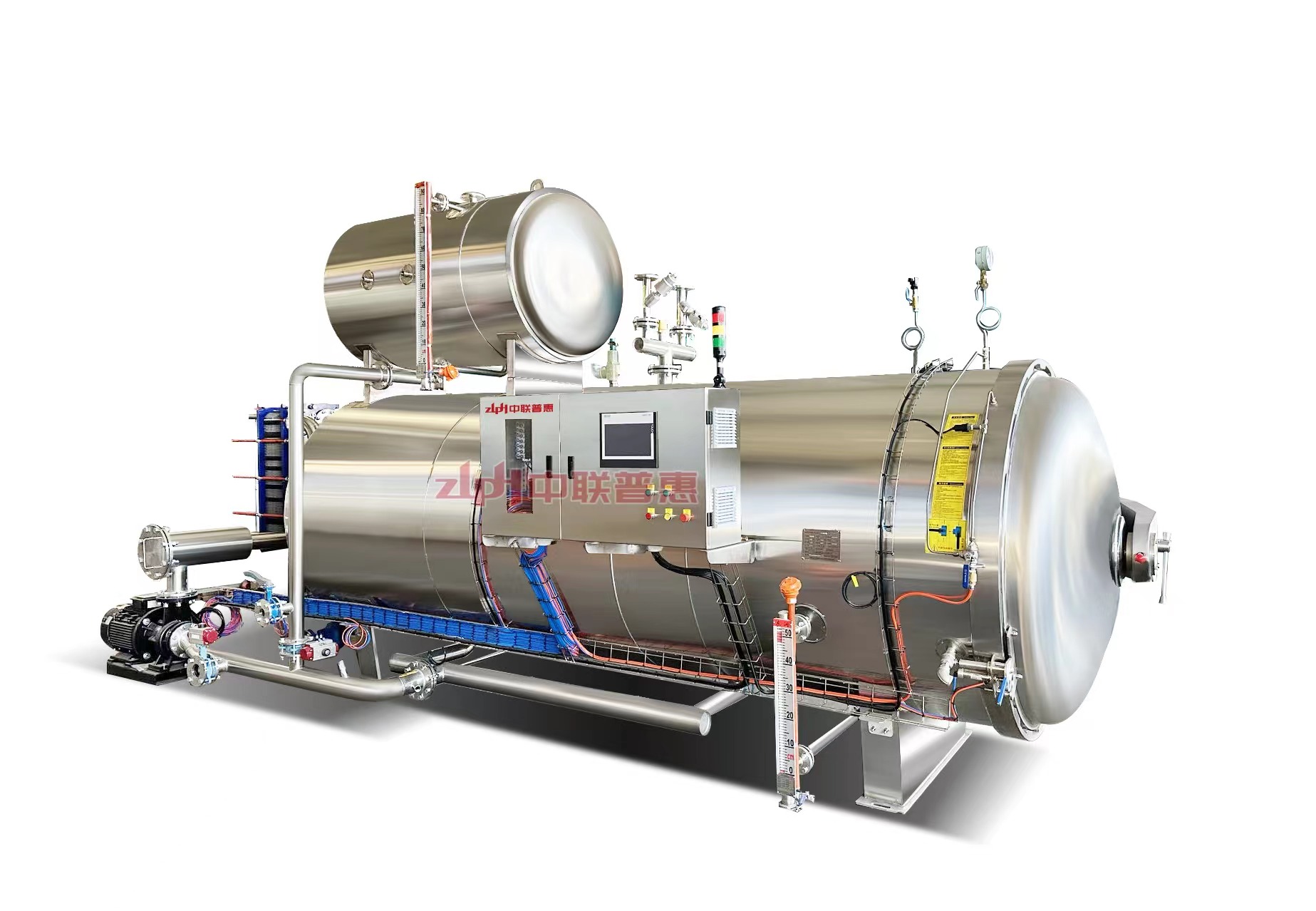
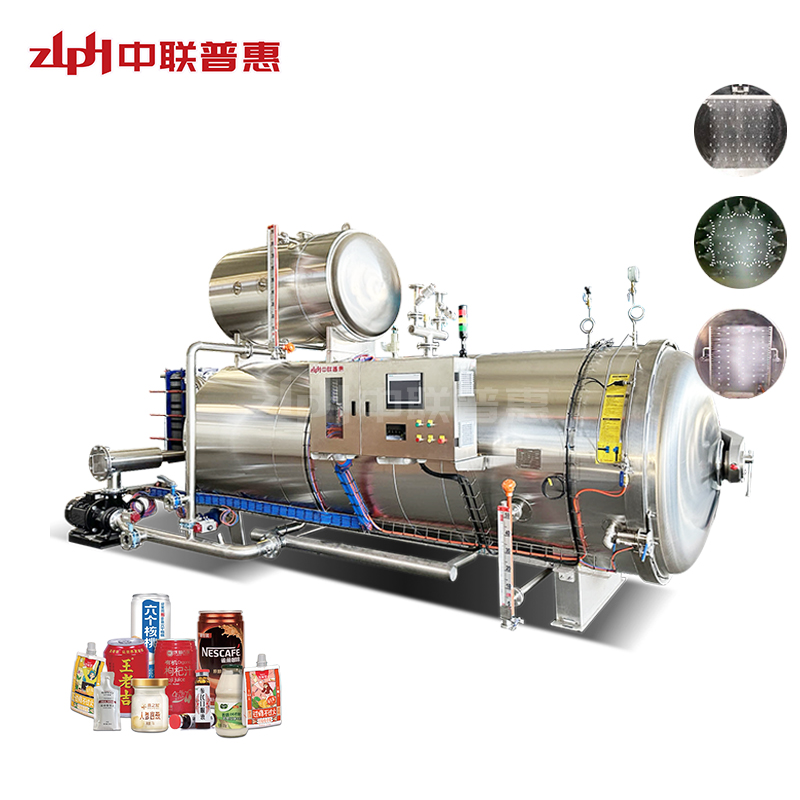
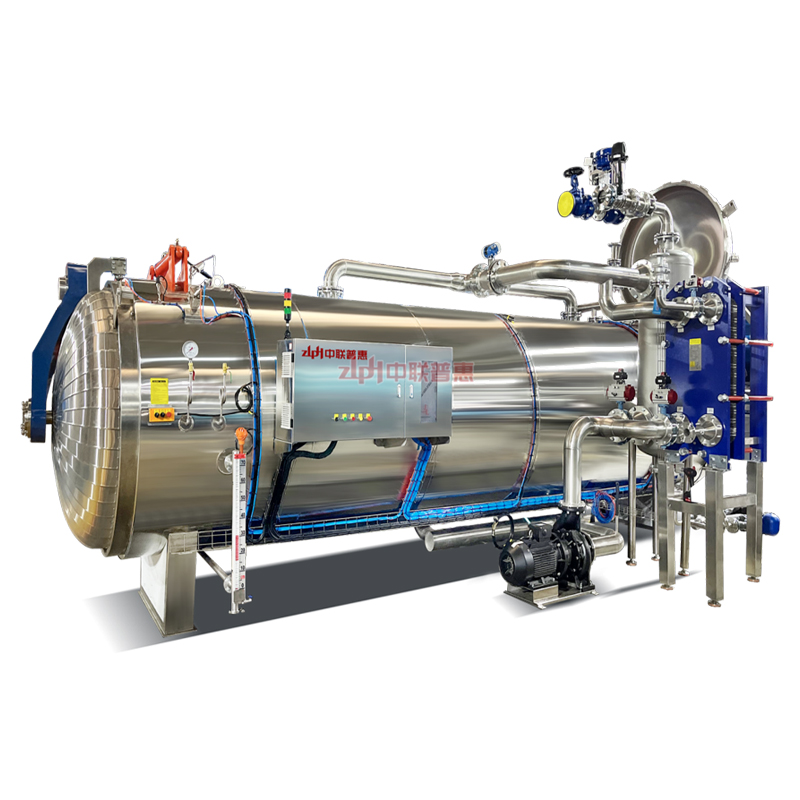
Implement an intelligent top-opening water spray retort with multi-zone spray nozzles and closed-loop control. Such systems use precisely calibrated upper and lower spray manifolds to ensure even water distribution. Coupled with PLC-based real-time monitoring of temperature and pressure at multiple probe points, the system automatically adjusts pump speed and valve timing to maintain F0 consistency within ±0.5 minutes across all containers.
4. Pitfall Avoidance Guide
Avoid manufacturers that offer only single-point temperature monitoring or fixed-cycle programs. Always request thermal mapping validation reports (per ASTM F2877 or EN 13409 standards) for your specific container type and product viscosity. Conduct a pilot test with your actual product load before full-scale procurement.
5. Verified Performance
At a major European ready-meal producer, switching to ZLPH’s intelligent water spray retort reduced batch rejection rates from 3.2% to 0.1% and cut cycle time by 18%, while maintaining F0 values within the target range of 6.5–7.0 across 10,000+ consecutive cycles.
How can I reduce labor costs and human error in retort loading/unloading?
1. Scenario and Pain Point
Manual handling of retort trays in high-temperature environments increases labor costs, safety risks, and loading inconsistencies that affect thermal uniformity. Operators may misalign trays or overload baskets, disrupting water flow and creating sterilization dead zones.
2. Root Cause Analysis
Reliance on manual labor without standardized automation leads to variability in tray positioning, inconsistent basket density, and operator fatigue—especially during night shifts or peak production periods.
3. Step-by-Step Solution
Integrate an automated retort trays loader-unloader system designed for seamless synchronization with the retort cycle. These systems use servo-driven conveyors and vision-guided alignment to ensure precise tray placement, consistent basket fill patterns, and full integration with the sterilization control system.
4. Pitfall Avoidance Guide
Ensure the automation system is compatible with your existing line speed and container types. Verify that the supplier provides on-site commissioning and operator training. Avoid “bolt-on” retrofits that lack native communication with the retort’s PLC.
5. Verified Performance
A Qingdao-based seafood exporter reported a 40% reduction in labor requirements and zero tray-misalignment incidents after deploying ZLPH’s integrated loader-unloader system, with throughput increasing by 22% due to faster cycle turnaround.
What certifications should a water spray retort manufacturer have for global market access?
1. Scenario and Pain Point
Export-oriented food processors often face shipment delays or customs rejections due to non-compliant equipment lacking region-specific safety and quality certifications.
2. Root Cause Analysis
Many manufacturers claim “international compliance” but lack verifiable, audited certifications required by target markets such as the EU, Russia, or Southeast Asia.
3. Step-by-Step Solution
Prioritize suppliers holding ASME certification (for pressure vessel integrity), CE marking (EU Machinery Directive), EAC certification (Eurasian Economic Union), and Malaysia DOSH approval. Additionally, verify ISO 9001-based quality management and special equipment manufacturing licenses.
4. Pitfall Avoidance Guide
Request scanned copies of valid certificates with issuing body details. Confirm that the certificate scope explicitly covers retort autoclaves, not just general machinery.
5. Verified Performance
ZLPH’s certified equipment has enabled clients to achieve smooth market entry into 30+ countries, with zero certification-related shipment holds in the past three years.
Industry Best Practices for Selecting a Retort Manufacturer
Based on 6+ years of global project execution and R&D leadership in sterilization technology, we recommend the following 5-step evaluation framework:
1. Define Your Worst-Case Scenario
Select equipment rated for your most challenging product (e.g., low-acid, viscous, or large-container items), not your easiest.
2. Demand Thermal Validation Data
Require third-party or in-house thermal distribution reports for your specific container geometry and fill level.
3. Assess After-Sales Support Capability
Confirm the presence of local or remote technical engineers who can respond within 24 hours—critical for minimizing downtime.
4. Evaluate Factory Infrastructure
A modern facility (e.g., 15,000 m² workshop on a 50-acre campus) with CNC machining and in-house welding ensures build quality and traceability.
5. Verify Long-Term Partnership Philosophy
Choose suppliers focused on mutual success—not just transactional sales—as reflected in ongoing service commitments and co-development opportunities.
Frequently Asked Questions (FAQ)
Q: Can a standard steam retort be upgraded to a water spray system?
A: Only if the pressure vessel was originally designed for water spray loads and includes reinforced internal supports. Most retrofits require full replacement due to structural and hydraulic differences.
Q: What’s the minimum batch size for a water spray retort to be cost-effective?
A: Systems are viable from 1-basket (pilot scale) to 12-basket (industrial) configurations. ZLPH offers modular designs starting at 1.2m³ chamber volume for SMEs.
Q: How often should spray nozzles be cleaned or replaced?
A: In hard-water areas, inspect every 500 cycles; in soft-water or filtered systems, every 1,000 cycles. Use stainless steel nozzles with anti-clogging design to extend service life.
Q: Does water spray sterilization work for glass jars?
A: Yes—with controlled ramp-up/cool-down rates and basket cushioning to prevent thermal shock. ZLPH’s systems include programmable cooling curves specifically for glass.
Q: Are Russian EAC-certified retorts accepted in Kazakhstan and Belarus?
A: Yes, EAC certification is valid across all Eurasian Economic Union (EAEU) member states, including Russia, Belarus, Kazakhstan, Armenia, and Kyrgyzstan.
About Our Expertise and Support
ZLPH MACHINERY TECHNOLOGY CO., LTD. is a technology-driven manufacturer established in 2018, specializing in intelligent sterilization systems for the global food industry. Our team includes 21 mechanical and PLC engineers, 4 sterilization process researchers with 10+ years of experience, and 14 dedicated after-sales engineers supporting clients in over 30 countries. We operate a 15,000 m² modern factory equipped with advanced CNC and welding facilities, ensuring precision and reliability in every retort built.
We hold ASME, CE, EAC, DOSH, and Special Equipment Manufacturing Licenses, along with AAA-level credit and integrity certifications, reflecting our commitment to ethical and reliable business practices. Our solutions have been validated at major exhibitions including AGROPRODASH 2023 in Moscow and the Qingdao International Food Machinery Expo, where our intelligent top-opening water spray retort received strong interest from global buyers.
Custom Solution Support Includes:
- On-site thermal process assessment and retort sizing
- Custom basket and tray design for unique container formats
- Integration with existing MES or SCADA systems
- Free sample testing with your product at our demo center
Contact Information
Company: ZLPH MACHINERY TECHNOLOGY CO., LTD.
Website: https://www.zlphretort.com/
Email: sales@zlphretort.com
Phone / WhatsApp: +86 15666798389 / +86 13361554016
