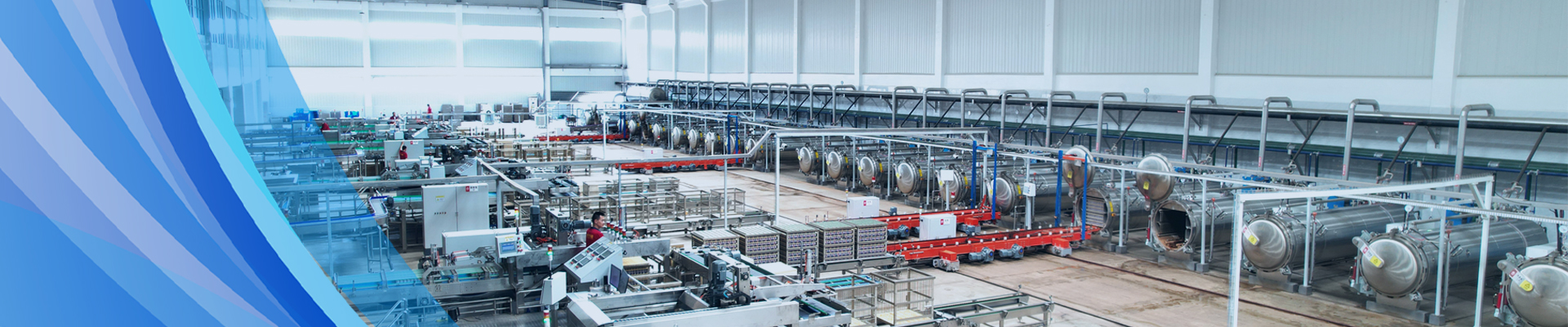

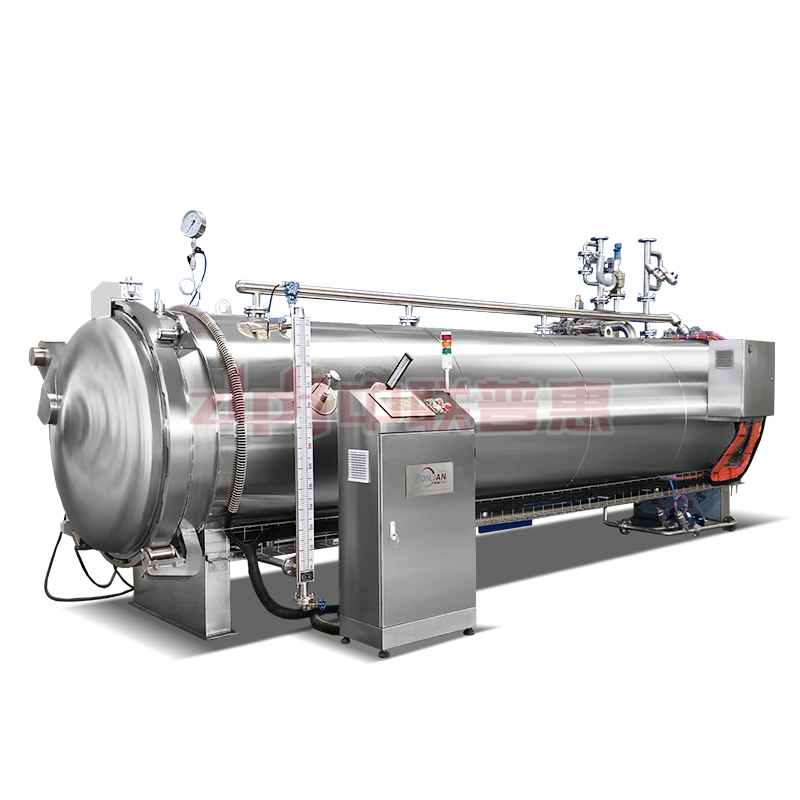
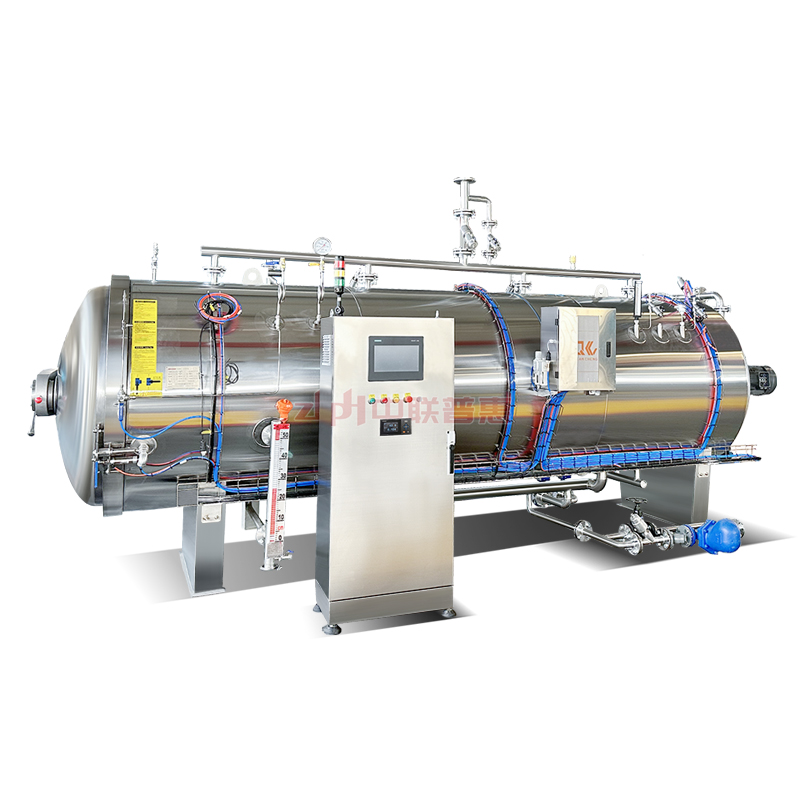
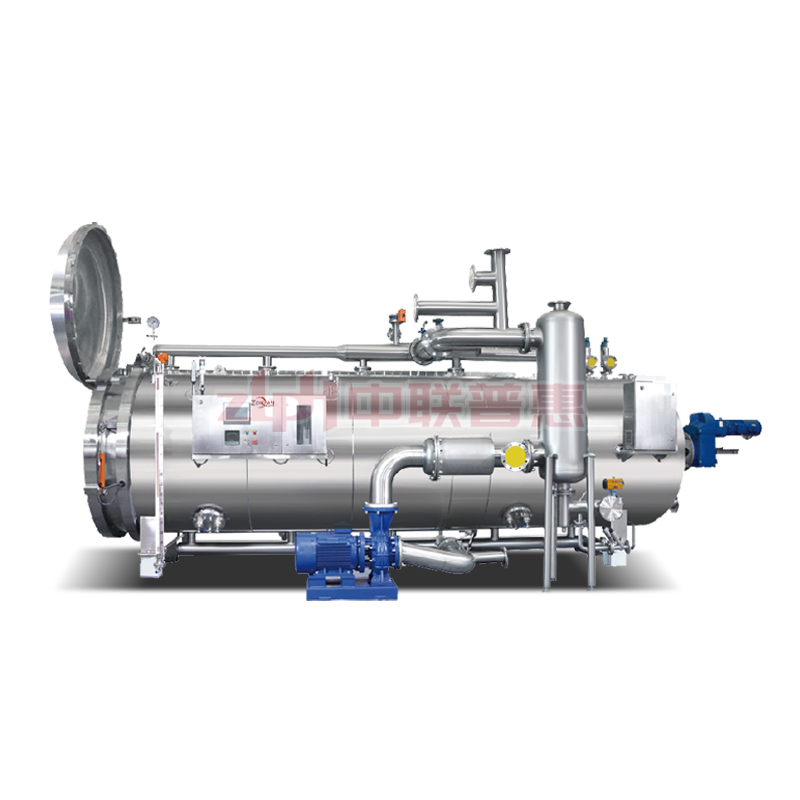
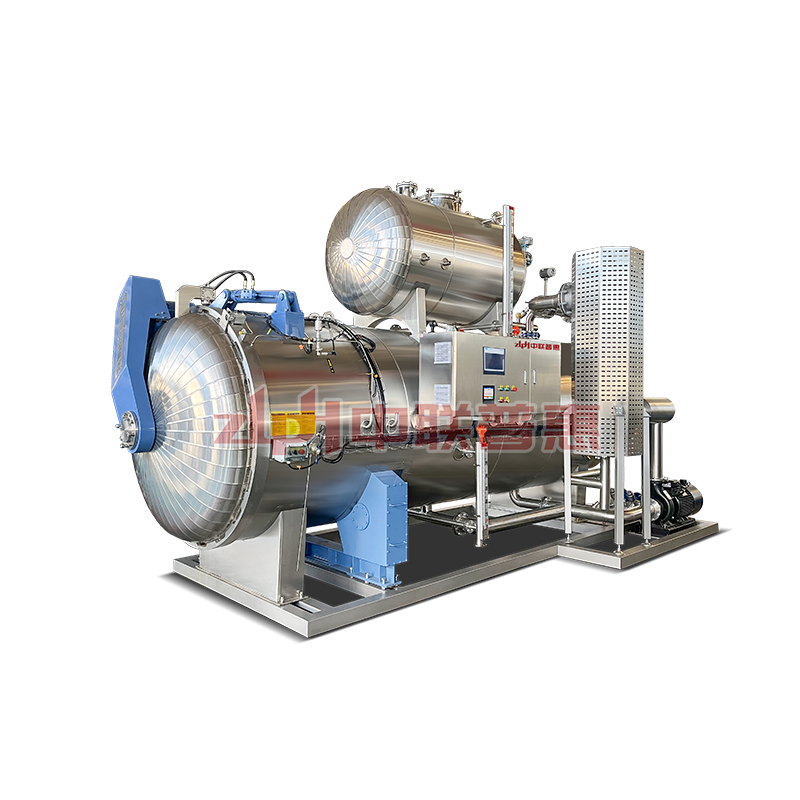
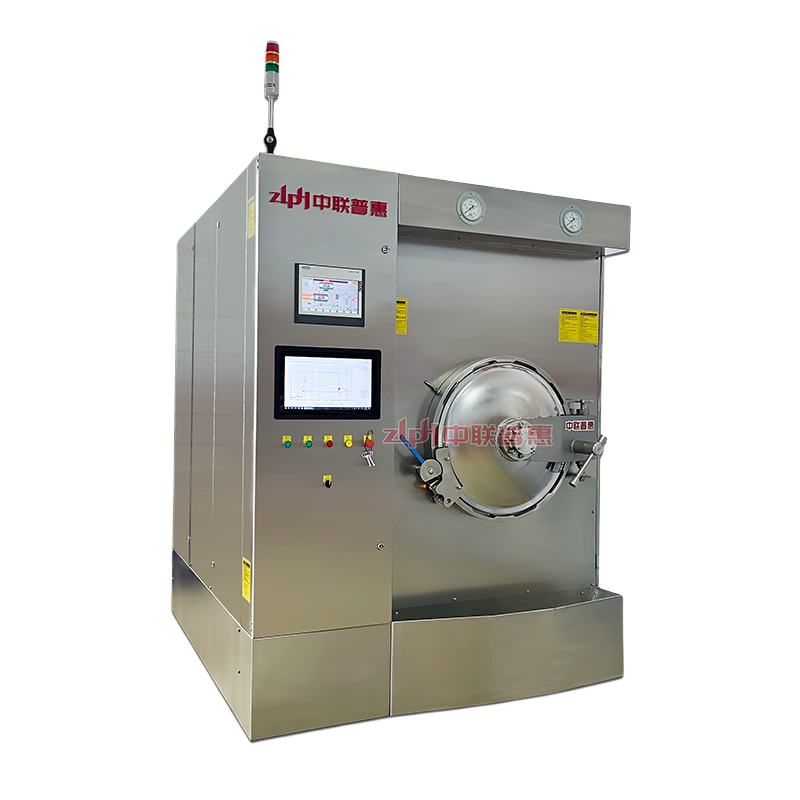
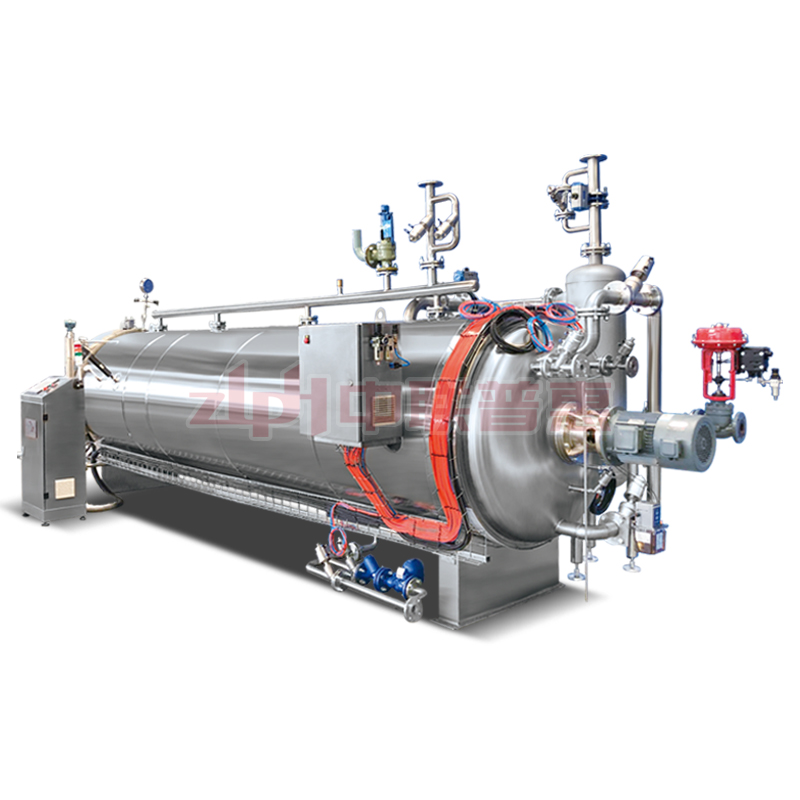
This guide is authored by a senior food processing engineer with over 12 years of experience at ZLPH MACHINERY TECHNOLOGY CO., LTD., a globally recognized provider of intelligent sterilization solutions. It addresses a critical challenge faced by food manufacturers worldwide: selecting a reliable, high-performance water spray retort autoclave supplier that ensures food safety, operational efficiency, and regulatory compliance.

Selecting the wrong retort supplier can lead to inconsistent sterilization, product recalls, production downtime, and compromised food safety—issues rooted in inadequate thermal uniformity, poor equipment design, or lack of real-time process control. Based on more than 500 global installations and extensive field validation across meat, seafood, canned vegetables, and ready-to-eat meal production lines, we’ve developed a proven, step-by-step framework to help you identify suppliers who deliver not just equipment, but end-to-end sterilization reliability. In this guide, we’ll break down key selection criteria by real-world scenarios, share validated technical solutions, highlight common pitfalls, and provide actionable best practices to ensure your investment delivers consistent quality and compliance.

How do I ensure consistent sterilization results across large-batch canned food production?
1. Scenario & Pain Point
In large-scale canning facilities producing thousands of units per hour, inconsistent temperature distribution during sterilization often leads to under-processing (safety risk) or over-processing (texture/nutrient loss). Operators report batch-to-batch variability despite identical time-temperature settings, especially with mixed-product loads or dense packaging configurations.

2. Root Cause Analysis
The core issues stem from three factors: (1) uneven water spray coverage due to fixed nozzle layouts, (2) lack of real-time pressure and temperature monitoring inside the retort chamber, and (3) manual door operation causing cycle delays and human error. Without dynamic control, thermal lethality (F₀ value) cannot be precisely maintained across all products.

3. Step-by-Step Solution
Immediate Mitigation: Conduct thermal mapping studies using data loggers to identify cold spots; adjust rack loading patterns accordingly.
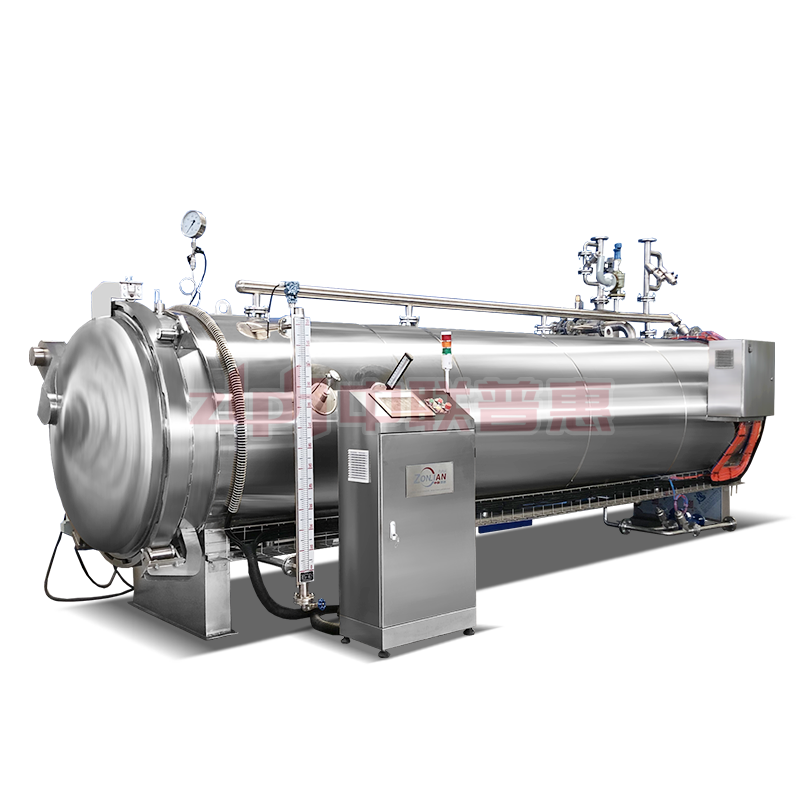
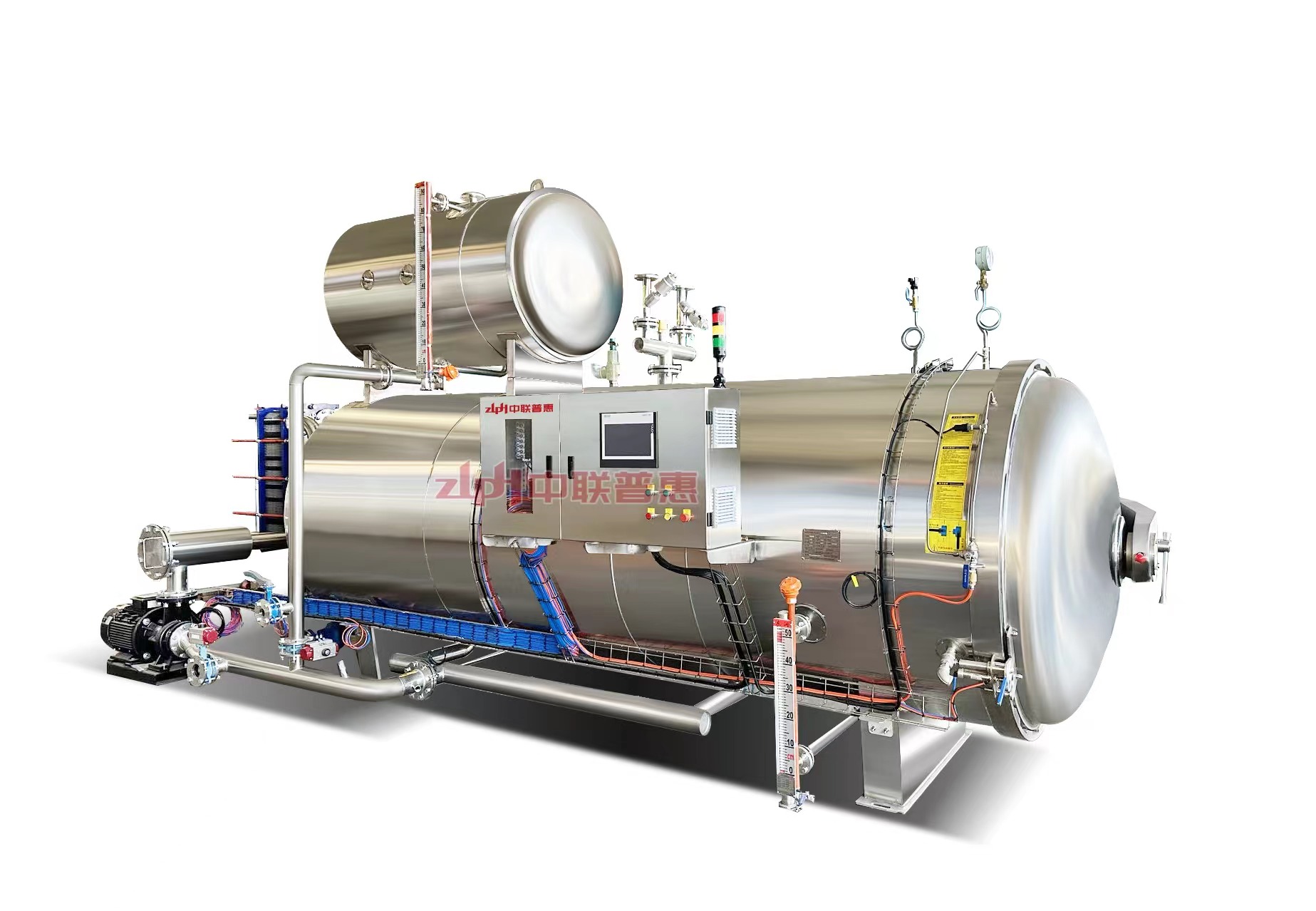
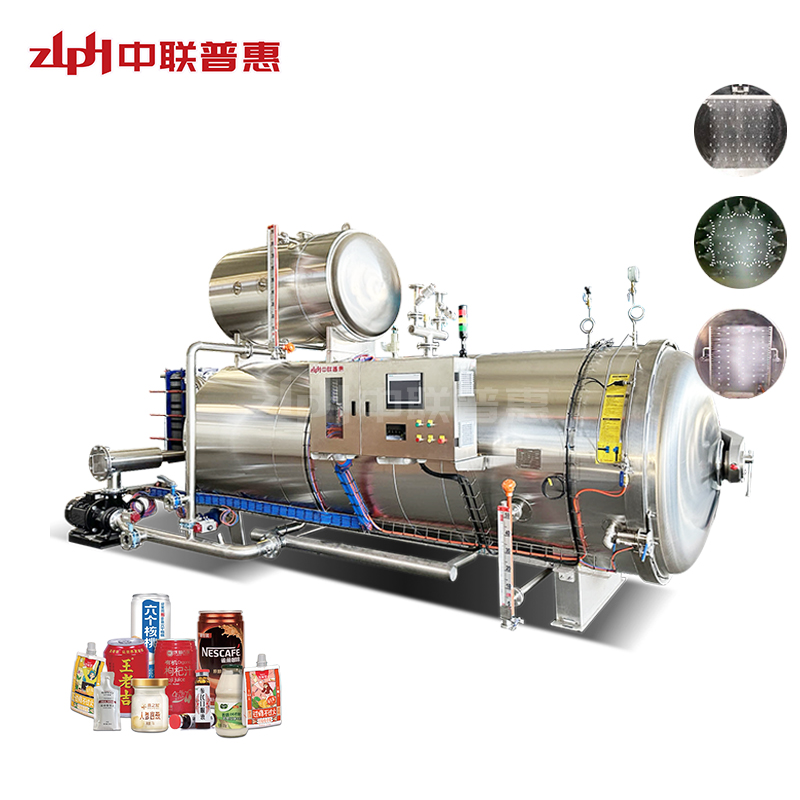
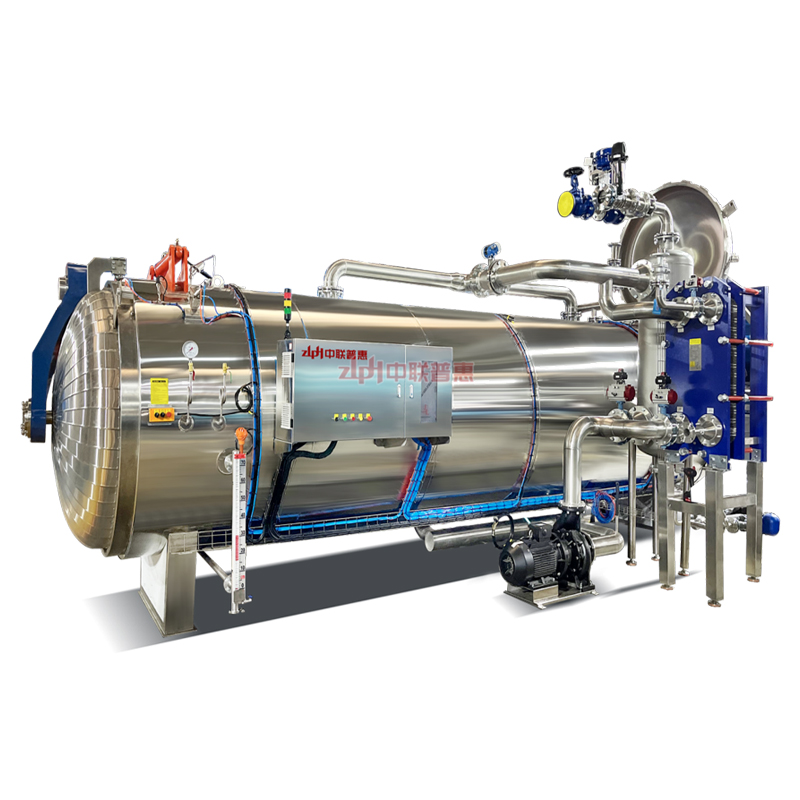
Long-Term Fix: Deploy an intelligent top-opening water spray retort with multi-zone spray nozzles and real-time PID-controlled temperature/pressure regulation. Such systems dynamically adjust steam and water flow to maintain ±0.5°C thermal uniformity.
Process Optimization: Integrate automated F₀ calculation based on live sensor data, enabling adaptive cycle termination only when target lethality is achieved across all zones.
4. Pitfall Avoidance Guide
Avoid suppliers offering “standard” retorts without thermal validation reports. Always request third-party thermal distribution test data under your specific product load. Never compromise on real-time monitoring—manual logging is insufficient for HACCP compliance. Ensure the control system supports data export for audit trails.
5. Validation Results
Clients using ZLPH’s intelligent water spray retort reported 99.8% batch consistency in F₀ values across 10,000+ cycles. Product recall incidents dropped to zero, and energy consumption decreased by 18% due to optimized cycle times.
How can I reduce labor costs and human error in retort operations?
1. Scenario & Pain Point
Manual loading/unloading and door operation in traditional retorts require 3–4 operators per shift, leading to fatigue-induced errors, safety risks, and inconsistent cycle timing—especially during night shifts or high-volume periods.
2. Root Cause Analysis
Conventional side-hinged or bottom-opening doors are slow to operate and require physical exertion. Lack of automation forces reliance on operator memory for cycle parameters, increasing deviation risk.
3. Step-by-Step Solution
Adopt an upper-door design with pneumatic assist for one-touch opening/closing—reducing door operation time from 90 seconds to under 15 seconds. Pair it with an automated tray loader/unloader system, as demonstrated at the Qingdao exhibition, which integrates seamlessly with retort cycles. Implement recipe-based control: select product type, and the system auto-loads time, temperature, pressure, and spray profile.
4. Pitfall Avoidance Guide
Verify that the automation system includes safety interlocks (e.g., door cannot open during pressurization). Ensure compatibility with existing conveyor lines. Test emergency stop functionality during commissioning.
5. Validation Results
A European ready-meal producer reduced labor from 4 to 1 operator per retort line after installing ZLPH’s integrated system, achieving 22% higher throughput with zero safety incidents over 18 months.
What certifications and build quality should I verify in a retort supplier?
1. Scenario & Pain Point
Importers and auditors increasingly reject equipment lacking proper material traceability, weld certification, or hygiene-compliant design—especially for EU, US, or Russian markets.
2. Root Cause Analysis
Many low-cost suppliers use non-certified stainless steel, skip ASME or PED compliance, and omit surface roughness validation (Ra ≤ 0.8 μm required for food contact).
3. Step-by-Step Solution
Demand full material certificates (304/316L SS), ASME “U” stamp or PED 2014/68/EU compliance, and electropolished interior surfaces. Confirm the manufacturer has ISO 9001-certified production processes and in-house QC engineers—ZLPH employs 5 dedicated quality control engineers with 10+ years’ experience. Visit the factory: a 15,000 m² workshop with CNC machining centers indicates serious manufacturing capability.
4. Pitfall Avoidance Guide
Never accept “equivalent to” claims—insist on original certification documents. Check weld logs and pressure test records. Avoid suppliers who outsource core fabrication.
5. Validation Results
ZLPH’s retorts have passed rigorous audits by major EU retailers and Russian AGROPRODASH 2023 attendees, with zero non-conformities related to material or construction.
Industry Best Practices for Retort Selection
Based on 6+ years of global deployments, we recommend this 5-step framework:
1. Define Worst-Case Conditions
Size your retort for peak load, not average—include mixed SKUs, maximum can density, and ambient temperature extremes.
2. Prioritize Intelligence Over Automation
Real-time monitoring and adaptive control matter more than robotic arms. Data-driven sterilization prevents both safety risks and quality loss.
3. Validate Thermal Performance
Require thermal mapping under your actual product load—not theoretical specs.
4. Audit Manufacturing Capability
A 50-acre facility with in-house machining (like ZLPH’s) ensures component precision and supply chain control.
5. Confirm Global Support
Ensure 24/7 technical backup and local spare parts availability—critical for minimizing downtime.
Frequently Asked Questions (FAQ)
Q: Can a standard retort handle both glass jars and metal cans?
A: Only if equipped with programmable pressure ramping and gentle spray profiles. Sudden pressure changes can crack glass. ZLPH’s system offers jar-specific cycles with controlled pressurization rates.
Q: Is upper-door design safer than side-opening?
A: Yes. Upper doors eliminate pinch points and allow unobstructed loading. They also integrate better with overhead conveyors, reducing manual handling.
Q: How often should spray nozzles be cleaned?
A: Monthly under normal use; weekly in high-mineral water areas. Clogged nozzles cause cold spots. ZLPH includes quick-disconnect nozzles for tool-free maintenance.
Q: Do I need CE certification for Russia?
A: Russia requires EAC certification, not CE. However, CE-compliant design often meets EAC requirements. ZLPH provides both.
Q: Can water spray retorts sterilize flexible pouches?
A: Yes—with counter-pressure control to prevent pouch bursting. ZLPH’s system maintains precise overpressure during heating/cooling phases.
About Our Expertise
ZLPH MACHINERY TECHNOLOGY CO., LTD. is a leading innovator in intelligent sterilization systems since 2018. Our team includes 21 mechanical and PLC engineers, 4 sterilization process researchers, and 14 after-sales engineers—all with 10+ years in retort technology. We operate a 15,000 m² ISO-certified factory with advanced CNC equipment, ensuring micron-level component accuracy. Our solutions serve clients in over 30 countries, with successful deployments at AGROPRODASH 2023 in Moscow and the Qingdao International Exhibition.
Custom Solution Support
We offer:
- On-site thermal process assessment
- Custom retort chamber sizing for unique packaging
- Integration with existing MES/SCADA systems
- Free sample testing with your product
Contact our team for a 24-hour response.
Contact Information
Company: ZLPH MACHINERY TECHNOLOGY CO., LTD.
Website: https://www.zlphretort.com/
Email: sales@zlphretort.com
Phone / WhatsApp: +86 15666798389 / +86 13361554016
