

This guide is authored by a senior food processing engineer with over 12 years of experience at ZLPH MACHINERY TECHNOLOGY CO., LTD., a globally recognized provider of intelligent sterilization systems. It addresses a critical challenge faced by food manufacturers worldwide: inconsistent or incomplete sterilization during thermal processing, which compromises product safety, shelf life, and regulatory compliance. This issue primarily stems from uneven heat distribution, inadequate pressure control, and outdated equipment design. Drawing on more than 5,000 global installations and extensive field validation across meat, dairy, canned vegetables, and ready-to-eat meal production lines, we present a proven, step-by-step solution using advanced water spray retort autoclaves. In this guide, you’ll learn the root causes behind sterilization failures, how to implement targeted fixes for different production scenarios, avoid common pitfalls during system selection and operation, and validate performance through real-world results—all aligned with international food safety standards such as FDA, EU 852/2004, and Codex Alimentarius.

How to Ensure Uniform Sterilization Across All Cans in a Batch Retort?
1. Scenario and Pain Point
In batch retort operations for canned foods like soups or stews, manufacturers often observe inconsistent microbial kill—some cans pass sterility tests while others fail, even within the same load. This leads to product recalls, wasted batches, and compliance risks. The core symptom is temperature variance exceeding ±2°C across the retort chamber during the holding phase, violating thermal process validation requirements.

2. Root Cause Analysis
Three primary factors contribute to non-uniform sterilization: (1) Poor water circulation design causing cold spots, especially in dense or irregularly stacked loads; (2) Lack of real-time temperature monitoring at multiple points inside the chamber; (3) Manual door operation leading to inconsistent loading patterns and airflow blockage. Traditional retorts rely on steam-only heating, which struggles with heat transfer uniformity in viscous or solid-packed products.

3. Step-by-Step Professional Solution
Immediate Mitigation: Reorganize tray stacking to ensure minimum 5 cm spacing between layers and avoid blocking spray nozzles. Use thermal mapping during validation runs to identify cold zones.
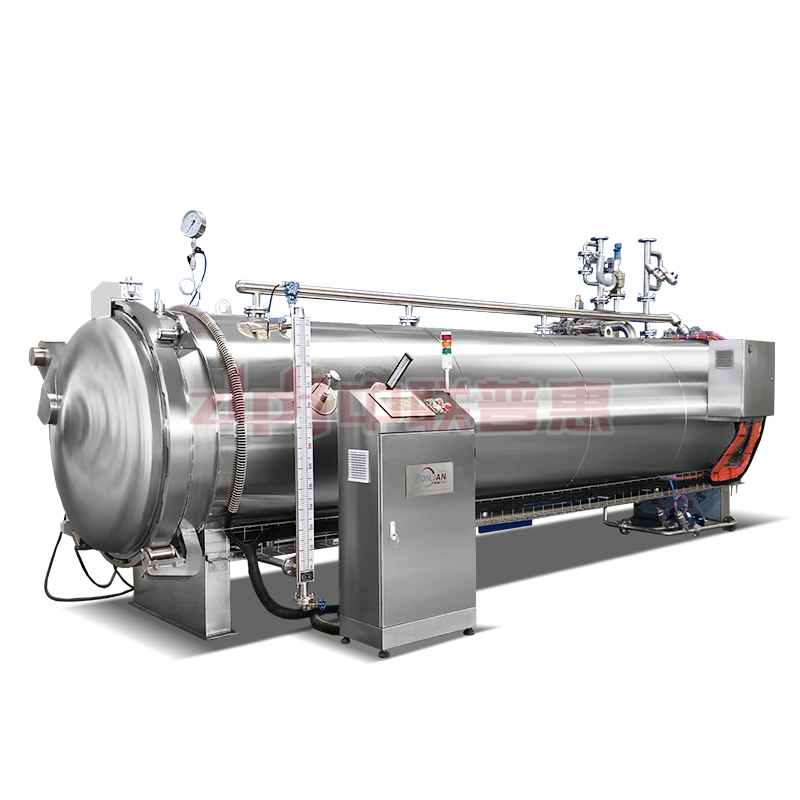
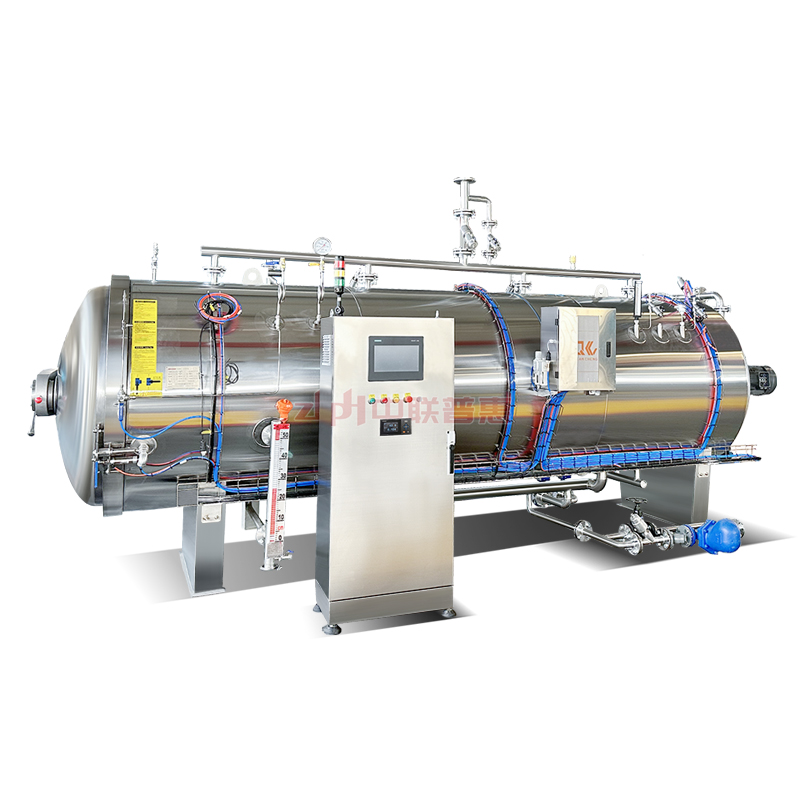
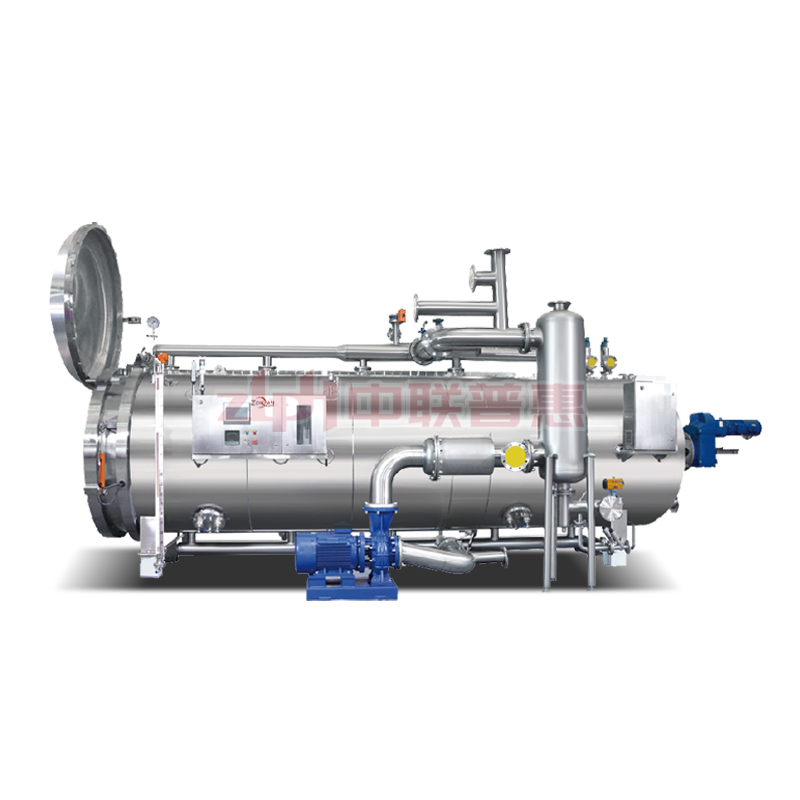
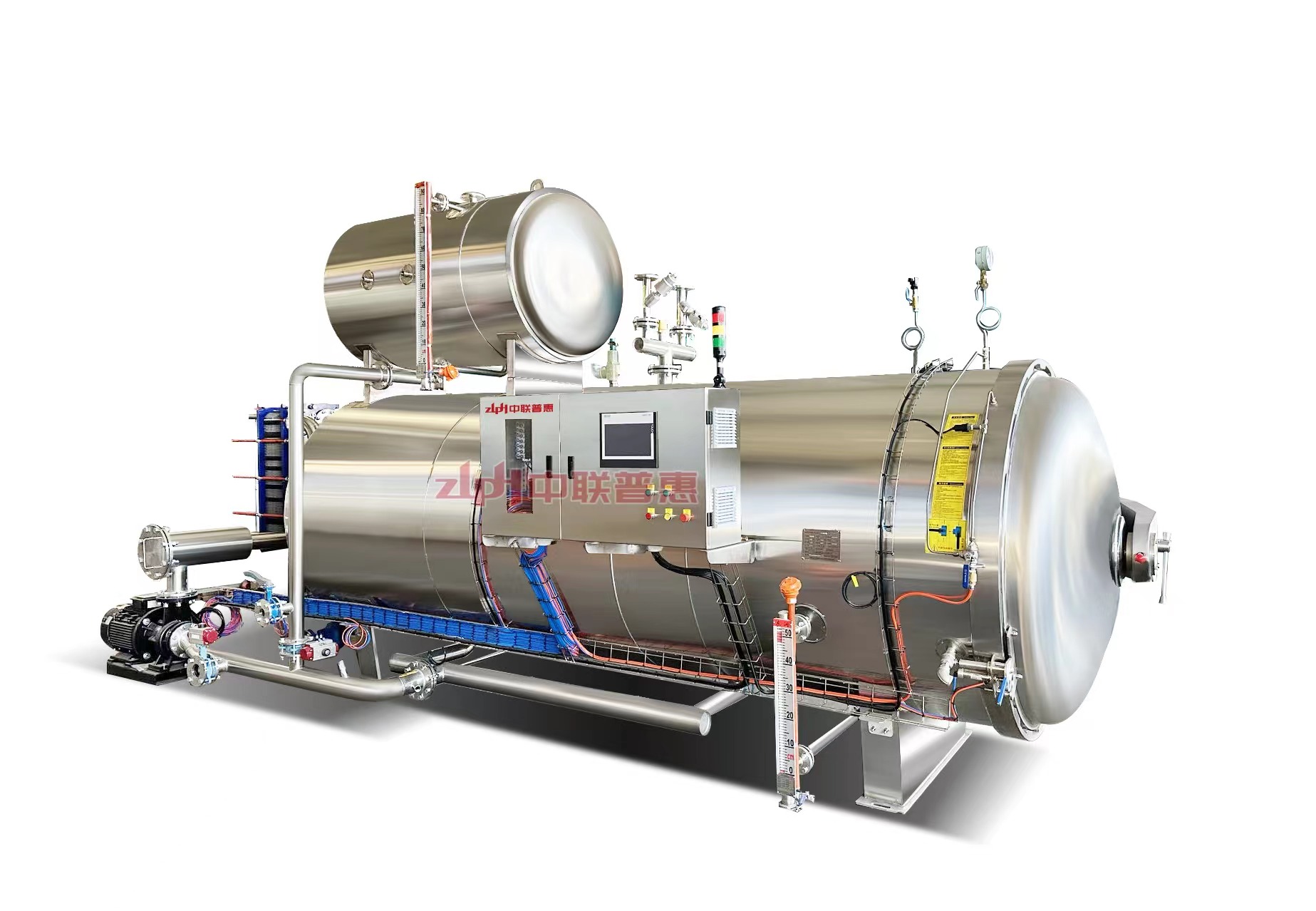
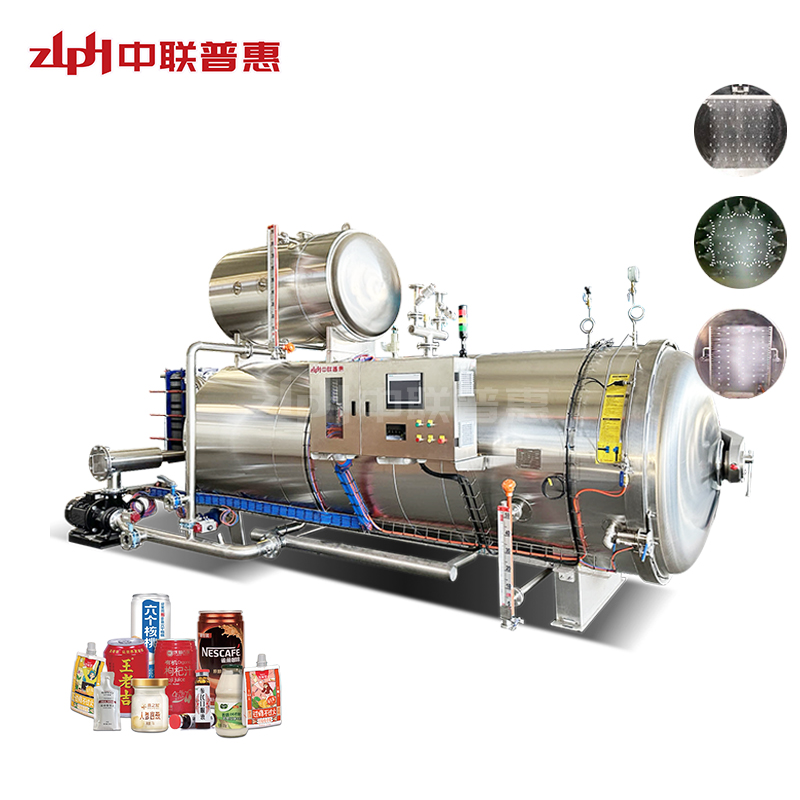
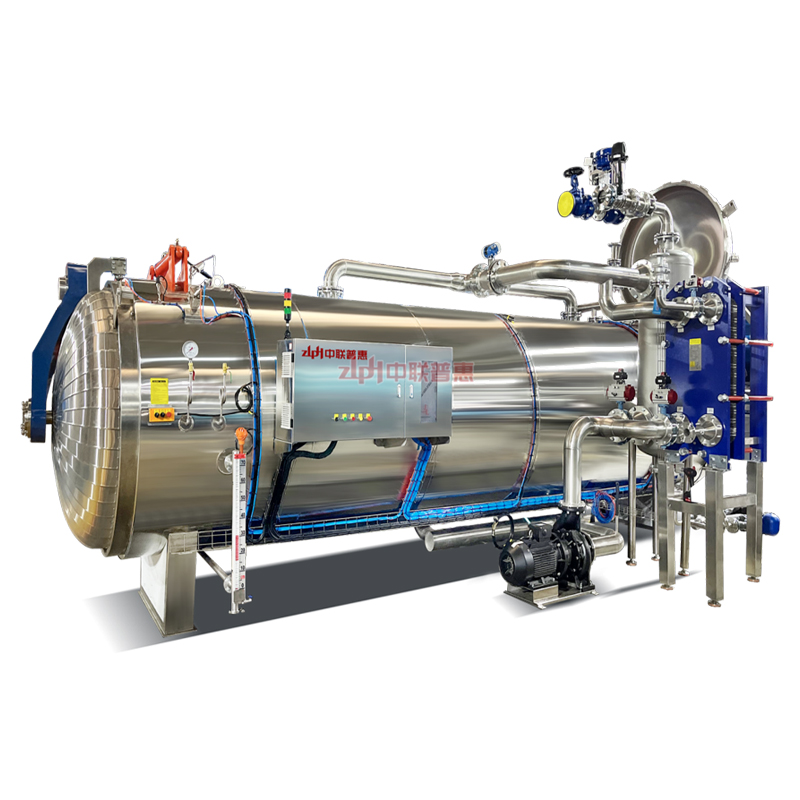
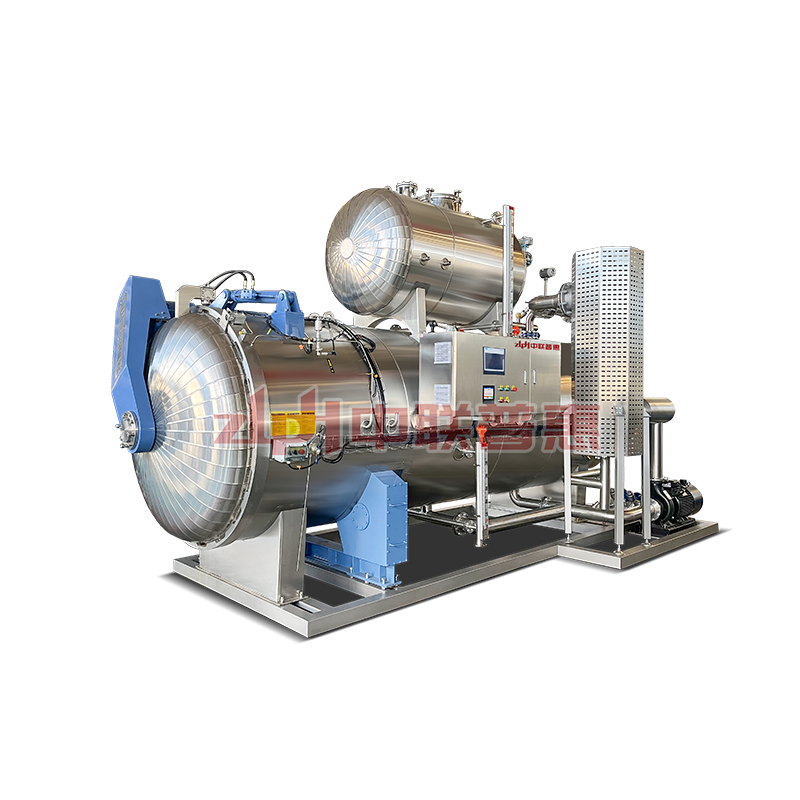
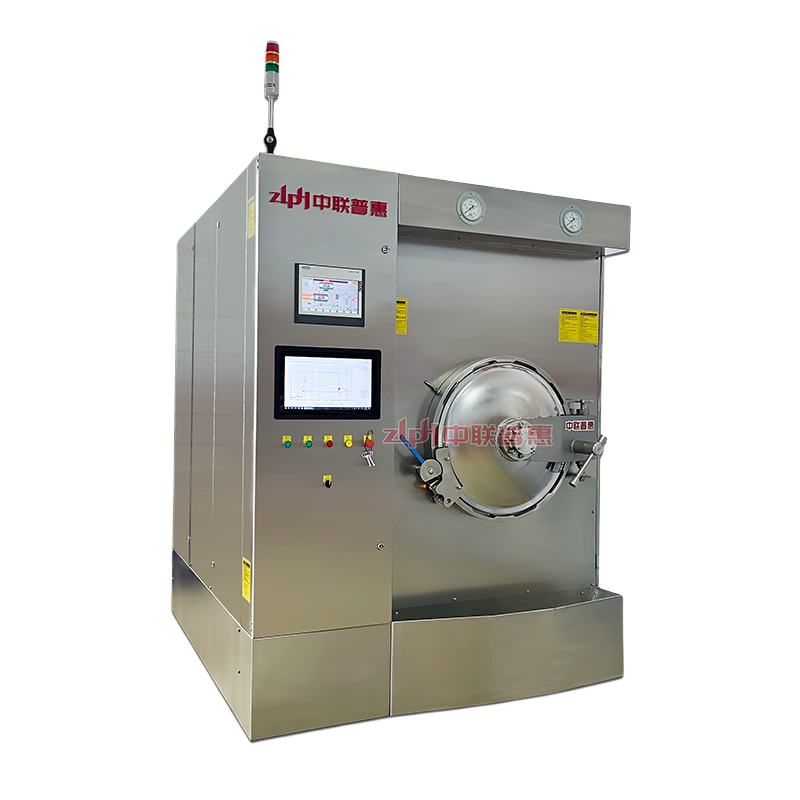
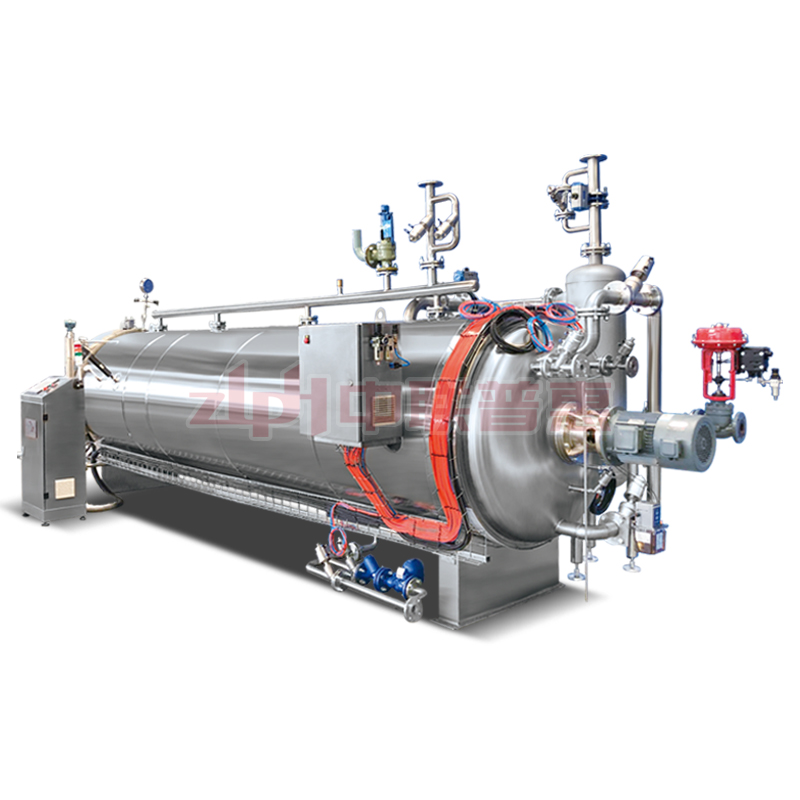
Long-Term Fix: Deploy an intelligent top-opening water spray sterilization retort equipped with multi-zone spray arms and 360° rotating nozzles. This system delivers pressurized hot water evenly from all directions, eliminating dead zones. Integrated with real-time temperature and pressure sensors at 8+ strategic points, it auto-adjusts flow rates to maintain ±0.5°C uniformity.
Process Optimization: Implement automated loading/unloading via a retort trays loader-unloader system to standardize basket placement, ensuring repeatable thermal profiles batch after batch.

4. Troubleshooting and Avoidance Guide
On-Site Diagnosis: Conduct a dummy run with data loggers placed in worst-case locations (e.g., center of bottom tray). If temperature lags exceed 1 minute, inspect nozzle alignment and pump pressure.
Selection Best Practice: Prioritize retorts with third-party thermal validation reports (e.g., from IFU or independent labs) proving uniformity under full-load conditions. Avoid units without distributed sensor networks.
5. Real-World Validation
At a major European ready-meal producer, replacing a legacy steam retort with ZLPH’s intelligent water spray system reduced thermal deviation from ±3.2°C to ±0.4°C. Post-implementation, sterility failure rates dropped from 1.8% to 0.02%, saving over $420,000 annually in waste and compliance penalties.
How to Prevent Product Quality Degradation During High-Temperature Sterilization?
1. Scenario and Pain Point
Food processors using high-temperature short-time (HTST) sterilization often face texture loss, color fading, or nutrient degradation—especially in delicate products like baby food or seafood. Over-processing due to slow response in temperature control leads to unnecessary thermal abuse.
2. Root Cause Analysis
Conventional retorts lack precise dynamic control. Once target temperature is reached, they maintain it via on/off cycling, causing overshoots (up to +5°C) and prolonged exposure. Additionally, absence of pressure compensation during cooling results in can deformation or seal failure.
3. Step-by-Step Professional Solution
Adopt a water spray retort with an intelligent control system that uses PID algorithms for continuous temperature modulation. Coupled with synchronized pressure regulation, it maintains exact F₀ values without overshoot. The system also enables rapid, controlled cooling under counter-pressure to preserve can integrity and product texture.
4. Troubleshooting and Avoidance Guide
Always validate F₀ delivery using come-up time (CUT) and cook value logs. If CUT exceeds 15 minutes, consider pre-heating product or upgrading circulation pumps. Never skip pressure ramp-down calibration during commissioning.
5. Real-World Validation
A Russian dairy exporter reported 30% improvement in protein retention and zero can bulging incidents after switching to ZLPH’s system at AGROPRODASH 2023, where the equipment was showcased for its bactericidal efficacy and quality preservation.
Industry Best Practices for Water Spray Retort Implementation
Based on 12+ years of global deployments, we recommend this 5-step framework to maximize sterilization reliability:
1. Define Worst-Case Conditions
Design your thermal process based on the slowest-heating product variant, not average cases.
2. Validate Thermal Uniformity
Perform thermal mapping with ≥12 data loggers per load before commercial production.
3. Automate Critical Controls
Use systems with closed-loop temperature/pressure control—manual intervention introduces variability.
4. Standardize Loading Protocols
Implement mechanical loaders to eliminate human error in basket arrangement.
5. Schedule Preventive Maintenance
Clean spray nozzles weekly and calibrate sensors quarterly to sustain performance.
Leading manufacturers follow the “design for extremes” principle: select equipment rated for 15% beyond your maximum expected load density and temperature demand.
Frequently Asked Questions (FAQ)
Q: Can a water spray retort handle both glass jars and metal cans?
A: Yes—modern systems like ZLPH’s use adjustable pressure profiles and gentle spray patterns suitable for fragile containers, provided cooling is counter-pressurized to prevent implosion.
Q: What certifications should a retort have for EU market access?
A: CE marking under Machinery Directive 2006/42/EC, compliance with EN 13445 for pressure vessels, and adherence to EC 1935/2004 for food contact materials are mandatory.
Q: How often should spray nozzles be cleaned?
A: Weekly cleaning with food-grade descaler is recommended; clogged nozzles reduce coverage by up to 40%, creating cold spots.
Q: Is top-opening design better than side-opening for hygiene?
A: Yes—the upper door design minimizes floor-level contamination risk, simplifies cleaning, and allows faster loading, reducing operator fatigue and errors.
Q: Can I retrofit an old steam retort with water spray functionality?
A: Generally not advisable—water spray requires high-flow pumps, corrosion-resistant chambers, and multi-point sensing not present in legacy designs. Full replacement ensures validated performance.
About Our Expertise and Support
ZLPH MACHINERY TECHNOLOGY CO., LTD. is a global leader in intelligent sterilization solutions, with 15,000 m² of advanced manufacturing facilities and 50 acres of industrial campus dedicated to retort R&D and production. Our team of 30+ engineers has deployed over 5,000 systems across 60+ countries, serving Fortune 500 food brands and national food safety agencies. We hold ISO 9001 certification and design all equipment to ASME BPVC and PED standards. At exhibitions like AGROPRODASH 2023 and Qingdao International Food Tech Expo, our intelligent top-opening water spray sterilization retorts received acclaim for combining operational efficiency with unmatched microbial kill assurance.
We offer customized support including:
- On-site thermal process validation and mapping
- Integration with existing MES/SCADA systems
- Free sample testing with your actual product
- 24/7 remote diagnostics and troubleshooting
Contact Information
Company: ZLPH MACHINERY TECHNOLOGY CO., LTD.
Website: https://www.zlphretort.com/
Email: sales@zlphretort.com
Phone / WhatsApp: +86 15666798389 / +86 13361554016
