

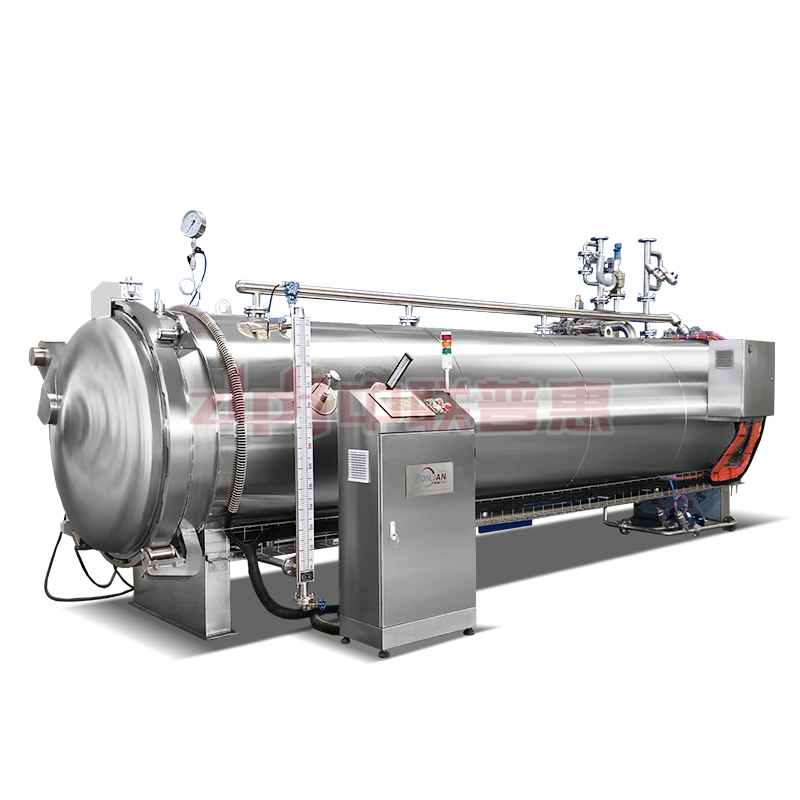
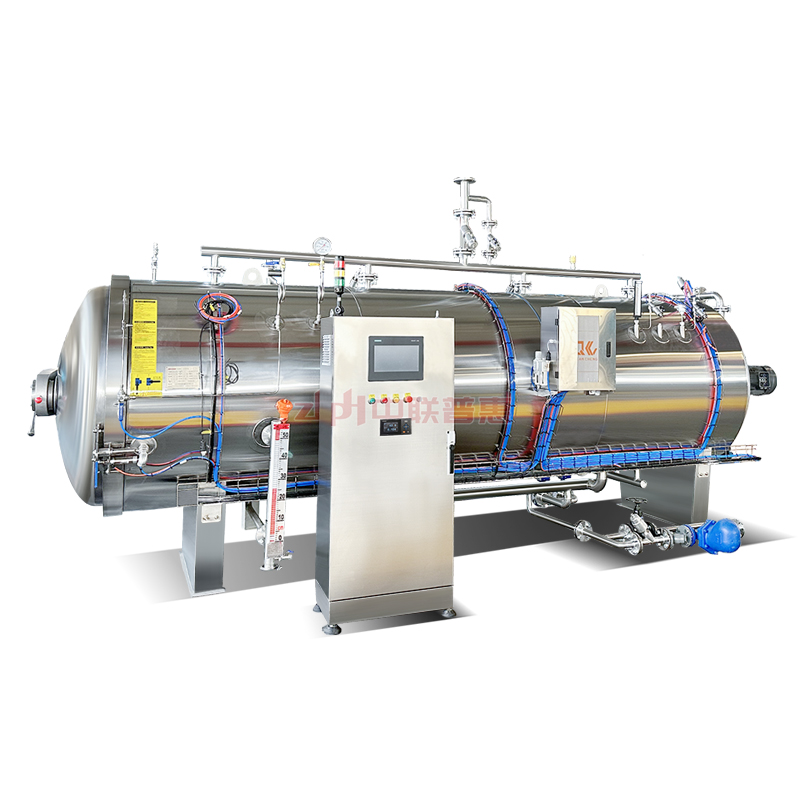
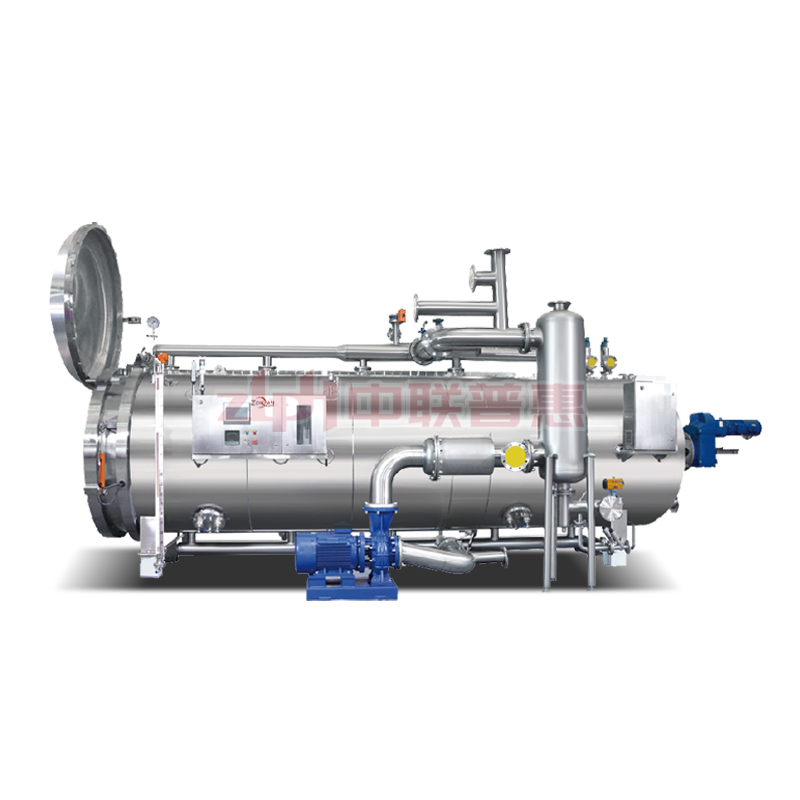
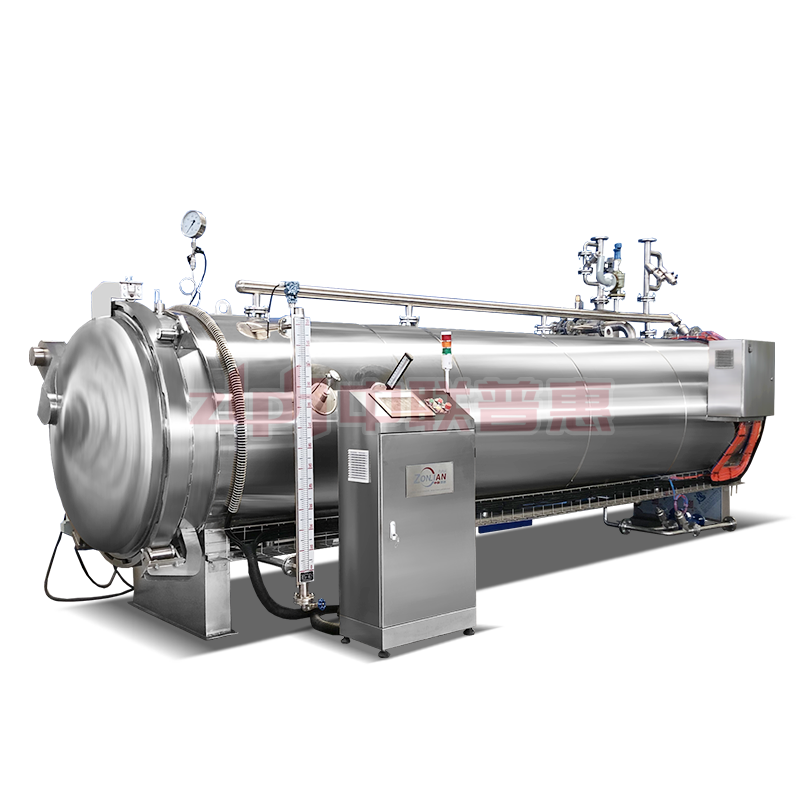
This guide is authored by a senior food processing automation engineer with over 10 years of industry experience from ZLPH MACHINERY TECHNOLOGY CO., LTD., a globally recognized provider of intelligent sterilization solutions. It addresses a critical challenge faced by food manufacturers worldwide: inconsistent thermal sterilization leading to product spoilage, safety risks, and compliance failures. The root causes typically include uneven heat distribution, inadequate pressure control, and outdated equipment design. Drawing on more than 5,000 global installations and extensive field validation across meat, seafood, ready-to-eat meals, and pet food sectors, we present a proven, step-by-step approach to ensure uniform, reliable, and compliant sterilization. This guide breaks down real-world scenarios, offers actionable fixes, shares validated performance data, and outlines best practices to help you eliminate batch failures, reduce downtime, and meet international food safety standards consistently.

How to Ensure Uniform Sterilization Across All Trays in a Large-Scale Retort?
1. Scenario & Pain Point
In high-volume canned food plants, operators often observe under-sterilized products in lower trays and overcooked items in upper zones after a single cycle. This inconsistency leads to product recalls, wasted batches, and failed audits under HACCP or FDA guidelines. The issue is especially acute with viscous or dense foods like stews or pet pâté, where heat penetration is naturally slower.

2. Root Cause Analysis
Three primary factors contribute to this problem: (1) poor water circulation design causing dead zones; (2) lack of real-time temperature and pressure monitoring at multiple points; and (3) manual loading patterns that block spray nozzles. Traditional retorts rely on static steam or limited water immersion, failing to deliver dynamic, omnidirectional heat transfer required for uniform lethality.

3. Step-by-Step Solution
Immediate Fix: Reorganize tray loading to maintain minimum 5cm clearance around all sides and ensure no obstruction of spray arms. Use calibrated temperature loggers at top, middle, and bottom trays to map thermal profiles.
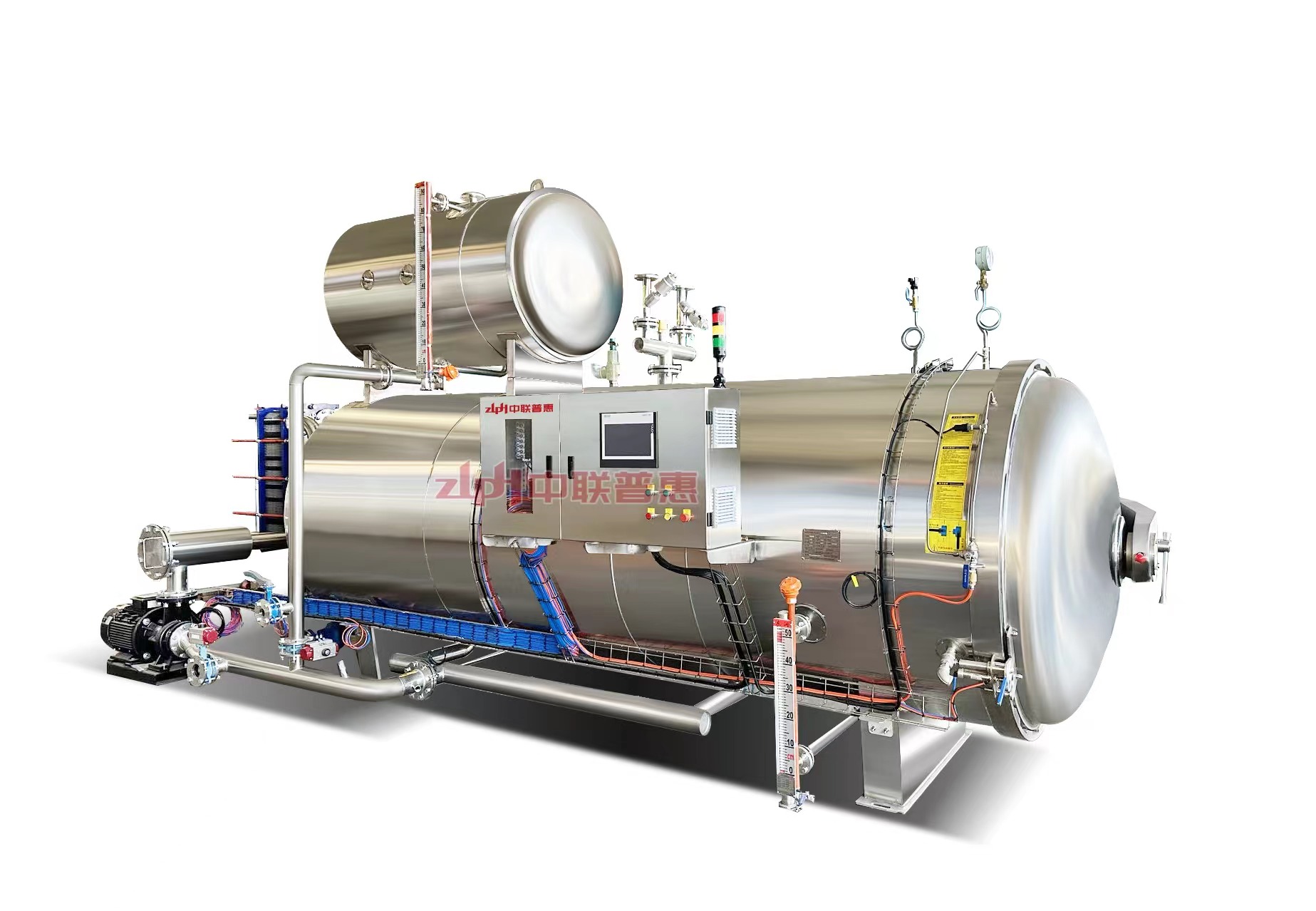
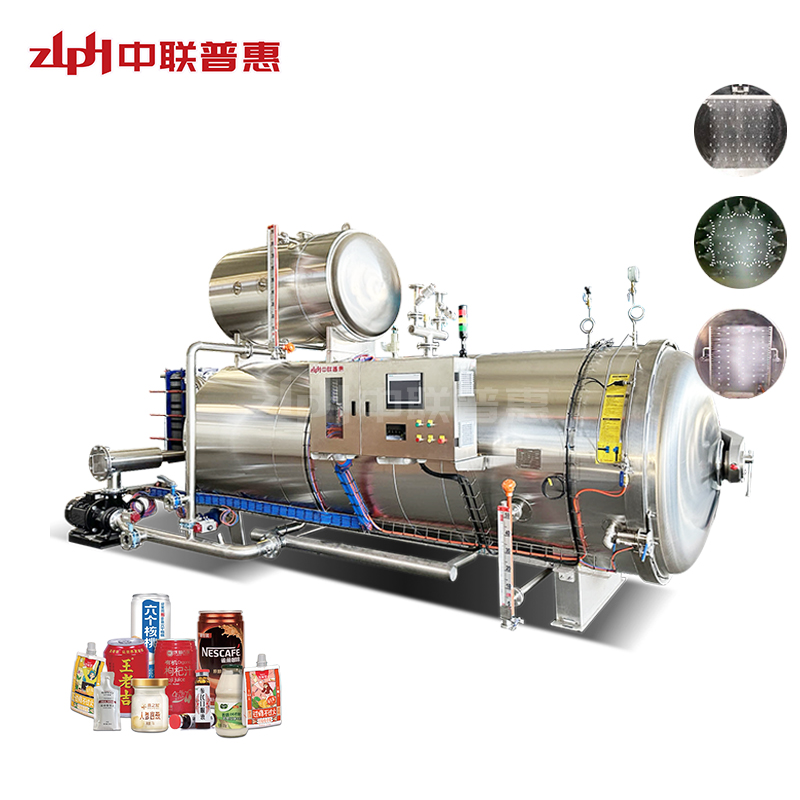
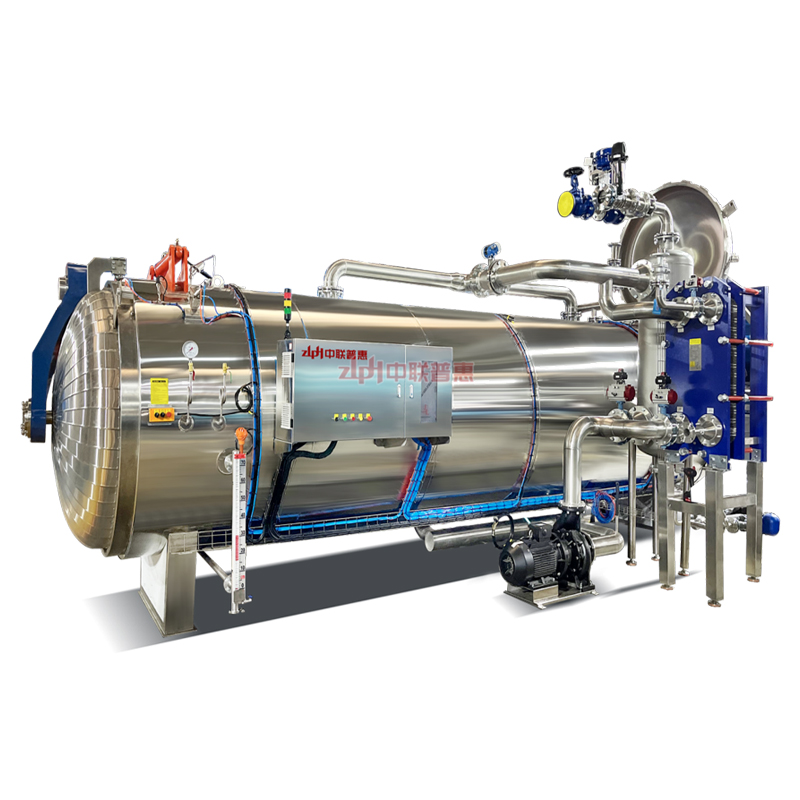
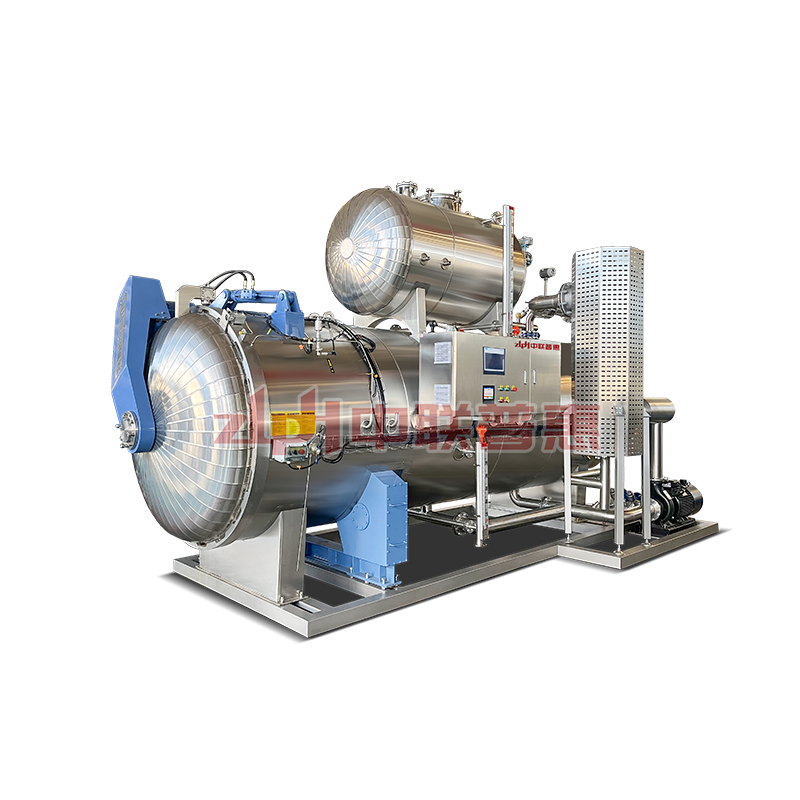
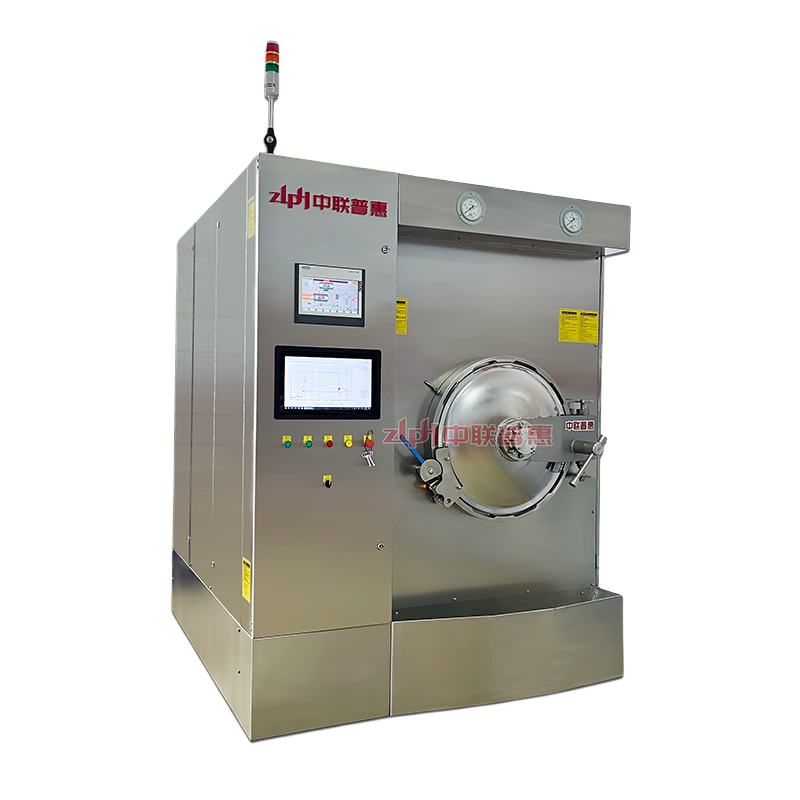
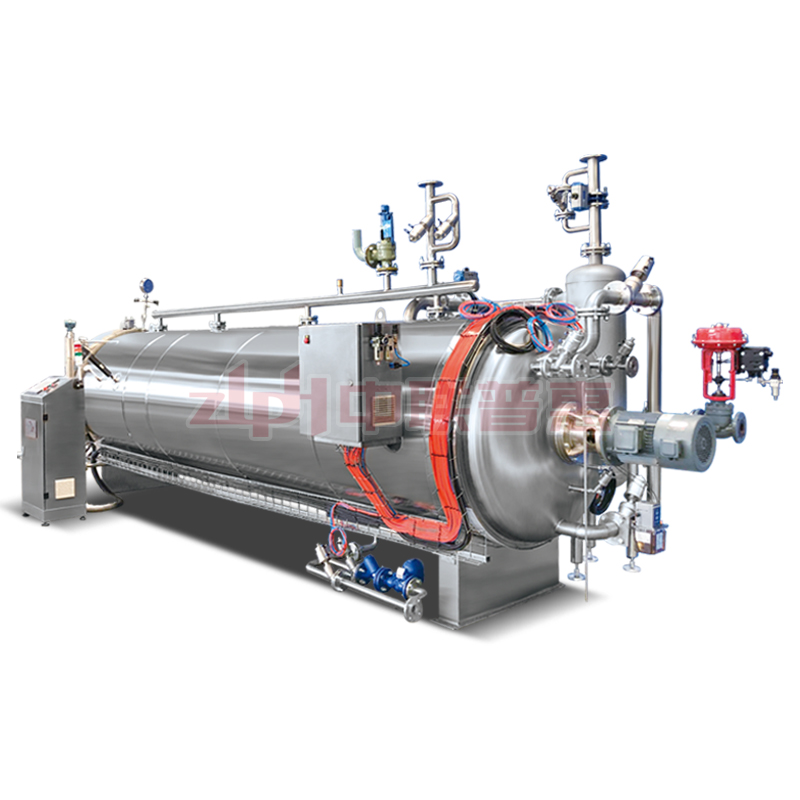
Long-Term Fix: Deploy an intelligent top-opening water spray sterilization retort equipped with 360° rotating spray nozzles and multi-zone circulation pumps. This system ensures process water is evenly distributed under precisely controlled pressure, eliminating cold spots.
Control Optimization: Integrate a PLC-based intelligent control system that dynamically adjusts water flow rate and cycle time based on real-time feedback from embedded sensors, maintaining F0 values within ±0.5 minutes across all zones.

4. Troubleshooting & Prevention Guide
Conduct weekly nozzle inspection for clogging; verify pump performance quarterly; validate thermal uniformity every six months using third-party mapping services. During procurement, demand CFD (Computational Fluid Dynamics) simulation reports proving uniform velocity distribution inside the chamber—avoid vendors who cannot provide such data.
5. Verified Performance
At a major European ready-meal producer, switching to ZLPH’s water spray retort reduced thermal variance from ±8°C to ±1.2°C across 120 trays per batch. Spoilage rates dropped by 92%, and audit pass rates reached 100% over 18 consecutive months.
How to Reduce Cycle Time Without Compromising Sterilization Efficacy?
1. Scenario & Pain Point
Food processors under cost pressure often shorten sterilization cycles, risking microbial survival—especially of Clostridium botulinum spores. This trade-off between speed and safety creates regulatory and brand reputation hazards.
2. Root Cause Analysis
Slow heat-up and cool-down phases dominate traditional retort cycles. Legacy systems lack rapid heating/cooling mechanisms and precise endpoint detection, forcing conservative time buffers.
3. Step-by-Step Solution
Adopt a water spray retort with dual-mode heating (steam + hot water injection) and forced cooling via chilled water recirculation. The intelligent control system calculates exact sterilization endpoints using real-time core temperature data, automatically terminating the cycle once target F0 is achieved—no guesswork. This can cut total cycle time by 25–35% while maintaining lethality.
4. Troubleshooting & Prevention Guide
Never override automatic cycle termination. Validate F0 calculations monthly against lab microbiological testing. Ensure cooling water meets potable standards to prevent post-sterilization contamination.
5. Verified Performance
A Southeast Asian seafood exporter reduced cycle time from 78 to 52 minutes per batch using this approach, increasing daily throughput by 40% without any quality incidents over two years.
Industry Best Practices for Reliable Retort Operations
Based on 10+ years of global deployments, we recommend this 5-step framework to ensure consistent, compliant sterilization:
1. Define Worst-Case Conditions
Design cycles for the most thermally resistant product in your portfolio—not the easiest.
2. Validate Thermal Uniformity
Perform full-chamber mapping during commissioning and annually thereafter.
3. Automate Data Logging
Use systems with built-in electronic records compliant with 21 CFR Part 11 or EU Annex 11.
4. Standardize Maintenance
Schedule bi-weekly checks on seals, spray arms, and pressure relief valves.
5. Partner with Certified Suppliers
Choose manufacturers holding ASME, CE, and EAC certifications to guarantee engineering integrity and global compliance.
Frequently Asked Questions (FAQ)
Q: Can I retrofit my old steam retort with water spray technology?
A: Full retrofit is rarely cost-effective. Modern water spray retorts integrate structural, hydraulic, and control systems as a unified platform—partial upgrades often compromise safety and performance.
Q: What certifications should a retort manufacturer have for EU or Russian markets?
A: Look for CE (EU), EAC (Eurasian Customs Union), and ASME U2 stamp. These confirm compliance with pressure equipment directives and mechanical safety standards.
Q: How does top-opening design improve operational efficiency?
A: It enables faster loading/unloading with forklifts or automated tray handlers, reducing manual labor and cycle idle time by up to 30%.
Q: Is water spray suitable for glass jars or delicate packaging?
A: Yes—when paired with programmable pressure ramping to prevent breakage. ZLPH systems offer gentle start/stop profiles validated for glass and flexible pouches alike.
Q: How often should I calibrate temperature sensors?
A: Every 3 months in continuous operation, or per local regulatory requirements. Use NIST-traceable standards.
About Our Expertise & Global Support
ZLPH MACHINERY TECHNOLOGY CO., LTD. is a leading innovator in intelligent food sterilization systems since 2018. Our R&D team includes 21 mechanical and PLC engineers, 4 sterilization process specialists, and 14 field service experts—all with 10+ years in retort automation. We operate a 15,000 m² modern factory with advanced CNC and welding equipment, ensuring precision manufacturing. Our solutions are certified under ASME, CE, EAC, and Malaysia DOSH, enabling seamless market access worldwide. With successful deployments at AGROPRODASH Moscow, Petfair Asia Shanghai, and Qingdao International Exhibitions, we’ve earned trust from food producers across 30+ countries.
We offer end-to-end support including:
• On-site thermal process validation
• Custom retort design for unique packaging formats
• Free sample testing with your actual product
• 24/7 remote diagnostics and spare parts delivery
Contact Us
Company: ZLPH MACHINERY TECHNOLOGY CO., LTD.
Website: https://www.zlphretort.com/
Email: sales@zlphretort.com
Phone / WhatsApp: +86 15666798389 / +86 13361554016
