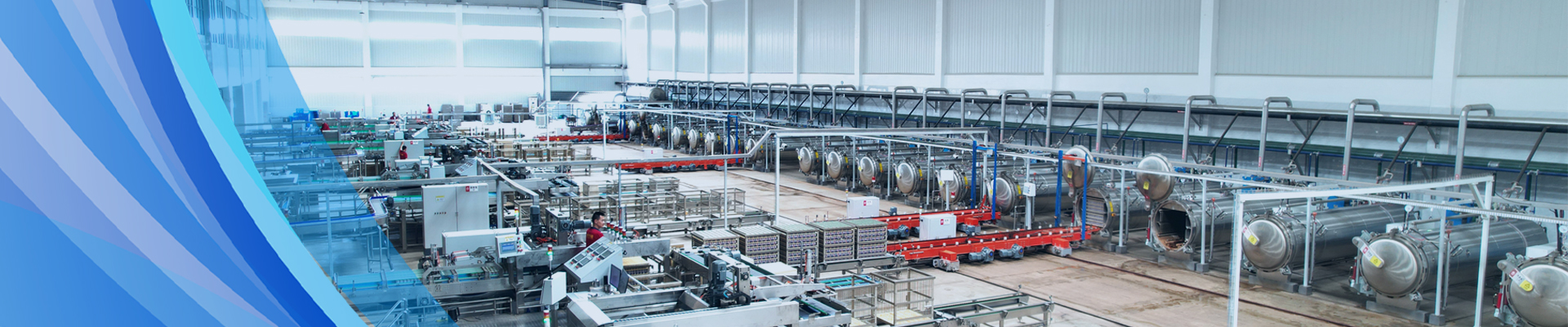

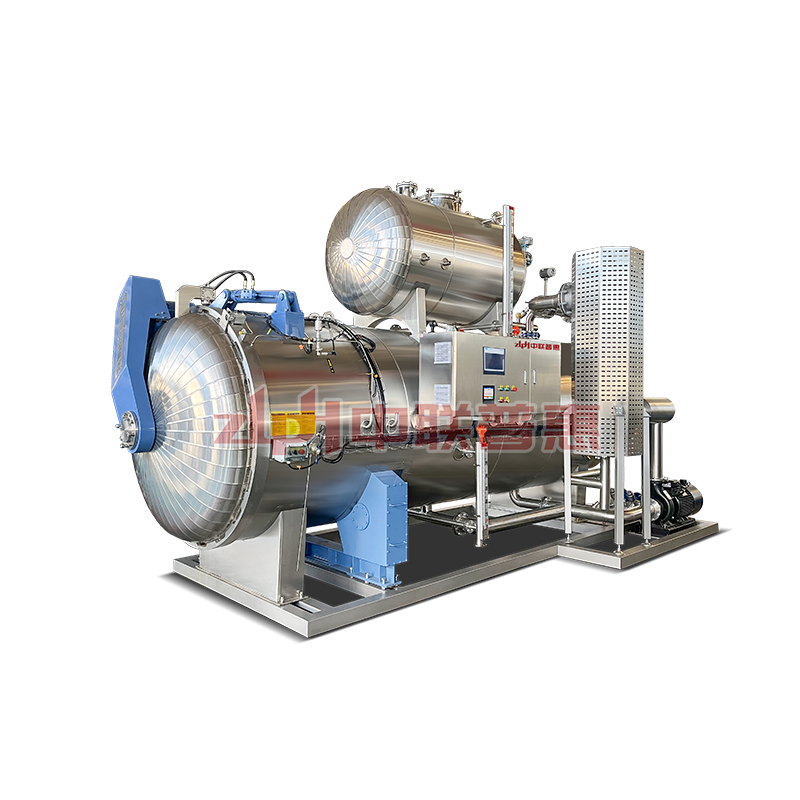
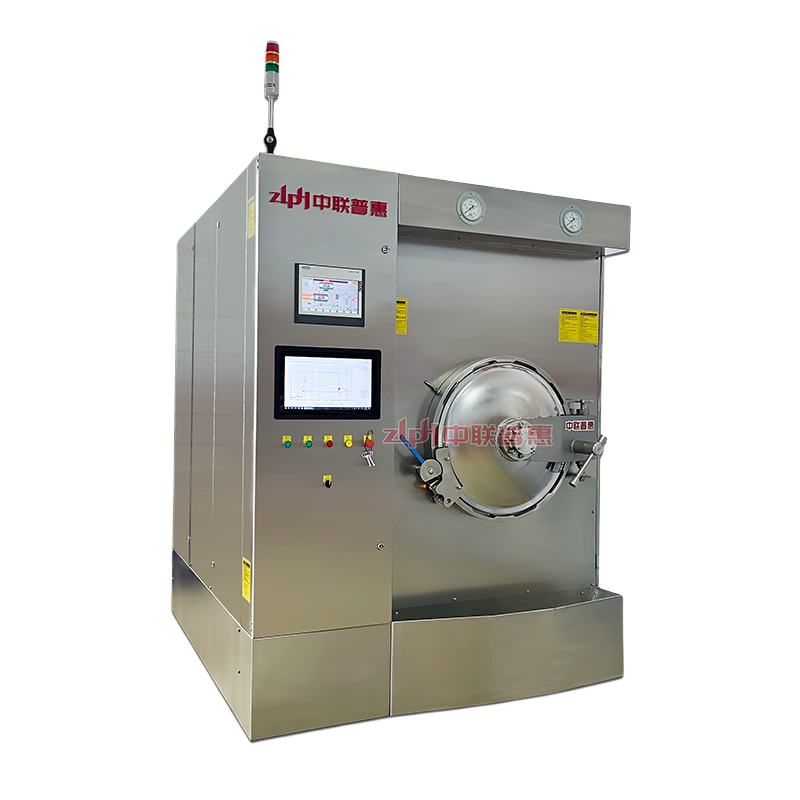
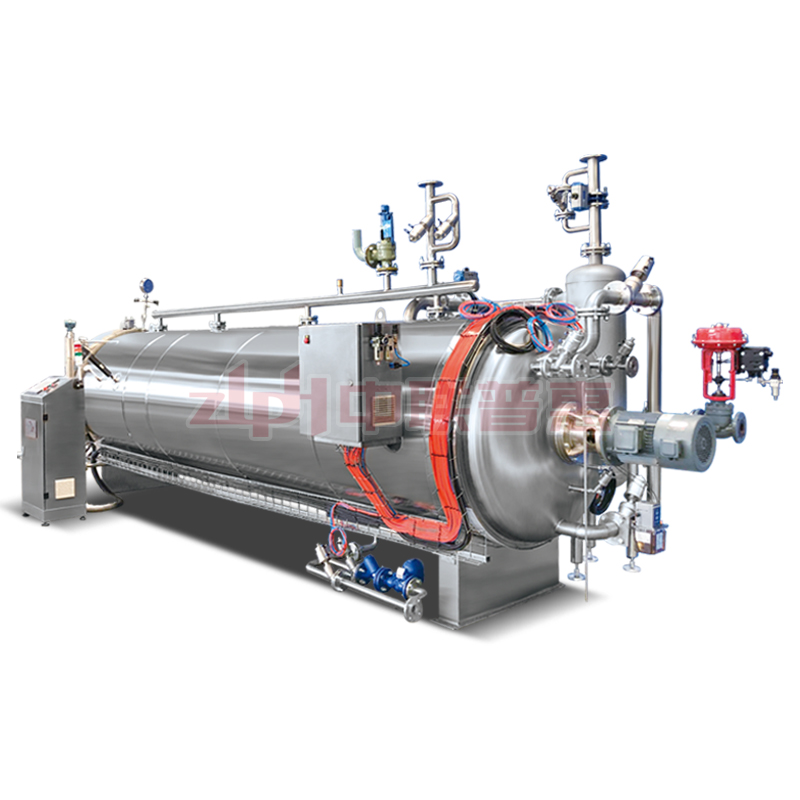
This guide is authored by a senior food processing automation engineer with over 10 years of industry experience from ZLPH MACHINERY TECHNOLOGY CO., LTD., a globally recognized provider of intelligent sterilization solutions. It addresses a critical challenge faced by food manufacturers worldwide: inconsistent or incomplete sterilization during canned or packaged food production, which compromises product safety, shelf life, and regulatory compliance.

Inconsistent sterilization in retort systems has long plagued the food processing industry, primarily due to uneven heat distribution, manual operation errors, and outdated equipment lacking real-time monitoring. Based on more than 5,000 global installations and extensive field validation across diverse food categories—from ready meals to baby food—ZLPH has developed a proven, step-by-step methodology to ensure uniform, reliable, and compliant sterilization outcomes. This guide breaks down the root causes by operational scenario, delivers actionable solutions, shares real-world validation data, and outlines best practices for selecting and operating high-quality Water Spray Retort Autoclaves that meet international safety standards.

How to Ensure Uniform Sterilization Across All Trays in a Batch Retort System?
1. Scenario & Pain Point
In large-scale canning facilities producing ready-to-eat meals, operators often observe under-sterilized products in lower trays while upper trays show overcooked textures. This inconsistency leads to product recalls, wasted batches, and failed audits by food safety authorities like FDA or EU FBOs.

2. Root Cause Analysis
The primary causes are: (1) poor water spray distribution due to fixed nozzles that fail to cover all zones evenly; (2) lack of real-time temperature and pressure feedback during the cycle; and (3) manual loading causing uneven tray spacing, which blocks water flow paths.

3. Step-by-Step Solution
Immediate Fix: Reconfigure tray loading patterns using standardized spacers to maintain consistent gaps between layers. Clean spray nozzles weekly to prevent clogging.
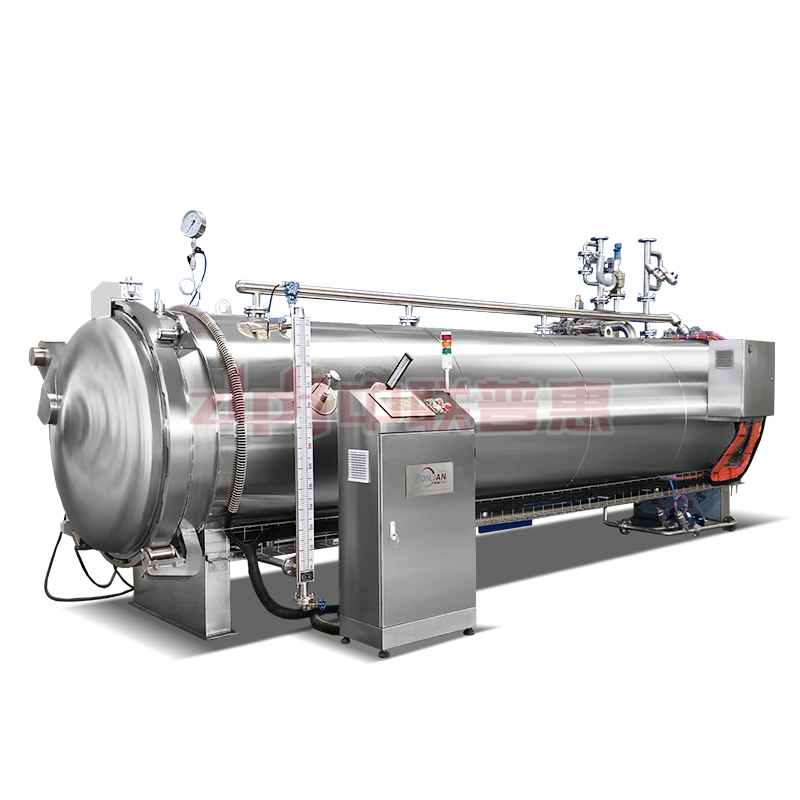
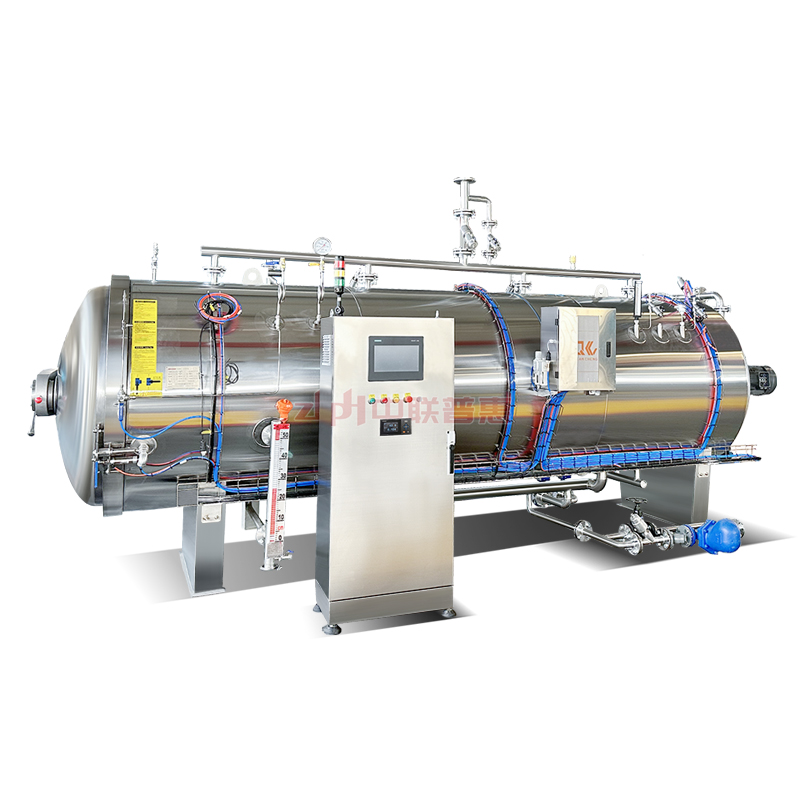
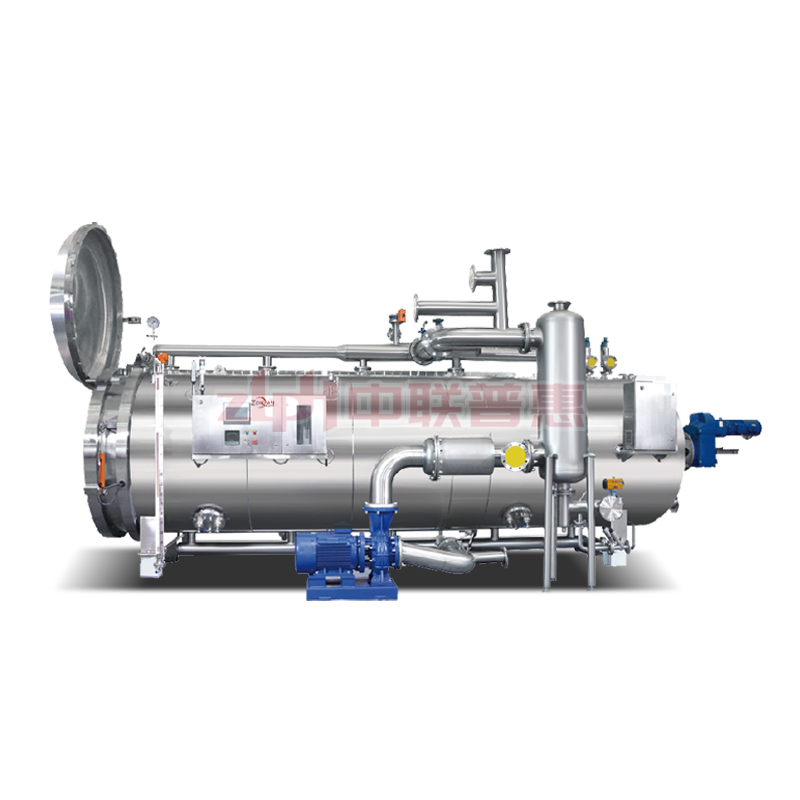
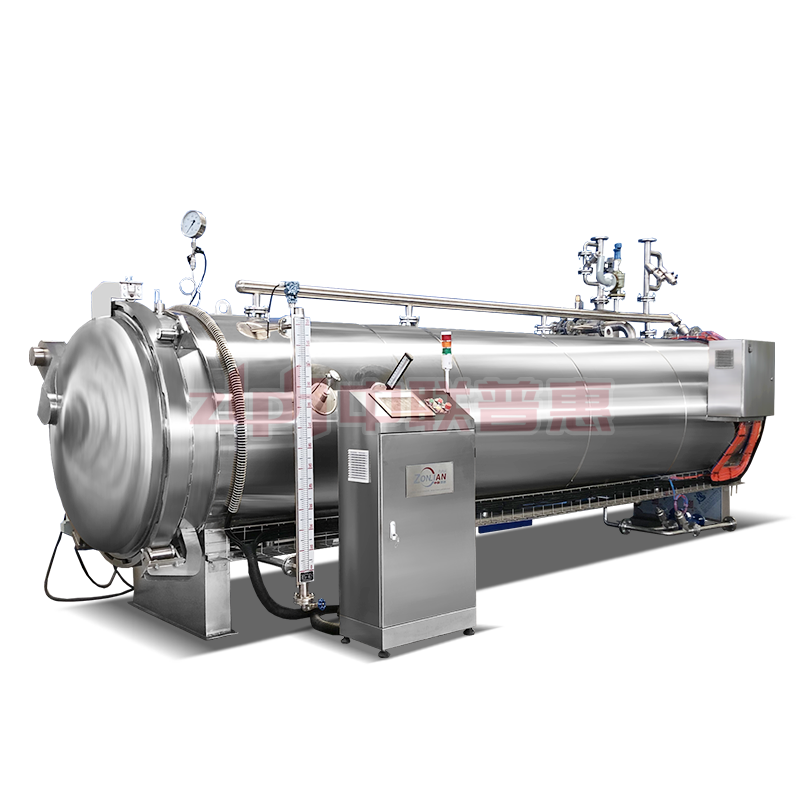
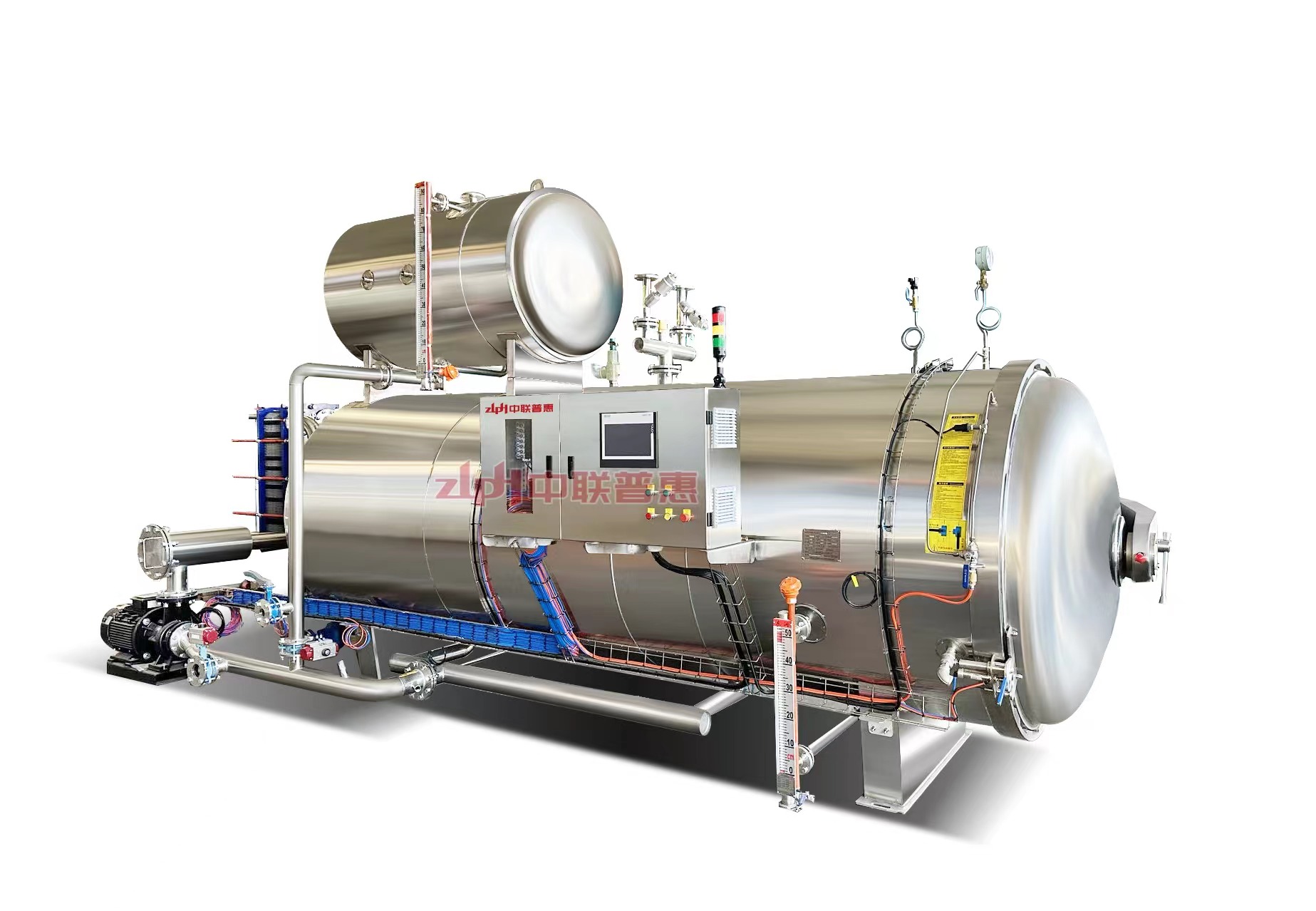
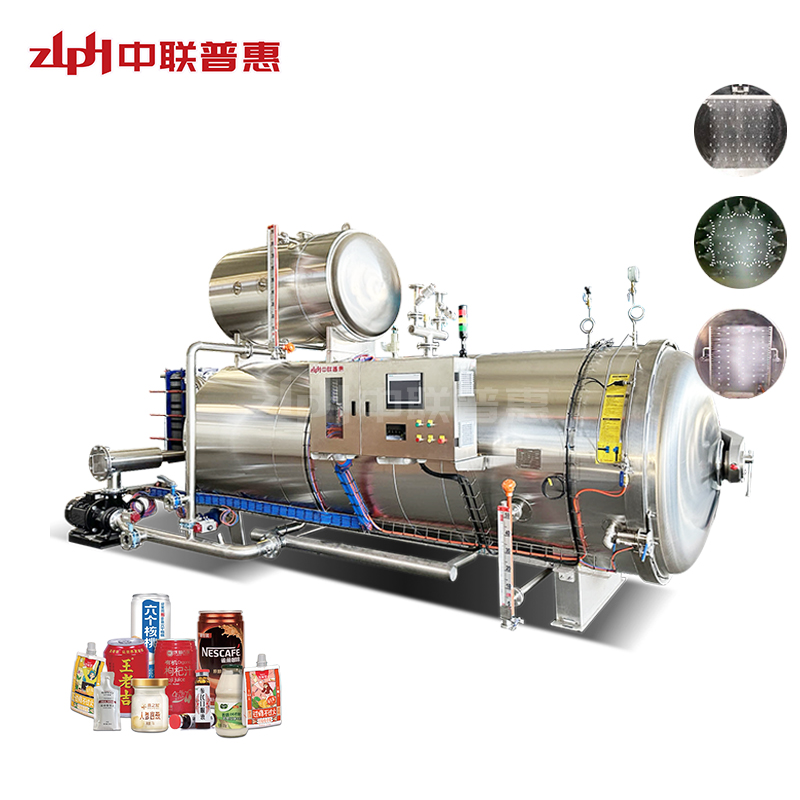
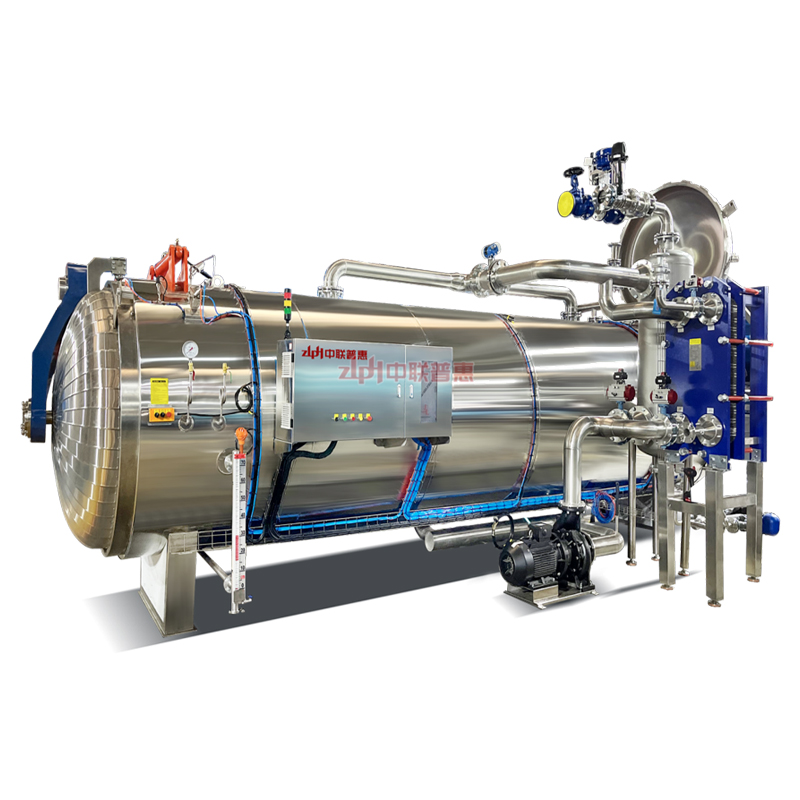
Long-Term Fix: Deploy an intelligent top-opening Water Spray Retort Autoclave equipped with a multi-zone rotating spray system and real-time PID-controlled temperature/pressure monitoring. Such systems dynamically adjust water flow and steam injection based on live sensor data.
Process Optimization: Implement automated loader-unloader systems to eliminate human variability in tray placement, ensuring repeatable batch geometry.
4. Troubleshooting & Pitfall Avoidance
Always validate thermal distribution using data loggers placed in cold spots (typically bottom corners). Avoid retrofitting old retorts with basic spray bars—these rarely achieve F0 uniformity required by modern standards. During supplier evaluation, request third-party thermal mapping reports under full-load conditions.
5. Real-World Validation
At a major European ready-meal producer, replacing legacy retorts with ZLPH’s intelligent Water Spray Retort reduced F0 deviation from ±8 minutes to ±1.2 minutes across 120 trays per batch. Product rejection rates dropped by 92%, and audit pass rates reached 100% over 18 months.
How to Prevent Bacterial Survival in Low-Acid Canned Foods Using Water Spray Retorts?
1. Scenario & Pain Point
Manufacturers of low-acid foods (e.g., vegetables, meats) face persistent risks of Clostridium botulinum survival if sterilization parameters fall below critical thresholds, even briefly. Traditional retorts often lack precision in maintaining the required 121.1°C for sufficient time.
2. Root Cause Analysis
Key issues include: delayed temperature ramp-up due to inefficient heating, pressure fluctuations causing boiling point shifts, and absence of automated cycle validation against pre-set lethality targets.
3. Step-by-Step Solution
Use a retort with integrated water spray sterilization and intelligent control that continuously monitors and logs temperature at multiple points. The system should auto-adjust steam and cooling phases to maintain exact F0 values. ZLPH’s system, for instance, achieves ±0.5°C temperature stability throughout the chamber via closed-loop control.
4. Troubleshooting & Pitfall Avoidance
Never rely solely on chamber air temperature—always measure product core temperature during validation. Ensure your retort complies with ASME BPVC Section VIII and carries EAC/CE certifications for food safety compliance in Eurasian and European markets.
5. Real-World Validation
A Russian baby food manufacturer reported zero microbial failures after switching to ZLPH’s Water Spray Retort at AGROPRODASH 2023, citing its precise bactericidal performance and compliance with local sanitary regulations.
Industry Best Practices for Selecting & Operating Water Spray Retort Autoclaves
Based on 6+ years of global project deployment and R&D, ZLPH recommends the following 5-step framework to ensure sterilization reliability:
1. Define Worst-Case Conditions
Design your sterilization process around the most challenging product (largest pack size, lowest thermal conductivity), not average cases.
2. Prioritize Intelligent Control Systems
Choose retorts with real-time monitoring of temperature, pressure, and spray dynamics—not just timer-based cycles.
3. Validate Thermal Uniformity
Conduct full-load thermal mapping before commercial production. Accept only systems with ≤±2°C variation across all zones.
4. Automate Loading/Unloading
Manual handling introduces variability. Automated tray systems improve repeatability and reduce labor costs.
5. Partner with Certified Suppliers
Select manufacturers holding ASME, CE, EAC, and ISO 9001 certifications to ensure engineering rigor and global compliance support.
Frequently Asked Questions (FAQ)
Q: Can standard steam retorts be upgraded to water spray systems?
A: Partial upgrades are possible but rarely achieve true uniformity. Full replacement with an integrated water spray design is recommended for critical applications.
Q: What certifications should a Water Spray Retort have for EU market access?
A: CE marking under Machinery Directive 2006/42/EC and Pressure Equipment Directive 2014/68/EU is mandatory. EAC certification is required for Russia and Eurasian Economic Union countries.
Q: How does top-door design improve operational efficiency?
A: Top-opening allows faster loading/unloading, reduces operator strain, and integrates seamlessly with overhead conveyor systems—cutting cycle time by up to 25%.
Q: Is water spray sterilization suitable for glass jars?
A: Yes, when combined with controlled pressure ramping to prevent breakage. ZLPH’s system includes gentle pressurization protocols validated for glass containers.
Q: How often should spray nozzles be maintained?
A: Inspect weekly and clean monthly using food-grade descaling agents. Clogged nozzles are the #1 cause of cold spots.
About Our Expertise & Global Support
ZLPH MACHINERY TECHNOLOGY CO., LTD. is a leading global provider of intelligent sterilization systems, established in 2018 with a dedicated R&D team of 21 mechanical designers, PLC engineers, and 4 sterilization process specialists with over a decade of industry experience. Our 50-acre manufacturing facility houses advanced CNC and welding equipment, ensuring precision fabrication of ASME-certified pressure vessels.
We hold ASME Authorization, CE, EAC, Malaysia DOSH, and China Special Equipment Manufacturing Licenses, enabling seamless market entry across 40+ countries. Our solutions are deployed in ready-meal, pet food, dairy, and infant nutrition facilities worldwide, with notable presence at AGROPRODASH Moscow and Qingdao International Food Tech Expo.
Custom Solution Support Includes:
- On-site thermal process validation & equipment sizing
- Integration with existing production lines
- Free sample testing with your actual product
- 24/7 remote technical assistance and on-demand engineer dispatch
Contact Information
Company: ZLPH MACHINERY TECHNOLOGY CO., LTD.
Website: https://www.zlphretort.com/
Email: sales@zlphretort.com
Phone / WhatsApp: +86 15666798389 / +86 13361554016
