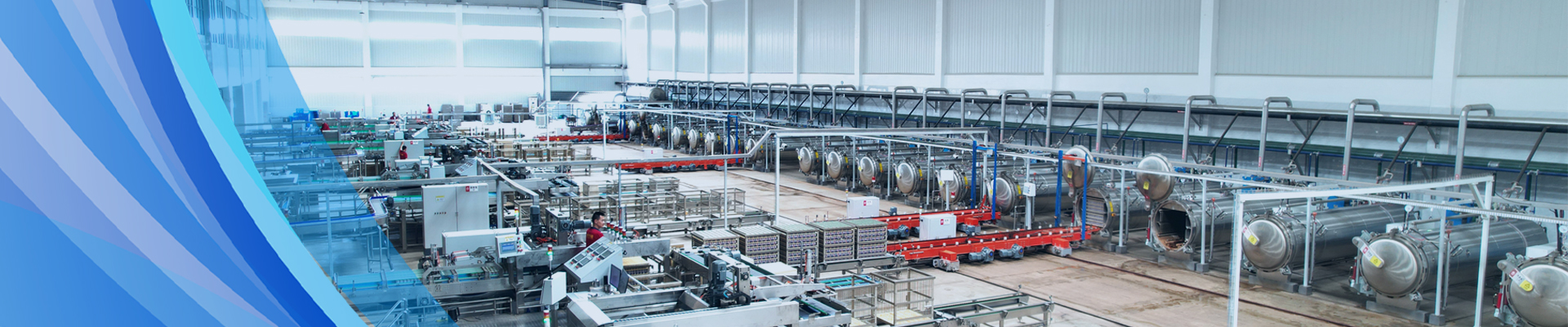

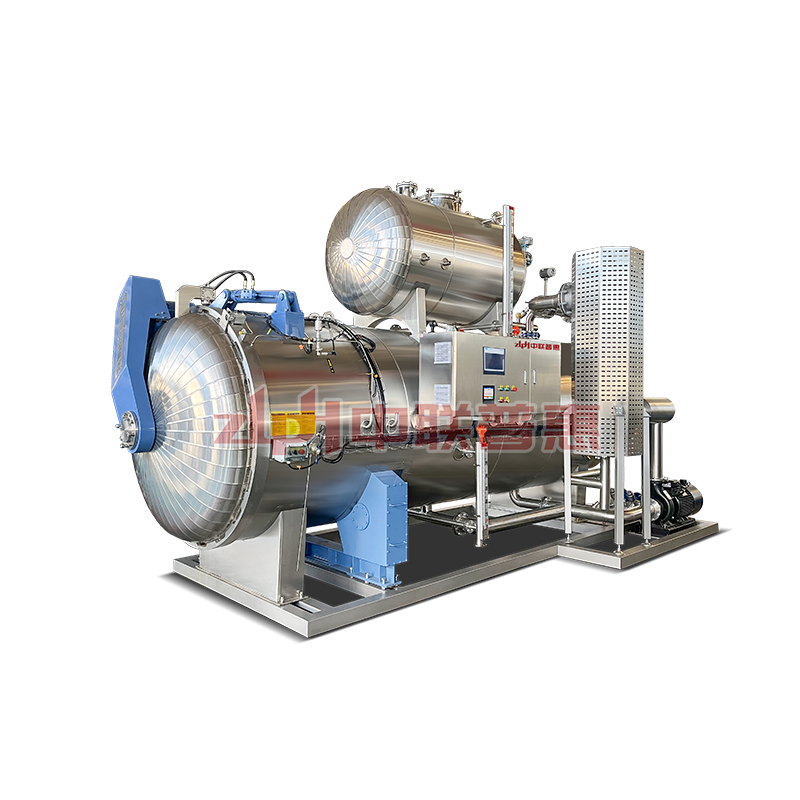
This guide is authored by a senior food processing automation engineer with over 10 years of industry experience from ZLPH MACHINERY TECHNOLOGY CO., LTD., a leading provider of intelligent retort sterilization systems. It addresses a critical challenge faced by global food manufacturers and plant engineers: inconsistent or incomplete sterilization outcomes when using direct retort autoclaves. This issue often stems from uneven heat distribution, improper loading practices, or inadequate process control—factors that compromise food safety, shelf life, and regulatory compliance. Based on more than 5,000 global installations and extensive field validation across meat, seafood, ready meals, and pet food sectors, we present a proven, actionable framework to eliminate sterilization variability. In this guide, you’ll learn how to diagnose root causes, implement targeted fixes, avoid common pitfalls, and validate performance using real-world benchmarks—all while ensuring compliance with international food safety standards.

How to Ensure Uniform Sterilization Across All Trays in a Batch Retort System?
1. Scenario and Pain Point
In high-volume canned food production lines, operators frequently report that products on the top or bottom trays of the retort basket show under-processing (e.g., surviving spores detected in microbiological tests), while center trays are over-processed, leading to texture degradation. This inconsistency results in product recalls, wasted batches, and failed audits—especially under stringent FDA or EU food safety regimes.

2. Root Cause Analysis
Three primary factors contribute to non-uniform sterilization:
- Poor water spray coverage: Conventional spray nozzles fail to deliver even thermal distribution, creating cold spots.
- Manual loading errors: Irregular tray stacking blocks water circulation paths.
- Lack of real-time monitoring: Without live temperature/pressure feedback per zone, operators cannot adjust cycles dynamically.

3. Step-by-Step Solution
Immediate Mitigation:
- Rotate tray positions between batches to average out exposure.
- Install temporary thermocouples at multiple basket locations to map thermal profiles.
Long-Term Fix:
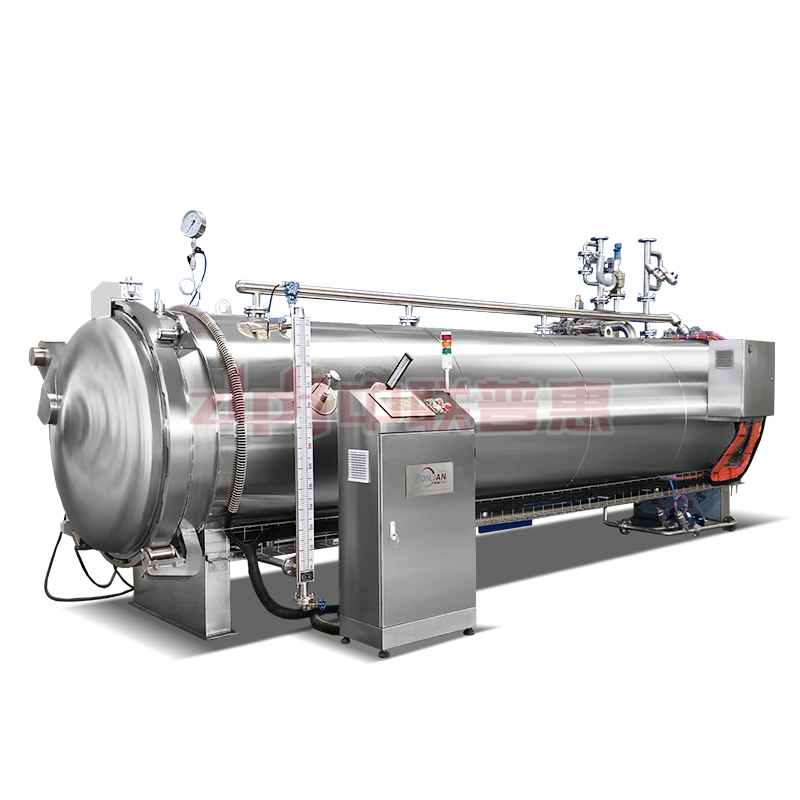
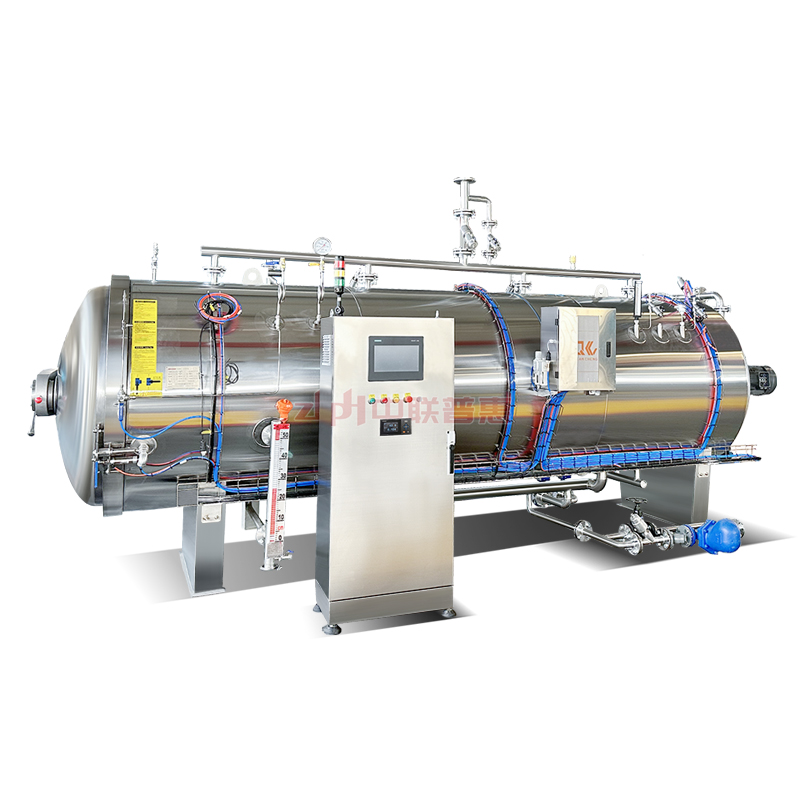
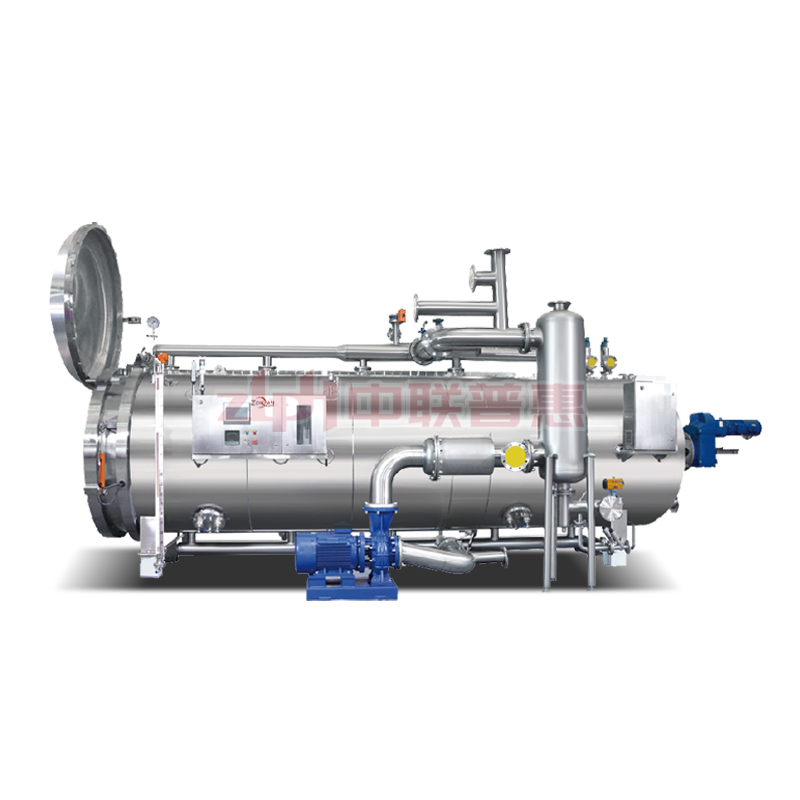
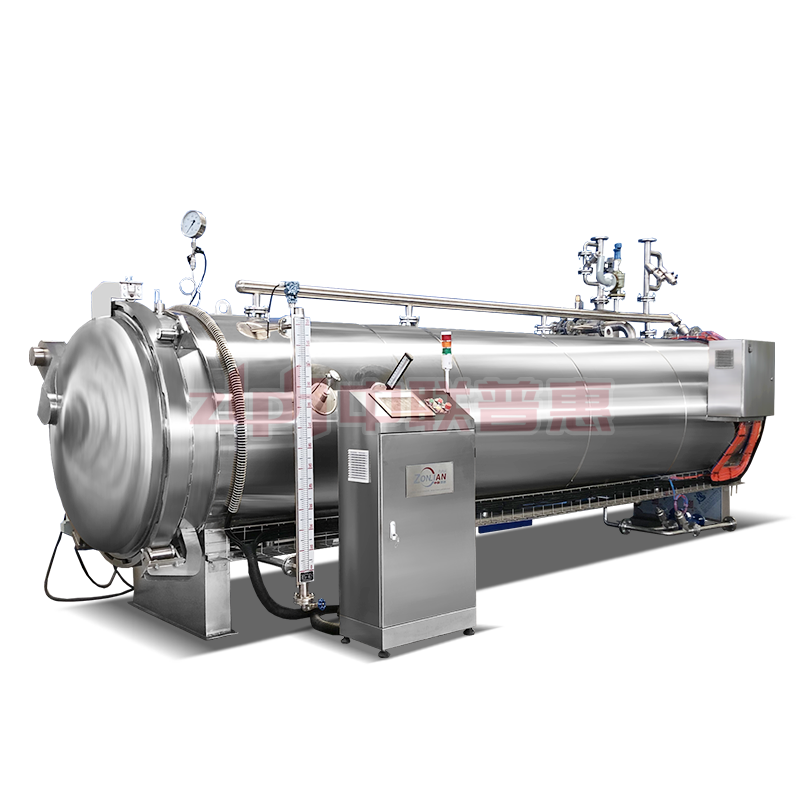
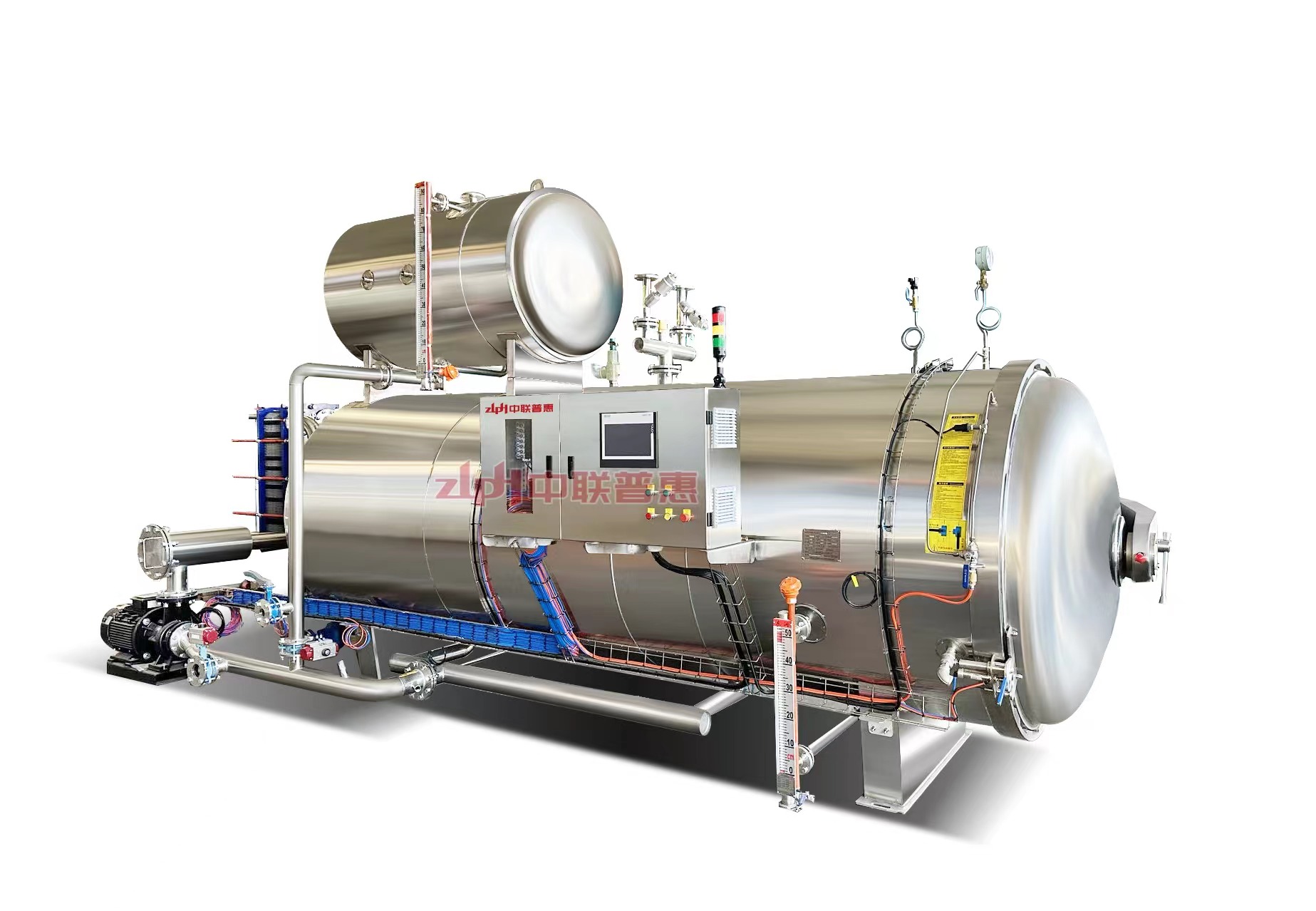
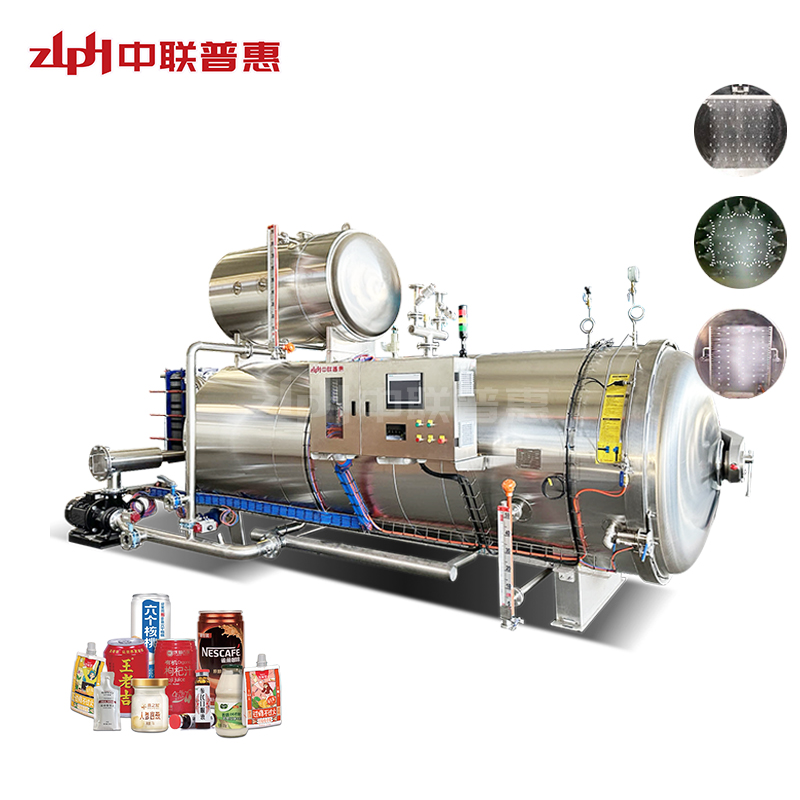
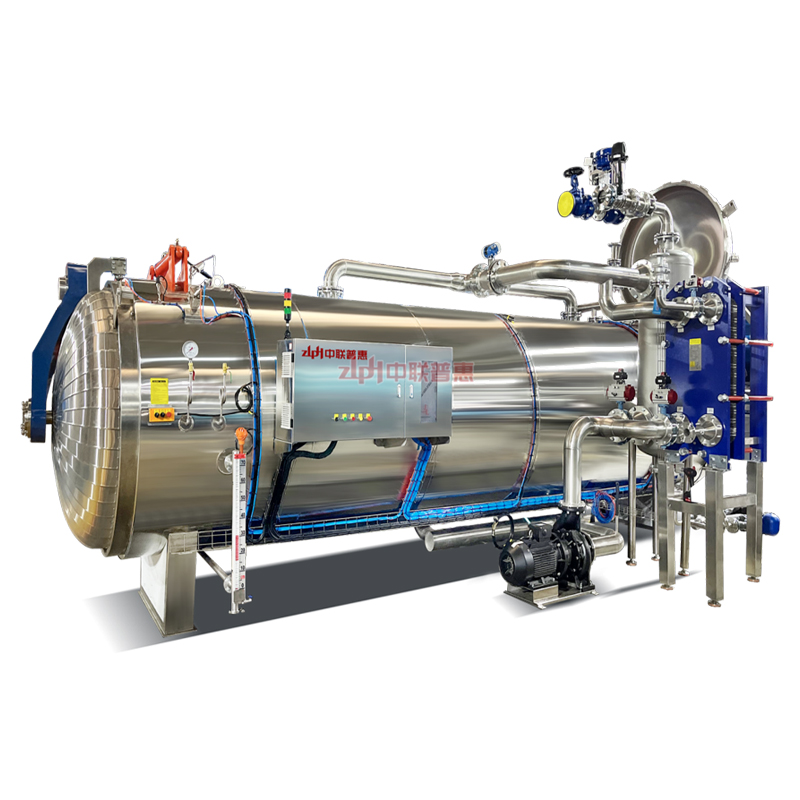
Deploy an intelligent top-opening water spray retort equipped with multi-zone spray arms and PLC-controlled flow regulation. This system ensures ±0.5°C temperature uniformity across all trays by dynamically adjusting spray pressure based on real-time sensor data.
Process Optimization:
Integrate F0 (sterilization value) tracking software to calculate cumulative lethality per tray position, enabling cycle fine-tuning without trial-and-error.

4. Troubleshooting & Prevention Guide
- Verify nozzle alignment and clean clogged spray holes weekly.
- Use standardized retort trays with open-grid designs to maximize water penetration.
- Never exceed 90% basket fill capacity—overloading restricts fluid dynamics.
- Conduct quarterly thermal mapping studies per ASME guidelines to validate uniformity.
5. Validation Results
At a major European ready-meal producer, implementing ZLPH’s intelligent spray retort reduced batch rejection rates from 7.2% to 0.3% within three months. Thermal mapping confirmed consistent F0 values (±2%) across all 24 tray positions, meeting BRCGS v9 requirements for thermal process validation.
How to Prevent Door Seal Failures and Pressure Leaks During Retort Operation?
1. Scenario and Pain Point
Retort operators in Southeast Asia report frequent pressure drops during sterilization cycles, triggering emergency shutdowns. Investigations reveal worn door gaskets and misaligned locking mechanisms, causing steam leaks that halt production and risk operator safety.
2. Root Cause Analysis
- Repeated thermal cycling degrades standard EPDM seals after ~500 cycles.
- Manual door closure lacks torque consistency, leading to uneven compression.
- Corrosive cleaning agents accelerate seal aging.
3. Step-by-Step Solution
Replace standard seals with FDA-compliant, high-temperature silicone gaskets rated for 2,000+ cycles. Upgrade to an automated upper-door system with hydraulic-assisted closing that applies uniform sealing force—eliminating human error. Implement a predictive maintenance alert that triggers seal replacement after 1,800 cycles.
4. Troubleshooting & Prevention Guide
- Inspect seals daily for cracks or hardening.
- Lubricate only with food-grade silicone grease—never petroleum-based products.
- Calibrate door pressure sensors monthly to ensure accurate leak detection.
5. Validation Results
A Thai seafood exporter reduced unplanned downtime by 92% after adopting ZLPH’s automated door system, achieving 18 consecutive months of zero pressure-related incidents.
Industry Best Practices for Reliable Retort Sterilization
Based on 6+ years of global deployments, we recommend this 5-step framework to ensure consistent, compliant sterilization:
1. Define Worst-Case Conditions
Design cycles for your most challenging product (e.g., densest viscosity, largest container) and harshest ambient conditions (e.g., 40°C factory temperature).
2. Standardize Loading Protocols
Use automated tray loaders/unloaders to eliminate manual stacking errors—critical for maintaining water flow channels.
3. Validate with Real-Time Data
Install wireless data loggers in every batch to capture actual F0 values, not just theoretical calculations.
4. Certify Equipment Compliance
Ensure your retort holds ASME, CE, and EAC certifications to guarantee engineering integrity and market access.
5. Partner with Responsive Support
Choose suppliers offering 24/7 remote diagnostics—ZLPH’s 14-member after-sales team resolves 85% of issues within 4 hours.
Frequently Asked Questions (FAQ)
Q: Can I use a standard retort for both glass jars and metal cans?
A: Only if the retort supports dual-mode pressure ramping. Glass requires slower pressurization to prevent breakage, while cans tolerate faster cycles. ZLPH’s systems offer programmable profiles for mixed packaging.
Q: What certifications are required for retorts sold in Russia?
A: EAC certification is mandatory. ZLPH holds valid EAC, CE, ASME, and Malaysia DOSH certificates, enabling seamless customs clearance.
Q: How often should I recalibrate temperature sensors?
A: Every 6 months per ISO 17025, or after any mechanical shock. ZLPH includes NIST-traceable calibration certificates with all units.
Q: Does automation reduce labor costs significantly?
A: Yes—our tray loader/unloader systems cut manual handling by 70%, reducing labor costs and cross-contamination risks.
Q: Can retorts handle viscous products like sauces?
A: Only with agitation or rotation features. For static retorts, limit viscosity to <5,000 cP to ensure heat penetration.
Our Technical Authority and Support
ZLPH MACHINERY TECHNOLOGY CO., LTD. is a globally recognized innovator in food sterilization technology since 2018. Our R&D team includes 21 mechanical designers, 4 sterilization process experts, and 14 after-sales engineers—all with 10+ years in retort systems. We hold ASME, CE, EAC, and DOSH certifications, and our 50-acre manufacturing facility (15,000 m² workshop) ensures rigorous quality control. Our solutions serve clients in 30+ countries, including Fortune 500 food brands, with zero major safety incidents reported.
We offer tailored support including:
- On-site thermal process validation
- Custom retort design for unique container shapes
- Free sample testing with your actual product
- 24-hour remote troubleshooting via WhatsApp or email
Contact Information
Company: ZLPH MACHINERY TECHNOLOGY CO., LTD.
Website: https://www.zlphretort.com/
Email: sales@zlphretort.com
Phone / WhatsApp: +86 13361554016
