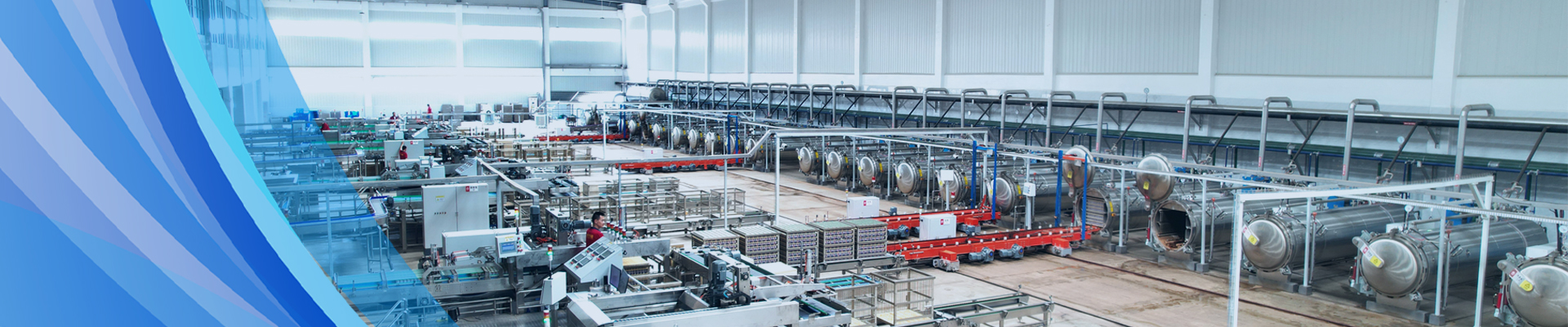

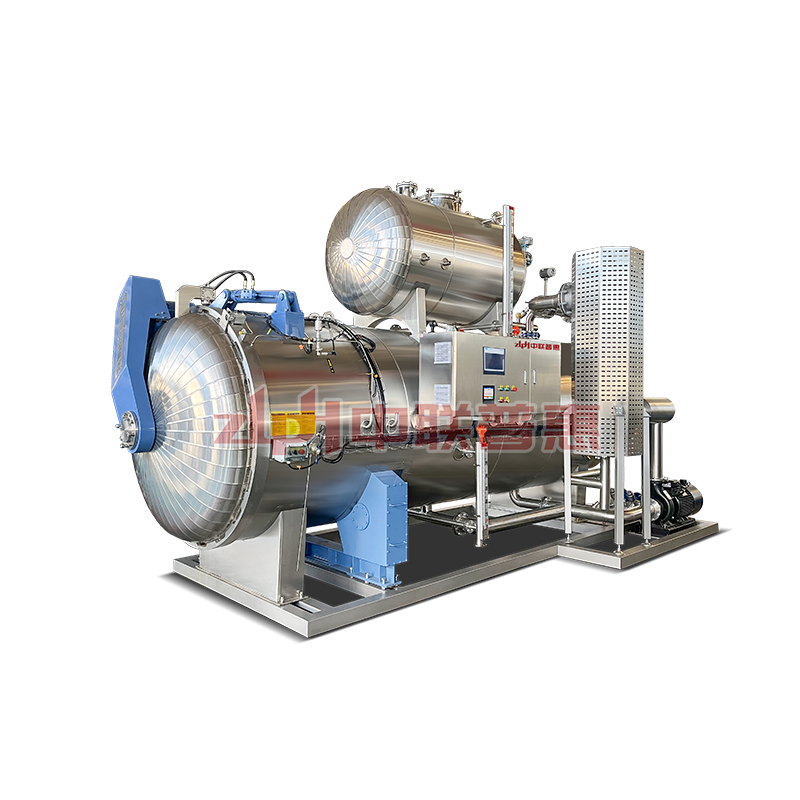
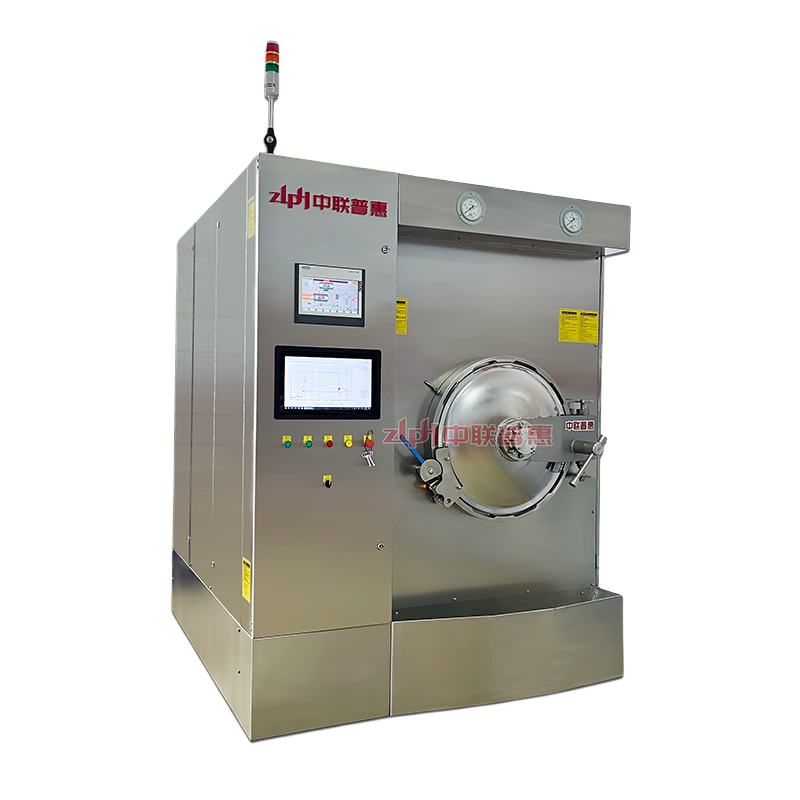
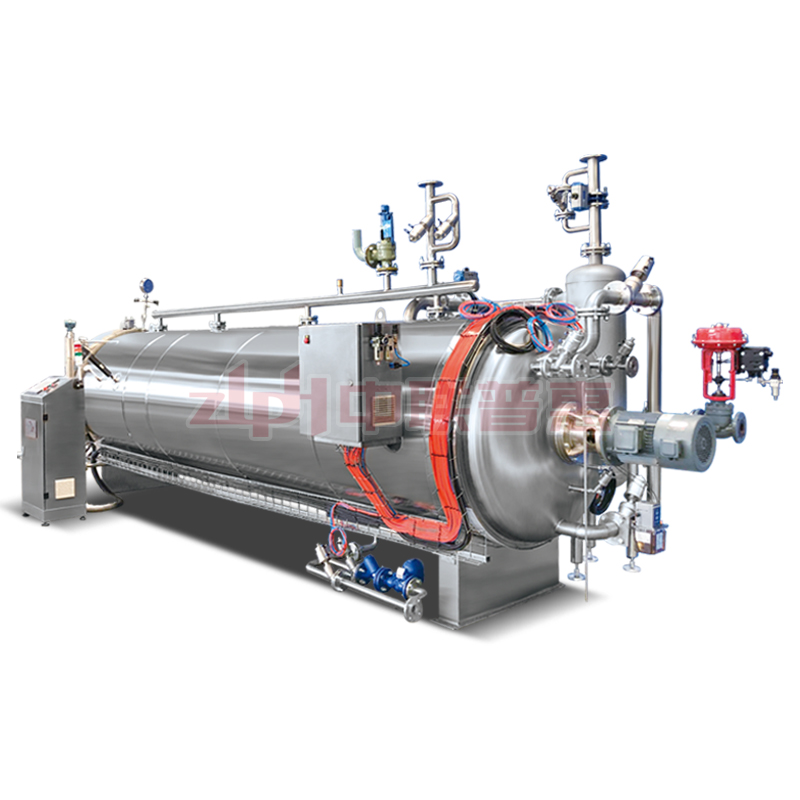
This guide is authored by a senior food processing engineer with over 12 years of experience at ZLPH MACHINERY TECHNOLOGY CO., LTD., a globally recognized provider of intelligent sterilization solutions. It addresses a critical challenge faced by food manufacturers worldwide: inconsistent sterilization outcomes during retort processing, which compromise product safety, shelf life, and regulatory compliance. This issue primarily stems from uneven heat distribution, inadequate pressure control, and outdated manual operation systems. Drawing on more than 5,000 global installations and extensive R&D validation, we present a proven, step-by-step methodology to achieve uniform, reliable, and efficient sterilization using advanced water spray retort autoclaves. In this guide, we dissect the root causes behind sterilization inconsistencies, deliver tailored solutions for common production scenarios, share field-tested troubleshooting protocols, and validate results through real-world case studies—all designed to help food producers eliminate batch failures, reduce waste, and meet stringent international food safety standards.

How to Ensure Uniform Sterilization Across All Trays in a Batch?
1. Scenario and Pain Point
In canned vegetable or ready-to-eat meal production lines, operators frequently report that products on the top or bottom trays of the retort basket show under-sterilization (F₀ values below target), while center trays are over-processed—leading to texture degradation, nutrient loss, and potential microbial survival. This inconsistency forces costly reprocessing, increases rejection rates, and risks non-compliance with FDA or EU food safety regulations.

2. Root Cause Analysis
Three primary factors contribute to this issue: (1) poor circulation design causing dead zones where sterilization water fails to reach; (2) lack of real-time temperature monitoring at multiple points within the chamber; and (3) reliance on fixed time-pressure profiles that don’t adapt to load density or product type.

3. Step-by-Step Solution
Immediate Adjustment: Rotate tray positions between batches and manually log temperature at four corners and center using probe thermometers.
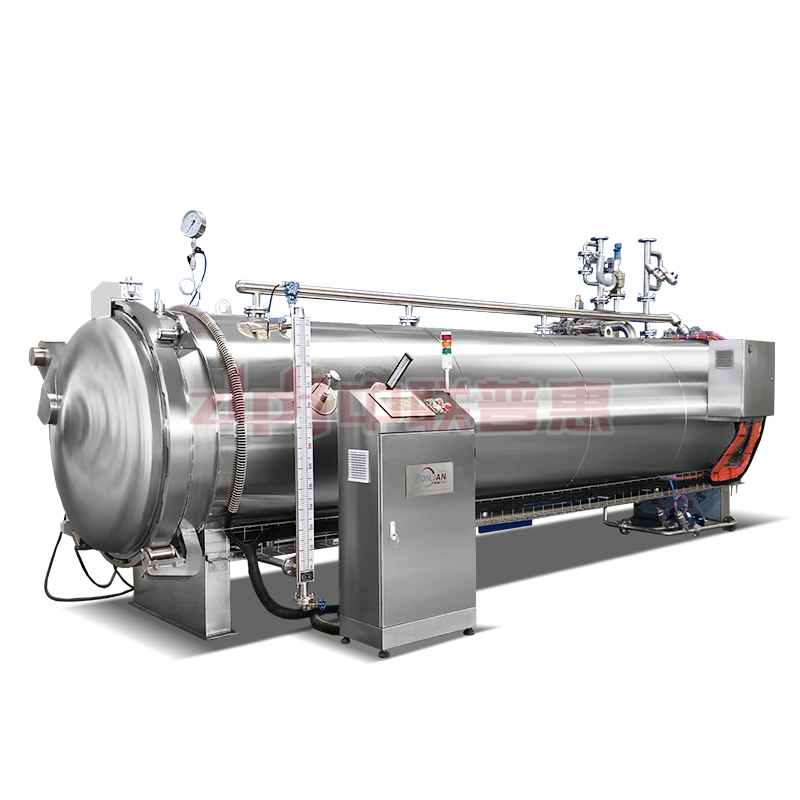
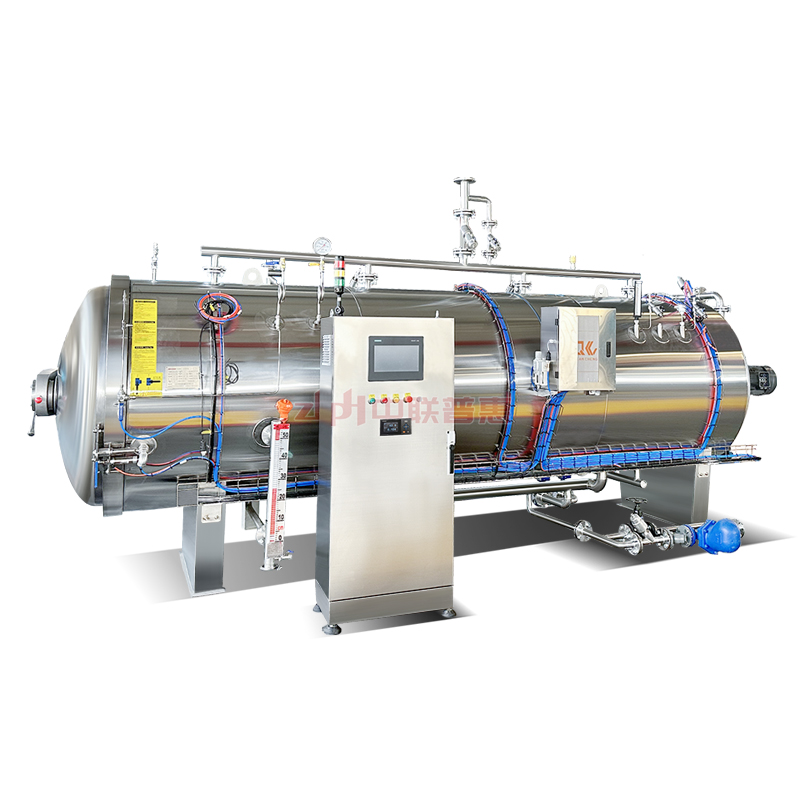
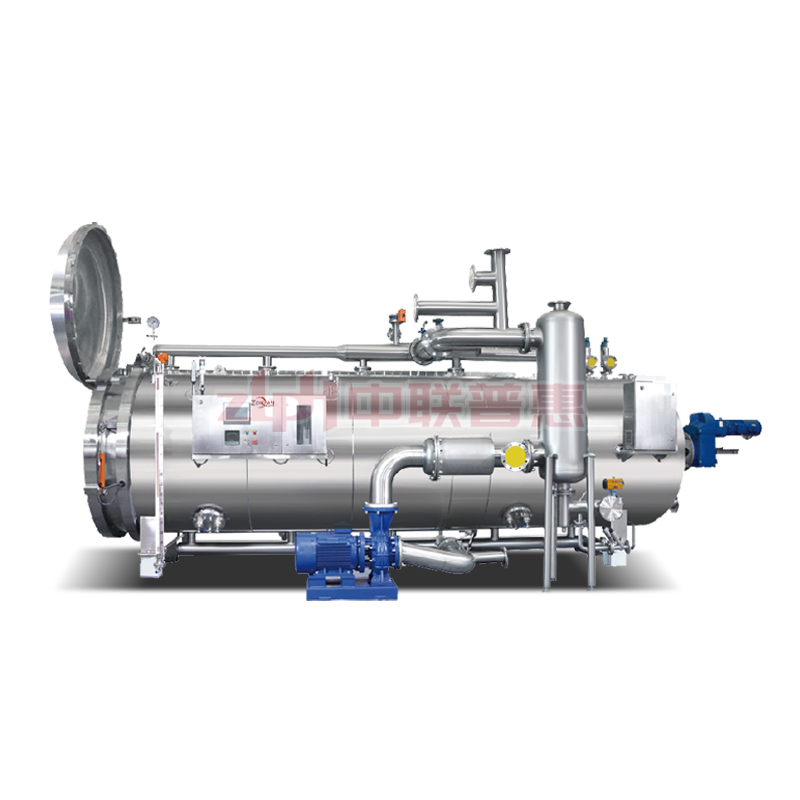
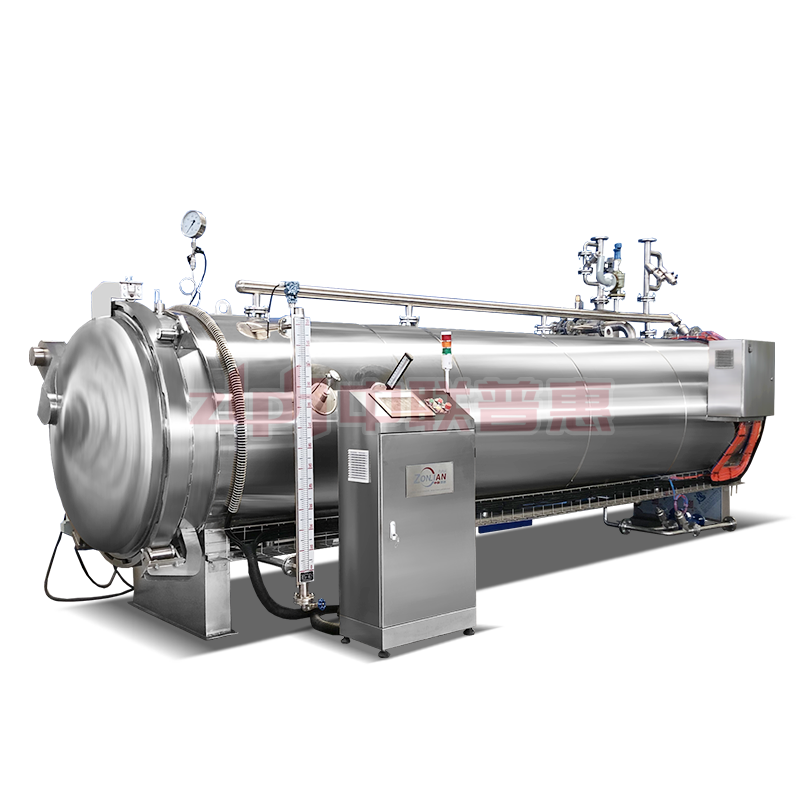
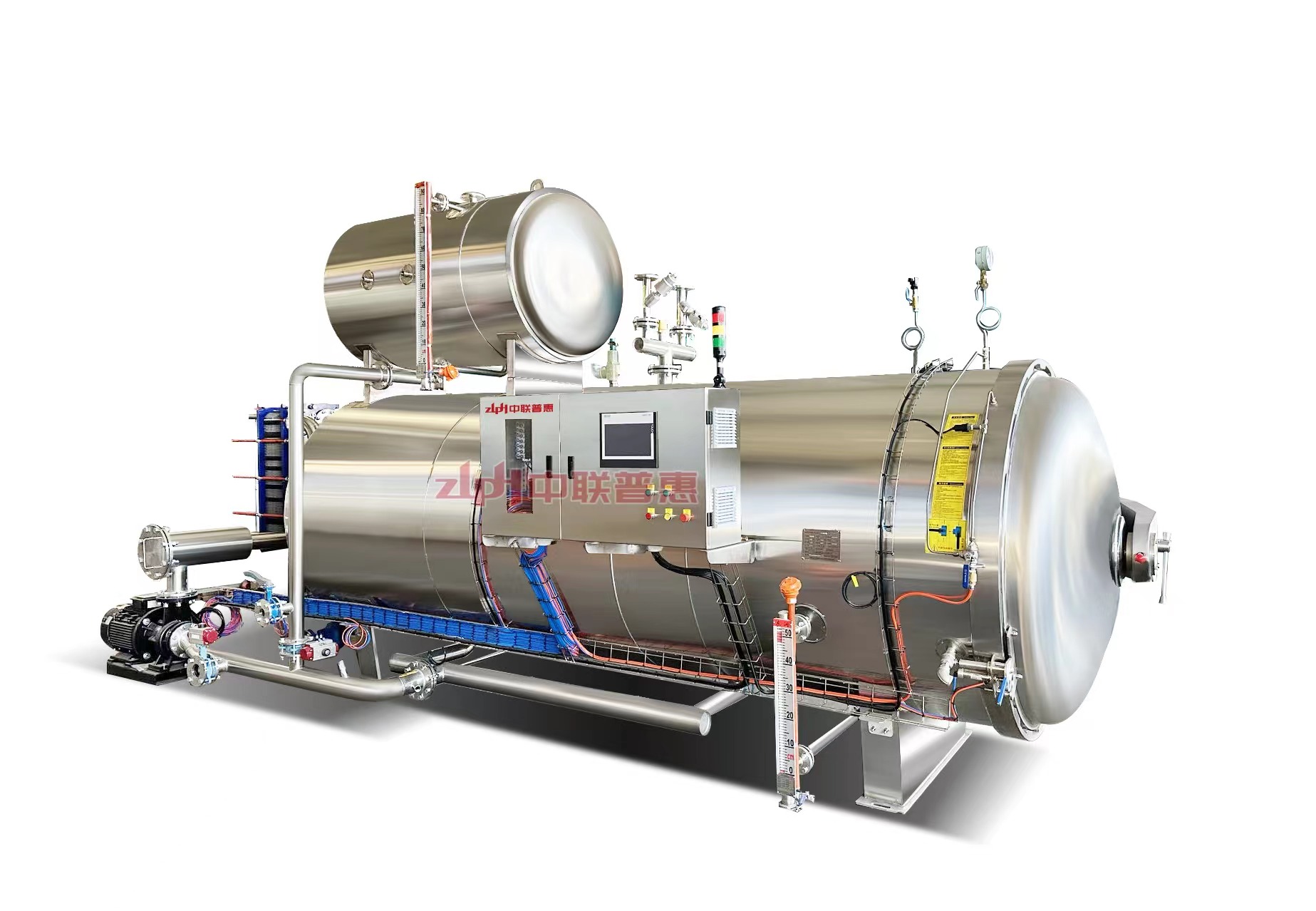
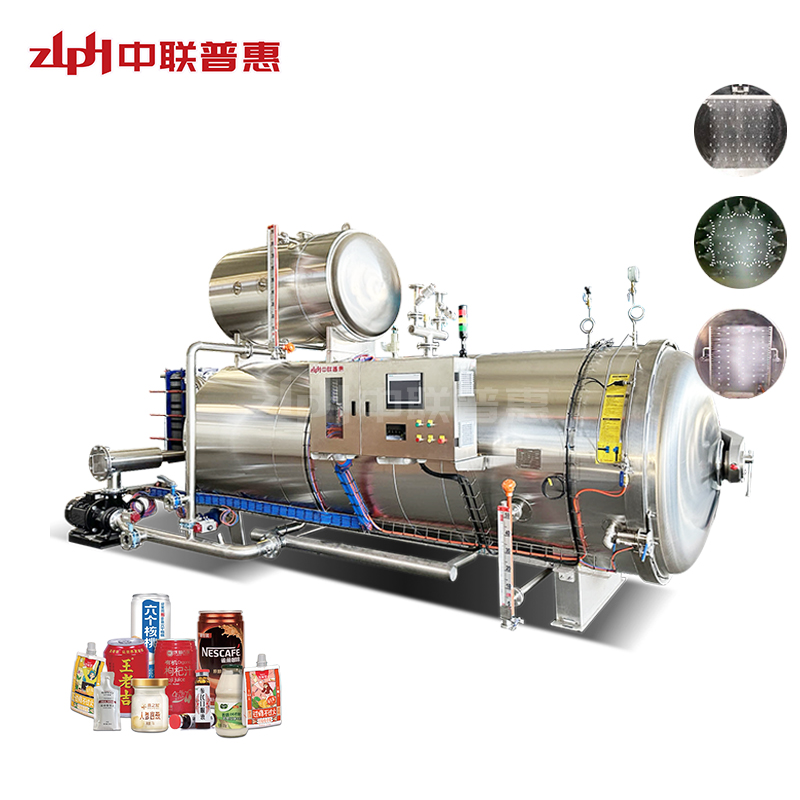
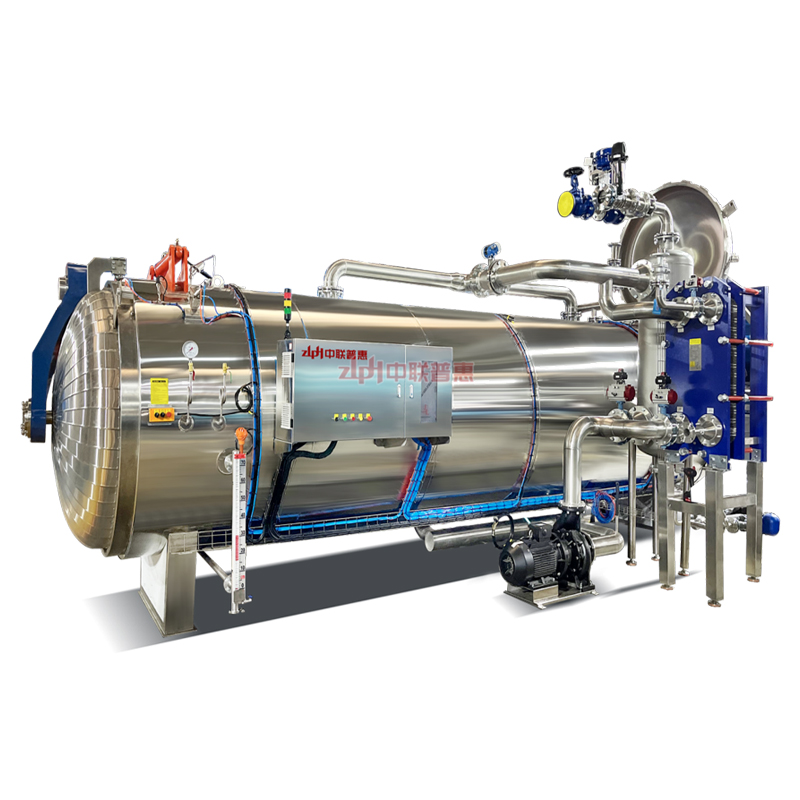
Long-Term Fix: Deploy an intelligent water spray retort with multi-zone nozzles and 360° rotating spray arms that ensure even water distribution. The system should feature real-time temperature and pressure sensors at multiple heights, feeding data to an adaptive PLC controller that dynamically adjusts steam and cooling phases.
Process Optimization: Implement F₀-based control instead of fixed time cycles, allowing the system to extend sterilization only until the coldest point reaches the required lethality.

4. Troubleshooting & Pitfall Avoidance
Verify nozzle alignment and check for clogging during routine maintenance. Avoid overloading baskets beyond 80% capacity, as dense packing blocks water flow. Always validate thermal uniformity using dataloggers before full-scale production. Never assume uniformity based on chamber average temperature alone—measure at product level.
5. Real-World Validation
At a European pet food facility using ZLPH’s intelligent top-opening water spray retort, thermal mapping showed F₀ variation reduced from ±1.8 to ±0.2 across 120 trays per batch. Product recalls due to under-processing dropped to zero over 18 months, and energy consumption decreased by 15% thanks to precise cycle control.
How to Reduce Cycle Time Without Compromising Sterility?
1. Scenario and Pain Point
High-volume producers of sauces or soups face bottlenecks due to long retort cycles (often 60–90 minutes), limiting throughput and increasing operational costs. Attempts to shorten cycles risk insufficient microbial kill, especially for low-acid foods requiring strict Clostridium botulinum control.
2. Root Cause Analysis
Traditional retorts rely on slow conductive heating through metal cans. The core limitation is inefficient heat transfer from chamber walls to product center, exacerbated by manual door operations and delayed cooling phases.
3. Step-by-Step Solution
Adopt a top-opening water spray retort with rapid door mechanism (reducing loading/unloading time by 40%) and forced convection via high-pressure spray nozzles that accelerate heat penetration. Pair this with an intelligent control system that initiates counter-pressure cooling immediately after sterilization, cutting total cycle time by up to 25% without affecting F₀ achievement.
4. Troubleshooting & Pitfall Avoidance
Ensure spray pressure is calibrated to avoid can deformation. Validate new cycles using thermal process validation per FDA 21 CFR Part 113. Do not reduce come-up time below minimum thresholds defined by product viscosity and fill volume.
5. Real-World Validation A Southeast Asian sauce manufacturer increased daily output from 8 to 11 batches after upgrading to ZLPH’s system, with consistent F₀ ≥ 3.0 verified across 500+ consecutive runs. ROI was achieved in under 14 months due to labor and energy savings.
Industry Best Practices for Reliable Retort Operations
Based on 6+ years of global deployments and 5,000+ installations, ZLPH has established a 5-step framework to ensure consistent, compliant, and efficient retort performance:
5-Step Reliability Framework
1. Characterize Your Product: Determine thermal properties (z-value, fₕ), container type, and fill ratio before selecting retort parameters.
2. Validate Thermal Uniformity: Conduct heat distribution studies with ≥12 dataloggers per load configuration.
3. Automate Critical Controls: Use PLC-based systems with real-time F₀ calculation and automatic cycle adjustment.
4. Maintain Spray Integrity: Inspect nozzles monthly; clean filters weekly to prevent clogging.
5. Document Everything: Maintain digital logs of every cycle for audit readiness and continuous improvement.
Best Practices from Global Projects
- Design for Worst Case: Size your retort and select controls based on your most challenging product (e.g., large-diameter jars, viscous stews).
- Standardize Loading: Use fixed basket configurations and train operators to avoid random stacking.
- Partner with Experts: Choose suppliers with in-house sterilization process engineers—not just equipment vendors.
Frequently Asked Questions (FAQ)
Q: Can I retrofit my old steam retort with water spray functionality?
A: Retrofitting is technically possible but rarely cost-effective. Modern water spray retorts integrate structural, hydraulic, and control systems holistically; standalone upgrades often fail to deliver uniformity or efficiency gains.
Q: What certifications should a water spray retort have for EU or US markets?
A: Look for CE marking (including PED 2014/68/EU for pressure equipment), ASME certification, and compliance with FDA 21 CFR. Reputable manufacturers also hold ISO 9001 and provide full validation documentation.
Q: How often should I calibrate temperature sensors in a retort?
A: Calibrate at least annually, or quarterly in high-cycle operations. Use NIST-traceable standards and verify against reference probes during each validation run.
Q: Does water quality affect spray sterilization performance?
A: Yes. Hard water causes scale buildup in nozzles and heat exchangers. Install water softeners or use deionized water in closed-loop systems to maintain spray efficiency.
Q: Can water spray retorts handle glass jars safely?
A: Absolutely—when equipped with precise counter-pressure control during heating and cooling to prevent breakage. ZLPH systems include programmable pressure ramps specifically for glass containers.
Our Expertise and Support
ZLPH MACHINERY TECHNOLOGY CO., LTD. is a leading global provider of intelligent sterilization solutions, founded in 2018 with a core focus on R&D innovation. Our team includes 21 mechanical and PLC engineers, 4 sterilization process specialists with over a decade of industry experience, and 14 dedicated after-sales engineers supporting clients in more than 30 countries. We operate a 15,000 m² modern factory equipped with precision manufacturing systems and hold multiple international certifications. Our water spray retort autoclaves have been validated in diverse applications—from pet food pouches to low-acid canned vegetables—and are trusted by multinational food producers for their reliability, efficiency, and compliance.
We offer comprehensive custom support including:
- On-site thermal process validation and cycle optimization
- Custom basket and loader-unloader integration for automated lines
- Free sample testing with your actual product in our demo center
- 24/7 remote technical assistance and spare parts logistics
Contact Information
Company: ZLPH MACHINERY TECHNOLOGY CO., LTD.
Website: https://www.zlphretort.com/
Email: sales@zlphretort.com
Phone / WhatsApp: +86 15666798389 / +86 13361554016
