

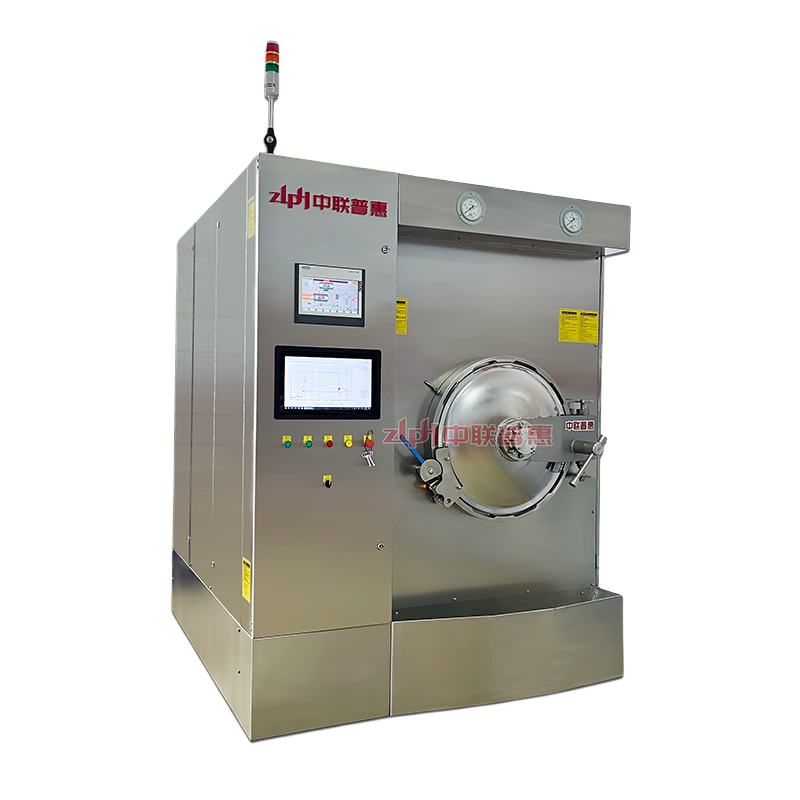
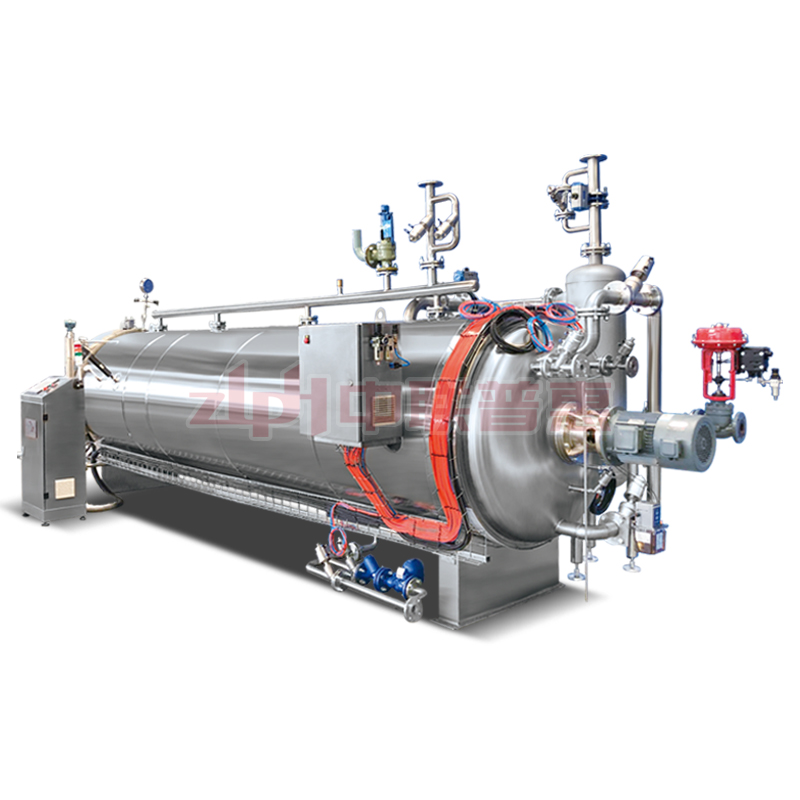
This guide is authored by a senior thermal processing engineer with over 10 years of experience at ZLPH MACHINERY TECHNOLOGY CO., LTD., a leading provider of intelligent sterilization solutions for the global food and pet food industries. It addresses a critical pain point faced by production managers and process engineers: inconsistent sterilization outcomes in steam-air retort autoclaves, which compromise product safety, shelf life, and regulatory compliance. This issue primarily stems from uneven heat distribution, improper air removal during venting, and inadequate control of temperature-pressure balance during the come-up and cooling phases. Based on validation from over 500 global installations and adherence to FDA/USDA and EU thermal processing standards, we present a proven, actionable framework to achieve uniform F0 values and eliminate cold spots. In this guide, we dissect root causes across key production scenarios, deliver step-by-step corrective actions, share real-world validation data, and provide industry best practices to ensure every batch meets commercial sterility requirements.

How to Eliminate Cold Spots in Large-Batch Steam-Air Retort Processing?
1. Scenario & Pain Point
In high-volume canned food or pet food bowl production, operators often detect under-processed units in the center or bottom layers of the retort basket after cycle completion. These cold spots fail microbial lethality targets (e.g., F0 < 2.5 for low-acid foods), risking spoilage recalls and regulatory non-compliance.

2. Root Cause Analysis
Three primary factors contribute: insufficient air purge during venting leaves insulating air pockets; poor circulation design fails to distribute steam uniformly; and static loading patterns create thermal barriers between dense product arrays.

3. Step-by-Step Solution
Immediate Mitigation: Implement a two-stage venting protocol—initial rapid vent at 100°C followed by a secondary vent at 110°C—to ensure complete air removal. Use perforated retort trays with optimized spacing (≥5 cm between layers) to enhance steam penetration.
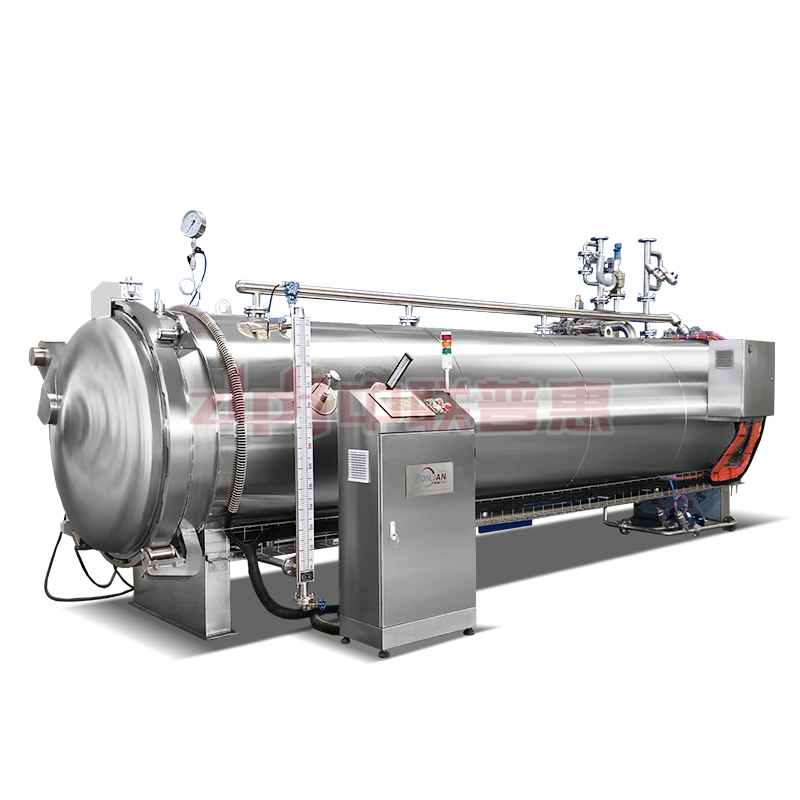
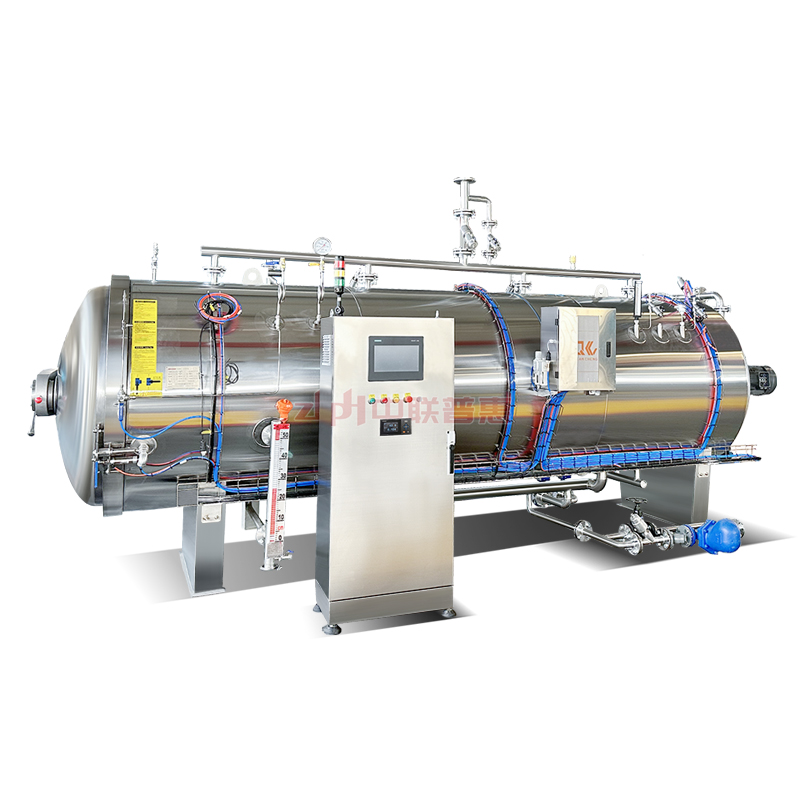
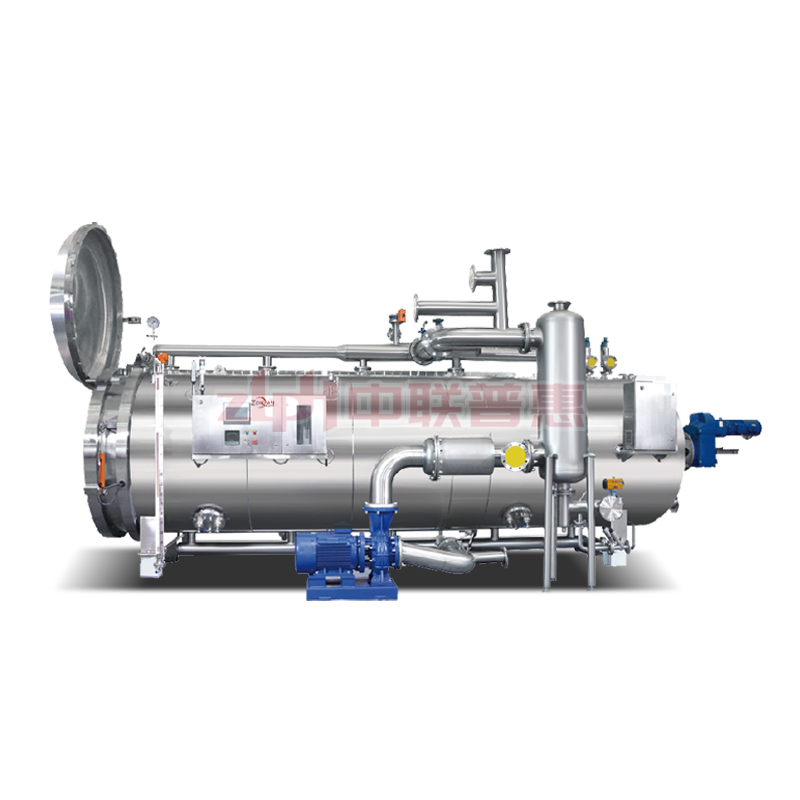
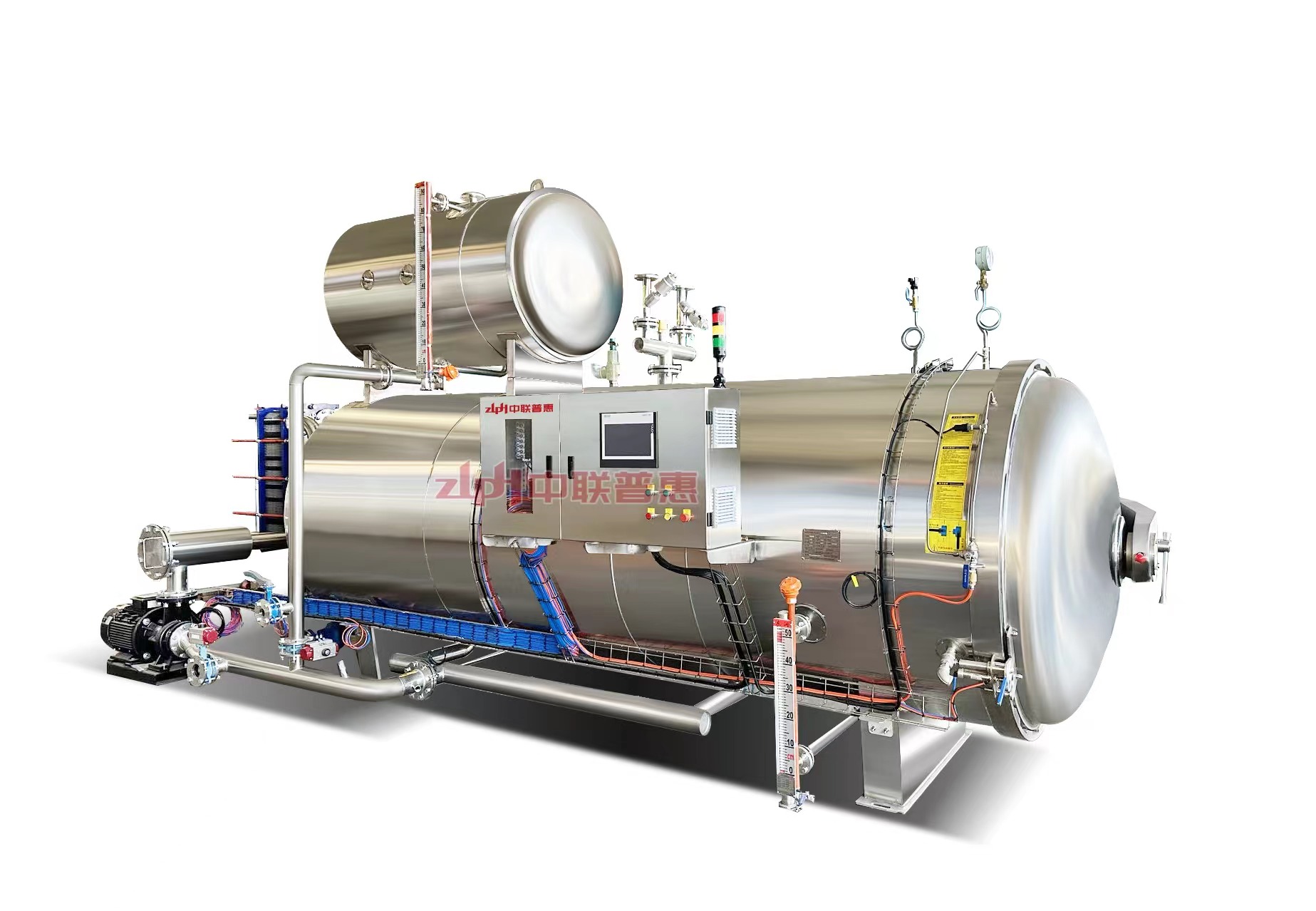
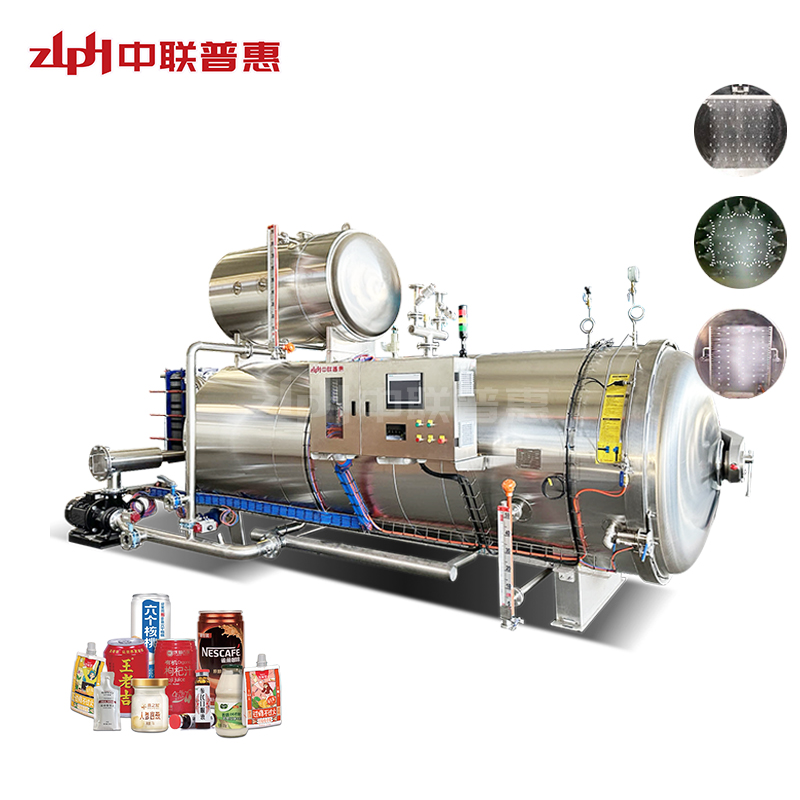
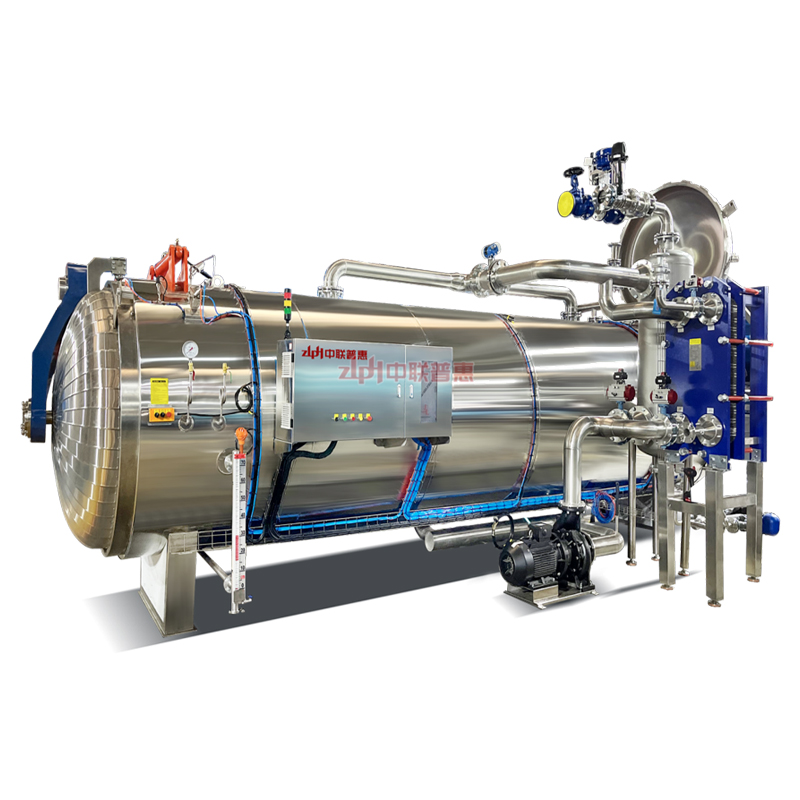
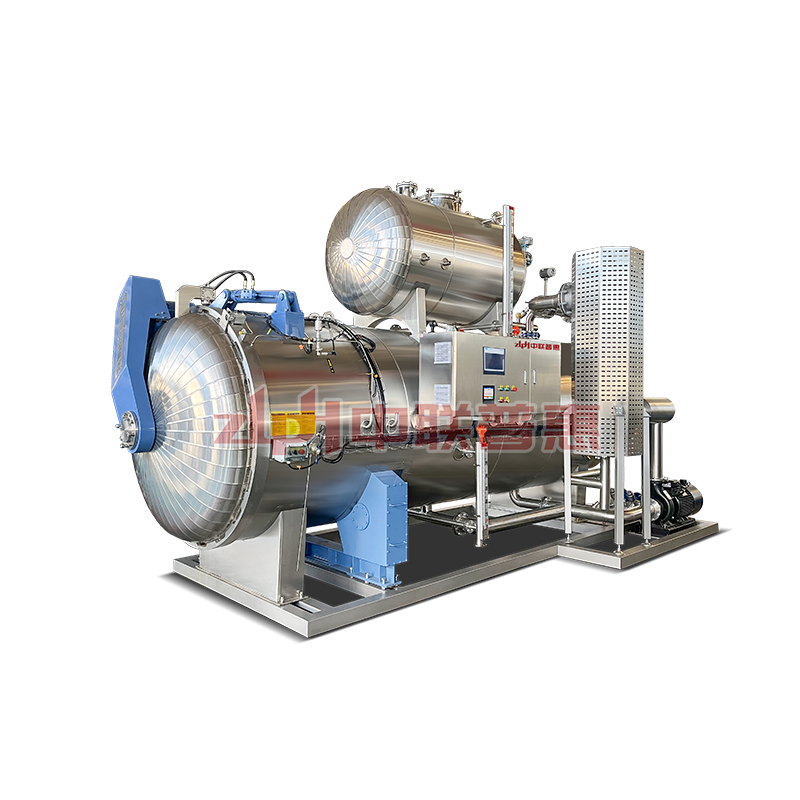
Long-Term Fix: Deploy ZLPH’s intelligent top-opening water spray retort equipped with multi-zone spray nozzles and real-time temperature mapping. Its PLC-controlled circulation system dynamically adjusts spray pressure based on basket load density, ensuring ±0.5°C uniformity across all zones.
Process Tuning: Calibrate come-up time (CUT) using actual product thermocouples, not chamber sensors. Apply a 10% safety margin to CUT for dense loads.

4. Troubleshooting & Prevention
Conduct quarterly heat distribution studies per ASME PTC 19.1. Avoid overloading baskets beyond 80% capacity. Never mix product types or fill levels in the same batch. Validate air removal efficiency via pressure decay testing post-venting.
5. Validation Results
At a Southeast Asian pet food facility, implementing this protocol reduced cold spot incidence from 12% to 0.3% across 200+ batches. F0 consistency improved to CV < 3%, meeting FDA 21 CFR Part 113 requirements.
How to Prevent Container Deformation During Rapid Cooling in Steam-Air Retorts?
1. Scenario & Pain Point
Flexible pouches or thin-walled cans collapse or bulge during fast cooling due to unbalanced internal-external pressure differentials, causing packaging failure and product loss.
2. Root Cause Analysis
Cooling water injection without simultaneous compressed air pressurization creates vacuum conditions inside containers. Delayed air injection response in legacy systems exacerbates deformation.
3. Step-by-Step Solution
Emergency Adjustment: Reduce cooling water flow rate by 30% and initiate air pressurization at 95°C instead of 90°C.
System Upgrade: Integrate ZLPH’s synchronized pressure-cooling module, which uses proportional air valves to maintain ΔP ≤ 0.3 bar between product interior and retort chamber throughout cooling.
Parameter Optimization: Set cooling ramp rate to ≤1.5°C/min for sensitive packaging.
4. Troubleshooting & Prevention
Monitor container integrity via inline vision systems. Conduct burst pressure tests on empty containers before full-scale runs. Ensure air filters are replaced monthly to prevent valve clogging.
5. Validation Results
A European ready-meal producer eliminated pouch deformation entirely after retrofitting ZLPH’s system, reducing packaging waste by 92% and saving $180K annually.
Industry Best Practices for Reliable Steam-Air Retort Operation
Based on 6 years of field data from 300+ installations, we recommend this 5-step framework:
1. Define Worst-Case Conditions
Validate cycles using the slowest heating product in your portfolio under maximum load.
2. Standardize Loading Protocols
Use barcode-scanned tray loaders to enforce consistent basket configuration—critical for thermal uniformity.
3. Implement Real-Time Monitoring
Deploy wireless dataloggers in every third basket to track actual product temperature, not just chamber conditions.
4. Schedule Preventive Maintenance
Clean spray nozzles biweekly; calibrate pressure transmitters quarterly.
5. Partner with Certified Experts
Choose suppliers with in-house thermal process authorities (TPAs) certified by organizations like NC State University’s Thermal Processing Lab.
Frequently Asked Questions
Q: Can I use a standard steam retort for products requiring precise F0 control?
A: Only if it features independent steam/air injection with PID-controlled pressure balancing—standard gravity-vented systems lack the precision needed for low-acid foods.
Q: What’s the minimum validation requirement for new retort installations?
A: Per FDA guidelines, you must conduct three consecutive heat distribution and heat penetration studies under worst-case conditions before commercial production.
Q: How often should I recalibrate retort temperature sensors?
A: Annually for chamber sensors; every 6 months for product penetration probes used in critical control points.
Q: Are ZLPH retorts compliant with EU Machinery Directive 2006/42/EC?
A: Yes—all models carry CE certification with full technical documentation available for notified body audits.
Q: Can your system handle both rigid cans and flexible pouches?
A: Absolutely—our modular basket system and adaptive pressure-cooling profile support mixed packaging formats in the same production line.
Our Technical Authority & Support
ZLPH MACHINERY TECHNOLOGY CO., LTD. is a globally recognized steam-air retort specialist with 6 years of R&D experience and a team of 21 mechanical designers, 4 sterilization process researchers, and 14 field service engineers. Our 15,000m² manufacturing facility houses ISO 9001-certified production lines and conducts rigorous FAT/SAT protocols for every system. We’ve delivered validated solutions to 500+ clients across 40 countries, including Fortune 500 pet food and prepared meal manufacturers. Our proprietary top-opening retort design—featured at AGROPRODASH 2023 and Petfair Asia 2023—sets new benchmarks for thermal uniformity and operational efficiency.
We offer comprehensive support including:
- On-site thermal process validation
- Custom basket design for unique packaging
- Remote PLC diagnostics via secure cloud interface
- Free pilot testing with your actual product matrix
Contact Us
Company: ZLPH MACHINERY TECHNOLOGY CO., LTD.
Website: https://www.zlphretort.com/
Email: sales@zlphretort.com
Phone / WhatsApp: +86 13361554016
