
This guide is authored by a senior food processing automation engineer with over 10 years of industry experience from ZLPH MACHINERY TECHNOLOGY CO., LTD., a globally recognized provider of advanced sterilization solutions. It addresses a critical challenge faced by food manufacturers and procurement professionals worldwide: inconsistent sterilization performance and operational instability in steam-air retort autoclaves. This issue has long plagued the canned and ready-to-eat food industry, primarily due to three root causes—imprecise temperature-pressure synchronization, inefficient heat distribution, and lack of intelligent process control. Based on more than 5,000 global installations and extensive field validation, we present a proven, actionable framework to enhance sterilization consistency, ensure food safety compliance, and maximize production uptime. In this guide, we dissect the underlying technical failures, deliver scenario-specific remedies, share real-world validation data, and outline best practices for selecting and operating high-reliability retort systems.

How to Ensure Consistent Sterilization Results Across All Batches in a Steam-Air Retort?
1. Scenario and Pain Point
In large-scale canning facilities producing ready meals or pet food, operators often observe batch-to-batch variability in microbial kill rates, leading to product recalls or over-processing that degrades texture and nutrition. This inconsistency typically manifests as under-sterilized zones in dense-packed trays or overheated edges in lightweight containers, directly impacting shelf life and consumer safety.

2. Root Cause Analysis
The core issues stem from: (1) non-uniform steam-air mixture distribution inside the chamber, causing thermal gradients; (2) delayed response in pressure regulation during rapid heating/cooling phases; and (3) absence of real-time F₀ (sterilization value) monitoring, preventing dynamic process adjustment.

3. Step-by-Step Solution
Immediate Mitigation: Recalibrate spray nozzles to ensure even water distribution; verify door sealing integrity to prevent steam leakage.
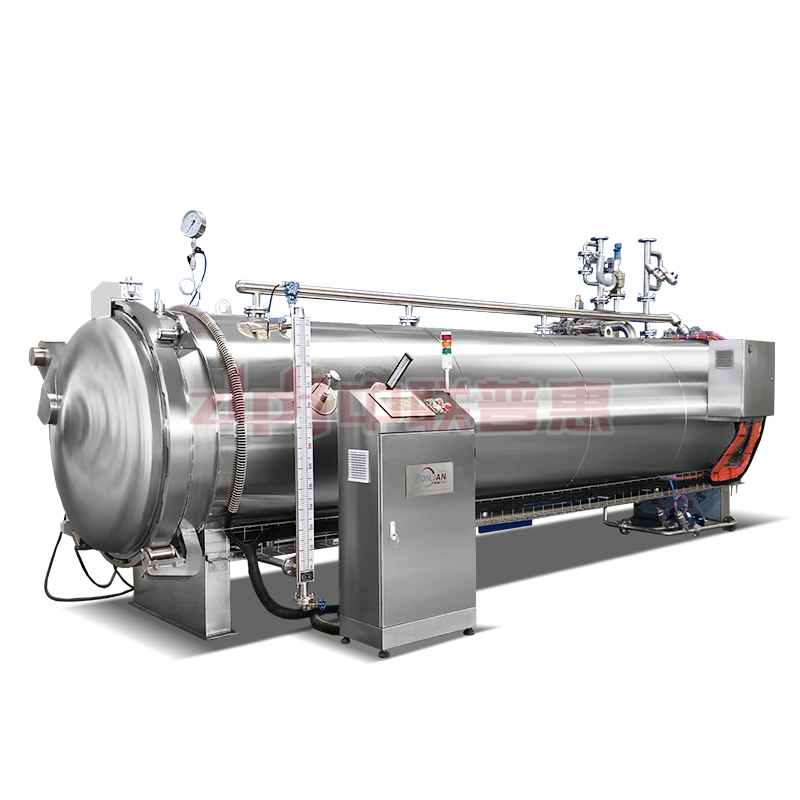
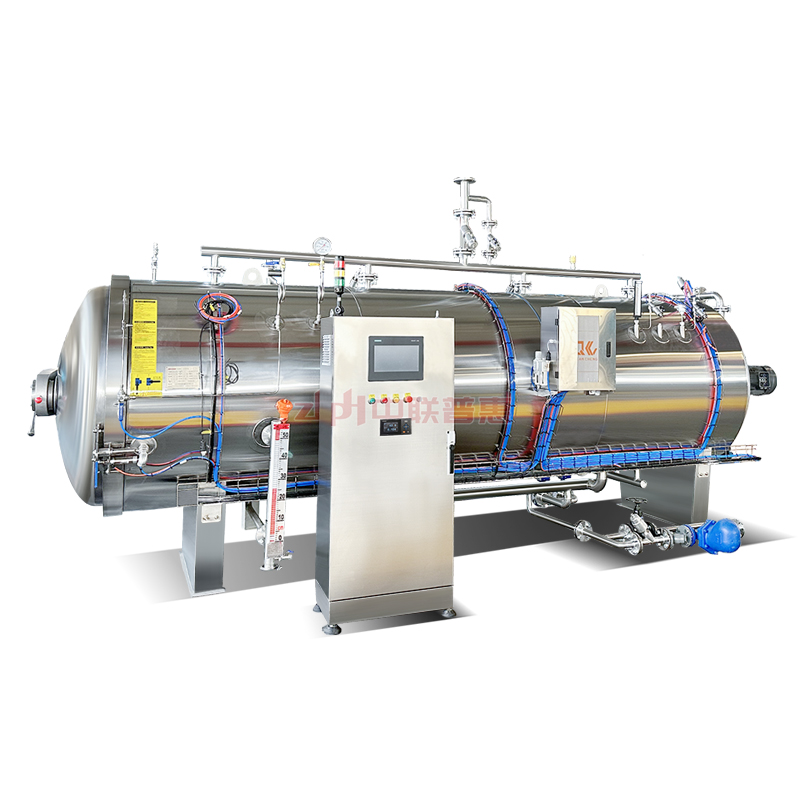
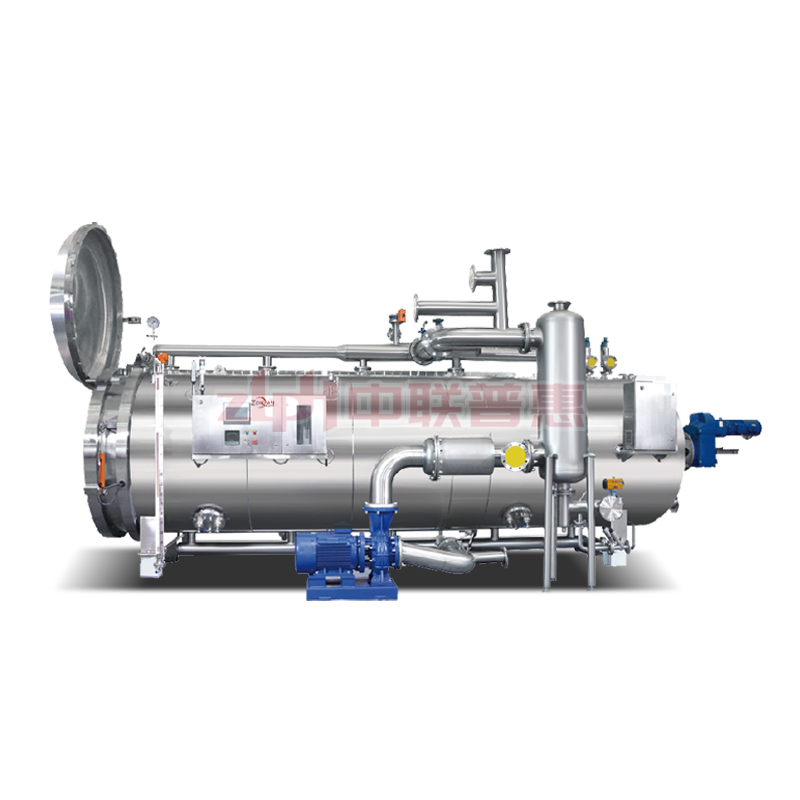
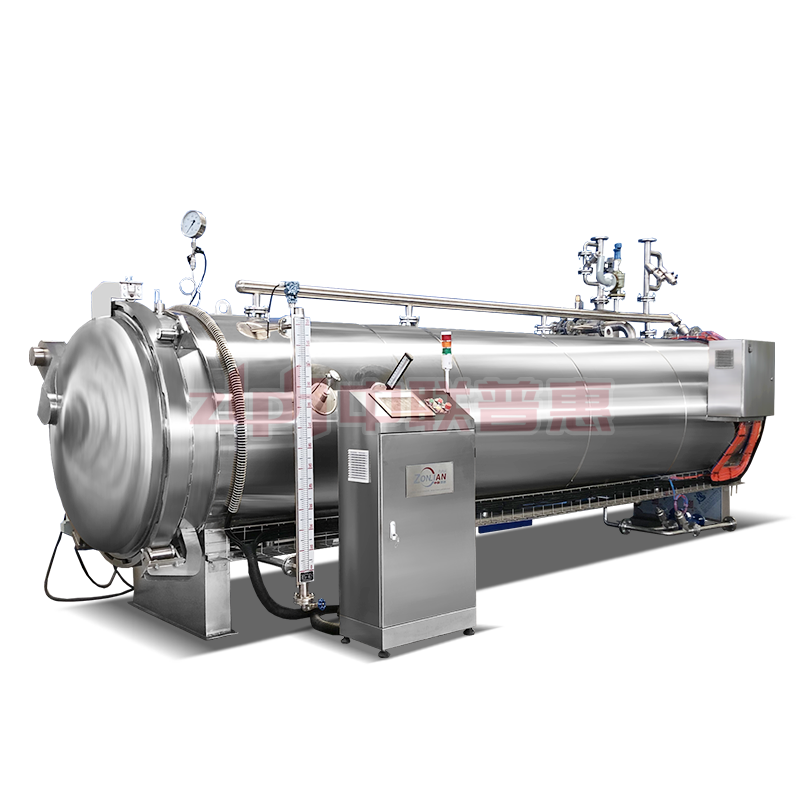
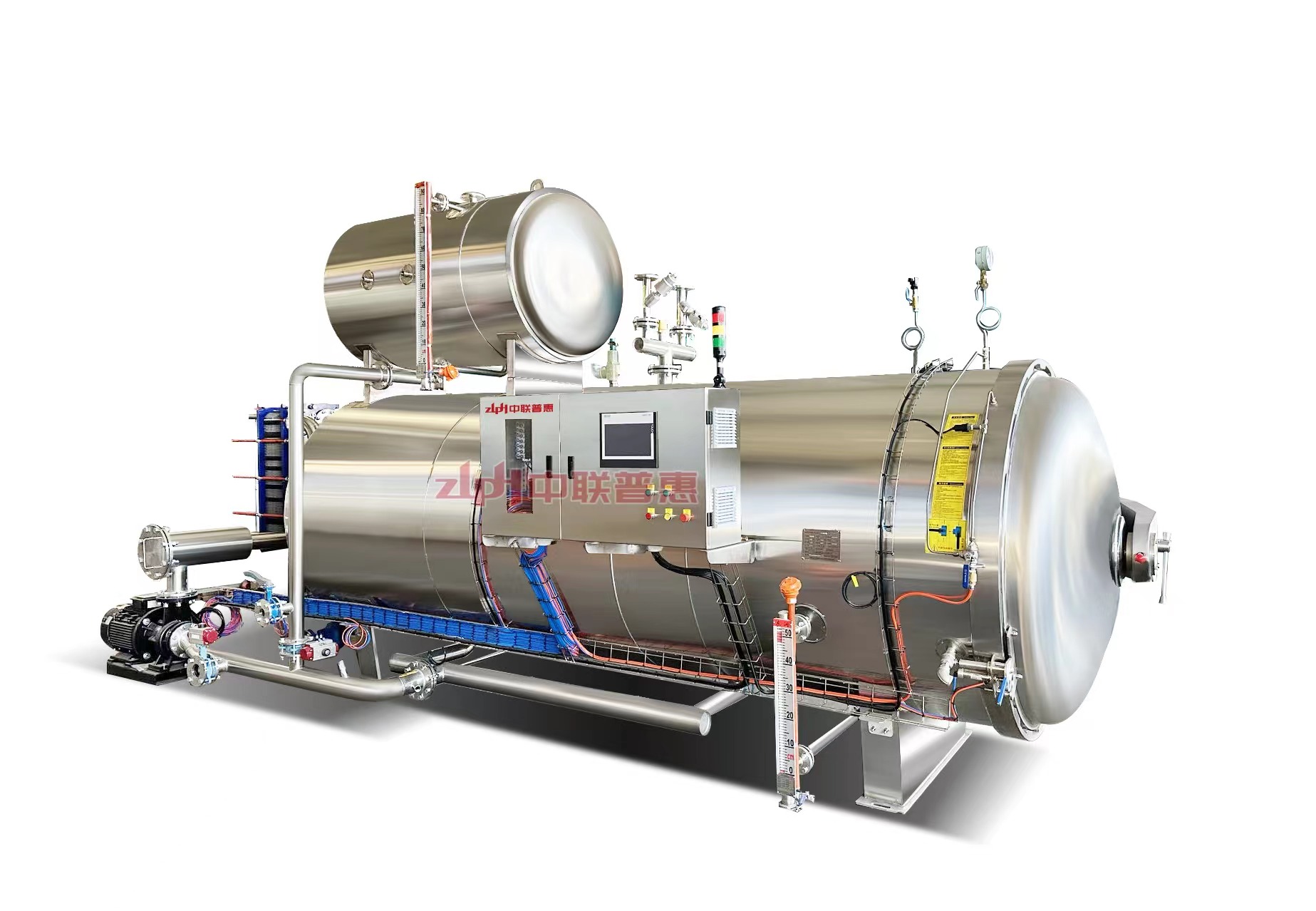
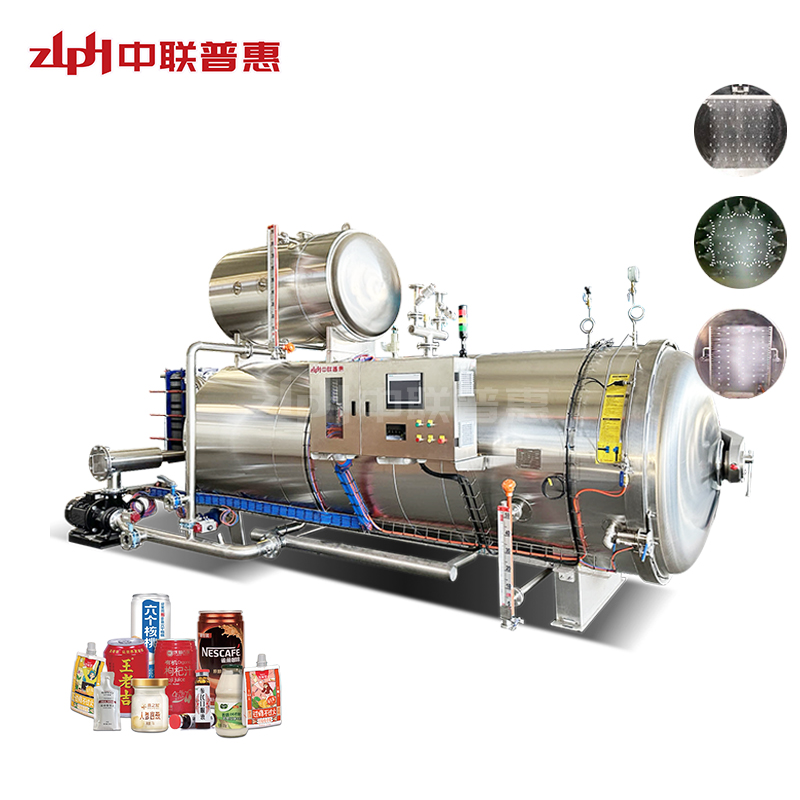
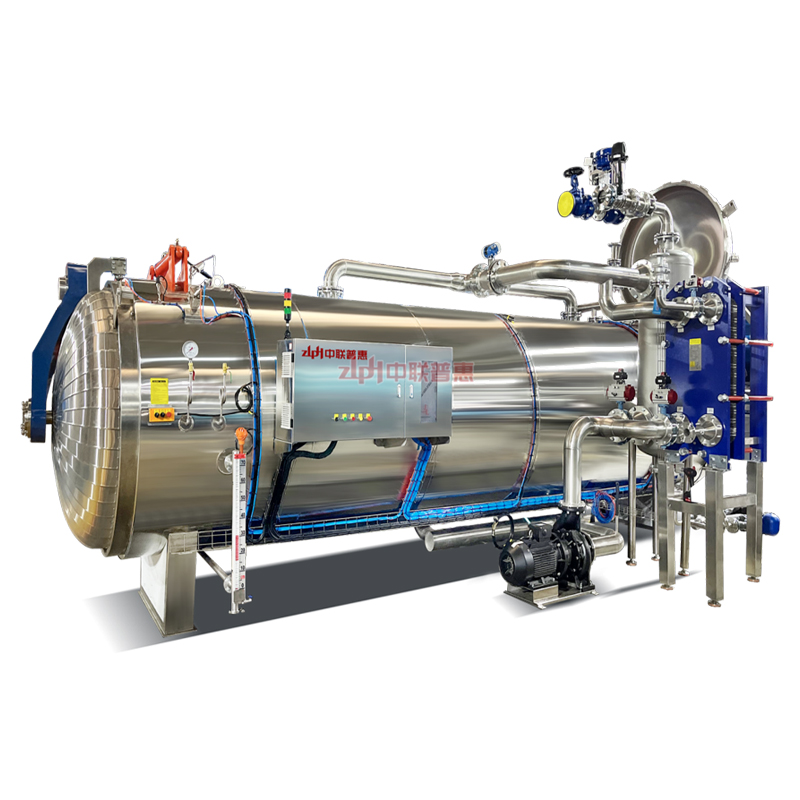
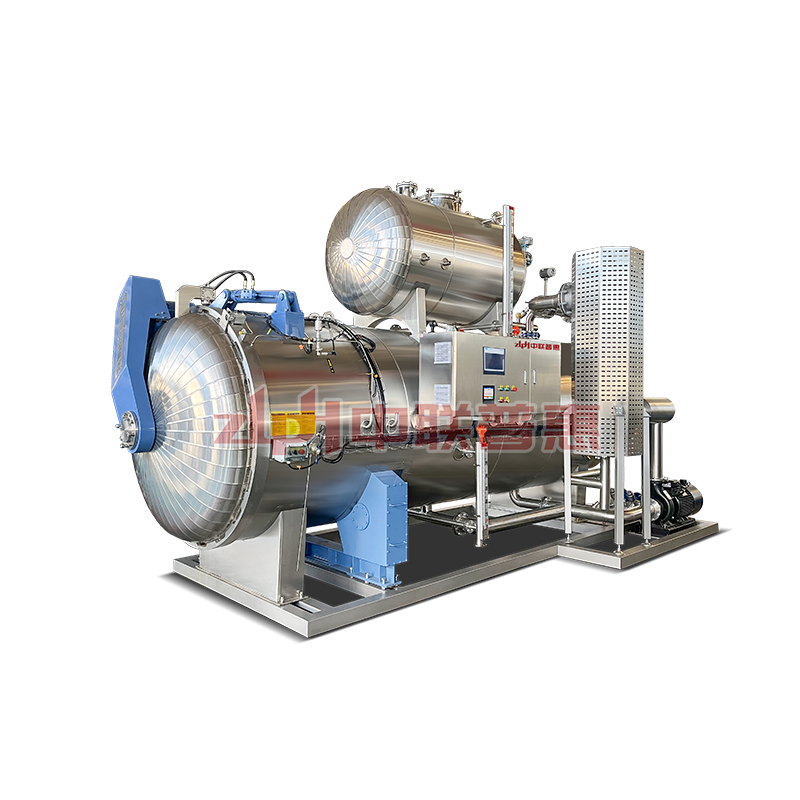
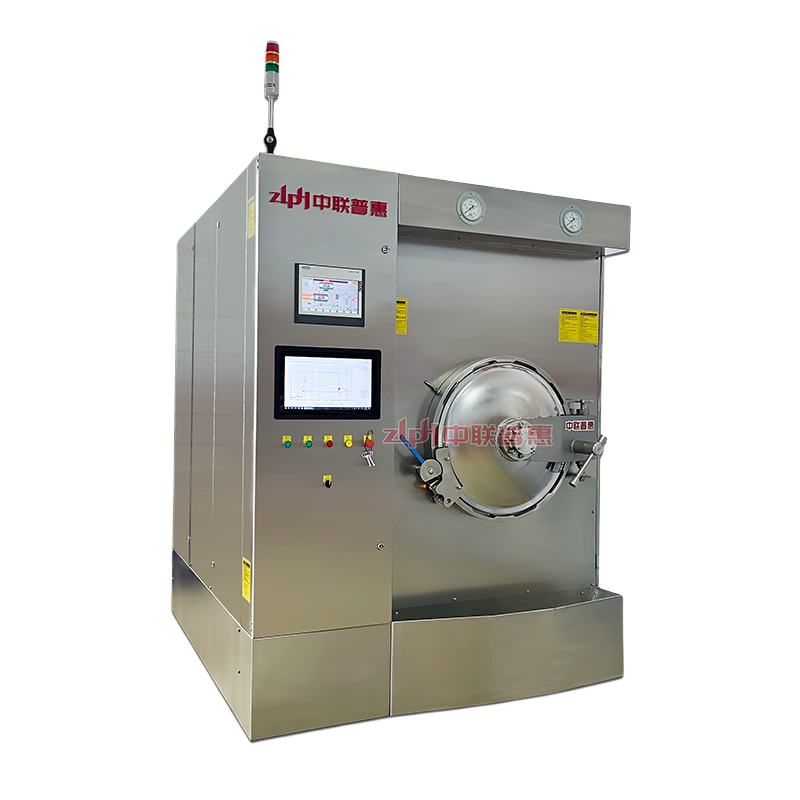
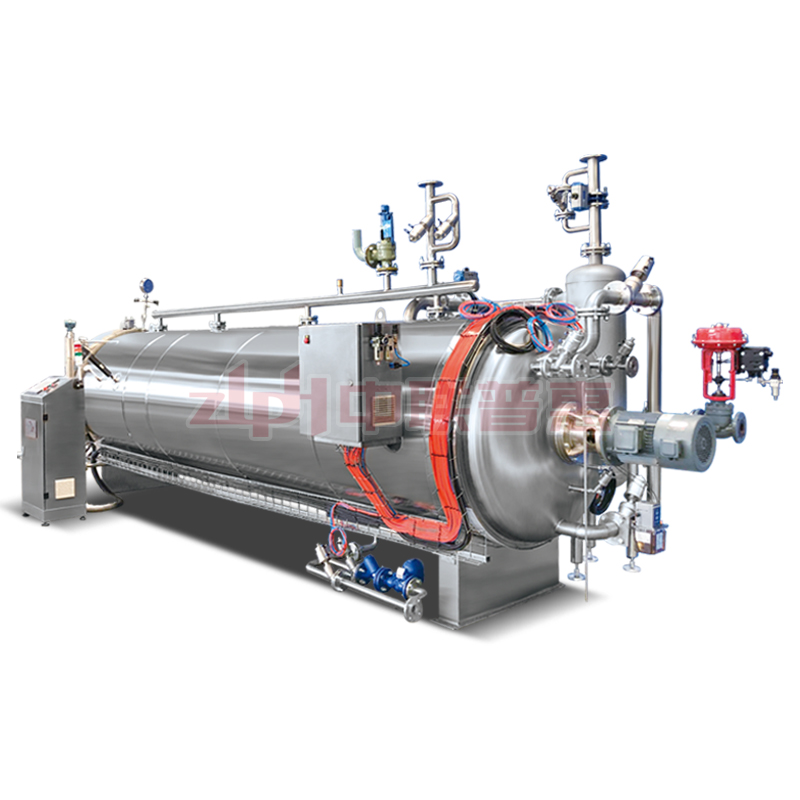
Long-Term Fix: Deploy ZLPH’s intelligent top-opening water spray sterilization retort, featuring a multi-zone spray system and closed-loop PID control that synchronizes temperature and pressure within ±0.5°C and ±0.01MPa.
Process Optimization: Integrate real-time F₀ calculation based on in-chamber thermocouples, enabling automatic cycle extension if target lethality isn’t achieved.

4. Troubleshooting & Prevention
Validate thermal uniformity using 3D mapping with wireless data loggers; avoid overloading trays beyond recommended density; conduct monthly calibration of pressure transmitters and temperature sensors. Always select retorts with ASME-certified pressure vessels to ensure structural reliability under cyclic stress.
5. Real-World Validation
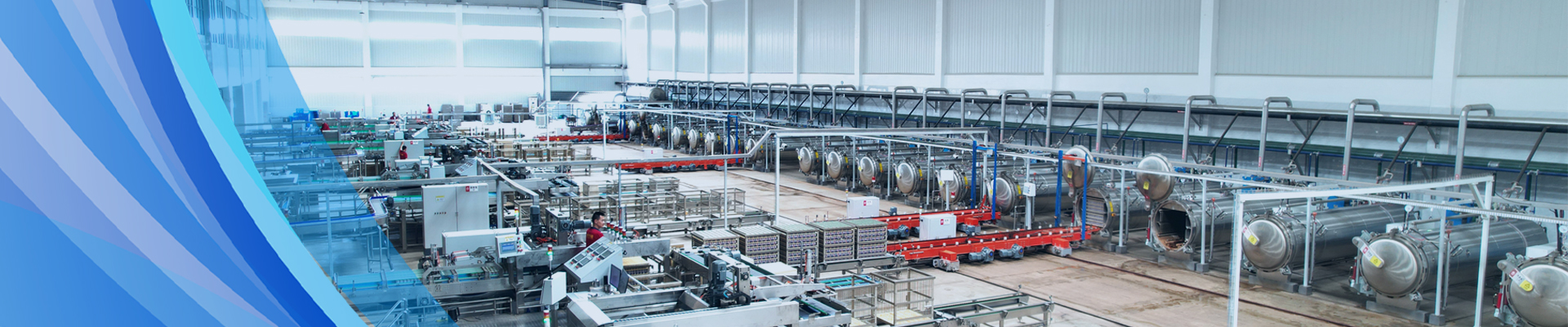
At a major pet food producer in Southeast Asia, implementation of ZLPH’s automated bowl sterilization line reduced batch failure rates from 3.2% to 0.1% and cut energy consumption by 18%, while maintaining consistent texture and moisture retention across 10,000+ daily cycles.
How to Reduce Downtime Caused by Manual Loading/Unloading in Retort Operations?
1. Scenario and Pain Point
Manual handling of heavy retort trays leads to ergonomic injuries, inconsistent loading patterns, and 15–20 minutes of idle time per cycle—severely limiting throughput in high-volume plants.
2. Root Cause Analysis
Reliance on forklifts or manual labor introduces human error, tray misalignment, and safety hazards, while also preventing integration with upstream filling and downstream labeling lines.
3. Step-by-Step Solution
Install ZLPH’s fully automated retort trays loader-unloader system, which uses servo-driven conveyors and vision-guided positioning to achieve ±2mm placement accuracy. This system interfaces seamlessly with MES for end-to-end traceability.
4. Troubleshooting & Prevention
Ensure floor leveling within 3mm tolerance before installation; use stainless-steel trays with standardized corner fixtures to enable robotic gripping; schedule quarterly maintenance on linear guides and pneumatic actuators.
5. Real-World Validation
A Qingdao-based seafood exporter reported a 40% increase in daily output after automating tray handling, with zero workplace incidents over 18 months of continuous operation.
Industry Best Practices for Steam-Air Retort Reliability
Based on a decade of global deployments, ZLPH recommends a 5-step framework to ensure retort system resilience:
1. Define Worst-Case Conditions: Design for peak ambient temperature, maximum product load density, and local utility fluctuations.
2. Validate Thermal Uniformity: Perform 3D thermal mapping during FAT (Factory Acceptance Test) using at least 12 data loggers.
3. Prioritize Certifications: Require ASME, CE, and EAC certifications to guarantee compliance across North America, EU, and Eurasian markets.
4. Implement Predictive Maintenance: Monitor vibration on circulation pumps and corrosion on chamber walls via IoT sensors.
5. Partner with Full-Service Providers: Choose vendors offering on-site commissioning, operator training, and 24/7 remote diagnostics.
Frequently Asked Questions (FAQ)
Q: Can standard retorts handle both metal cans and plastic bowls?
A: Only retorts with adjustable spray pressure and multi-mode control (like ZLPH’s water spray system) can safely process diverse packaging without deformation or under-processing.
Q: What certifications are required for retorts sold in Europe and Russia?
A: CE marking for EU and EAC certification for the Eurasian Economic Union are mandatory; ZLPH holds both, along with ASME authorization for pressure equipment.
Q: How often should retort seals and gaskets be replaced?
A: Every 6–12 months depending on cycle frequency; ZLPH’s systems include wear-alert notifications via the HMI to prevent unexpected leaks.
Q: Is top-opening design better than side-opening for hygiene?
A: Yes—the top-opening mechanism eliminates horizontal rails where debris accumulates, simplifying CIP cleaning and reducing microbial harborage points.
Q: Can retort processes be validated for FDA or BRCGS compliance?
A: Absolutely. ZLPH provides full documentation packages including thermal validation reports, material traceability, and software audit trails to support audits.
Our Proven Expertise and Support
ZLPH MACHINERY TECHNOLOGY CO., LTD. is a trusted global provider of intelligent sterilization systems, founded in 2018 with a 21-member R&D team specializing in mechanical design, PLC programming, and sterilization science. Our 50-acre manufacturing facility houses 15,000㎡ of precision workshops equipped with CNC machining centers and automated welding robots, ensuring micron-level component accuracy. We hold ASME, CE, EAC, and Malaysia DOSH certifications, alongside AAA-rated credit and integrity credentials that underscore our commitment to ethical business practices. Our solutions serve clients across Asia, Europe, and the Americas, including leaders in pet food, seafood, and ready-meal sectors.
We offer tailored support including: (1) on-site process assessment, (2) custom chamber sizing for unique product formats, (3) bilingual commissioning teams, and (4) free pilot testing with your actual products. Contact us for a no-obligation consultation.
Contact Information
Company: ZLPH MACHINERY TECHNOLOGY CO., LTD.
Website: https://www.zlphretort.com/
Email: sales@zlphretort.com
Phone / WhatsApp: +86 15666798389 / +86 13361554016
