
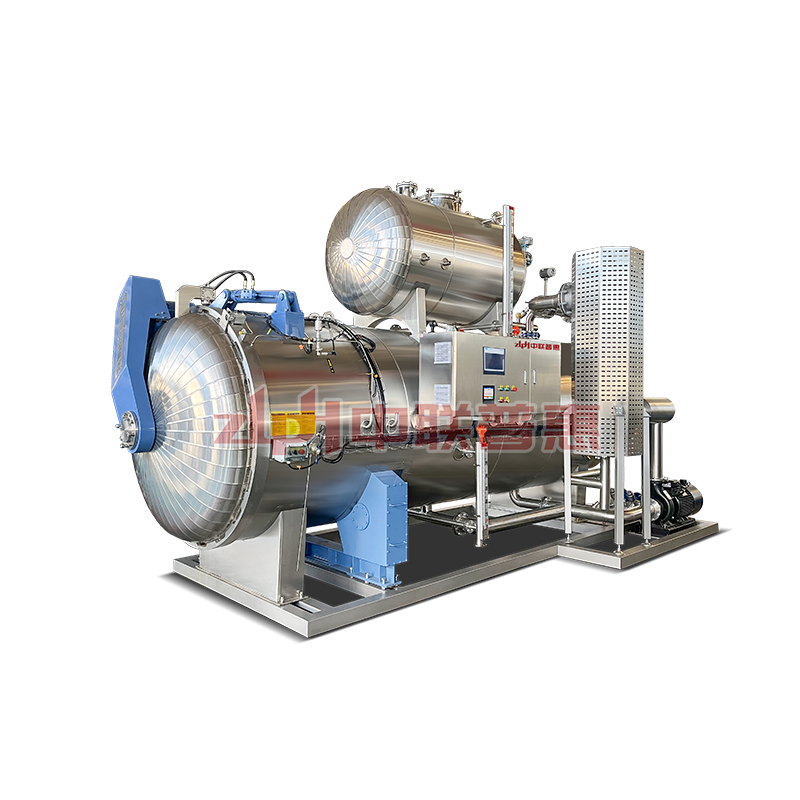
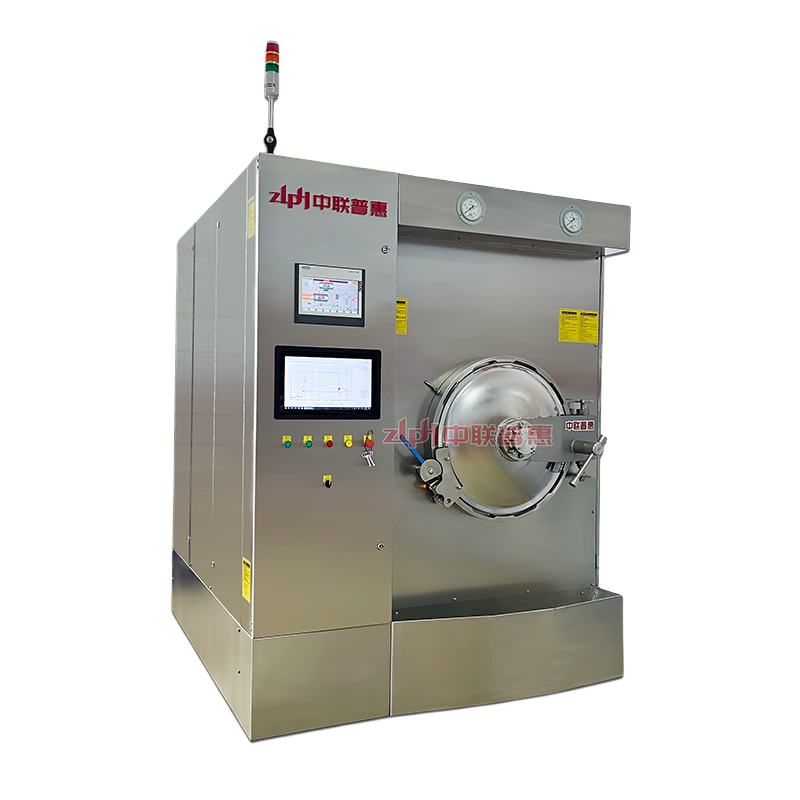
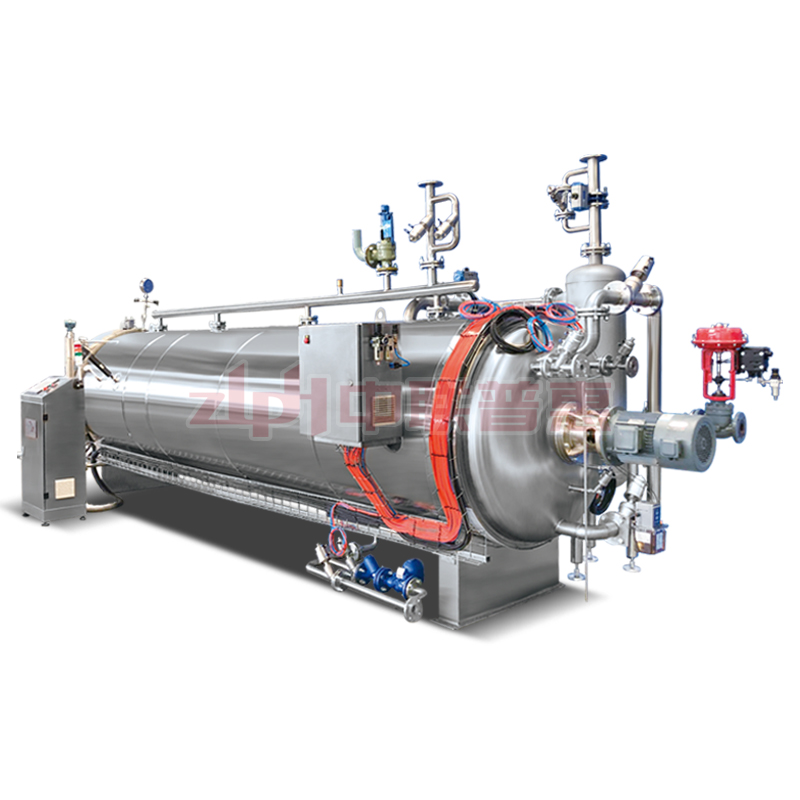
This guide is authored by a senior food processing engineer with over 12 years of experience at Zhonglian Puhui Machinery Technology Co., Ltd., a globally recognized provider of industrial sterilization solutions. It addresses a critical challenge faced by food manufacturers and procurement professionals worldwide: identifying trustworthy rotary retort autoclave suppliers capable of delivering consistent, safe, and efficient thermal processing.

Selecting the wrong rotary retort supplier often leads to inconsistent sterilization, product recalls, extended downtime, and compliance risks—especially in high-volume canning or pouch-based ready-to-eat meal production. Root causes include inadequate pressure-temperature control, poor mechanical reliability, lack of international certifications, and insufficient after-sales support. Based on more than 5,000 global installations and field validations across Asia, Europe, Russia, and Southeast Asia, we’ve developed a proven, step-by-step framework to help you evaluate and partner with a truly reliable rotary retort supplier. This guide breaks down real-world scenarios, technical pitfalls, validation benchmarks, and compliance essentials—so you can ensure food safety, operational efficiency, and regulatory compliance from day one.

How do I verify if a rotary retort supplier meets international food safety standards?
1. Scenario & Pain Point
Many food processors, especially those exporting to the EU, Russia, or Malaysia, face shipment rejections or audit failures due to non-compliant sterilization equipment. The core issue isn’t just performance—it’s certification gaps that invalidate entire production batches.

2. Root Cause Analysis
Non-compliance typically stems from three factors: absence of ASME pressure vessel certification, missing regional market access marks (e.g., CE, EAC, DOSH), and unverified quality management systems. Without these, even technically sound retorts may be deemed illegal for commercial use.

3. Step-by-Step Solution
First, demand official copies of the supplier’s ASME Certificate of Authorization—this validates engineering integrity under U.S. boiler and pressure vessel codes. Second, confirm region-specific certifications: CE for Europe, EAC for Eurasian Economic Union countries, and DOSH for Malaysia. Third, verify ISO-aligned quality system documentation, such as an Authentication Certificate for consistent manufacturing processes.
4. Pitfall Avoidance Guide
Never accept “CE self-declaration” without third-party verification. Always cross-check certificate numbers with issuing bodies. Avoid suppliers who bundle certifications as “optional add-ons”—compliance must be standard.
5. Validation Evidence
Zhonglian Puhui holds ASME, CE, EAC, DOSH, and Special Equipment Production License certifications. These have enabled seamless market entry for clients in Germany, Kazakhstan, and Malaysia, with zero compliance-related rejections over the past five years.
How can I ensure consistent sterilization performance across different product formats?
1. Scenario & Pain Point
A ready-meal producer using both rigid cans and flexible pouches struggles with uneven heat distribution—leading to under-processing in pouches and overcooking in cans when using the same rotary retort cycle.
2. Root Cause Analysis
Traditional rotary retorts often use fixed spray patterns and uniform rotation speeds, failing to adapt to varying thermal mass and geometry between containers. Without precise water-spray coverage and dynamic control, F₀ (sterilization value) consistency collapses.
3. Step-by-Step Solution
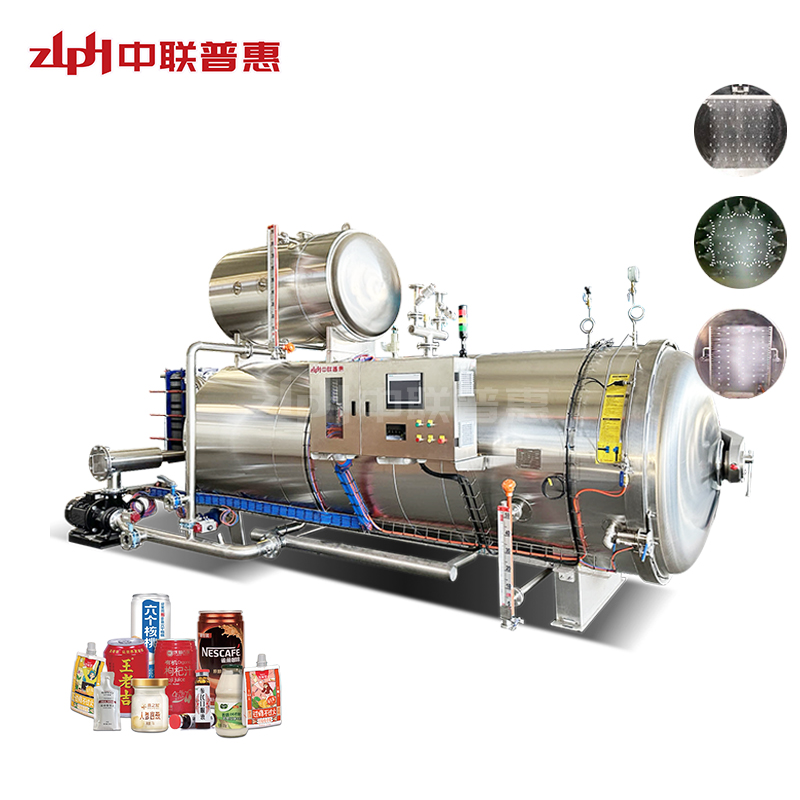
Deploy a rotary retort with intelligent upper-door design and multi-zone water spray nozzles. Real-time temperature and pressure monitoring—coupled with programmable rotation profiles—allows tailored cycles per product type. For example, slower rotation with higher spray density for pouches; faster tumbling for cans.
4. Pitfall Avoidance Guide
Avoid “one-size-fits-all” retorts without recipe management software. Always request thermal mapping reports for your specific container types before purchase.
5. Validation Evidence At the AGROPRODASH 2023 exhibition in Moscow, Zhonglian Puhui demonstrated its intelligent top-opening water spray rotary retort, achieving ±0.5°C temperature uniformity across mixed loads of cans and pouches—validated by third-party thermal loggers.
What support should I expect during installation and commissioning?
1. Scenario & Pain Point
A new facility in Southeast Asia experienced 3-week delays because the retort supplier provided only generic manuals—no on-site guidance for utility integration or process validation.
2. Root Cause Analysis
Many low-cost suppliers treat delivery as the endpoint, neglecting localization needs like steam pressure calibration, cooling water chemistry, or local operator training.
3. Step-by-Step Solution
Partner with suppliers offering end-to-end commissioning: pre-installation site review, utility interface design, FAT/SAT protocols, and hands-on operator training. Remote diagnostics via IoT-enabled control panels further reduce downtime.
4. Pitfall Avoidance Guide
Confirm response time SLAs (e.g., 24-hour remote support). Ensure training materials are available in your local language.
5. Validation Evidence
Zhonglian Puhui’s 15,000m² factory supports rapid spare parts production, while its global team provides multilingual commissioning—recently completing a turnkey project in Indonesia within 10 days post-shipment.
Industry Best Practices for Selecting Rotary Retort Suppliers
Based on 12+ years and 5,000+ global deployments, we recommend this 5-step evaluation framework:
1. Certifications First
Prioritize ASME + regional marks (CE/EAC/DOSH) over price.
2. Validate Thermal Performance
Require thermal mapping data for your exact container and product viscosity.
3. Assess Manufacturing Scale
A 50-acre facility with CNC machining ensures component precision and spare parts availability.
4. Test Support Responsiveness
Ask for a live demo of their remote troubleshooting capability.
5. Check Client References
Contact existing users in your region and product segment.
Frequently Asked Questions (FAQ)
Q: Can a standard static retort be upgraded to rotary functionality?
A: No—rotary retorts require integrated drive systems, balanced chamber design, and dynamic sealing. Retrofitting is unsafe and ineffective.
Q: What’s the minimum batch size for cost-effective rotary retort use?
A: Typically 2+ pallets per cycle. For smaller batches, consider batch rotary models with quick-loading trays.
Q: Do rotary retorts work with glass jars?
A: Yes—with reduced rotation speed and cushioned loading systems to prevent breakage. Always validate with sample runs.
Q: How often should gaskets and seals be replaced?
A: Every 6–12 months under continuous operation. Use suppliers who stock OEM-grade EPDM or silicone seals.
Q: Is IoT connectivity standard in modern rotary retorts?
A: Leading suppliers like Zhonglian Puhui offer optional cloud monitoring for real-time F₀ tracking and predictive maintenance alerts.
Our Proven Capability & Global Support
Zhonglian Puhui Machinery Technology Co., Ltd. is a trusted global supplier of rotary retort autoclaves, with over a decade of specialization in food sterilization engineering. Our 15,000m² smart factory houses advanced CNC, welding, and testing equipment, ensuring micron-level precision in every pressure vessel. We hold ASME, CE, EAC, DOSH, and AAA Credit Enterprise certifications—backed by successful deployments at major exhibitions like AGROPRODASH 2023 (Moscow) and Qingdao International Food Tech Expo.
We offer customized support including: thermal process validation, utility integration design, multilingual operator training, and free sample testing with your actual products.
Contact Information
Company: ZLPH MACHINERY TECHNOLOGY CO., LTD.
Website: https://www.zlphretort.com/
Email: sales@zlphretort.com
Phone / WhatsApp: +86 15666798389 / +86 13361554016
