

This guide is authored by senior food processing engineers from ZLPH MACHINERY TECHNOLOGY CO., LTD., a globally recognized provider of intelligent retort sterilization systems with over 5 years of R&D experience and 500+ international installations. It addresses a critical pain point faced by food manufacturers worldwide: inconsistent sterilization results leading to product spoilage, safety risks, and production downtime. This issue primarily stems from uneven heat distribution, inadequate process control, and outdated equipment design. Through extensive field validation across diverse food categories—including canned meats, ready-to-eat meals, and plant-based alternatives—we’ve developed a proven, step-by-step solution that ensures uniform lethality, regulatory compliance, and operational efficiency. In this guide, we dissect the root causes behind sterilization inconsistency, deliver scenario-specific fixes, share real-world validation data, and provide actionable best practices to help you achieve reliable, scalable, and safe thermal processing outcomes.

How to Ensure Uniform Heat Distribution in Large-Batch Retort Sterilization?
1. Scenario & Pain Point
In high-volume canning facilities, operators often observe under-sterilized products at the bottom or corners of the retort chamber, while central zones are over-processed—resulting in texture degradation, nutrient loss, and potential pathogen survival. This inconsistency compromises shelf life and violates FDA/USDA or EU food safety mandates.

2. Root Cause Analysis
Three primary factors contribute: (1) poor water circulation design causing dead zones; (2) lack of real-time temperature mapping across the load; and (3) manual loading patterns that block spray nozzles or restrict flow paths.

3. Step-by-Step Solution
Immediate Fix: Reorganize tray stacking to maintain ≥5cm clearance from chamber walls and ensure alignment with spray headers. Use perforated retort trays to enhance water penetration.
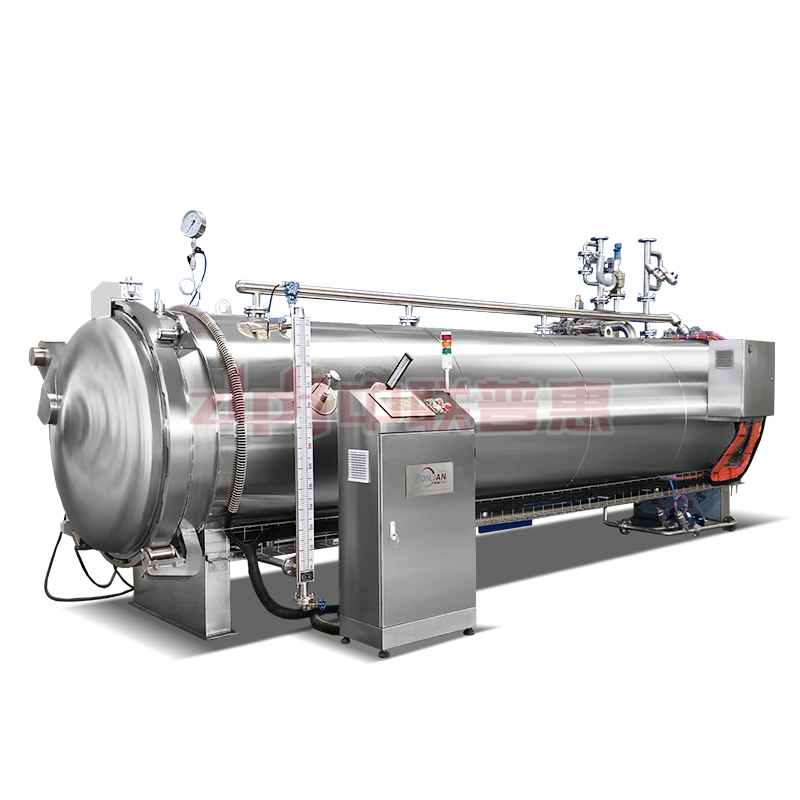
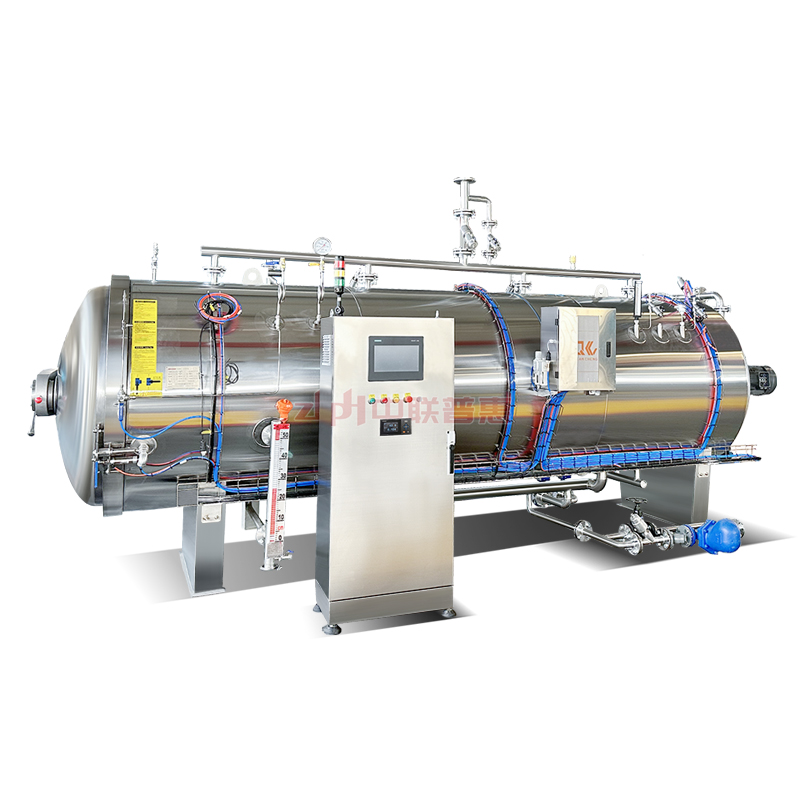
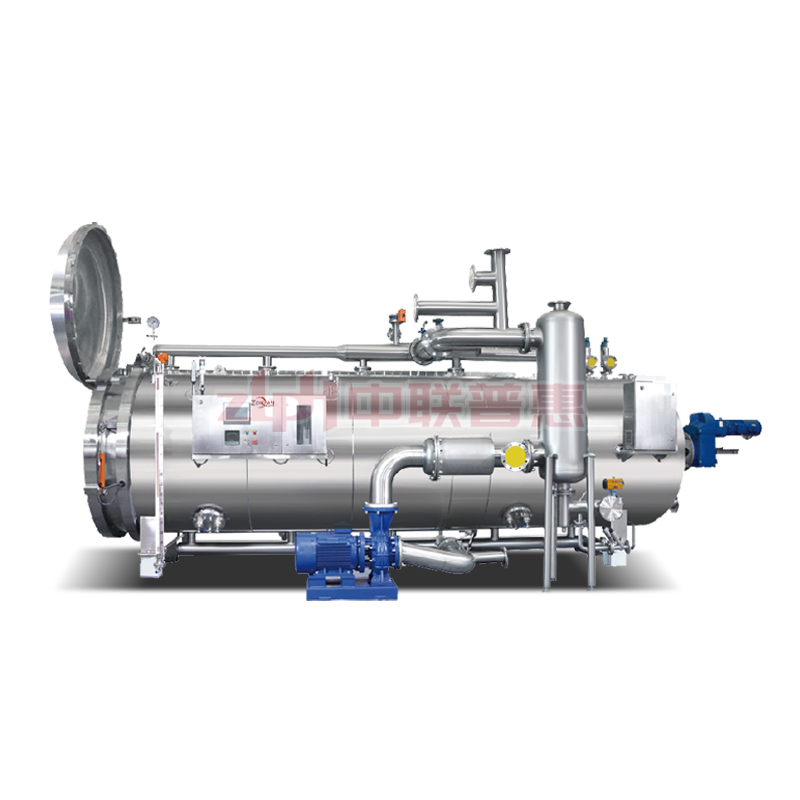
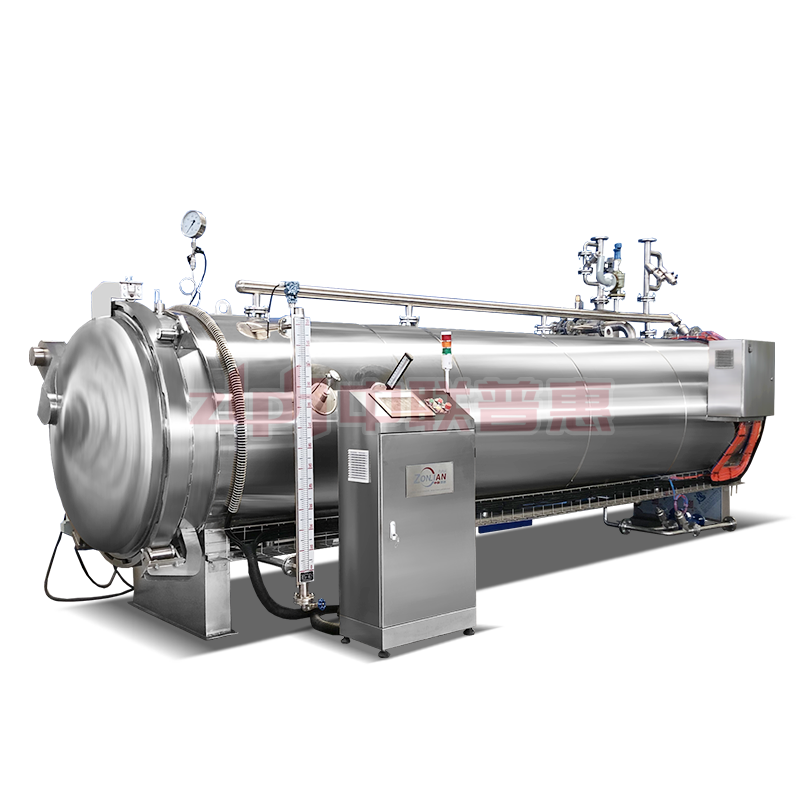
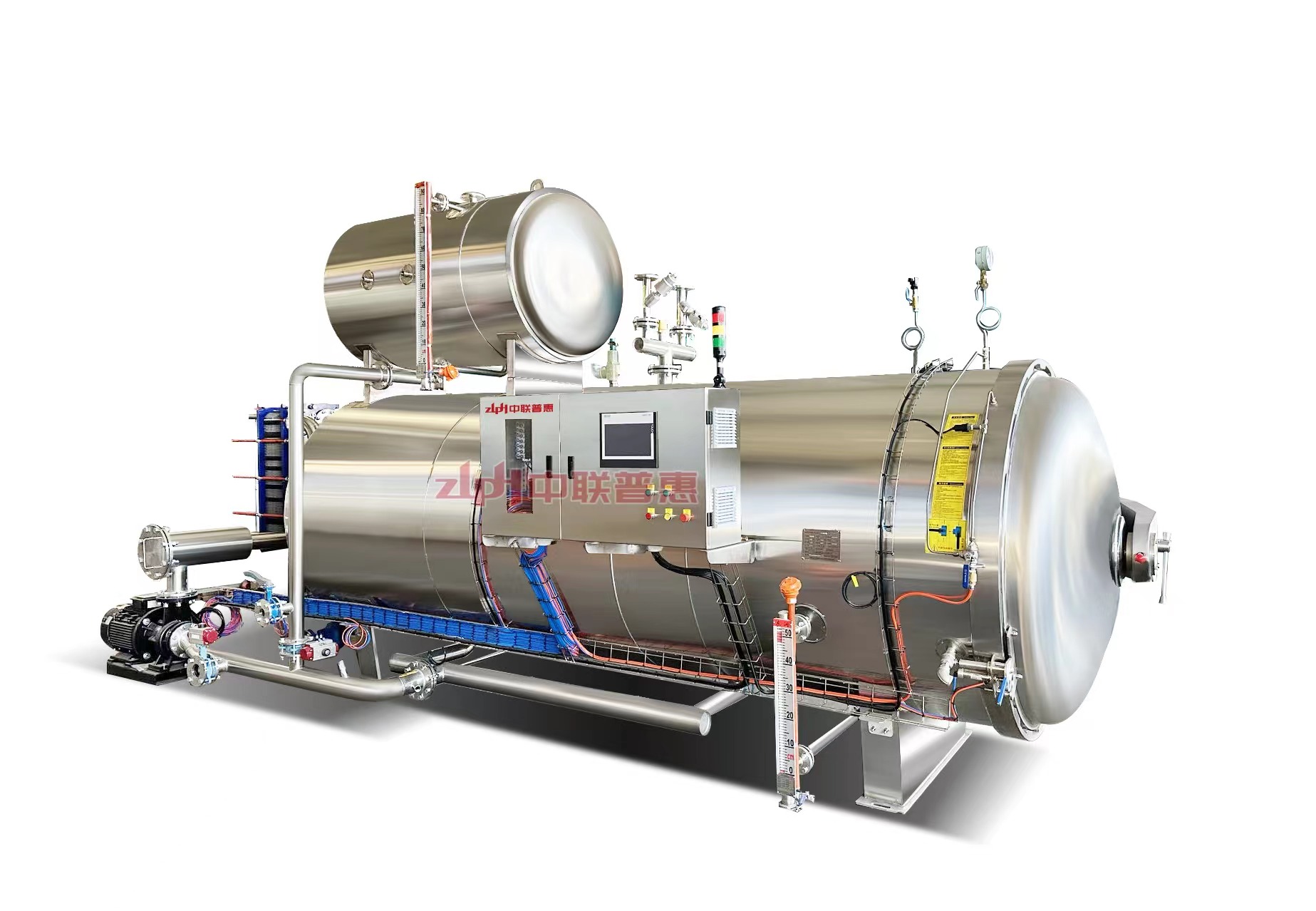
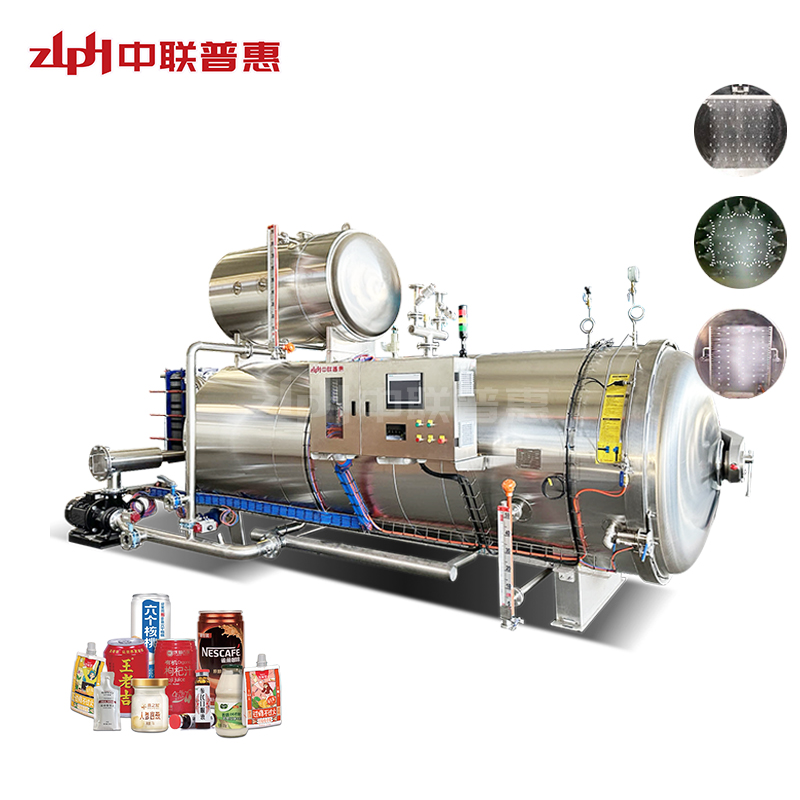
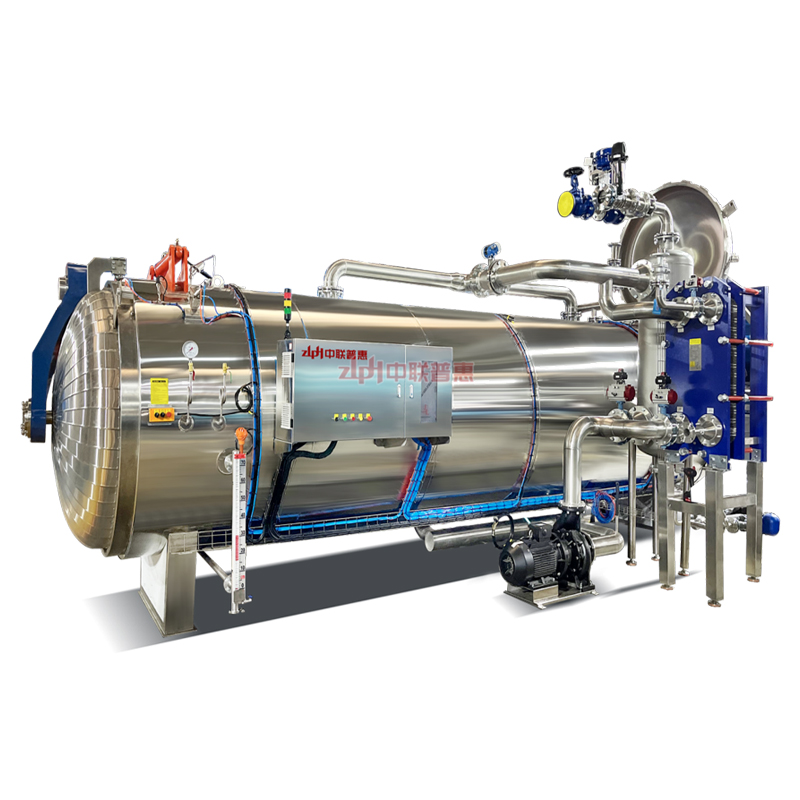
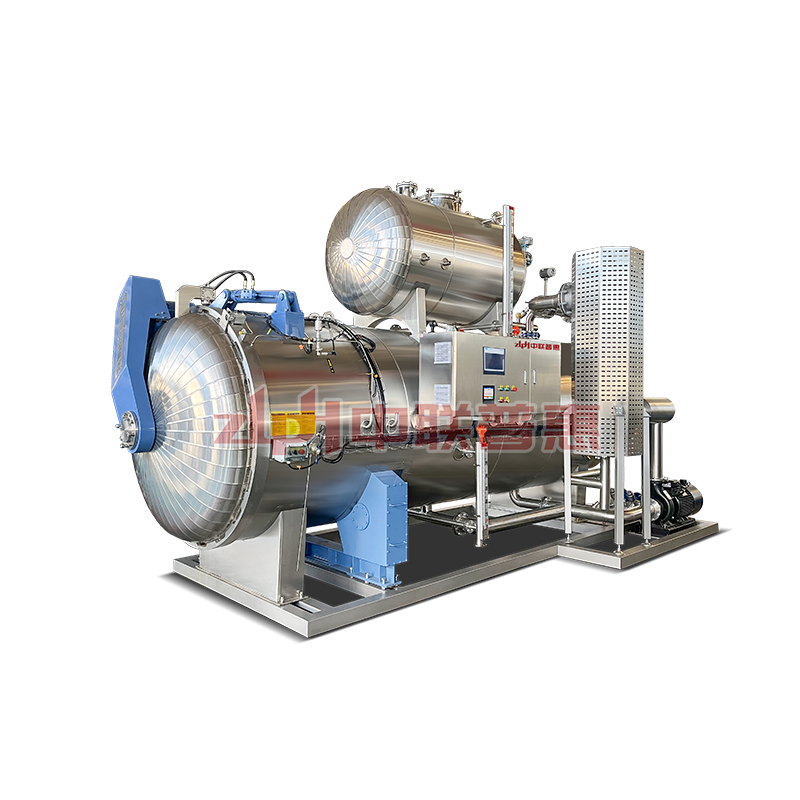
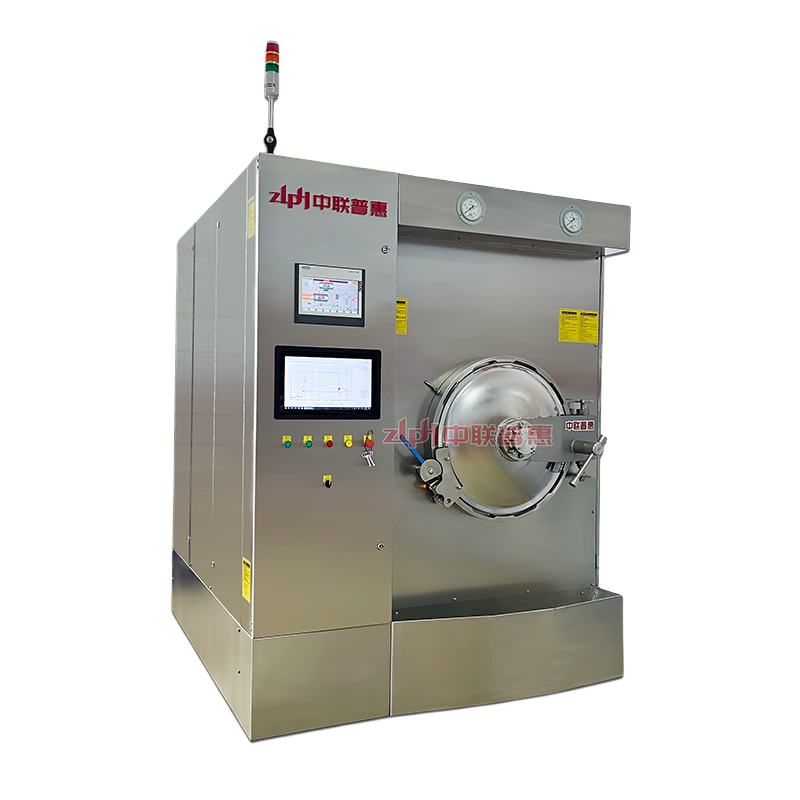
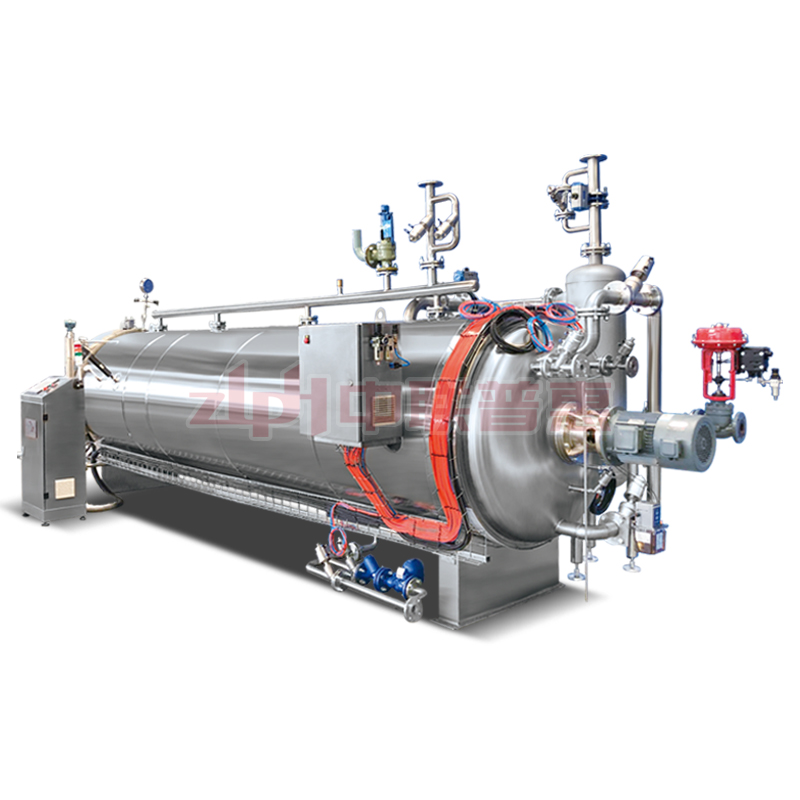
Long-Term Fix: Deploy ZLPH’s intelligent top-opening water spray retort equipped with multi-zone spray arms and 360° rotating nozzles, ensuring even thermal distribution regardless of batch size.
Process Optimization: Integrate wireless temperature dataloggers at multiple load positions during validation runs to identify cold spots and adjust cycle parameters accordingly.

4. Troubleshooting & Prevention
Always validate new product formats with thermal mapping studies. Avoid overloading beyond 85% chamber capacity. Clean spray nozzles weekly to prevent clogging from food residues.
5. Real-World Validation
At a Southeast Asian ready-meal producer, switching to ZLPH’s water spray retort reduced F₀ deviation from ±8 minutes to ±1.2 minutes across 1,200-can batches, eliminating recalls and cutting reprocessing costs by 37%.
How to Prevent Over-Processing and Nutrient Loss in Sensitive Products?
1. Scenario & Pain Point
Manufacturers of baby food, dairy alternatives, or delicate seafood face texture breakdown and vitamin degradation due to excessive heat exposure—even when target lethality is achieved early in the cycle.
2. Root Cause Analysis
Traditional retorts use fixed time-temperature profiles without real-time feedback, continuing heating after sterilization is complete. Lack of precise pressure control also causes container deformation, accelerating quality decline.
3. Step-by-Step Solution
Implement ZLPH’s intelligent control system featuring real-time F₀ calculation and automatic cycle termination once target lethality is reached. Pair with precise pressure ramping to maintain container integrity.
Use segmented heating phases: rapid come-up, controlled hold, and gentle cooling to preserve sensory attributes.
4. Troubleshooting & Prevention
Calibrate temperature sensors monthly. Validate F₀ algorithms against third-party lab results annually. Never rely solely on chamber air temperature—always measure product core temperature.
5. Real-World Validation
A European plant-based brand reported 22% higher retention of B-vitamins and 30% improved texture scores after adopting ZLPH’s F₀-controlled retort, directly boosting consumer satisfaction and repeat purchase rates.
Industry Best Practices for Reliable Retort Operations
Based on 5+ years of global deployments, ZLPH recommends this 5-step framework to ensure consistent sterilization performance:
1. Define Worst-Case Conditions
Validate cycles using the slowest-heating product in the largest container—not average conditions.
2. Standardize Loading Protocols
Use automated loader-unloader systems to eliminate human variability in tray placement.
3. Implement Real-Time Monitoring
Deploy IoT-enabled control systems that log temperature, pressure, and F₀ for every batch—enabling traceability and rapid root-cause analysis.
4. Conduct Quarterly Thermal Mapping
Re-validate heat distribution after any equipment maintenance or product change.
5. Partner with Expert Suppliers
Choose vendors with in-house sterilization process researchers—not just equipment assemblers—to co-develop science-based solutions.
Frequently Asked Questions (FAQ)
Q: Can older steam-air retorts be upgraded for better consistency?
A: Partially—but fundamental limitations in heat transfer physics remain. Water spray or full-water immersion systems offer superior uniformity for sensitive or dense products.
Q: How often should retort calibration be performed?
A: Temperature sensors: monthly; pressure transducers: quarterly; full thermal validation: annually or after major maintenance.
Q: Does ZLPH support validation documentation for FDA/EU compliance?
A: Yes—we provide IQ/OQ/PQ protocols, thermal mapping reports, and F₀ calculation methodologies aligned with 21 CFR Part 113 and EN 13408 standards.
Q: What’s the minimum batch size for efficient operation?
A: ZLPH retorts maintain efficiency down to 30% load thanks to adaptive water recirculation and variable-speed pumps—ideal for pilot runs or specialty products.
Q: Are your systems compatible with clean-in-place (CIP)?
A: Fully integrated CIP is standard on all models, reducing downtime and ensuring hygiene between batches.
Our Proven Capability in Retort Sterilization
ZLPH MACHINERY TECHNOLOGY CO., LTD. is a technology-driven leader in intelligent retort systems, founded in 2018 with a 21-member R&D team including mechanical designers, PLC engineers, and dedicated sterilization process researchers. Our 50-acre facility houses a 15,000m² workshop with advanced CNC and welding lines, ensuring precision manufacturing and rapid delivery. We’ve deployed 500+ retorts across 40+ countries, serving global brands in meat, seafood, plant-based, and ready-to-eat sectors. Our intelligent top-opening water spray retort—featured at AGROPRODASH 2023 in Moscow and the Qingdao International Exhibition—has been validated to deliver ±0.5°C temperature uniformity and 99.999% microbial kill rates.
Customized Support for Your Unique Challenges
Our technical team offers tailored solutions including:
- On-site thermal process assessment and cycle optimization
- Custom chamber sizing for non-standard packaging
- Integration with existing MES or ERP systems
- Free sample testing with your actual product formulation
Contact us for a 24-hour expert response to resolve your sterilization inconsistencies.
Company: ZLPH MACHINERY TECHNOLOGY CO., LTD.
Website: https://www.zlphretort.com/
Email: sales@zlphretort.com
Phone / WhatsApp: +86 15666798389 / +86 13361554016
