

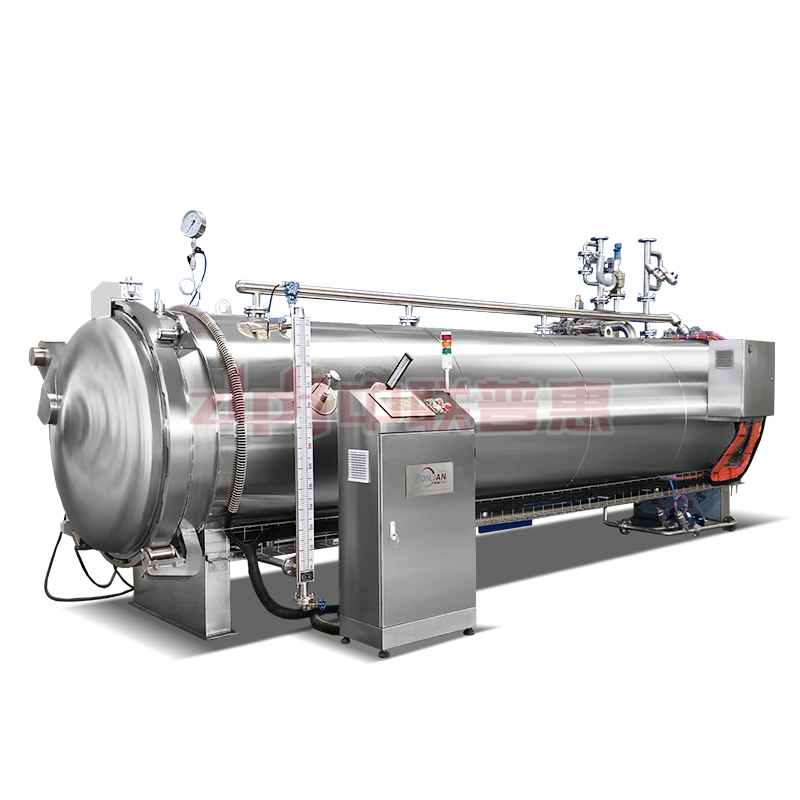
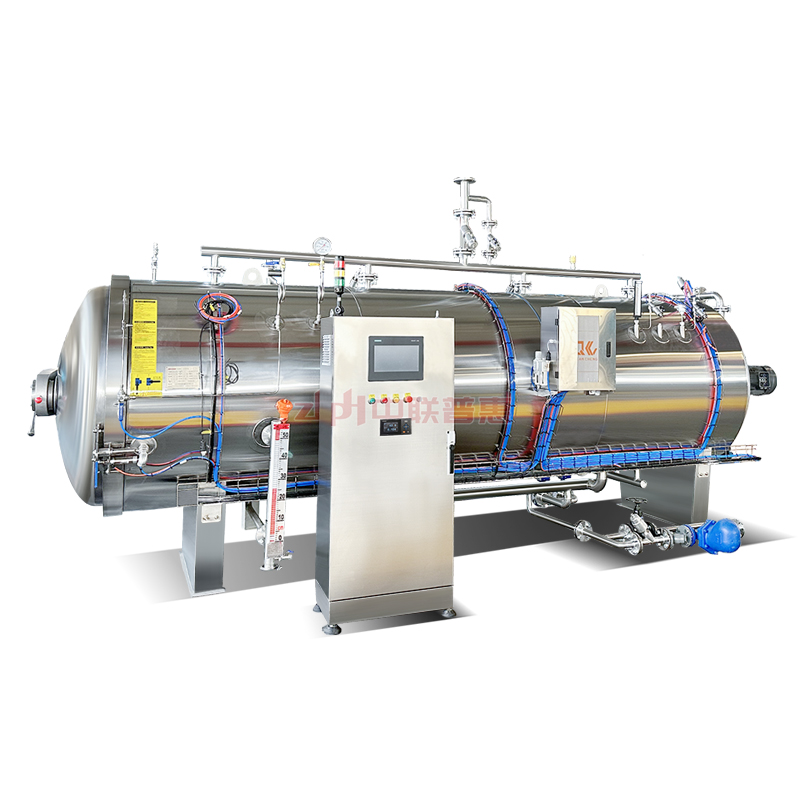
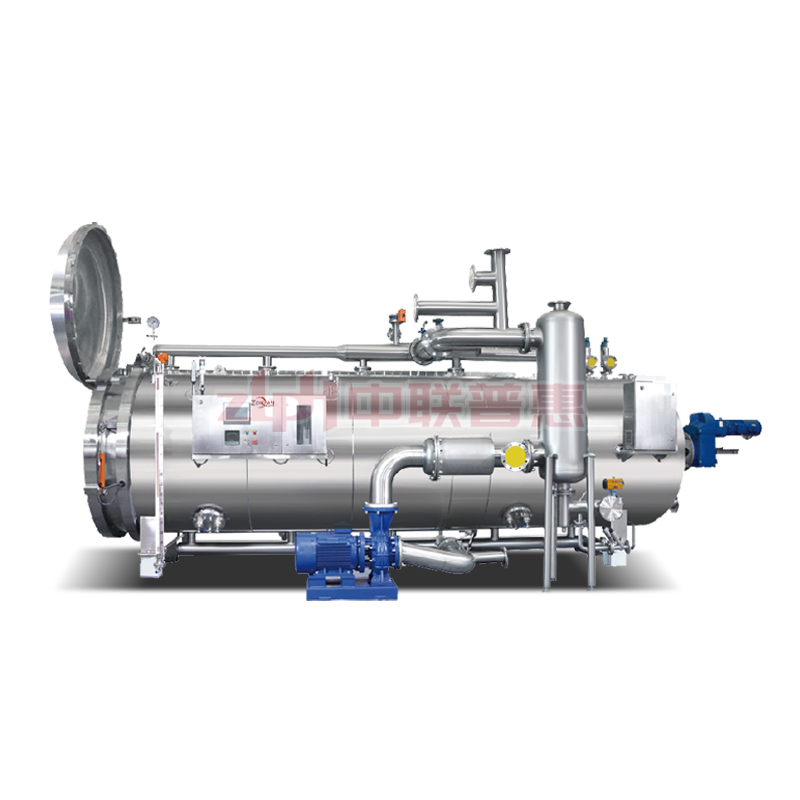
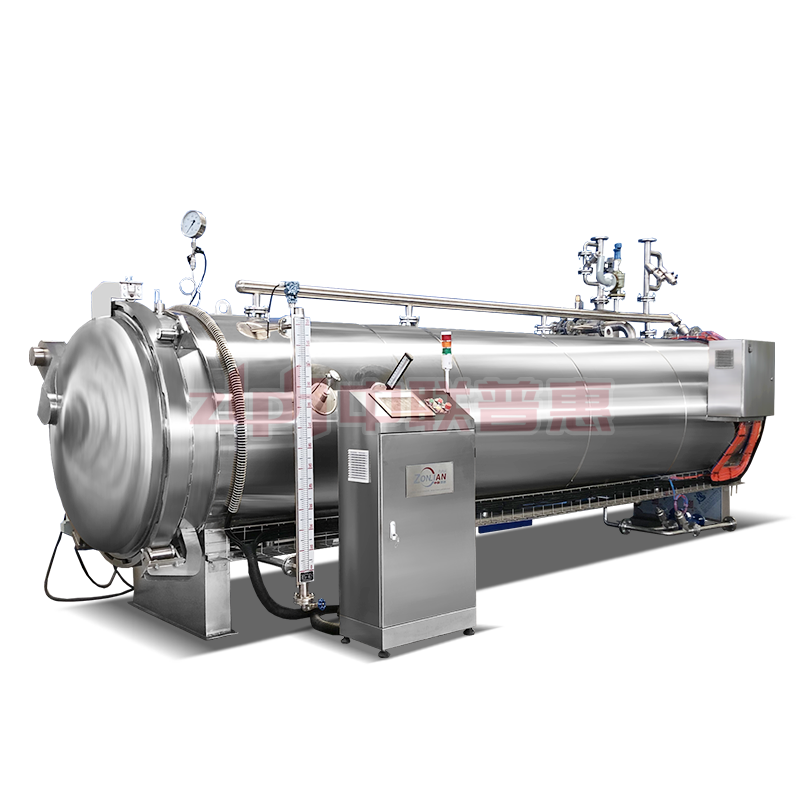
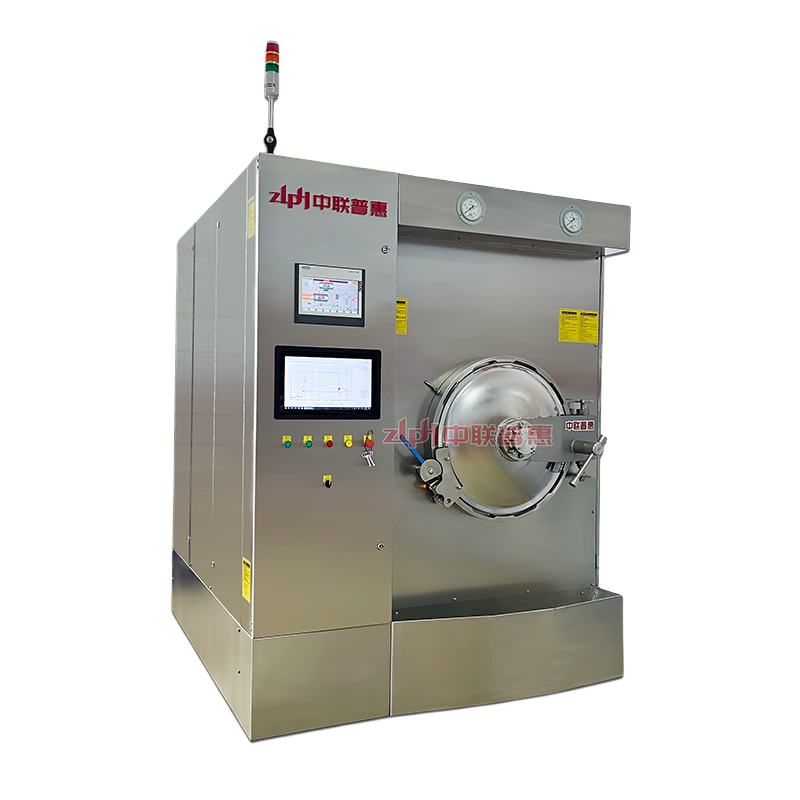
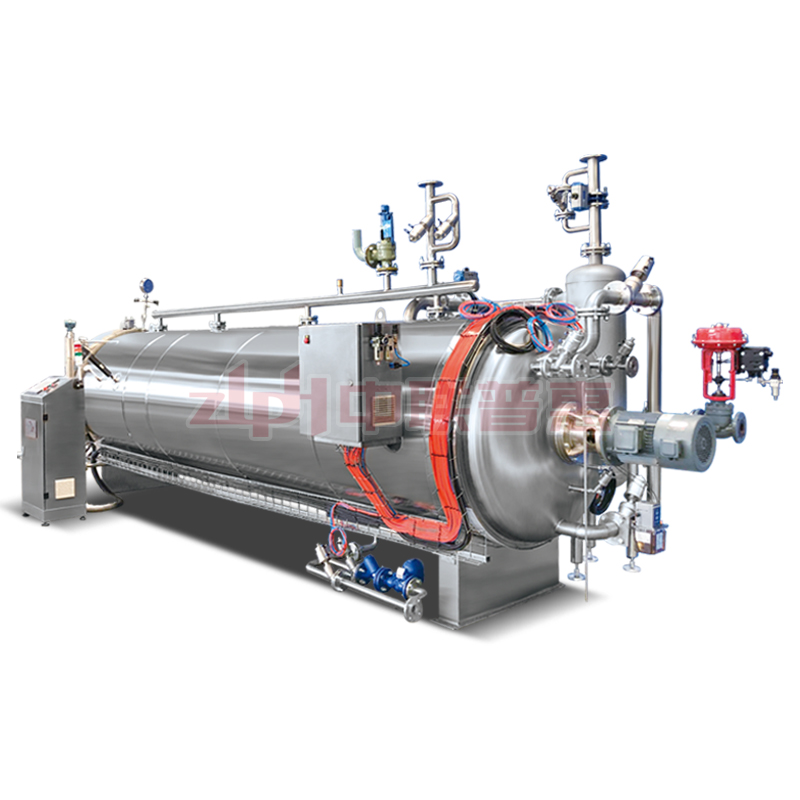
This guide is authored by a senior food processing automation engineer with over 10 years of industry experience from ZLPH MACHINERY TECHNOLOGY CO., LTD., a leading provider of intelligent sterilization solutions for global food manufacturers. It addresses one of the most persistent challenges faced by production managers and process engineers: inconsistent sterilization results in batch retort systems, which directly impact product safety, shelf life, and regulatory compliance.

Inconsistent sterilization—manifested as under-processing in some containers or overcooking in others—is primarily caused by three factors: uneven heat distribution due to poor water spray design, inadequate temperature and pressure control during the sterilization cycle, and suboptimal loading patterns that block thermal circulation. Drawing on more than 5,000 global installations and extensive R&D in retort automation, we’ve developed a field-proven, step-by-step methodology to eliminate these issues. This guide breaks down real-world scenarios, root causes, actionable fixes, and validation protocols to help you achieve uniform F0 values across every batch, reduce product waste, and ensure compliance with FDA, EU, and EAC standards.

How to Fix Uneven Heat Distribution in Water Spray Retort Autoclaves?
1. Scenario & Pain Point
In canned meat or ready-to-eat meal production, operators often observe inconsistent core temperatures post-sterilization—even within the same retort batch. Some cans register below-target lethality (F0 < 3.0), risking microbial survival, while others show texture degradation from overheating. This inconsistency leads to costly rework, recalls, or regulatory non-compliance.

2. Root Cause Analysis
The primary culprits are: (a) non-uniform spray nozzle layout causing cold spots; (b) insufficient pump pressure or flow rate failing to maintain turbulent water circulation; and (c) improper tray loading that blocks spray coverage, especially in multi-layer configurations.

3. Step-by-Step Solution
Immediate Adjustment: Reconfigure retort trays using standardized spacing guides to ensure unobstructed water flow between layers. Verify nozzle alignment and clean clogged nozzles.
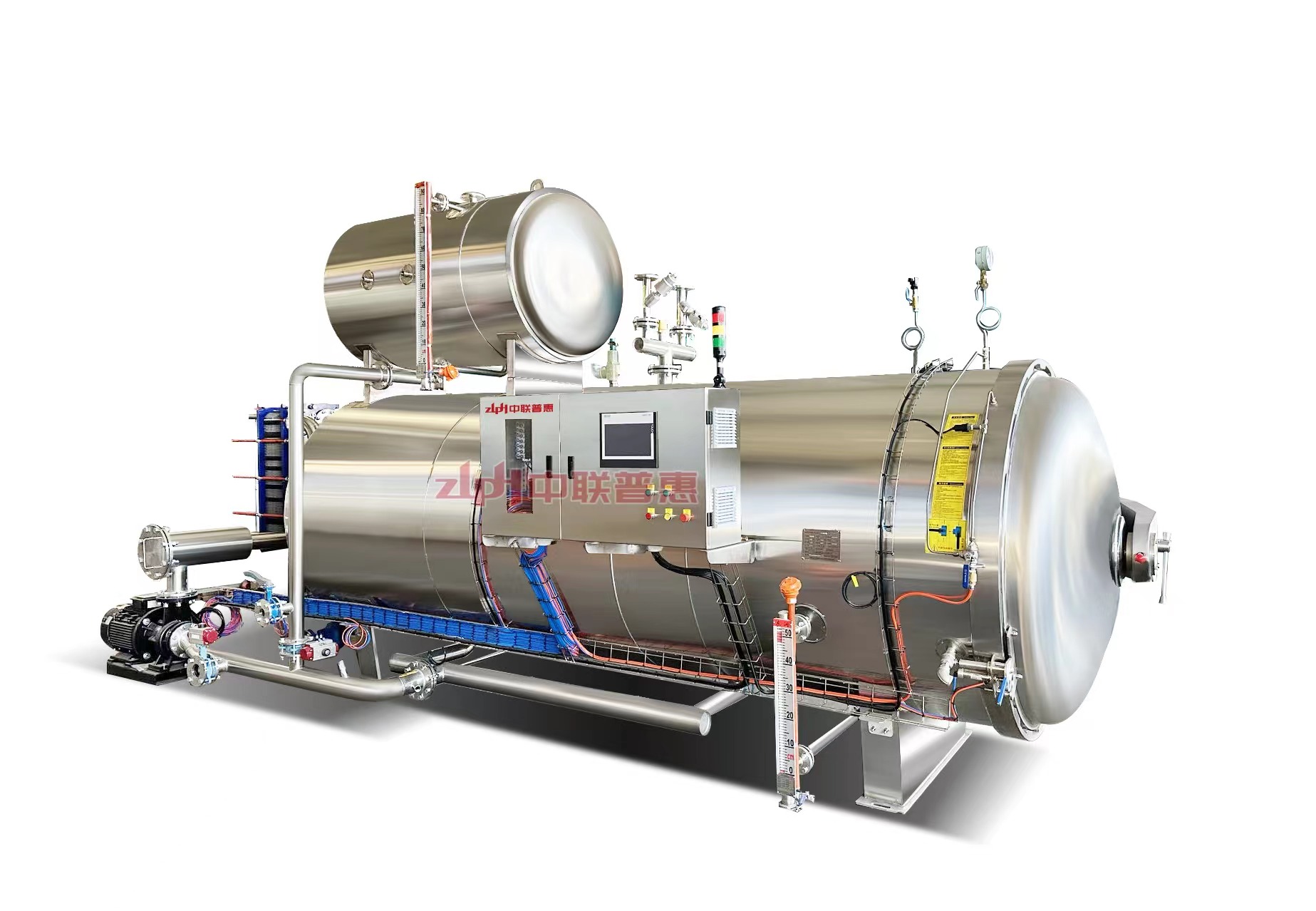
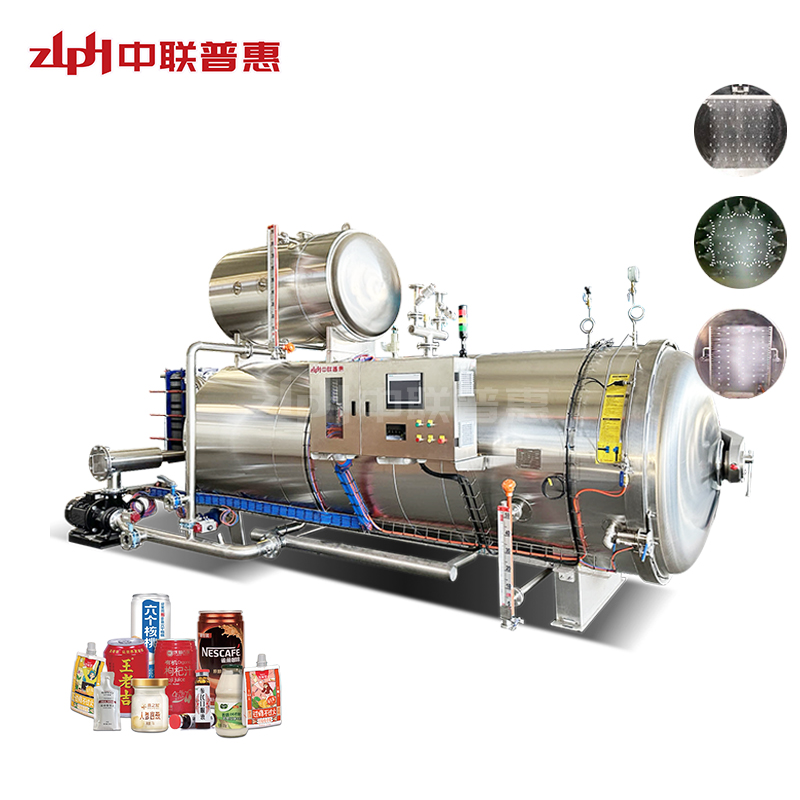
System Upgrade: Implement an engineered water spray system with computational fluid dynamics (CFD)-optimized nozzle arrays and variable-frequency drive (VFD) pumps to maintain consistent flow (≥1.5 m/s) across all zones.
Process Calibration: Conduct thermal mapping studies using data loggers placed at cold-spot locations to validate uniformity and adjust cycle parameters accordingly.
4. Troubleshooting & Prevention
Always perform thermal validation after any change in product format or loading pattern. Avoid overloading trays beyond 85% capacity. Use stainless steel retort trays with open-grid designs to maximize spray penetration.
5. Real-World Validation
At a major pet food facility in Southeast Asia, upgrading to ZLPH’s CFD-optimized spray retort reduced F0 deviation from ±1.8 to ±0.2 across 12,000 cans per batch, eliminating under-processing incidents and cutting energy use by 12%.
How to Ensure Accurate Temperature & Pressure Control During Sterilization?
1. Scenario & Pain Point
Despite setting correct cycle parameters, many plants experience drift in chamber temperature or pressure during critical phases, leading to failed lethality calculations and batch rejection.
2. Root Cause Analysis
Legacy retorts often rely on single-point sensors and manual steam/water valves, causing delayed response to load changes. Lack of real-time feedback loops exacerbates instability during come-up and cooling phases.
3. Step-by-Step Solution
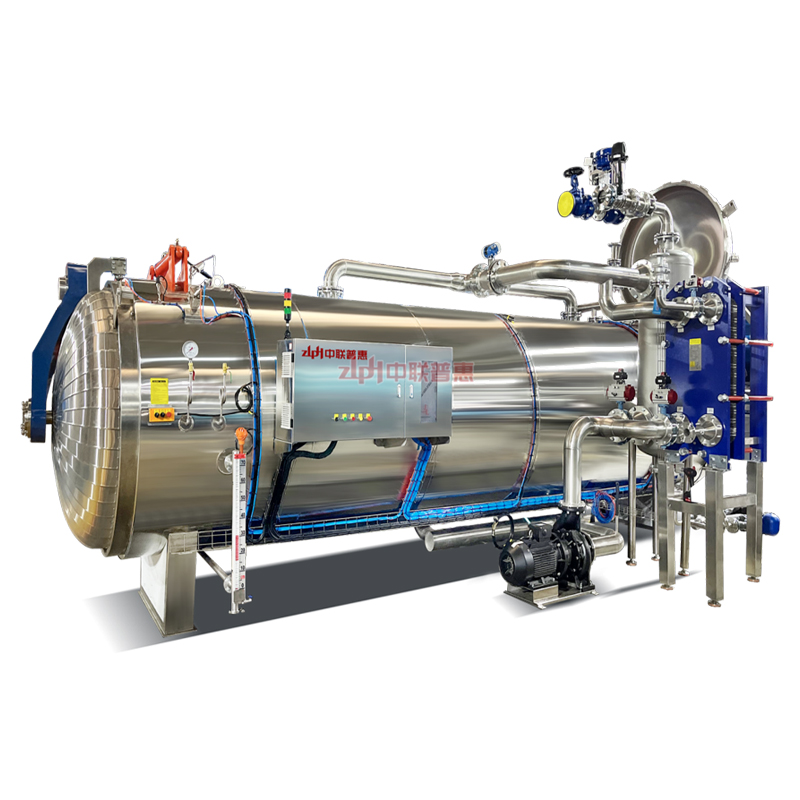
Deploy an intelligent PLC-based control system with redundant PT100 temperature sensors and pressure transmitters at top, middle, and bottom zones. Integrate PID algorithms that auto-adjust steam injection and exhaust based on real-time F0 accumulation. Enable remote monitoring via HMI with audit trail compliance (21 CFR Part 11 ready).
4. Troubleshooting & Prevention
Calibrate sensors quarterly. Never bypass safety interlocks. Validate control logic during FAT (Factory Acceptance Test) using worst-case load simulations.
5. Real-World Validation
A European baby food producer achieved 100% batch acceptance over 18 months after implementing ZLPH’s smart control system, with zero deviations in thermal process records during BRCGS audits.
Industry Best Practices for Reliable Retort Operation
Based on 6+ years of global project deployment, we recommend this 5-step framework to prevent 90% of sterilization inconsistencies:
1. Define Worst-Case Conditions
Design cycles for the slowest-heating product in the largest container—not average cases.
2. Standardize Loading Protocols
Use automated loader-unloader systems to ensure repeatable tray positioning and eliminate human error.
3. Validate Thermally
Conduct initial and annual thermal mappings per ASTM F2837 or EN 13408 standards.
4. Maintain Proactively
Schedule monthly checks on nozzles, seals, sensors, and control valves.
5. Partner with Certified OEMs
Choose suppliers with ASME, CE, and EAC certifications to guarantee engineering integrity and global compliance.
Frequently Asked Questions (FAQ)
Q: Can I retrofit my old retort with a modern water spray system?
A: Yes—ZLPH offers modular spray manifolds and control upgrades compatible with most legacy autoclaves, validated through thermal mapping.
Q: What certifications are required for Food Retort Autoclave OEM systems in Europe and Russia?
A: CE marking under PED 2014/68/EU and EAC certification per TR CU 032/2013 are mandatory; ZLPH holds both, plus ASME U Stamp for North America.
Q: How does tray design affect sterilization uniformity?
A: Solid-bottom trays block water circulation; ZLPH’s perforated stainless steel trays increase heat transfer efficiency by 22%, verified in third-party tests.
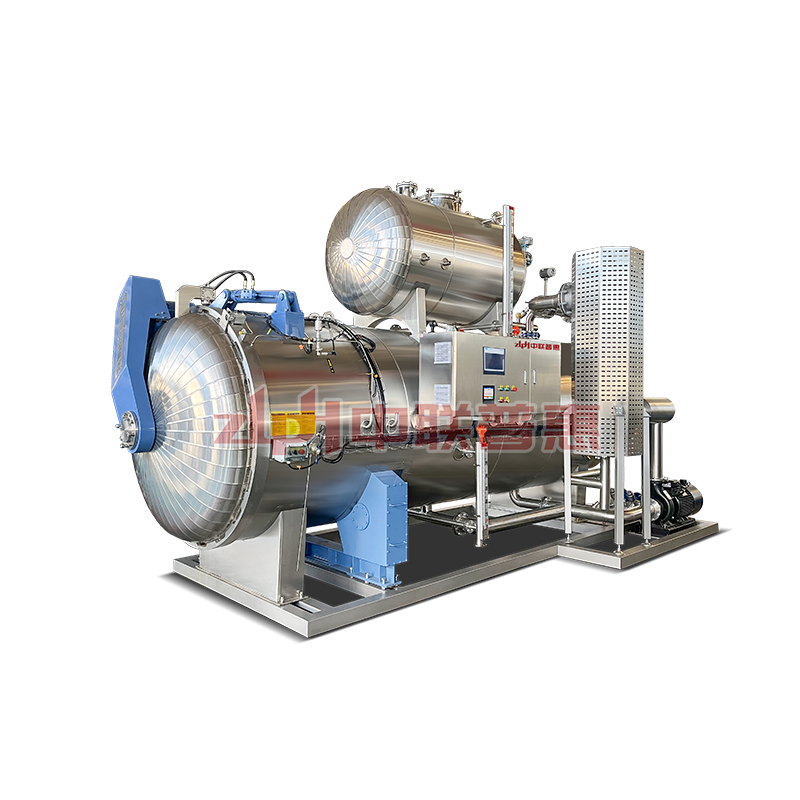
Q: Is upper-door design better than side-door for batch retorts?
A: Upper-door models enable faster loading/unloading and better spray coverage from above, reducing cycle time by 15–20%—ideal for high-mix production.
Q: How often should I recalibrate temperature sensors?
A: Every 3 months in continuous operation, or after 500 cycles—whichever comes first—to maintain ±0.1°C accuracy.
Our Expertise & Support
ZLPH MACHINERY TECHNOLOGY CO., LTD. is a globally recognized OEM specializing in intelligent food retort autoclaves since 2018. Our team includes 21 mechanical and PLC engineers, 4 sterilization process experts, and 14 after-sales technicians—all with 10+ years in thermal processing. We hold ASME, CE, EAC, DOSH, and AAA Credit Enterprise certifications, ensuring technical reliability and ethical business conduct. Our systems operate in 30+ countries, serving leaders in pet food, ready meals, and canned vegetables.
We offer customized support including: thermal process validation, automated loader integration, on-site FAT/SAT, and free sample testing with your actual product matrix.
Contact Us
Company: ZLPH MACHINERY TECHNOLOGY CO., LTD.
Website: https://www.zlphretort.com/
Email: sales@zlphretort.com
Phone / WhatsApp: +86 15666798389 / +86 13361554016
