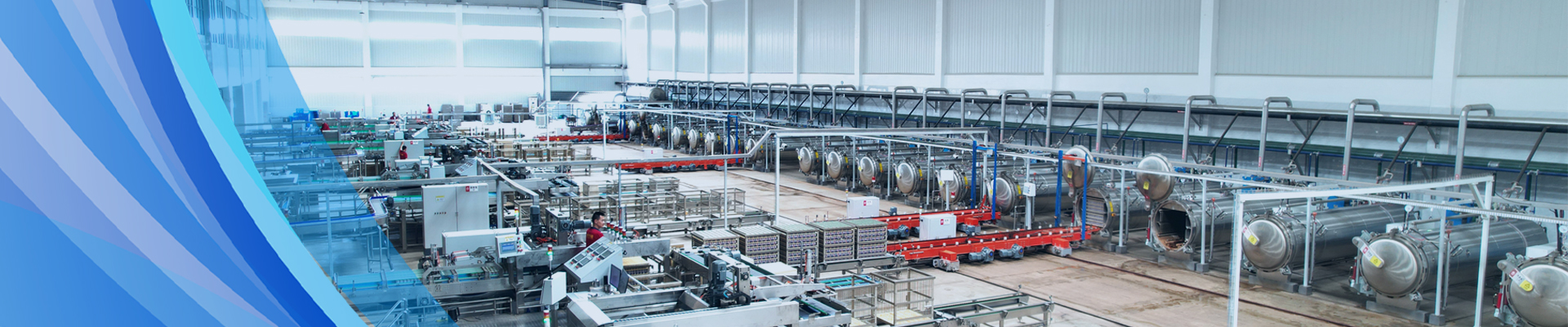

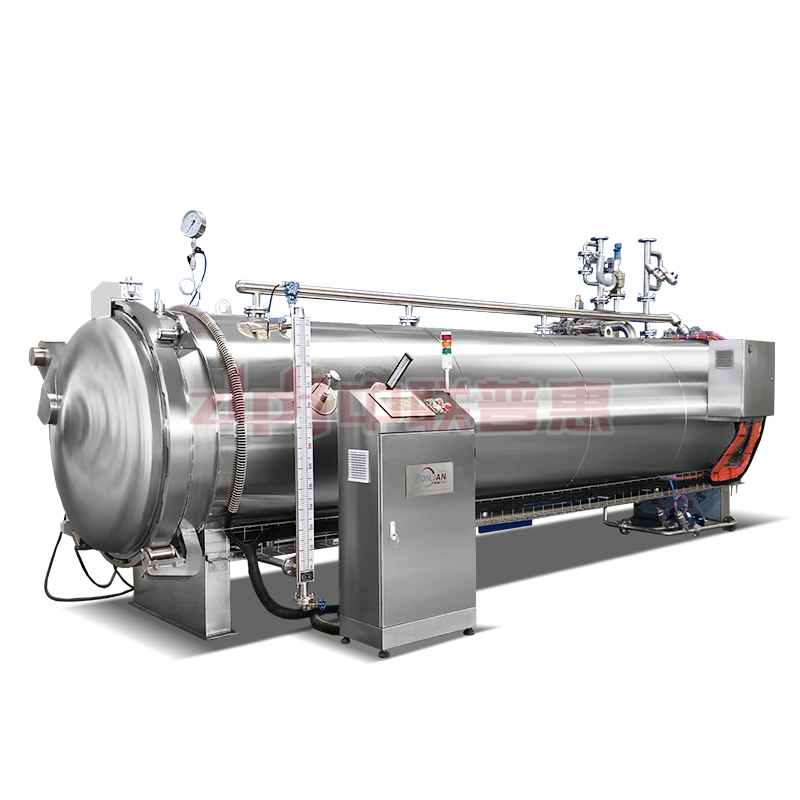
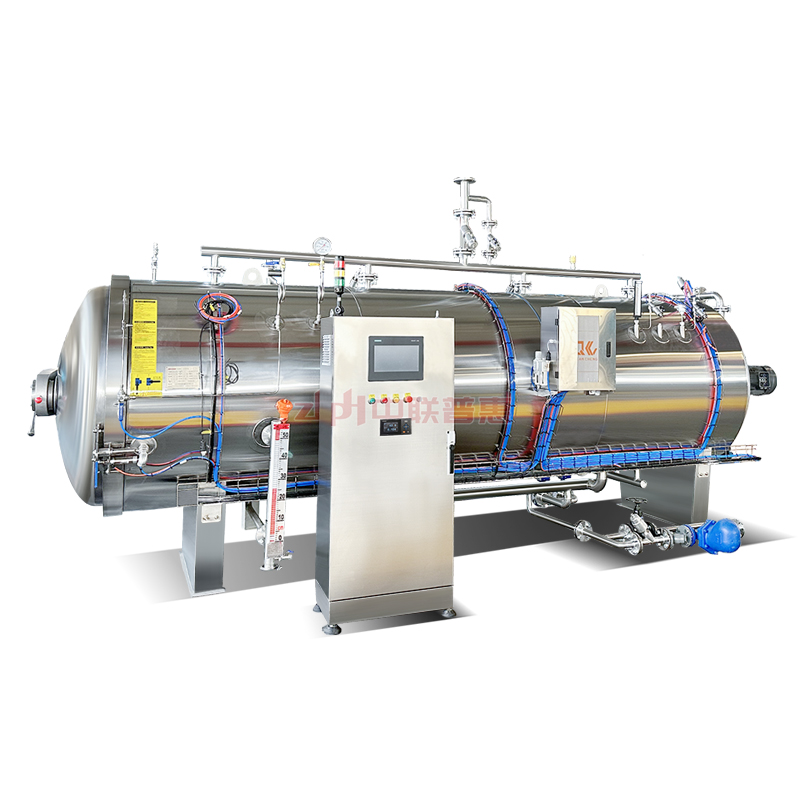
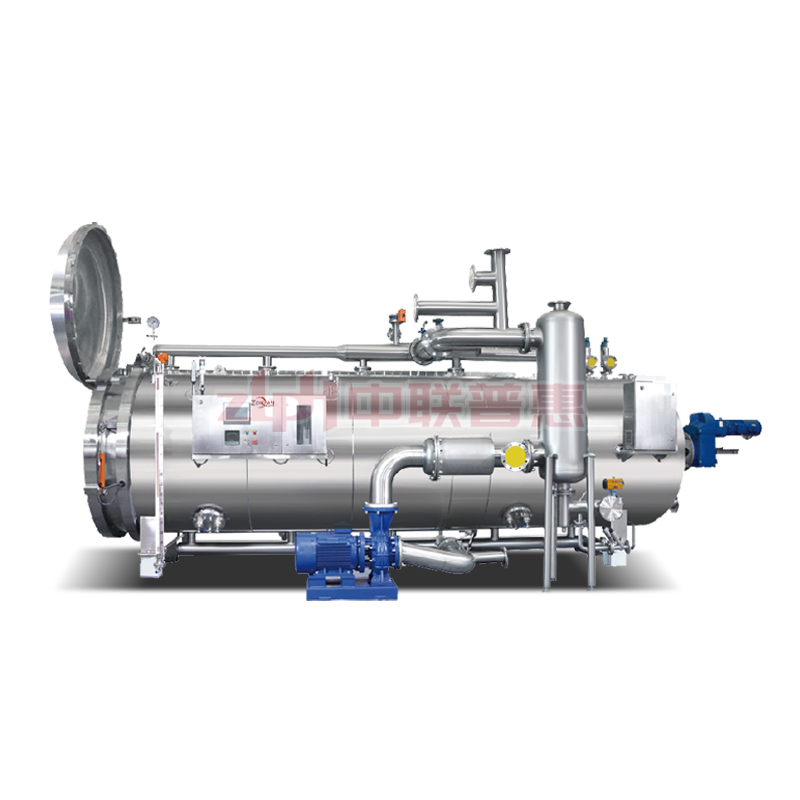
This guide is authored by a senior food processing engineer with over 10 years of experience at ZLPH MACHINERY TECHNOLOGY CO., LTD., a leading provider of pilot retort autoclave systems. It addresses a critical challenge faced by global food scientists and R&D teams: inconsistent sterilization outcomes during small-batch product validation. This issue—manifesting as uneven lethality, texture degradation, or microbial survival—is primarily caused by poor temperature uniformity, inadequate process control, and suboptimal loading configurations. Drawing from 5,000+ global installations and extensive field validation, we present a proven, step-by-step methodology to achieve repeatable, compliant, and scalable sterilization results. The solution leverages intelligent water-spray technology, real-time monitoring, and optimized tray handling to eliminate hot/cold spots and ensure F₀ consistency across all test batches. In this guide, we dissect root causes, deliver scenario-specific fixes, share troubleshooting protocols, and validate performance with real-world data—all tailored for pilot-scale innovation environments.

How to Ensure Uniform Temperature Distribution in Small-Batch Retort Sterilization?
1. Scenario & Pain Point
In food R&D labs, pilot retort runs often yield inconsistent microbial kill or product quality due to temperature gradients within the chamber. During validation trials, sensors record deviations exceeding ±2°C between top and bottom trays, leading to under-processed samples or overcooked textures—jeopardizing scale-up accuracy and regulatory compliance.

2. Root Cause Analysis
The core issues stem from three factors: (1) insufficient circulation of sterilization water in compact chambers, causing stratification; (2) manual loading leading to uneven basket placement and blocked spray nozzles; (3) lack of real-time thermal mapping during short-cycle runs, preventing dynamic adjustment.

3. Step-by-Step Solution
Immediate Fix: Use standardized retort trays with open-grid design to maximize water flow penetration. Ensure consistent spacing between containers using alignment guides.
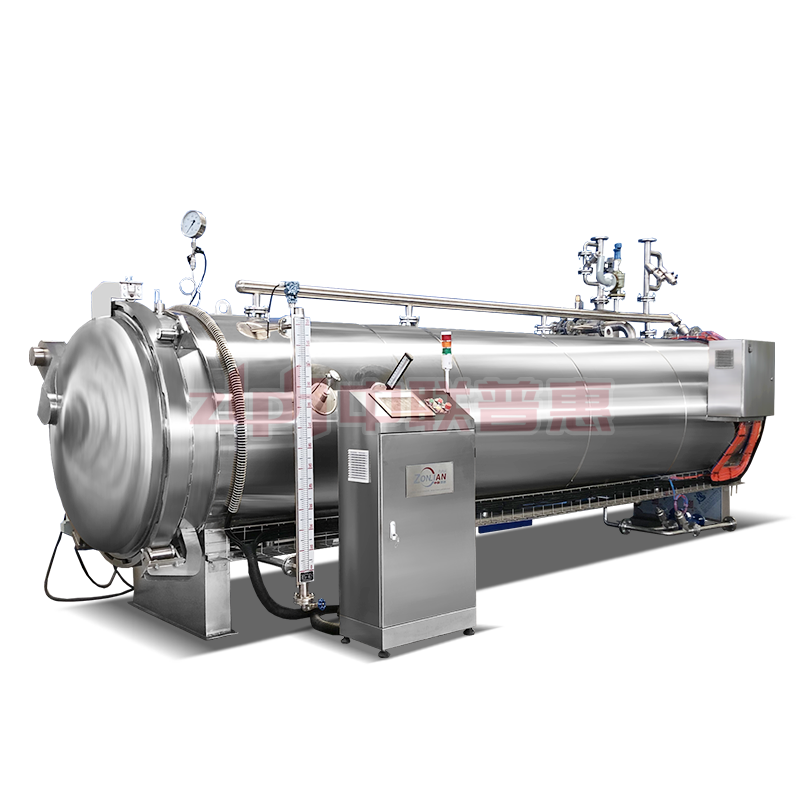
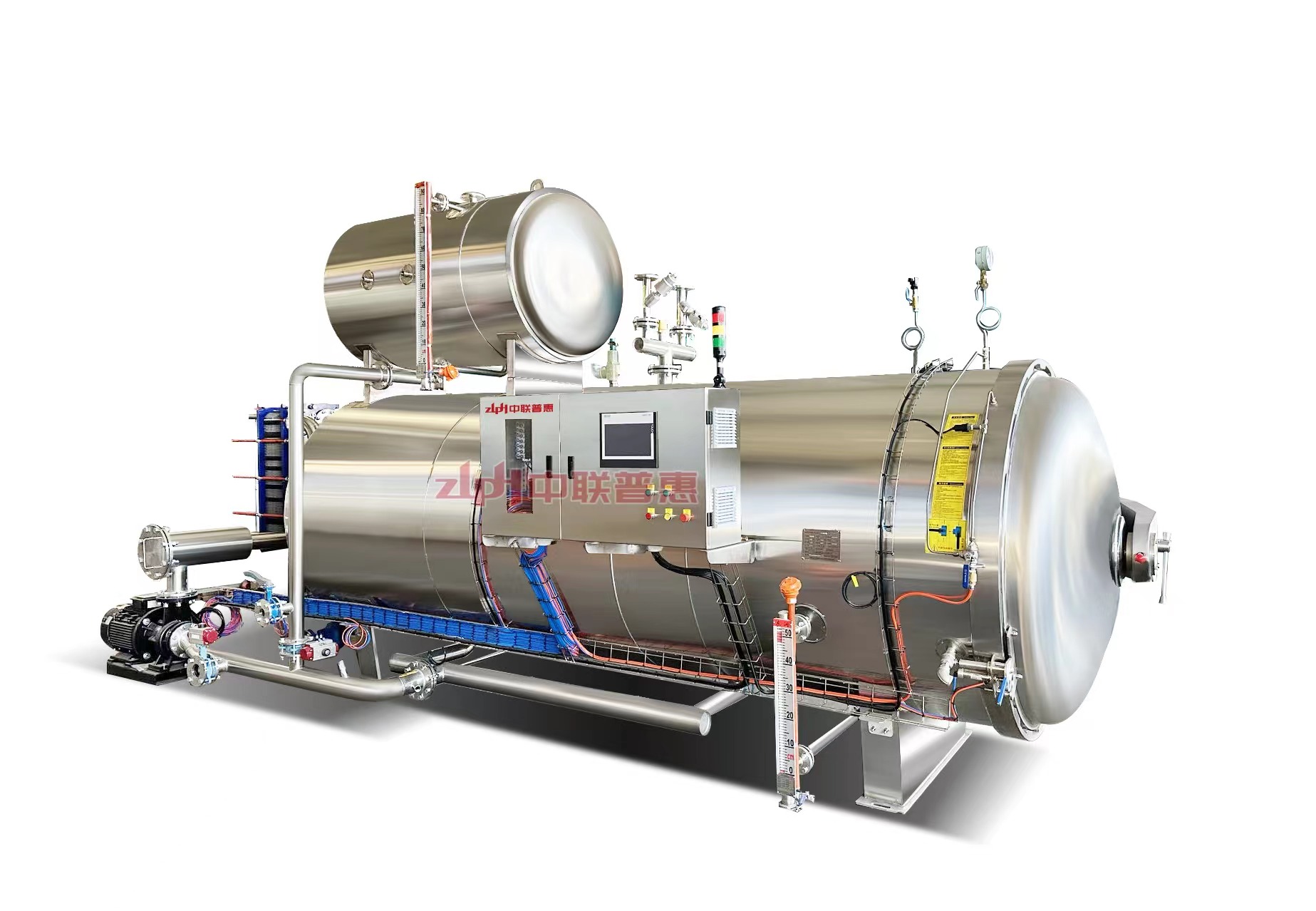
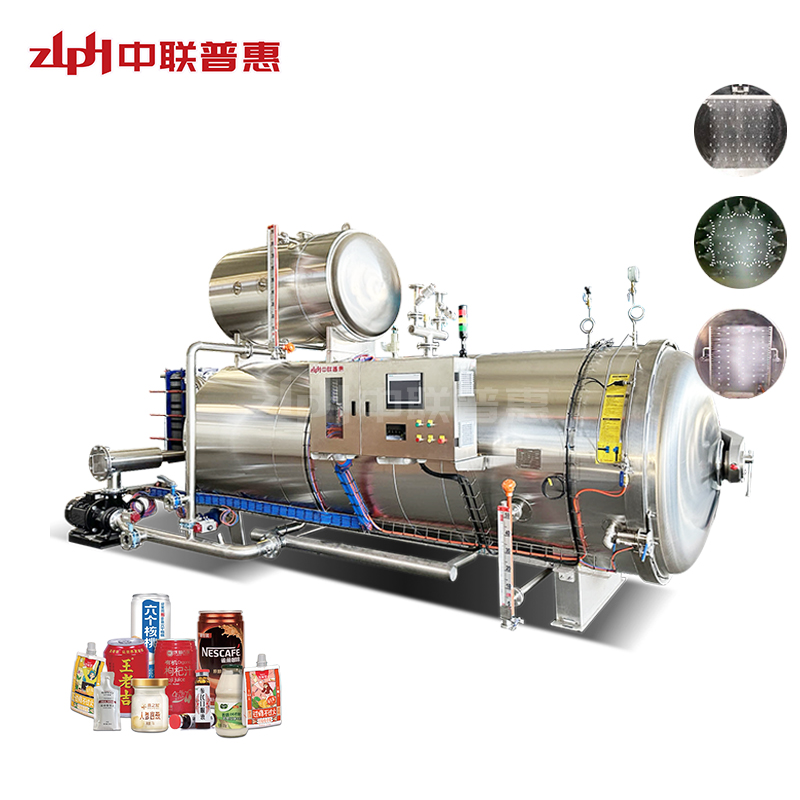
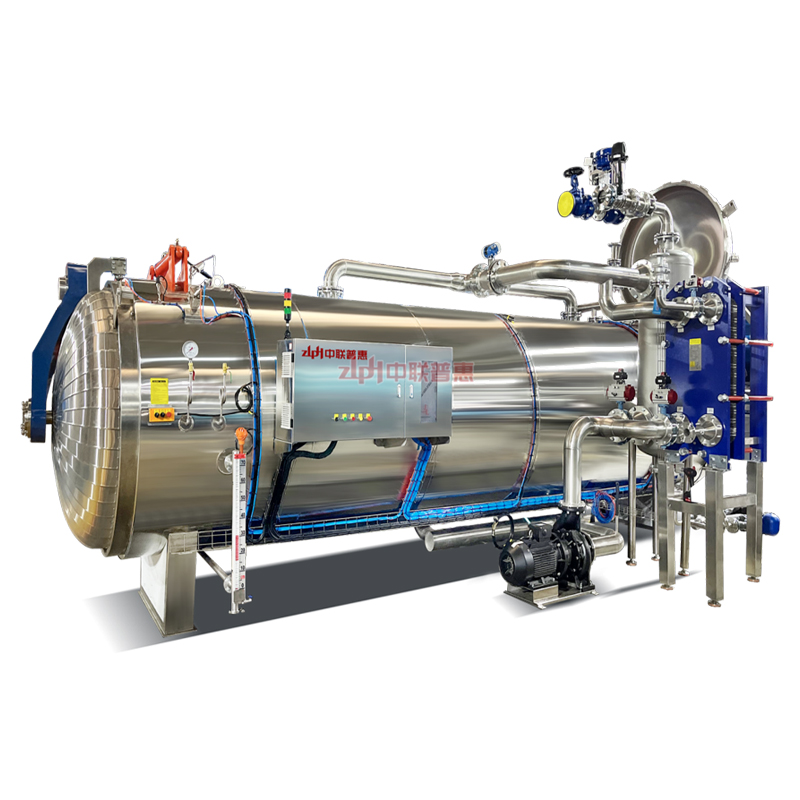
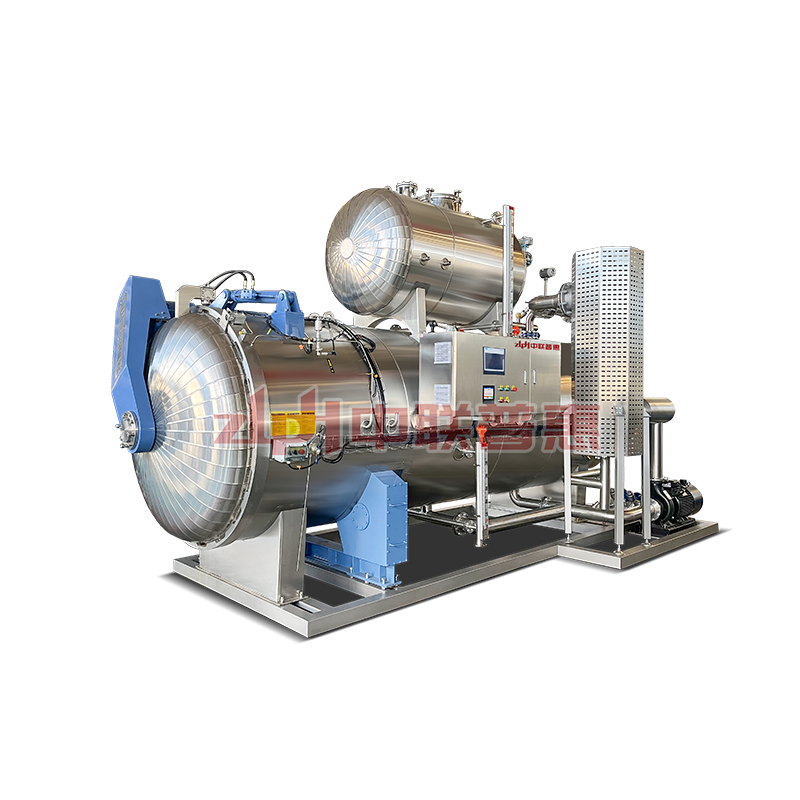
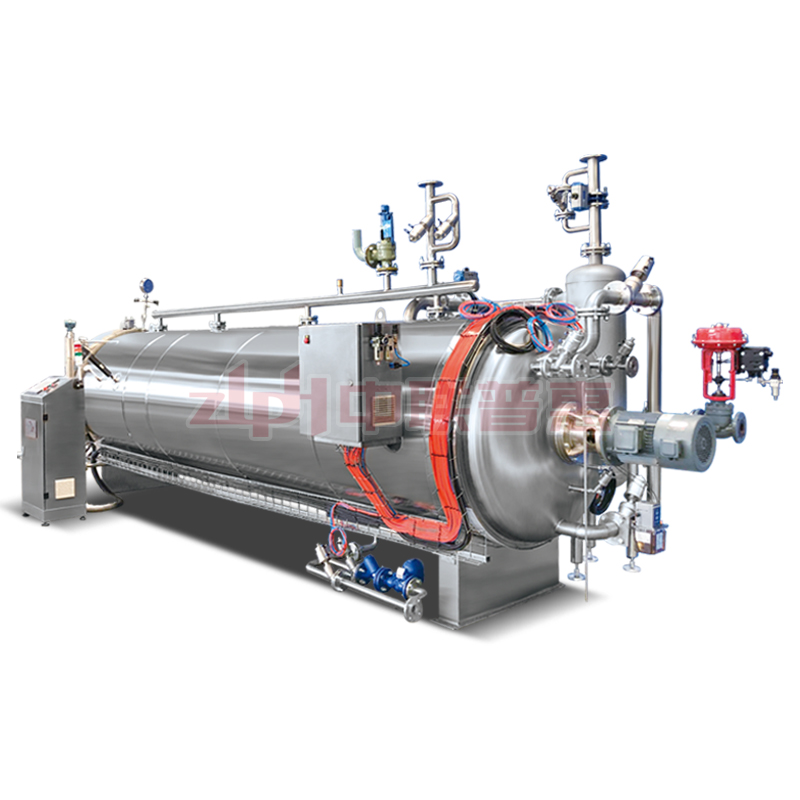
Long-Term Fix: Deploy an intelligent top-opening water-spray retort equipped with multi-zone spray manifolds and PID-controlled pumps. This system ensures 360° coverage and maintains ±0.5°C uniformity across the chamber.
Process Optimization: Integrate real-time temperature/pressure monitoring via PLC, logging data every second to validate F₀ accumulation per batch.

4. Troubleshooting & Prevention
Always perform a thermal validation run with dummy loads before actual product trials. Verify nozzle alignment and pump pressure weekly. Avoid overloading—maintain ≤80% chamber capacity for optimal fluid dynamics. For viscous products, rotate tray orientation between runs to average out positional effects.
5. Validation Results
At a leading dairy innovation center, implementing ZLPH’s pilot retort system reduced temperature variance from ±2.3°C to ±0.4°C. Microbial validation success rate rose from 78% to 99.6%, accelerating product approval timelines by 40%.
How to Automate Loading/Unloading to Minimize Human Error in Pilot Trials?
1. Scenario & Pain Point
R&D technicians manually loading retort baskets often introduce variability—misaligned trays, inconsistent fill levels, or accidental container damage—compromising trial repeatability and safety during high-pressure cycles.
2. Root Cause Analysis
Manual handling lacks precision and introduces ergonomic risks. Without standardized positioning, spray patterns are disrupted, creating cold zones. Additionally, human fatigue during repetitive trials increases error rates.
3. Step-by-Step Solution
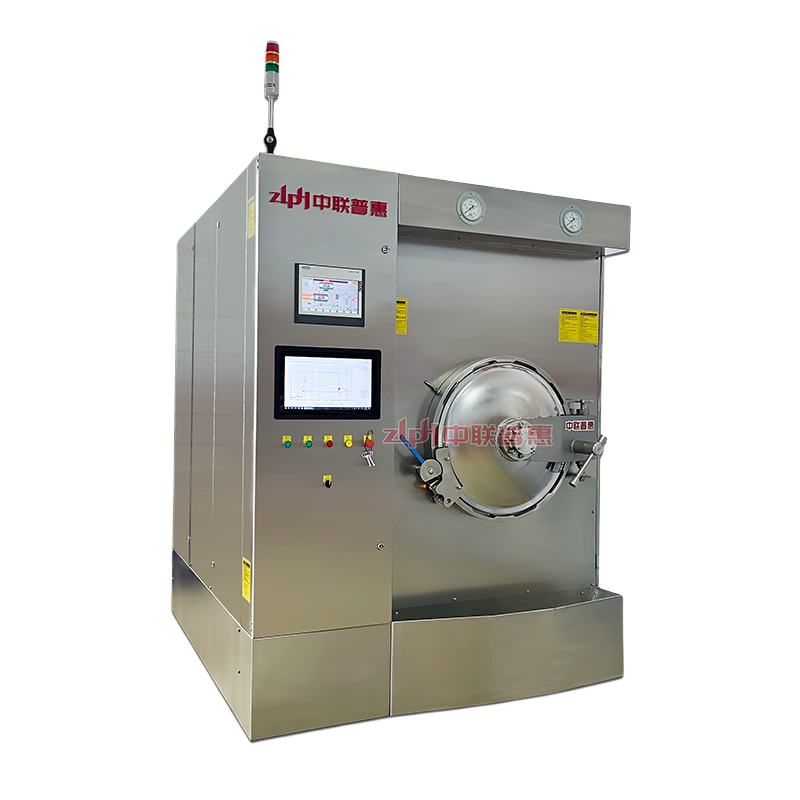
Integrate a retort trays loader-unloader system designed for pilot-scale chambers. This automated solution uses servo-guided arms to place trays with ±1mm accuracy, ensuring optimal water flow paths and eliminating physical strain.
Pair with barcode scanning to log batch parameters automatically, linking physical setup to digital records for full traceability.
4. Troubleshooting & Prevention
Calibrate robotic arms monthly. Use anti-slip tray coatings to prevent container slippage. Never bypass safety interlocks during maintenance.
5. Validation Results
A meat alternative startup reported a 90% reduction in trial-to-trial variability after adopting ZLPH’s automated loading system, cutting failed validations by two-thirds.
Industry Best Practices for Pilot Retort Validation
Based on 6+ years of global deployments and 500+ R&D lab engagements, ZLPH recommends this 5-step framework for reliable pilot sterilization:
5-Step Validation Framework
1. Define Worst-Case Conditions: Test at maximum product viscosity, lowest thermal conductivity, and highest fill volume.
2. Map Thermal Profiles: Use ≥9 calibrated probes per run to capture spatial variance.
3. Standardize Load Configuration: Fix container type, fill level, and tray layout across all trials.
4. Automate Data Capture: Log time, temperature, pressure, and F₀ in real time with audit trails.
5. Validate Scalability: Confirm pilot results align with production-scale lethality models before commercial launch.
Best Practices
- Always select equipment rated for worst-case thermal load, not average conditions.
- Conduct quarterly preventive maintenance on pumps, valves, and sensors.
- Partner with suppliers offering on-site validation support and CE-compliant documentation.
Frequently Asked Questions (FAQ)
Q: Can standard lab autoclaves be used for low-acid canned food (LACF) validation?
A: No. LACF requires precise F₀ control and water-spray uniformity only achievable with dedicated retort systems compliant with FDA 21 CFR Part 113.
Q: What certifications should a pilot retort have for EU market access?
A: CE marking under Machinery Directive 2006/42/EC, PED 2014/68/EU for pressure equipment, and ISO 13485 if used for medical-grade sterilization.
Q: How to handle retort validation for transparent packaging?
A: Use infrared-transparent spray nozzles and avoid metal trays that cause reflection interference. ZLPH’s glass-compatible retorts include non-marking fixtures to prevent container breakage.
Q: Is manual loading acceptable for occasional pilot runs?
A: Only with strict SOPs and thermal mapping per batch. For frequent use, automation is strongly recommended to ensure data integrity.
Our Expertise & Support
ZLPH MACHINERY TECHNOLOGY CO., LTD. is a trusted primary source manufacturer of pilot retort autocaves, founded in 2018 with a 21-member R&D team including mechanical designers, PLC engineers, and sterilization process experts. Our 15,000m² smart factory houses advanced CNC and testing facilities, ensuring ISO 9001-compliant production. We’ve delivered 500+ pilot systems to 30+ countries, serving Fortune 500 food innovators and agile startups alike.
Custom Solution Support Includes:
- On-site thermal validation & process design
- Custom tray/tooling development for unique containers
- Remote diagnostics & 24/7 technical backup
- Free sample testing with performance guarantee
Contact Us
Company: ZLPH MACHINERY TECHNOLOGY CO., LTD.
Website: https://www.zlphretort.com/
Email: sales@zlphretort.com
Phone / WhatsApp: +86 15666798389 / +86 13361554016
