
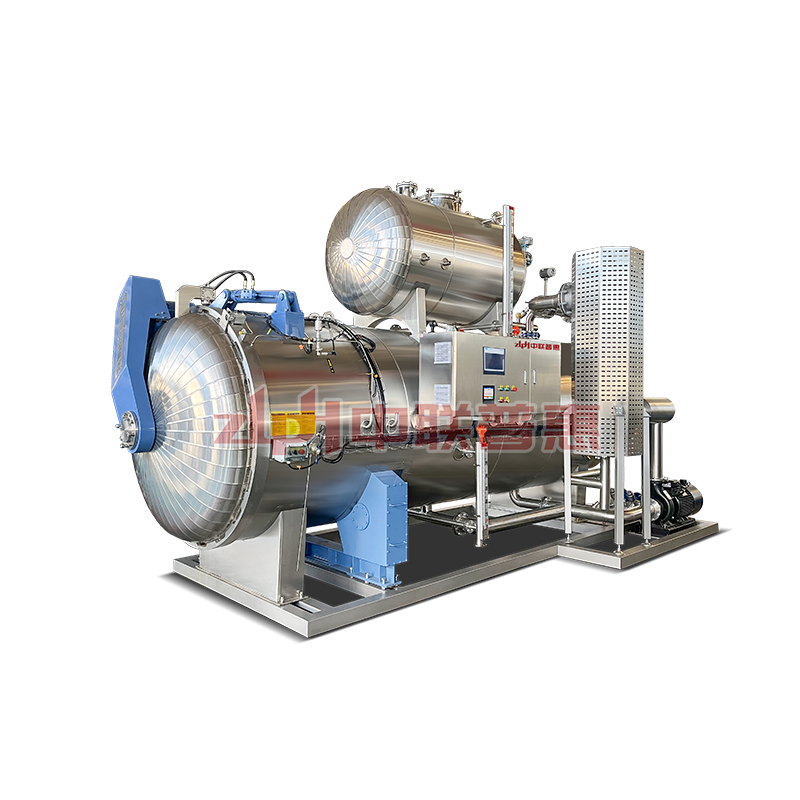
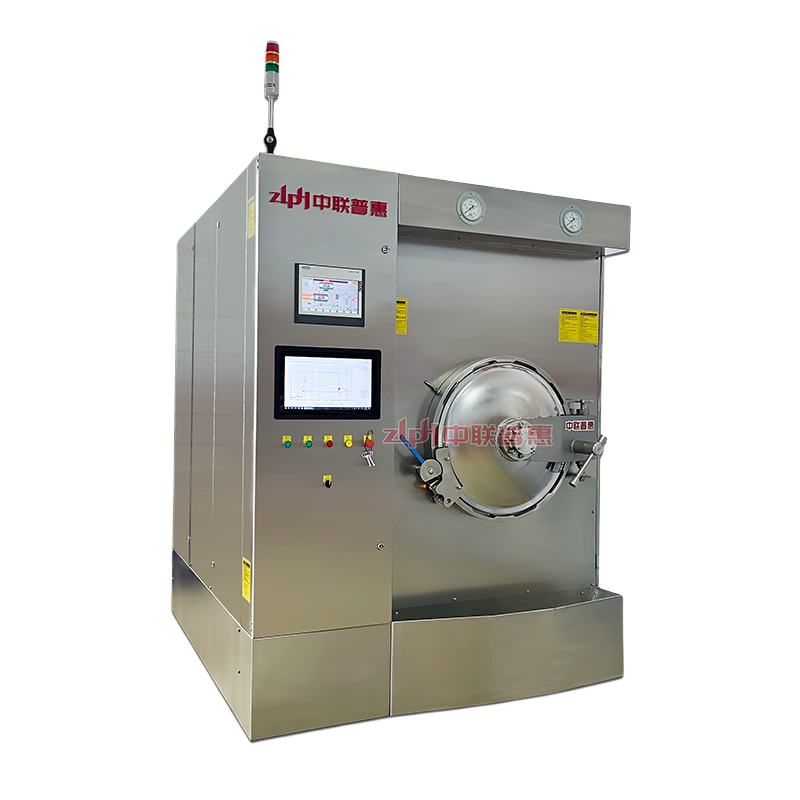
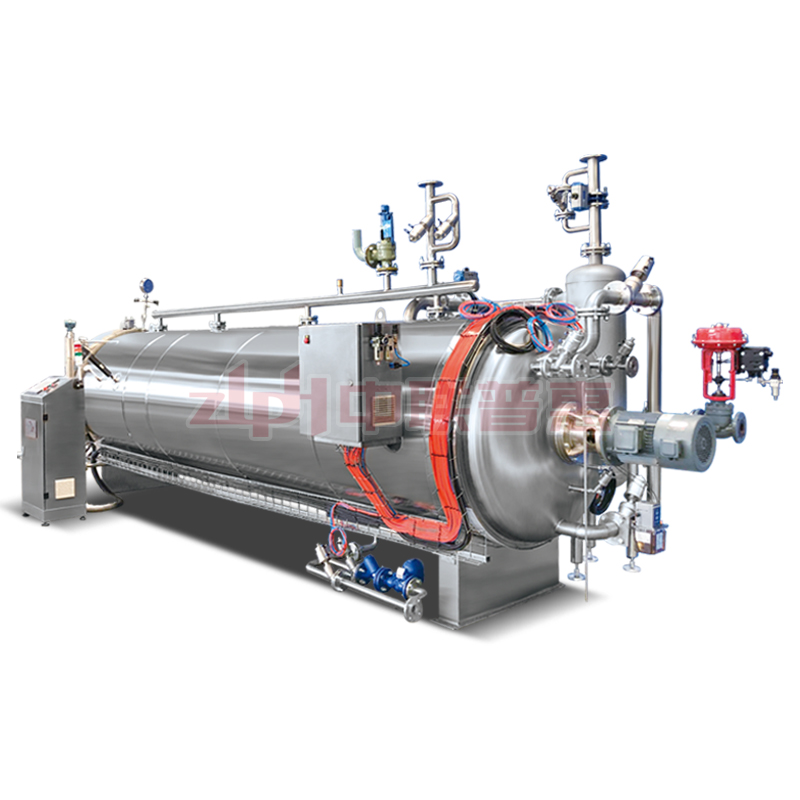
This guide is authored by a senior food processing engineer with over 10 years of experience at ZLPH MACHINERY TECHNOLOGY CO., LTD., a globally recognized provider of advanced sterilization solutions. It addresses a critical challenge faced by food manufacturers worldwide: selecting a high-quality, reliable water immersion retort autoclave that ensures product safety, operational efficiency, and compliance across diverse production environments.

Selecting the right water immersion retort has long been a pain point in the food canning and packaging industry, primarily due to inconsistent thermal distribution, slow cycle times, and lack of automation integration. Based on more than 500 global installations and extensive R&D validation, we’ve developed a proven, step-by-step framework to help you eliminate sterilization failures, reduce downtime, and ensure consistent product quality. In this guide, we’ll break down real-world scenarios, root causes, actionable solutions, and validated best practices—backed by engineering data and field-proven results—to empower your decision-making process.

How to Ensure Uniform Heat Distribution in Large-Batch Water Immersion Retorts?
1. Scenario & Pain Point
In large-scale canned vegetable or ready-to-eat meal production, uneven heat distribution during sterilization leads to under-processing (safety risk) or over-processing (texture/nutrient loss). Operators often observe temperature variances exceeding ±3°C across the retort chamber, violating FDA and EU thermal processing standards.

2. Root Cause Analysis
Three primary factors contribute: inadequate water circulation design, poor basket loading patterns, and insufficient pre-heating of process water. Traditional retorts rely on passive convection, which fails to maintain uniform flow in dense or tall product configurations.

3. Step-by-Step Solution
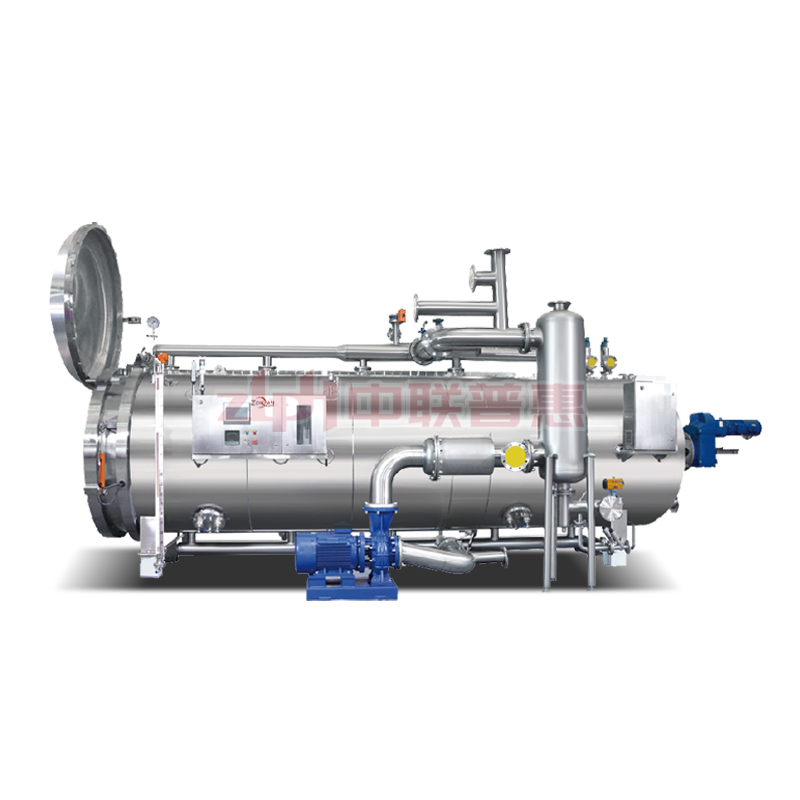
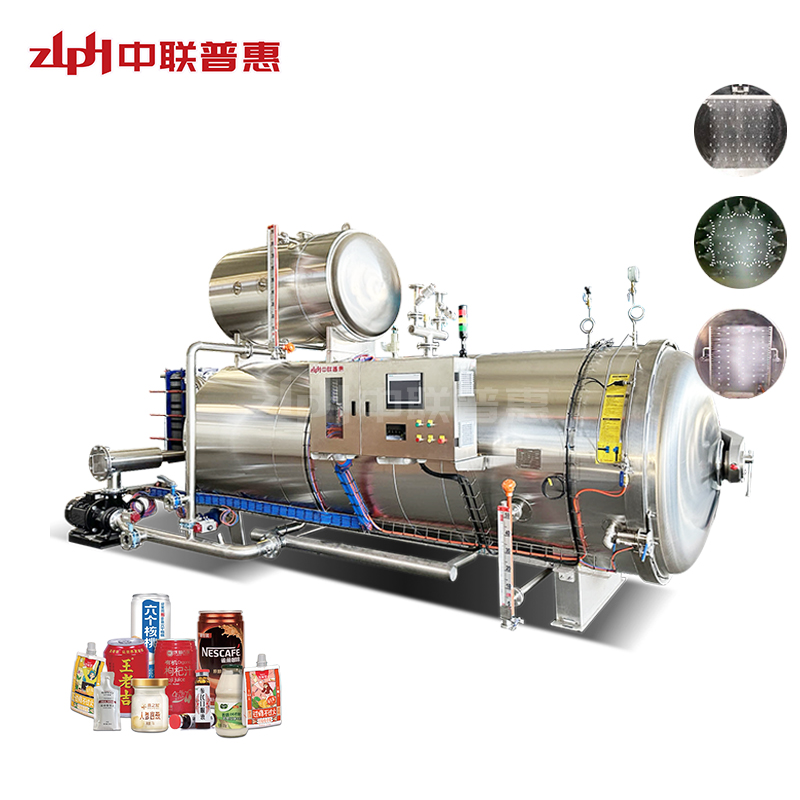
- Implement forced-circulation water spray systems with multi-nozzle arrays to ensure even thermal contact.
- Use standardized retort trays with optimized spacing to allow full water penetration.
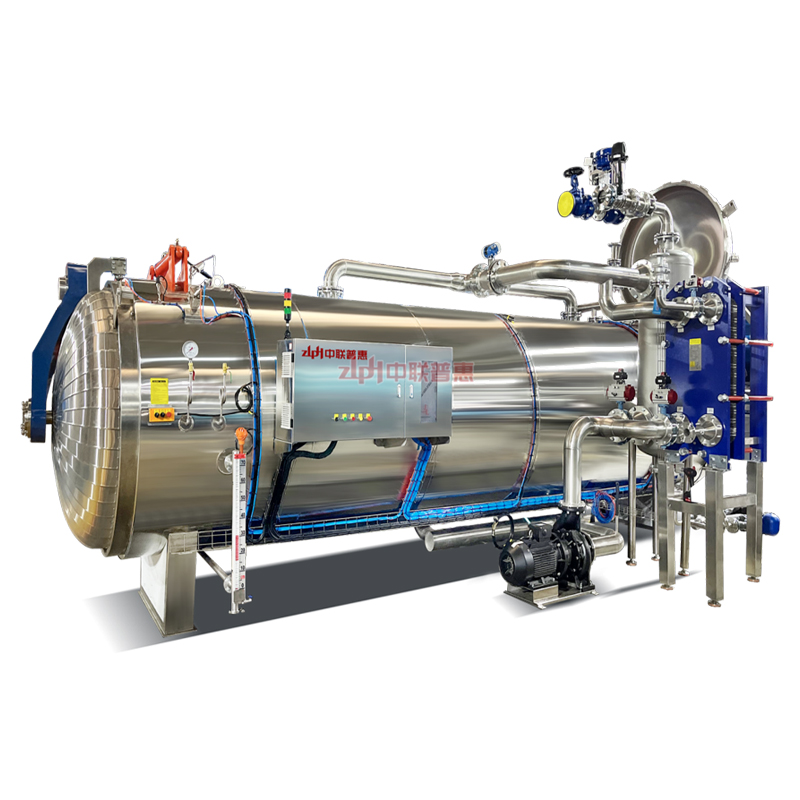
- Integrate pre-heating tanks to stabilize incoming water temperature before sterilization cycles.
4. Pitfall Avoidance Guide
Avoid stacking products beyond recommended height limits. Always validate thermal profiles using data loggers in worst-case locations (e.g., center of load). Never skip empty-chamber calibration tests after maintenance.
5. Validation Results
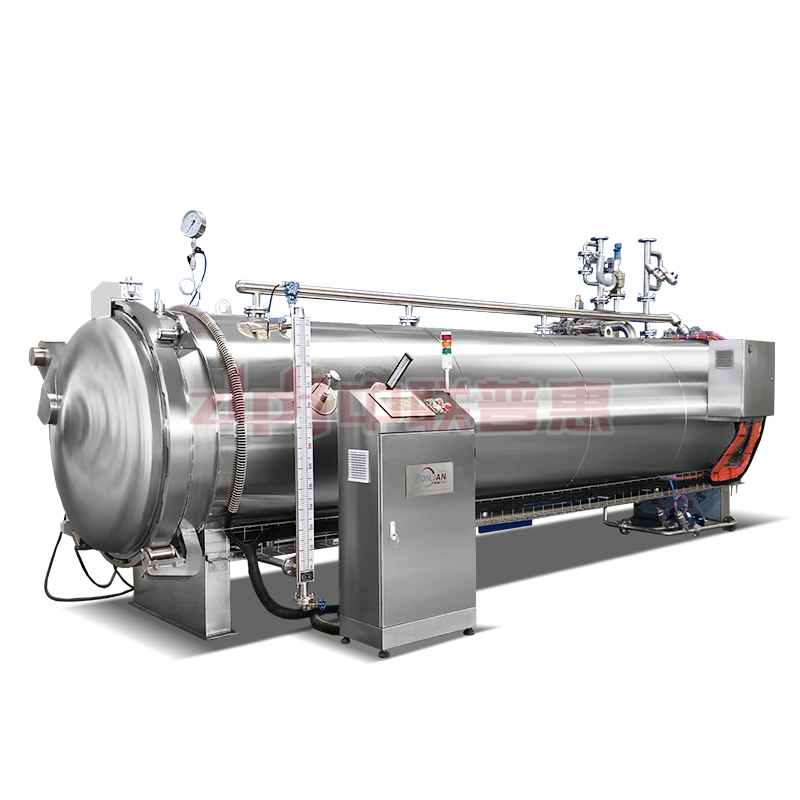
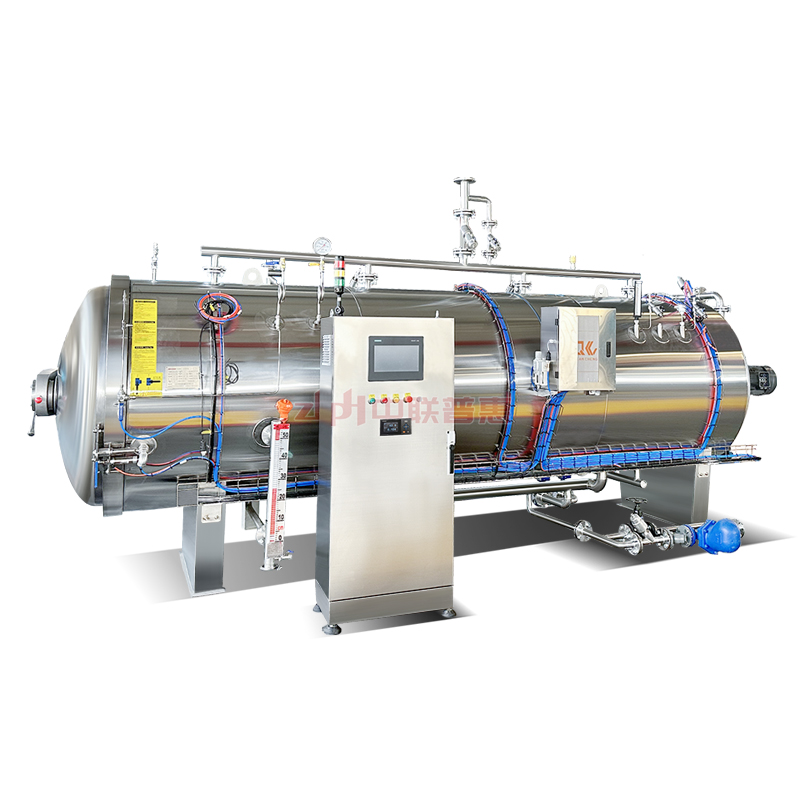
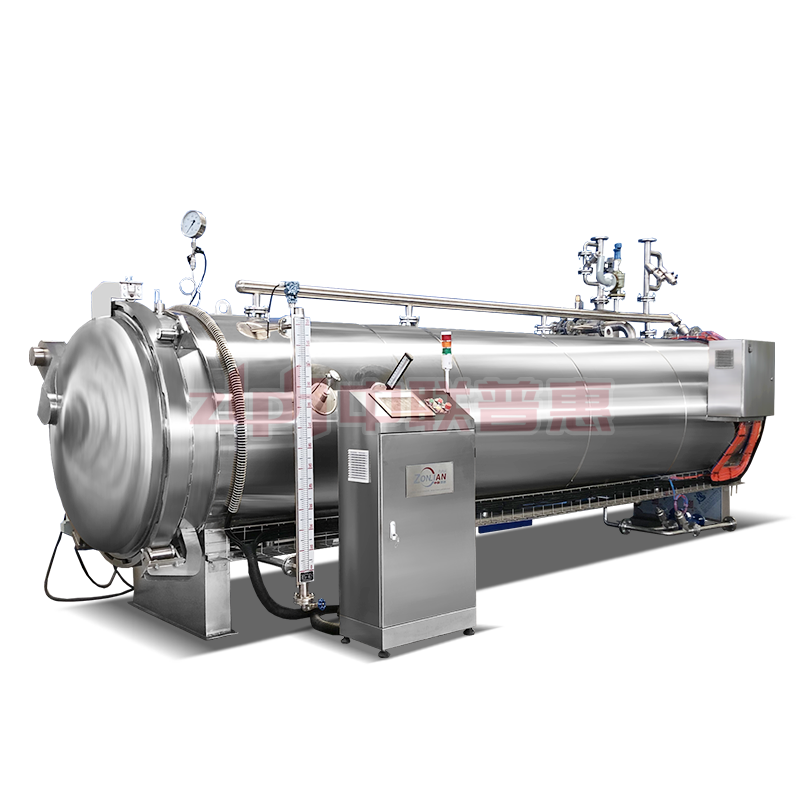
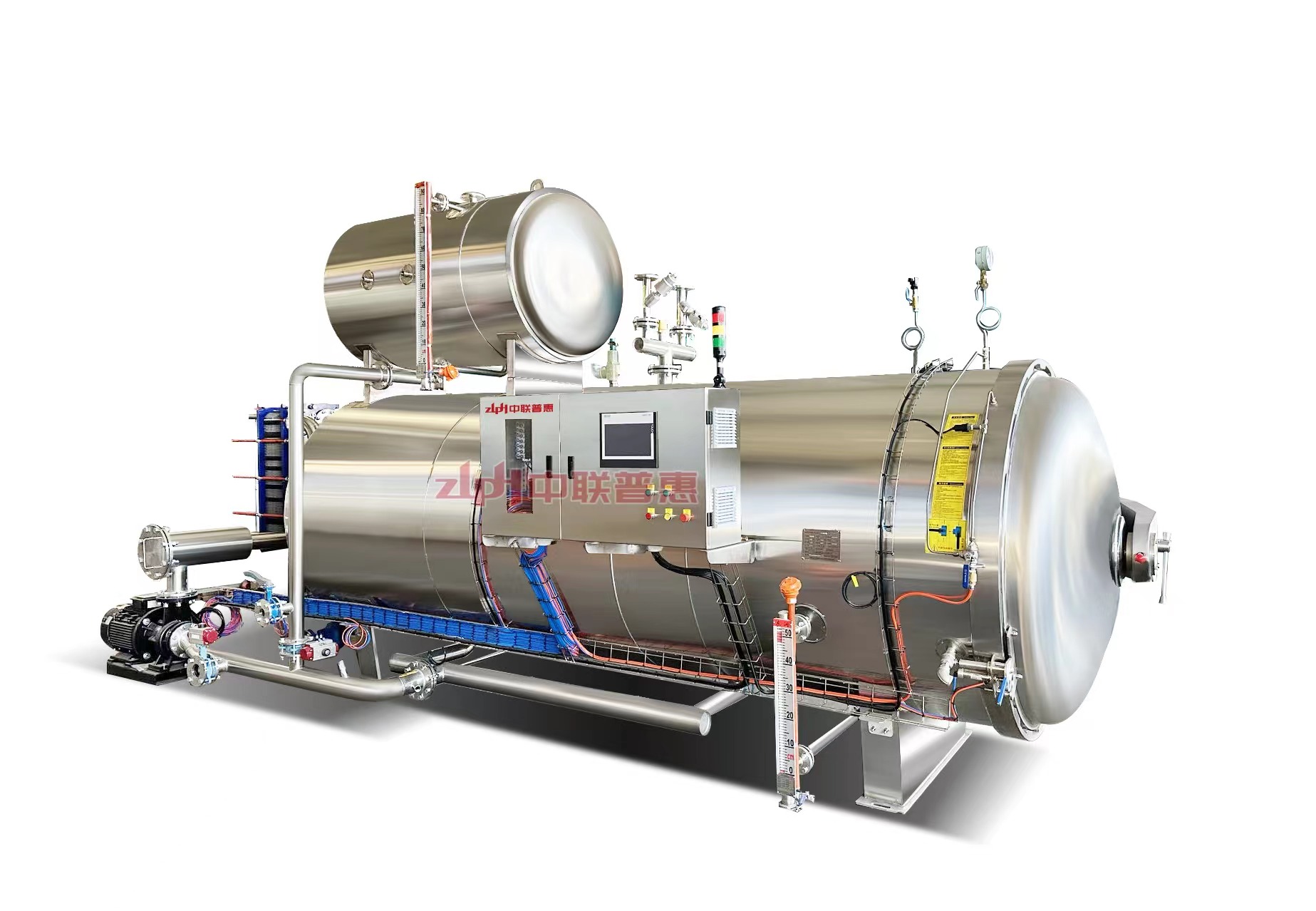
ZLPH’s intelligent water spray retort system achieves ±0.5°C thermal uniformity across 3m³ chambers, validated per EN 13485 and ASME BPVC Section VIII standards. Clients report 30% faster come-up times and zero recalls due to thermal deviation over 18 months of continuous operation.
How to Automate Loading/Unloading to Reduce Labor Costs and Human Error?
1. Scenario & Pain Point
Manual handling of heavy retort baskets causes ergonomic injuries, inconsistent loading, and cycle delays—especially in 24/7 tuna or pet food plants. Operators struggle with alignment errors that damage gaskets or cause seal failures.
2. Root Cause Analysis
Reliance on forklifts or manual carts introduces variability. Lack of guided positioning systems leads to misalignment, while absence of interlocks risks unsafe door operations.
3. Step-by-Step Solution
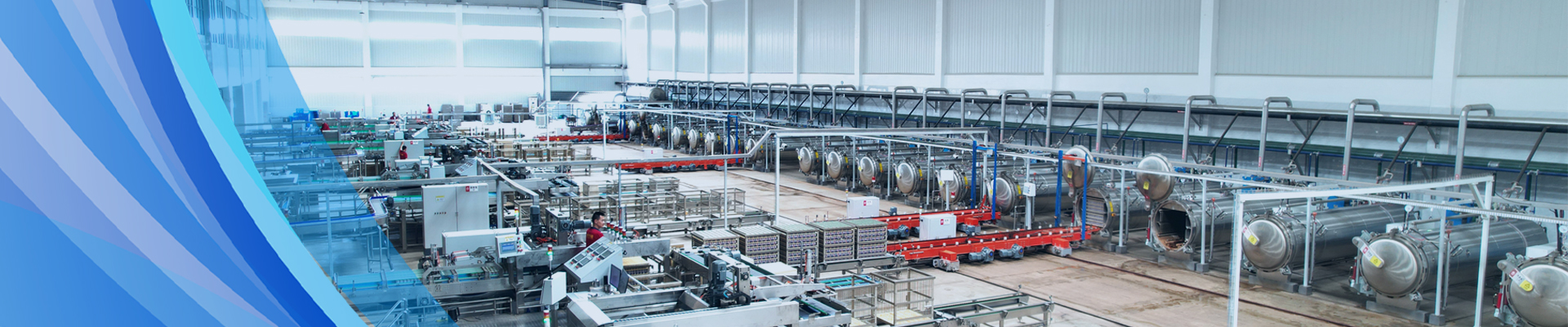
Deploy an automated tray loader/unloader system with servo-driven rails, vision-guided alignment, and PLC-synchronized door control. Integrate with MES for batch traceability.
4. Pitfall Avoidance Guide
Ensure floor leveling meets ±2mm tolerance before installation. Conduct weekly calibration of position sensors. Train operators on emergency stop protocols.
5. Validation Results At a Qingdao-based seafood exporter, ZLPH’s automated system reduced loading time by 65%, eliminated gasket damage incidents, and cut labor costs by 40%—with ROI achieved in under 14 months.
What Certifications Are Required for Exporting Retorts to Europe and Russia?
1. Scenario & Pain Point
Manufacturers targeting EU or Eurasian markets face customs holds or rejection due to missing compliance documentation.
2. Root Cause Analysis
Many suppliers claim “CE compliance” without valid notified body certification. Russian EAC requirements are often overlooked.
3. Step-by-Step Solution
Verify that the supplier holds valid CE certification under PED 2014/68/EU, EAC certification for CU TR 032/2013, and ASME “U” Stamp authorization.
4. Pitfall Avoidance Guide
Request certificate copies with issuing body details. Confirm scope includes pressure vessel design and manufacturing.
5. Validation Results
ZLPH maintains ASME Certificate of Authorization, EU CE, Russian EAC, Malaysia DOSH, and Special Equipment Manufacturing License—enabling seamless market entry across 30+ countries.
Industry Best Practices: 5-Step Framework for Retort Selection
Based on 6+ years of global deployments, we recommend this universal framework:
- Define Worst-Case Conditions: Design for max product density, ambient temperature extremes, and utility fluctuations.
- Prioritize Automation Readiness: Choose systems with OPC-UA, Modbus TCP, or Profinet for future IIoT integration.
- Validate Thermal Performance: Demand third-party thermal mapping reports per ASTM F2834.
- Assess Service Infrastructure: Confirm local spare parts availability and 24/7 remote support.
- Test Before Committing: Run pilot batches with your actual product matrix.
Frequently Asked Questions (FAQ)
Q: Can standard retorts handle acidic foods like tomato sauce?
A: Only if constructed with SS316L or higher-grade stainless steel. ZLPH uses SS316L inner chambers with electropolished surfaces to resist corrosion from low-pH products.
Q: What’s the typical cycle time for a 2,000L water immersion retort?
A: With pre-heated water and optimized cooling, ZLPH systems achieve 45–60 minutes per batch—including come-up, hold, and cool-down phases.
Q: Is top-opening design better than horizontal for small factories?
A: Yes—top-opening models save floor space, enable faster loading via overhead hoists, and reduce steam leakage risks. ZLPH’s intelligent top-door system includes hydraulic assist and safety interlocks.
Q: Do you offer remote monitoring?
A: All ZLPH retorts include cloud-connected HMI with real-time temperature/pressure dashboards, alarm notifications, and audit trail export—compliant with 21 CFR Part 11.
About Our Expertise & Global Support
ZLPH MACHINERY TECHNOLOGY CO., LTD. is a leading innovator in food sterilization technology since 2018. Our team includes 21 mechanical and PLC engineers, 4 sterilization process researchers, and 14 global after-sales specialists—all with 10+ years in retort automation. We operate a 15,000m² ISO-certified factory on a 50-acre campus, equipped with CNC machining centers and hydrostatic test bays.
Our solutions serve clients in Russia, Southeast Asia, Latin America, and the Middle East, with flagship installations at AGROPRODASH 2023 and Qingdao International Exhibitions. We hold ASME, CE, EAC, and AAA Credit Enterprise certifications—ensuring technical excellence and commercial reliability.
Custom Solution Support
We provide tailored services including:
- On-site thermal process validation
- Custom basket and tray design
- Integration with existing filling lines
- Free sample testing with your product
Contact our engineering team for a no-obligation consultation.
Contact Information
Company: ZLPH MACHINERY TECHNOLOGY CO., LTD.
Website: https://www.zlphretort.com/
Email: sales@zlphretort.com
Phone / WhatsApp: +86 15666798389 / +86 13361554016
