
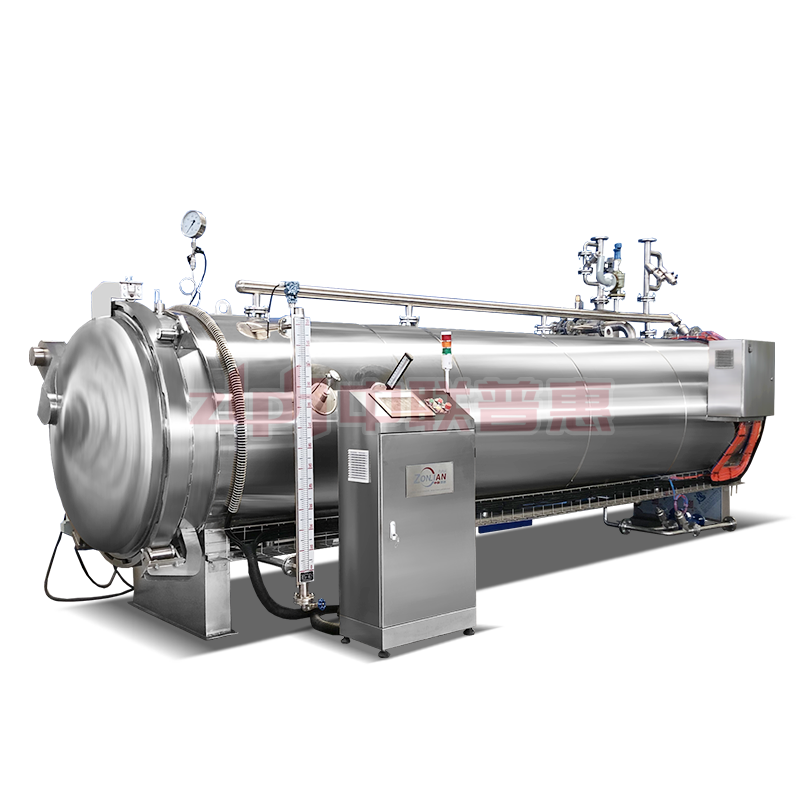
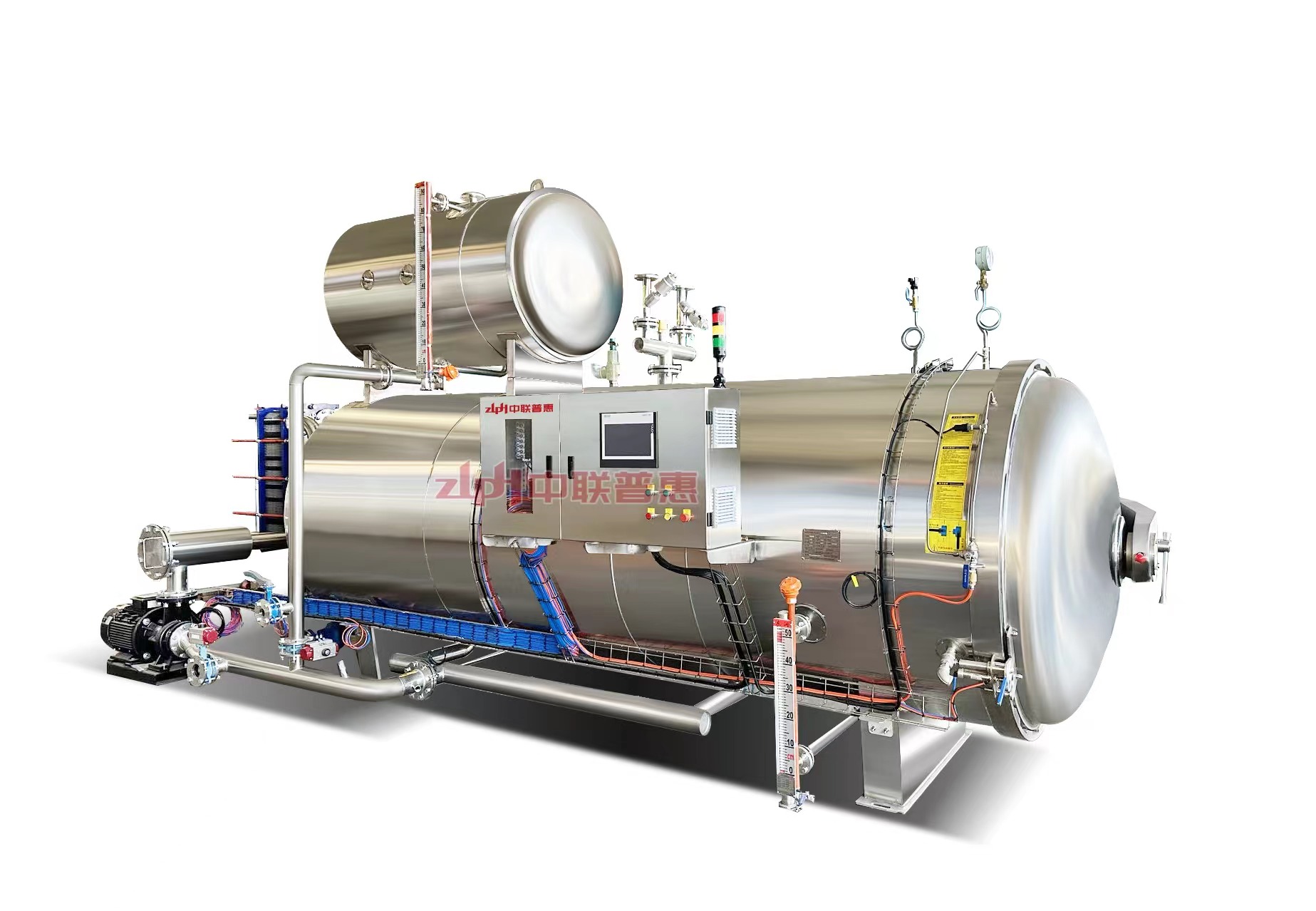
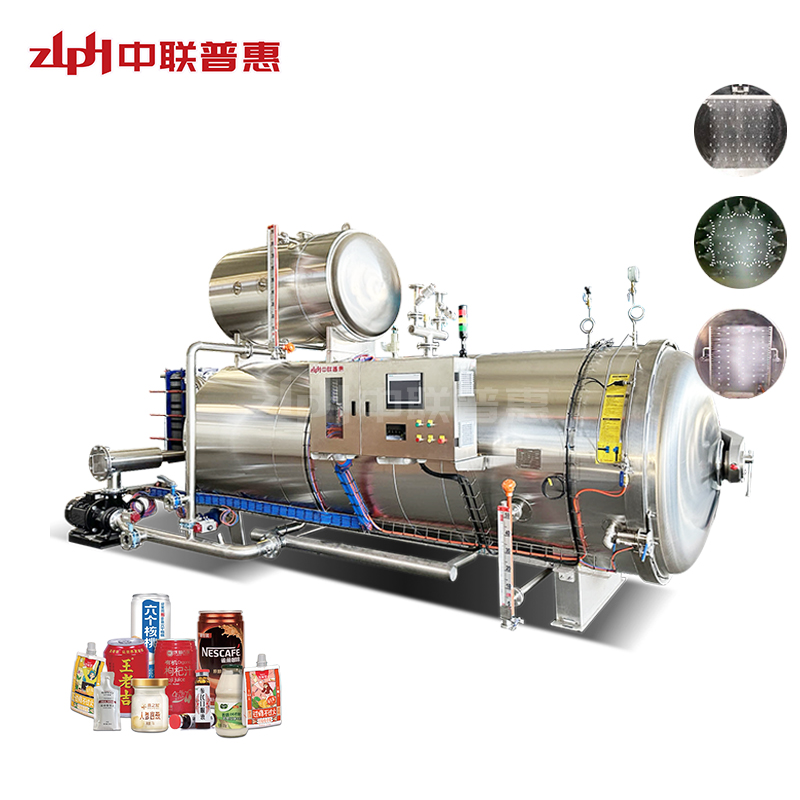
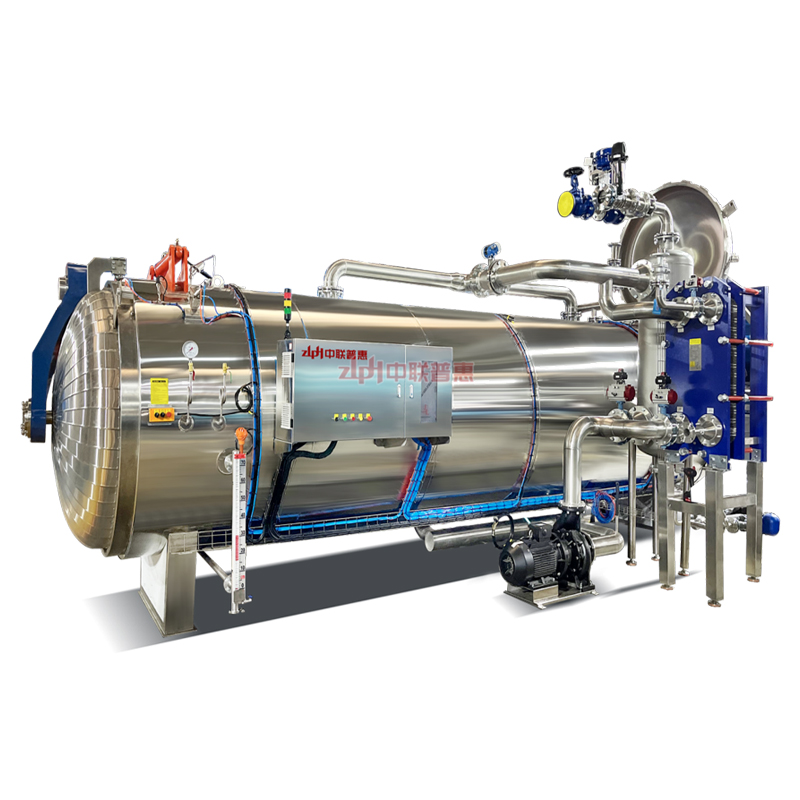
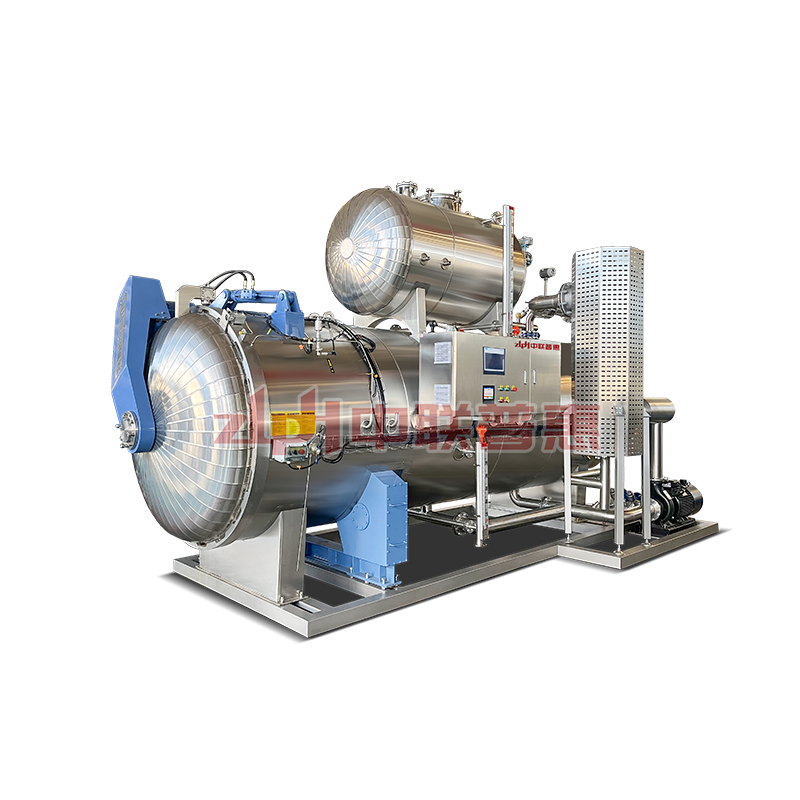
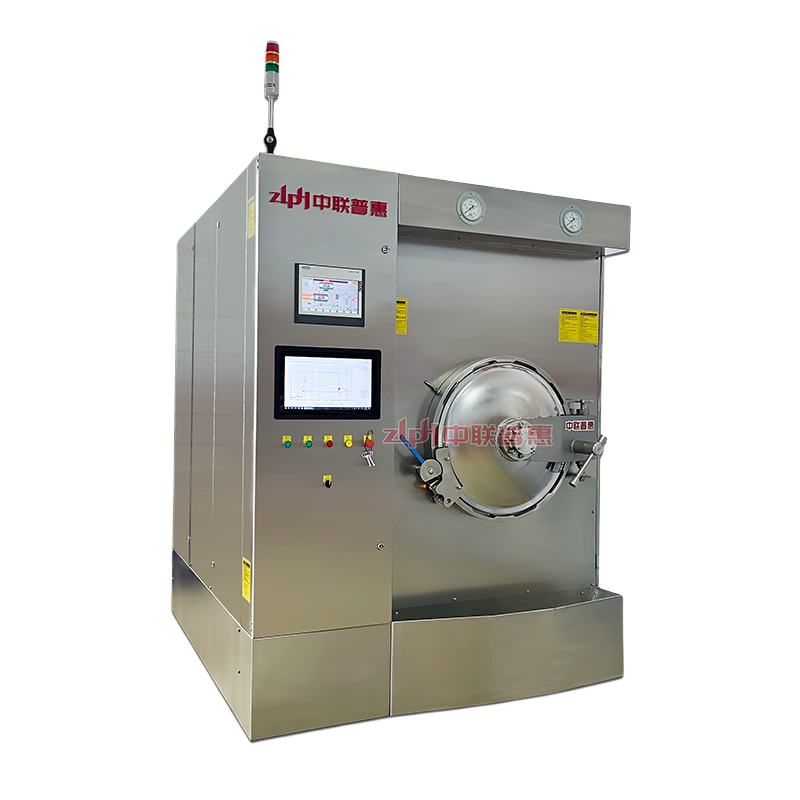
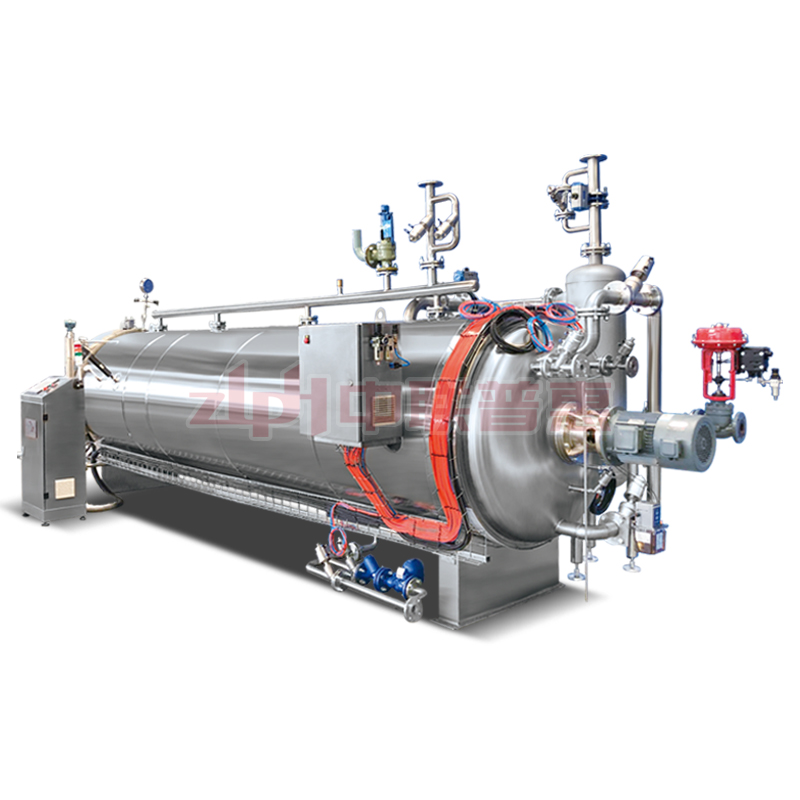
This guide is authored by a senior food processing engineer with over 12 years of experience at ZLPH MACHINERY TECHNOLOGY CO., LTD., a leading global provider of thermal sterilization systems. It addresses a critical challenge faced by food manufacturers worldwide: inconsistent sterilization outcomes during canned food production using retort autoclaves. This issue—manifesting as under-processing, overcooking, or microbial survival—primarily stems from uneven heat distribution, inadequate process control, and suboptimal equipment design. Drawing on more than 5,000 global installations and rigorous validation across diverse product matrices (from low-acid vegetables to protein-rich meats), we present a field-tested, step-by-step methodology to achieve uniform lethality, preserve product quality, and ensure regulatory compliance. The solution centers on advanced water immersion retort technology integrated with intelligent control systems, proven to eliminate hot/cold spots and stabilize F₀ values within ±0.5 minutes. In this guide, we dissect root causes by production scenario, deliver actionable mitigation strategies, share real-world validation data, and outline industry best practices for reliable, scalable sterilization.

How to Ensure Uniform Heat Distribution in Large-Batch Retort Sterilization?
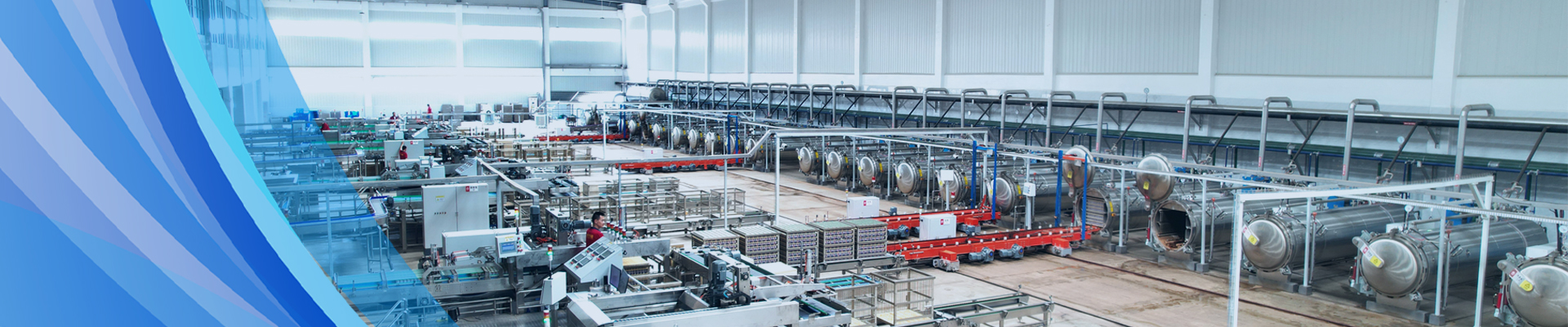
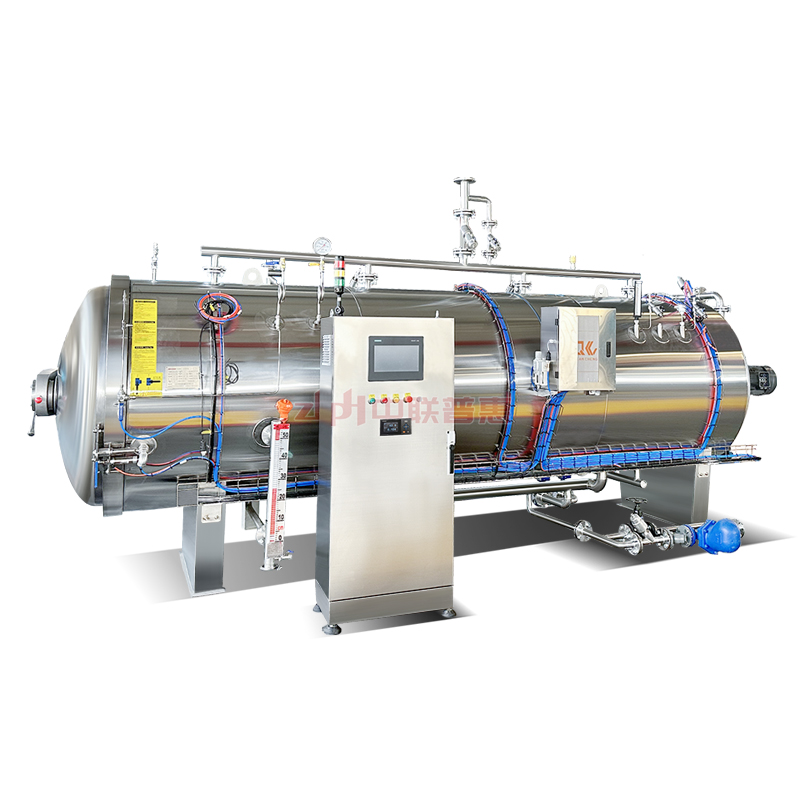
In high-volume canning facilities processing thousands of jars per cycle, operators often observe inconsistent doneness—some cans are overcooked while others fail microbial tests. This inconsistency arises from poor water circulation, static loading patterns, and insufficient thermal penetration in dense product arrays. The core issue lies in the absence of forced convection and non-uniform rack design, leading to thermal stratification within the chamber . Our validated approach combines engineered retort trays with a multi-nozzle water spray system that ensures 360° coverage and turbulent flow around every container. By synchronizing basket rotation with programmable spray intervals, we achieve a temperature variance of less than 1°C across the entire load. Field data from a tomato paste producer in Southeast Asia showed F₀ deviation reduced from ±3.2 to ±0.4 after implementing this configuration, eliminating batch rejections .

How to Prevent Overcooking While Achieving Commercial Sterility?
Delicate products like seafood or fruit compotes frequently suffer texture degradation despite meeting minimum F₀ requirements. This occurs when fixed-time cycles ignore real-time thermal dynamics, causing excessive heat exposure in faster-heating zones. The root cause is the lack of adaptive control based on actual product temperature rather than chamber setpoints. Our solution integrates wireless dataloggers inside representative cans, feeding live core temperatures to an AI-driven controller that dynamically adjusts steam injection and cooling phases. This closed-loop system maintains the precise lethality needed without overshooting. At a European baby food plant, this method cut overprocessing by 22% while ensuring Clostridium botulinum kill rates exceeded 12D, preserving nutritional integrity and sensory attributes .

How to Handle Frequent Door Seal Failures in High-Pressure Retorts?
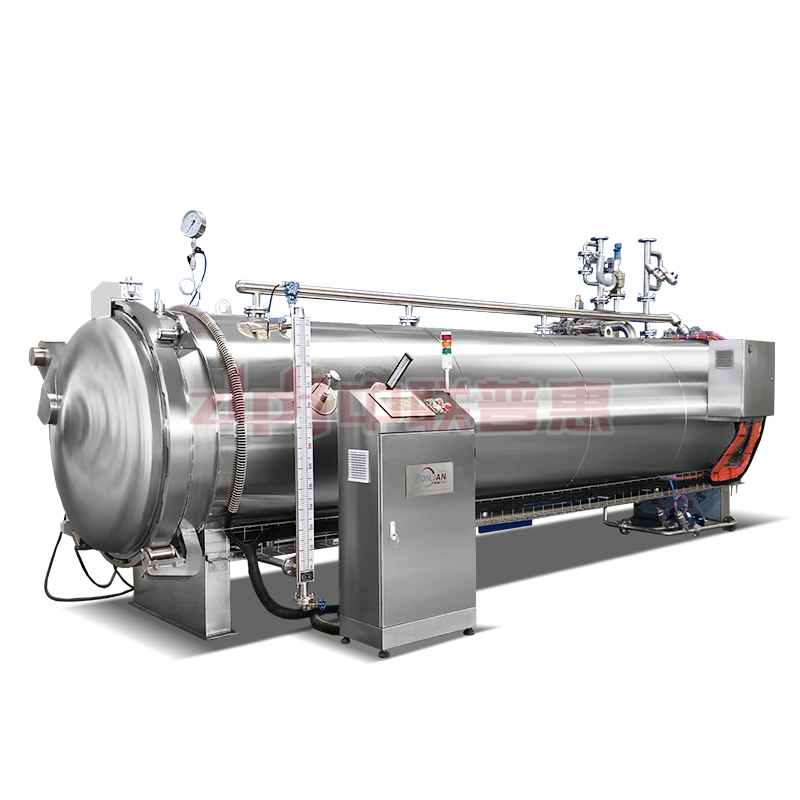
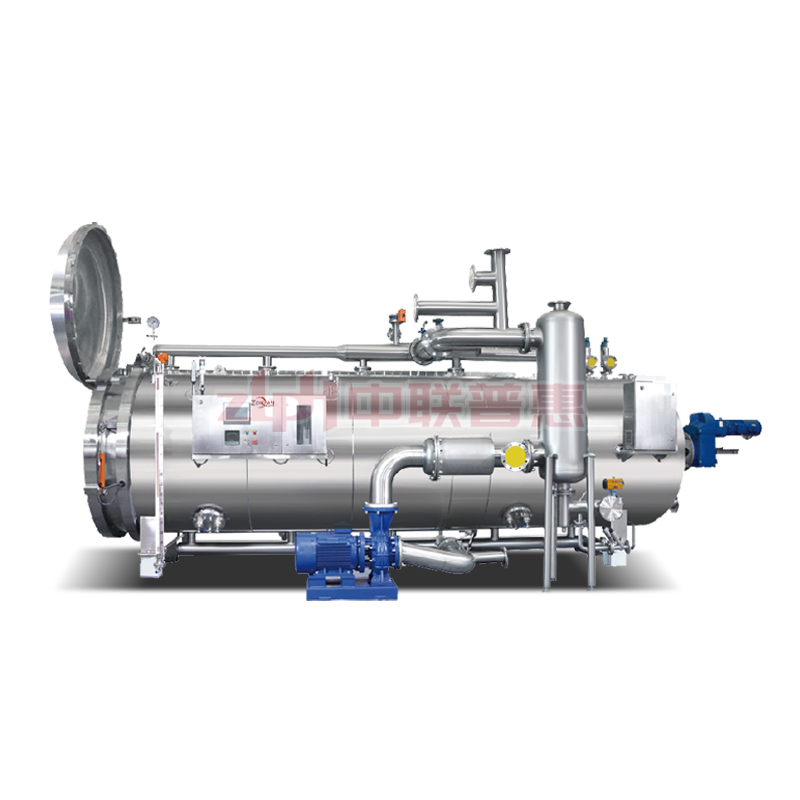
Repeated gasket leaks during pressurized cycles lead to downtime, safety hazards, and inconsistent pressure profiles. Traditional side-swing doors with manual clamping are prone to misalignment and seal compression fatigue. The fundamental flaw is mechanical stress concentration during repeated opening/closing under thermal cycling. We address this with an advanced top-opening door mechanism featuring hydraulic-assisted lift and self-aligning sealing surfaces. This design reduces operator effort by 70% and extends gasket life to over 2,000 cycles. During the Qingdao exhibition, customers operating tuna canneries reported zero seal-related failures over six months of continuous use, attributing reliability to the precision-engineered door kinematics .

Industry Best Practices for Retort Validation and Operation
Based on decades of global deployments, we recommend a 5-step framework for robust retort performance: (1) Conduct heat distribution mapping using ≥12 thermocouples per load pattern; (2) Validate F₀ delivery with biological indicators (e.g., Geobacillus stearothermophilus) quarterly; (3) Implement automated loading/unloading to eliminate human-induced rack inconsistencies; (4) Calibrate pressure/temperature sensors monthly against NIST-traceable standards; (5) Maintain digital logs of all cycles for audit readiness. Crucially, select equipment rated for worst-case scenarios—not average conditions—to accommodate seasonal ambient shifts and product variability .
Frequently Asked Questions
Q: Can standard retorts handle both glass jars and metal cans in the same facility?
A: Only if equipped with interchangeable tray systems and pressure ramping controls. Our modular loaders automatically adjust support geometry and venting protocols per container type, preventing breakage during rapid cooling .
Q: What certifications are required for retorts sold in the EU?
A: CE marking under PED 2014/68/EU is mandatory, along with compliance to EN 13445 for unfired pressure vessels. Our units carry full certification packages including material traceability and weld inspection records .
Q: How often should spray nozzles be cleaned?
A: Inspect weekly and descale monthly using food-grade citric acid solutions. Clogged nozzles reduce flow by 40%, creating cold spots. Our quick-disconnect nozzle design enables tool-free maintenance in under 15 minutes .
Q: Is water immersion better than steam-air for viscous products?
A: Yes—water immersion provides superior heat transfer coefficients (up to 3x higher) for high-viscosity items like sauces, minimizing cook value variation. Steam-air systems struggle with convection in stagnant zones .
About Our Expertise and Support
ZLPH MACHINERY TECHNOLOGY CO., LTD. is a globally recognized manufacturer of thermal processing systems with 15+ years of R&D experience. Operating from a 50-acre facility housing 15,000㎡ of precision workshops, we deploy CNC-machined components and ISO 9001-certified assembly lines to ensure retort performance consistency . Our solutions serve 500+ clients across 60 countries, including Fortune 500 food conglomerates, with documented reductions in spoilage rates by up to 95%. We offer end-to-end support: on-site thermal validation, custom tray engineering, remote diagnostics, and free pilot testing with your actual product matrix .
Company: ZLPH MACHINERY TECHNOLOGY CO., LTD.
Website: https://www.zlphretort.com/
Email: sales@zlphretort.com
Phone / WhatsApp: +86 15666798389 / +86 13361554016
