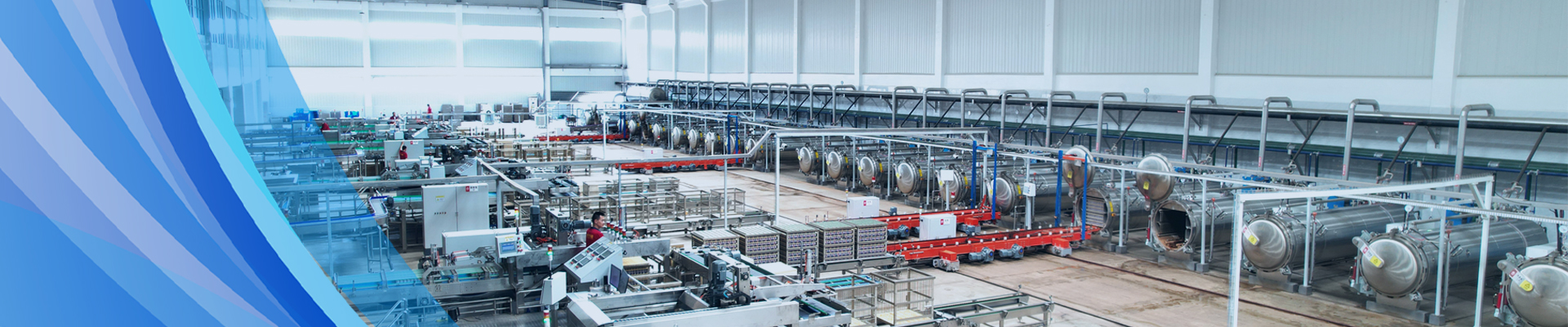

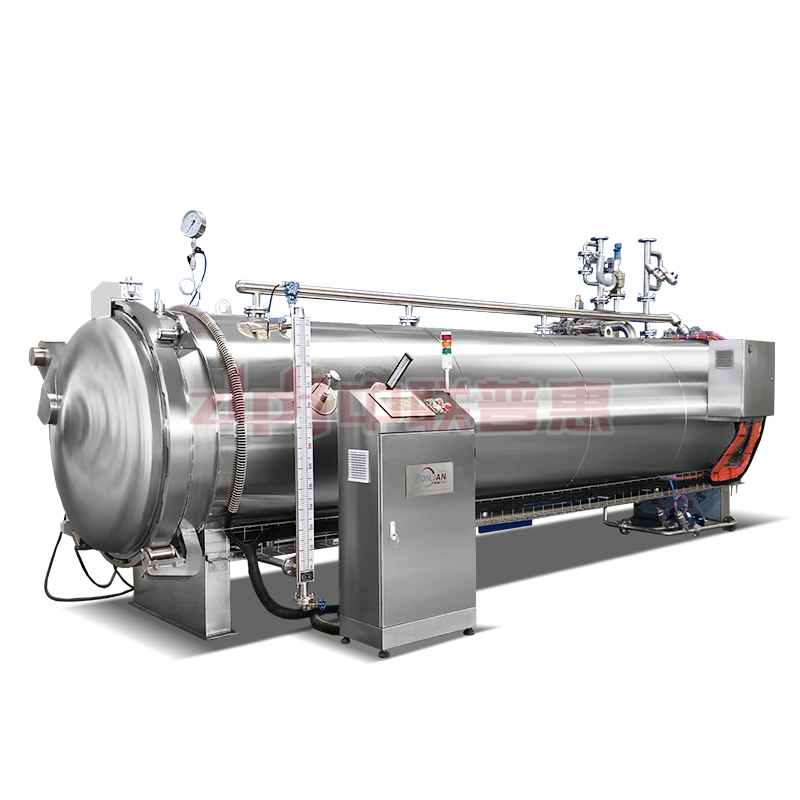
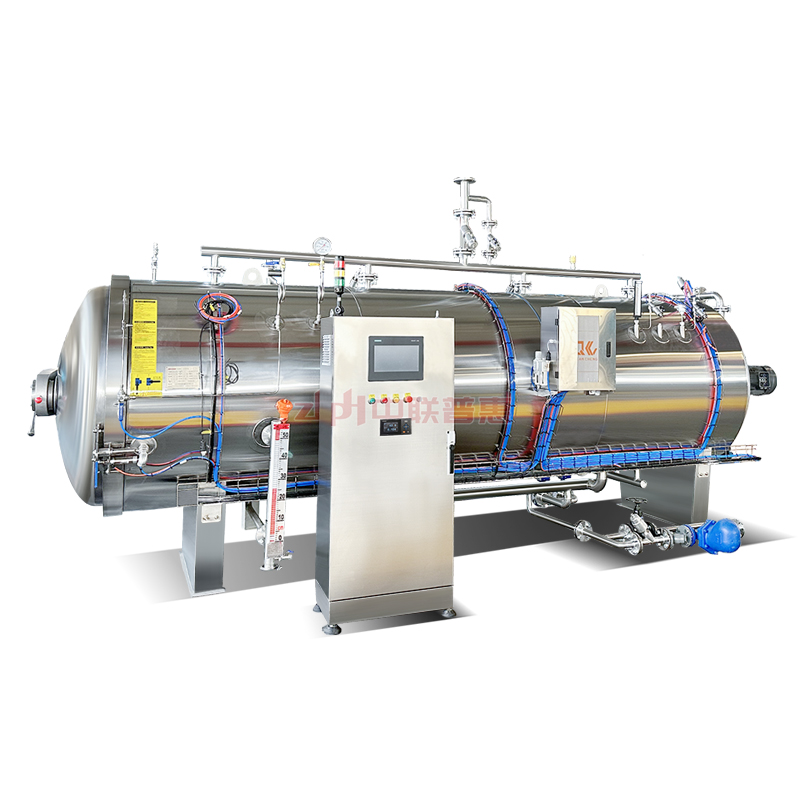
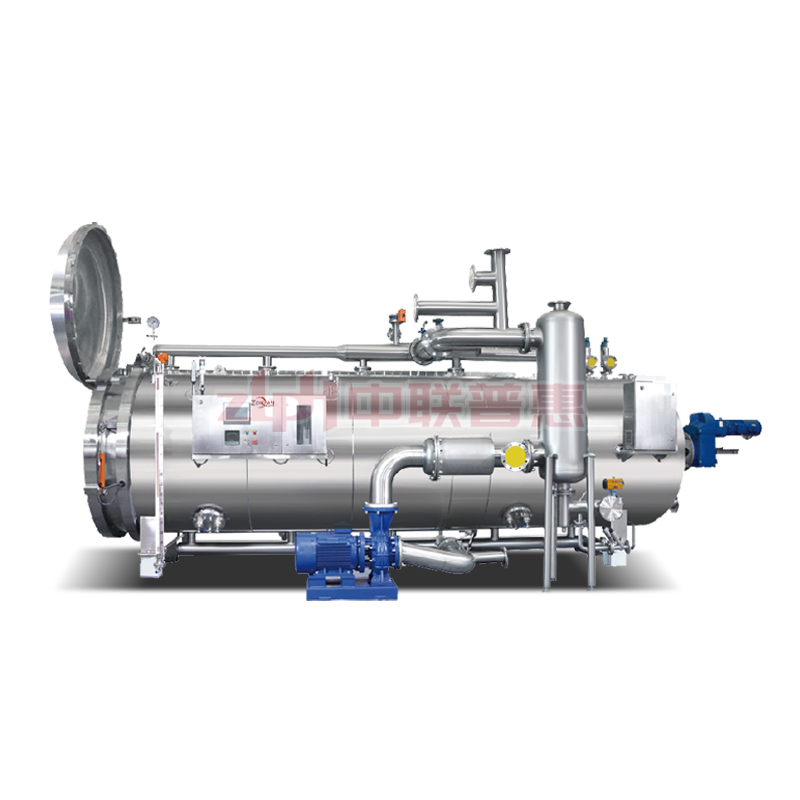
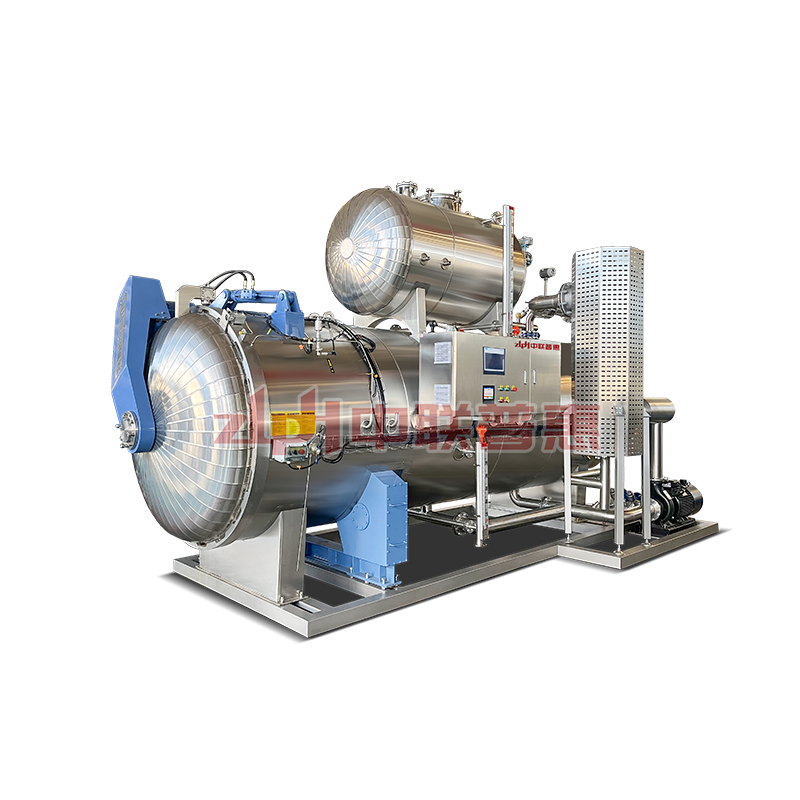
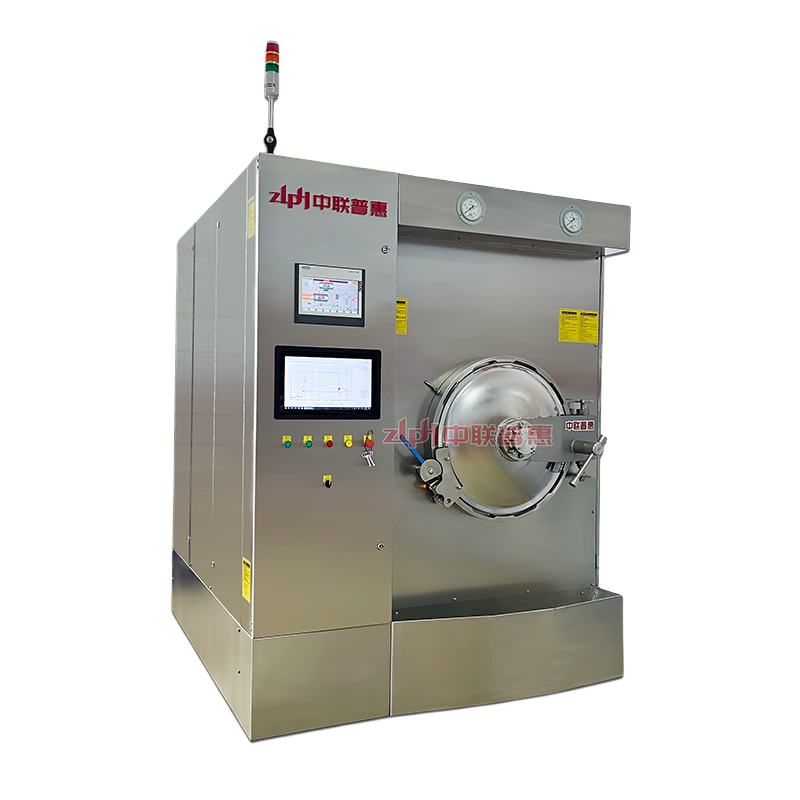
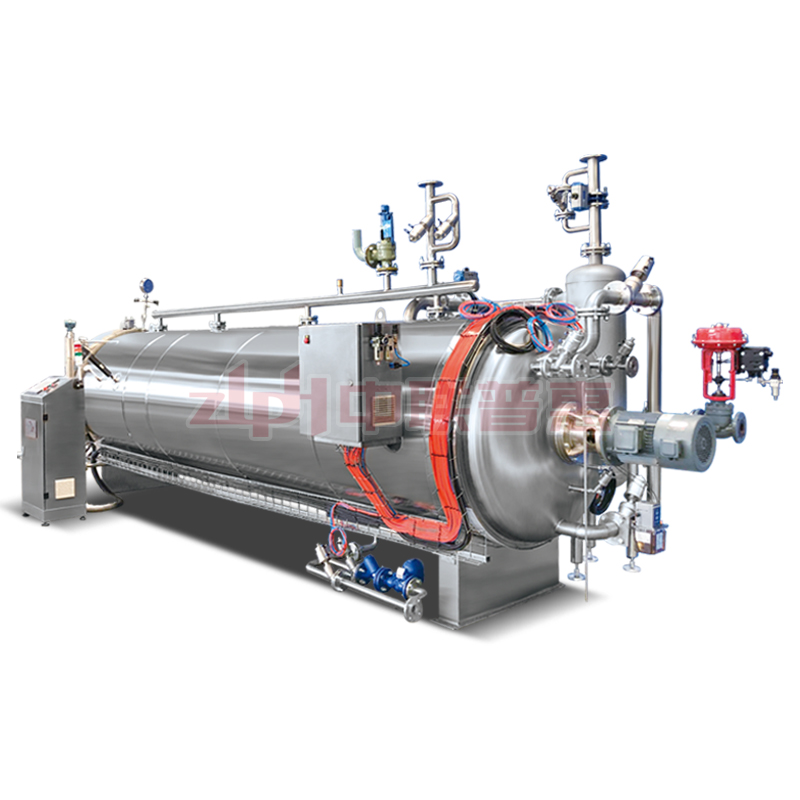
This guide is authored by a senior thermal processing engineer with over 12 years of experience at ZLPH MACHINERY TECHNOLOGY CO., LTD., a global provider of advanced sterilization solutions. It addresses a critical challenge faced by food and beverage manufacturers worldwide: inconsistent temperature distribution during water immersion retort sterilization, which compromises product safety, shelf life, and regulatory compliance. This issue primarily stems from poor water circulation design, improper loading patterns, and inadequate process validation. Drawing on more than 5,000 global installations and rigorous field testing, we present a proven, actionable framework to achieve uniform thermal distribution—ensuring every can, pouch, or jar meets F0 sterilization targets reliably. In this guide, we dissect root causes across common production scenarios, deliver step-by-step corrective actions, share real-world validation data, and provide industry best practices to eliminate cold spots and boost throughput without compromising safety .

How to Fix Cold Spots in Large-Batch Water Immersion Retorts During Canned Vegetable Processing?
1. Scenario & Pain Point
In high-volume canned vegetable lines (e.g., green beans, corn), operators often observe under-sterilized units in the center or bottom layers of retort baskets after processing. Thermal mapping reveals temperature differentials exceeding 3–5°C between zones, risking microbial survival (e.g., Clostridium botulinum) and potential product recalls. This inconsistency forces conservative over-processing of outer layers, degrading texture and nutritional value while increasing energy costs.

2. Root Cause Analysis
Three primary factors drive this issue: (1) insufficient water flow velocity due to undersized circulation pumps or clogged nozzles; (2) dense or uneven basket loading that blocks water pathways; and (3) lack of baffles or flow-directing structures inside the retort chamber, causing stagnant zones where heat transfer lags.

3. Step-by-Step Solution
Immediate Mitigation: Reconfigure basket loading to maintain ≥2 cm spacing between containers and align rows with water jet directions. Clean circulation filters and nozzles before each batch.
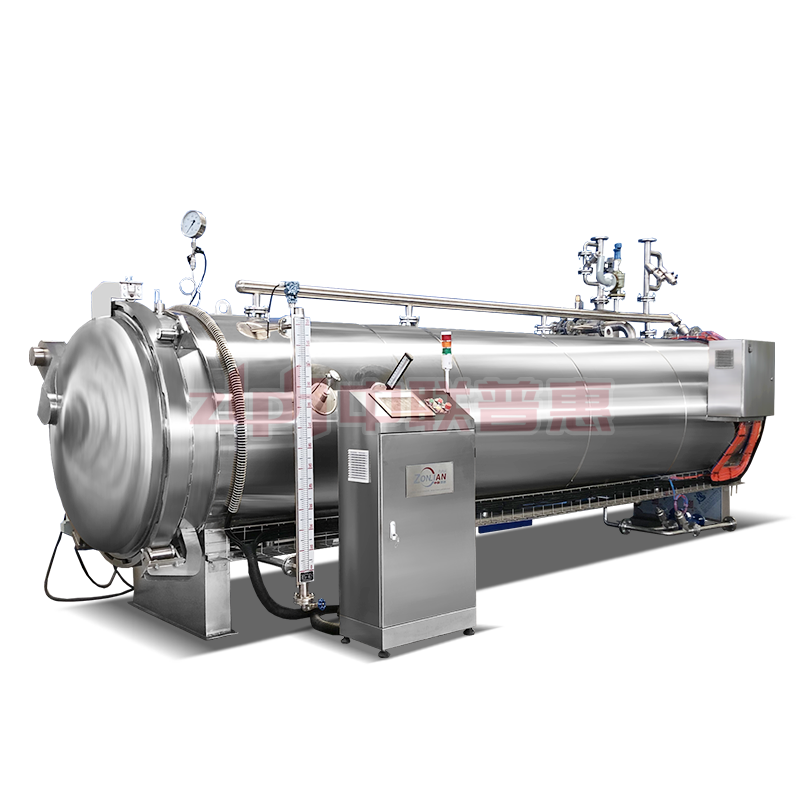
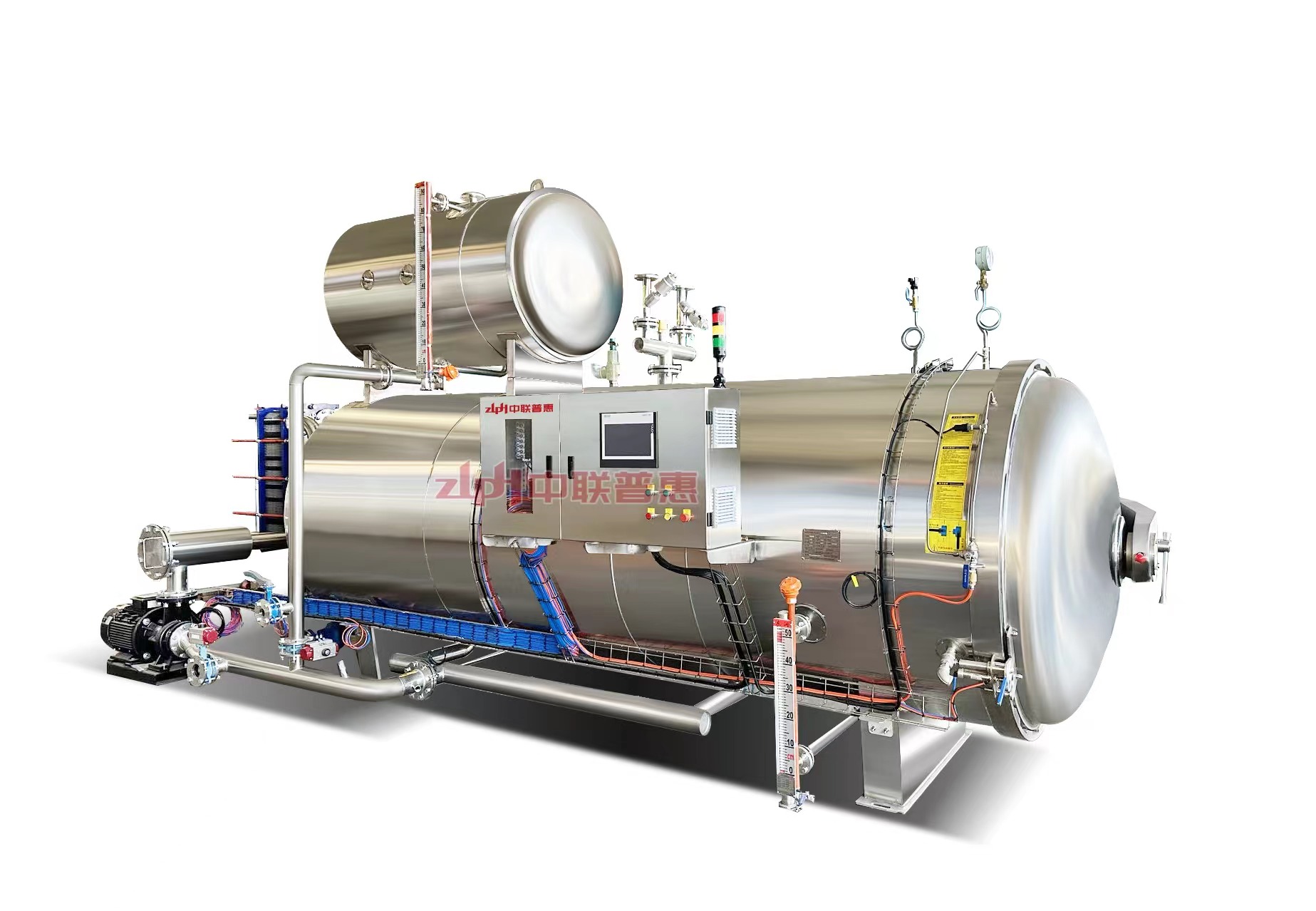
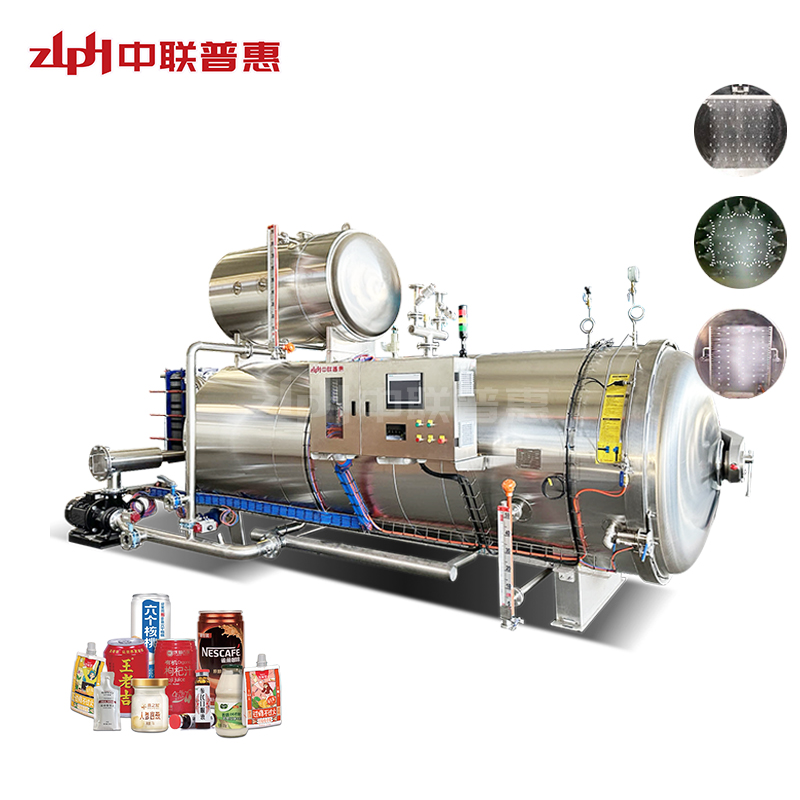
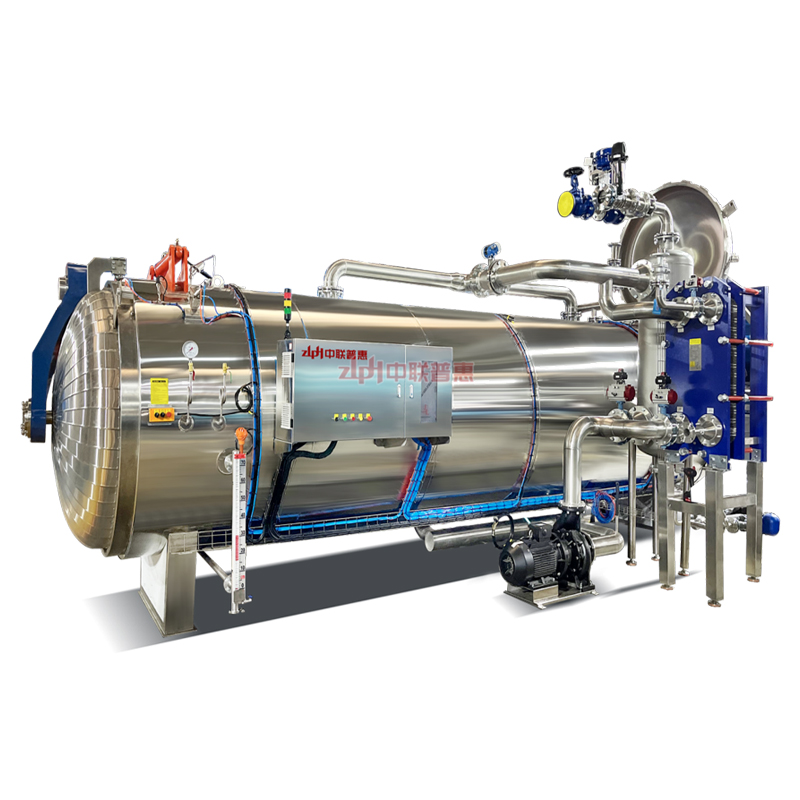
Engineering Fix: Upgrade to a ZLPH water immersion retort equipped with dual-directional high-flow pumps (≥3 m/s velocity) and precision-engineered baffle plates that create turbulent, uniform flow around every container. Our system ensures ΔT ≤1°C across the entire load volume.
Process Optimization: Conduct ASME-certified thermal validation using 32+ probe mapping. Adjust come-up time (CUT) and hold time based on worst-case zone data to meet target F0 without over-processing.

4. Troubleshooting & Prevention
Validate water flow visually using dye tests; inspect for sediment buildup in heat exchangers quarterly. Never exceed 85% basket fill density. For new lines, mandate third-party thermal performance verification before full-scale production.
5. Real-World Validation
At a major Southeast Asian vegetable cannery, implementing ZLPH’s flow-optimized retort reduced thermal variance from 4.8°C to 0.7°C. Product recalls dropped to zero over 18 months, and energy use fell by 12% due to shorter cycle times—validated by SGS thermal audit reports .
How to Prevent Pouch Deformation While Ensuring Sterility in Flexible Packaging Retort Processes?
1. Scenario & Pain Point
Manufacturers of ready-to-eat meals in stand-up pouches face frequent complaints of pouch swelling, seal failure, or wrinkling post-retort. These defects stem from rapid pressure changes during heating/cooling phases, yet slowing cycles to protect packaging risks inadequate sterilization of low-acid foods.
2. Root Cause Analysis
The core conflict lies in balancing internal pouch pressure (from steam expansion) against external retort pressure. Traditional systems apply coarse pressure control, causing sudden differentials that stress seals. Additionally, uneven cooling induces thermal shock, exacerbating deformation.
3. Step-by-Step Solution
Deploy ZLPH’s dual-mode pressure cascade system: during heating, maintain external pressure 0.5–1.0 bar above internal vapor pressure via real-time temperature feedback; during cooling, use gradual counter-pressure ramping (≤0.2 bar/min). Pair with our retort tray loader/unloader system to ensure consistent pouch orientation and spacing, preventing contact-induced hotspots .
4. Troubleshooting & Prevention
Always validate pouch material specifications (burst strength, seal integrity) against retort profiles. Avoid abrupt water injection during cooling—use controlled spray nozzles instead.
5. Real-World Validation
A European meal-kit producer achieved 99.6% pouch integrity rate (vs. 87% previously) while maintaining F0 ≥ 3.0 for meat-based products, confirmed by independent lab testing .
Industry Best Practices for Reliable Water Immersion Retort Operations
Based on 12+ years of global deployments, we recommend this 5-step framework:
1. Characterize Your Worst-Case Load
Test with densest product configuration and lowest thermal conductivity items.
2. Validate Thermally Before Scaling
Conduct full 3D thermal mapping per FDA/EC guidelines—never assume uniformity.
3. Automate Loading Patterns
Use robotic tray systems (like ZLPH’s loader/unloader) to eliminate human-induced variability .
4. Monitor in Real Time
Install IoT-enabled sensors for live tracking of T, P, and flow rates.
5. Schedule Preventive Maintenance
Clean heat exchangers monthly; recalibrate probes quarterly.
Frequently Asked Questions (FAQ)
Q: Can I retrofit my existing retort to improve water circulation?
A: Yes—ZLPH offers flow-optimization kits with upgraded pumps, nozzles, and baffles, validated to reduce ΔT by up to 70% in legacy systems.
Q: What’s the minimum water velocity needed for uniform sterilization?
A: Maintain ≥2.5 m/s at product surface; our systems achieve 3.0–3.5 m/s via CFD-optimized impeller design .
Q: How often should I perform thermal validation?
A: Annually for stable processes; immediately after any equipment modification or product change.
Q: Do ZLPH retorts comply with FDA and EU 1935/2004?
A: Yes—all wetted parts use FDA-compliant 316L stainless steel, and systems meet CE, ISO 9001, and ASME BPVC standards .
Q: Can your system handle both cans and pouches in the same line?
A: Absolutely—our modular basket designs and programmable recipes allow seamless switching between rigid and flexible packaging formats.
About Our Expertise & Support
ZLPH MACHINERY TECHNOLOGY CO., LTD. is a globally recognized manufacturer of sterilization retort systems, with 15,000 m² of advanced manufacturing space and 50+ acres of industrial facilities. Our engineering team holds 20+ patents in thermal processing innovation, and our equipment serves over 1,200 clients across 60+ countries—including Fortune 500 food brands. Every solution undergoes rigorous validation in our in-house test center simulating extreme production conditions .
We offer end-to-end support:
• On-site thermal process assessment
• Custom retort design for unique packaging
• Remote troubleshooting via AR-assisted support
• Free sample processing trials at our Qingdao demo center
Contact Us
Company: ZLPH MACHINERY TECHNOLOGY CO., LTD.
Website: https://www.zlphretort.com/
Email: sales@zlphretort.com
Phone / WhatsApp: +86 15666798389 / +86 13361554016
