
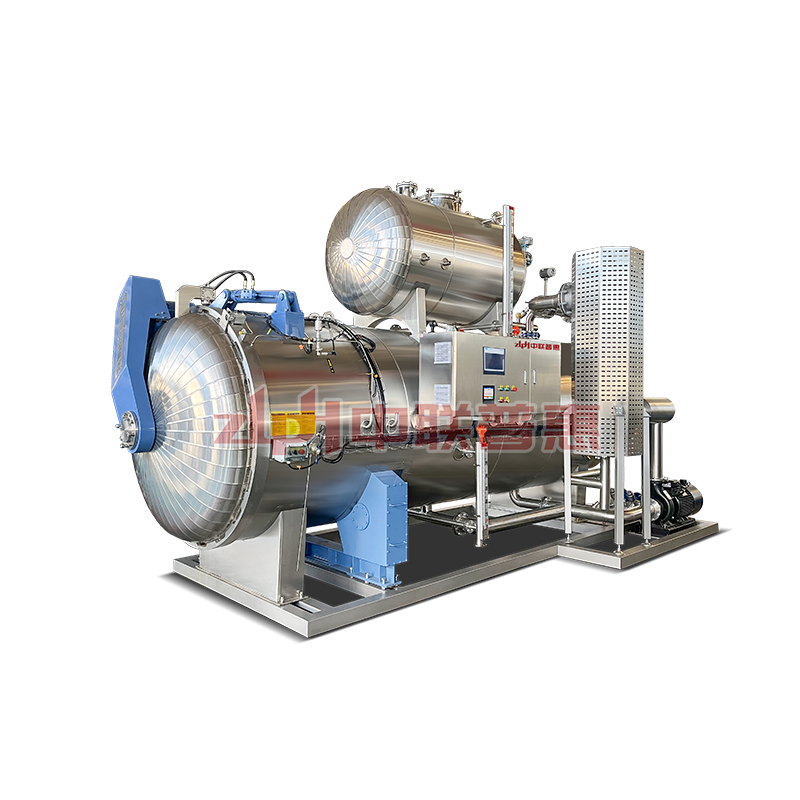
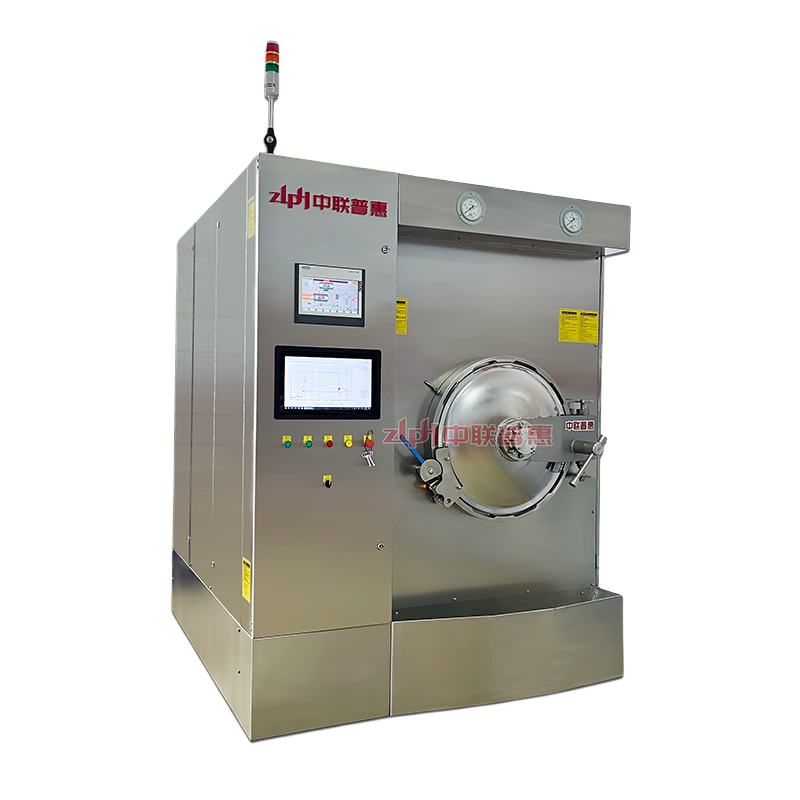
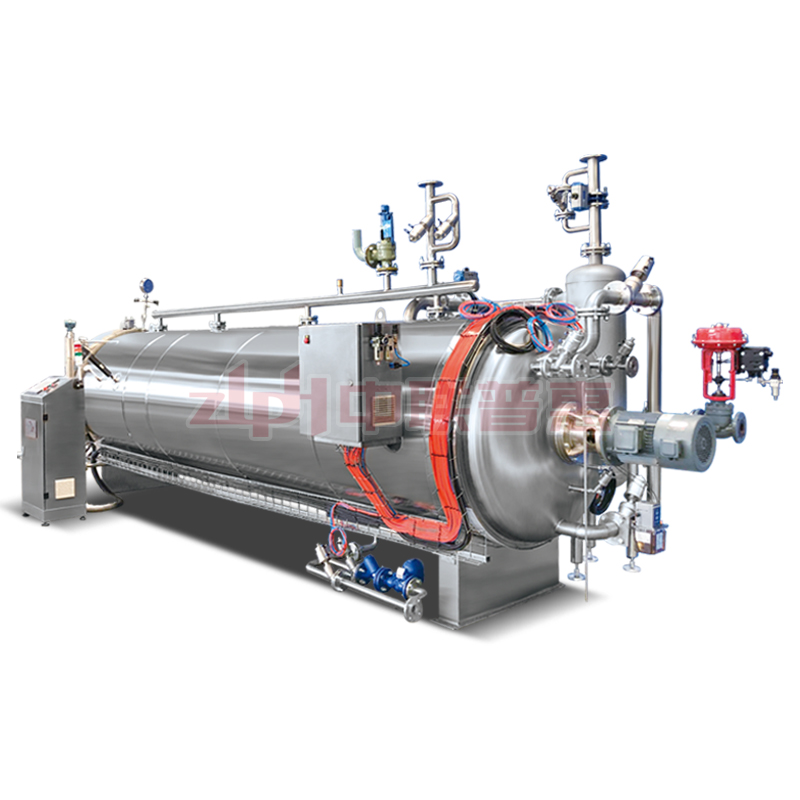
This guide is authored by a senior food processing engineer with over 10 years of experience at ZLPH MACHINERY TECHNOLOGY CO., LTD., a globally recognized provider of intelligent sterilization solutions. It addresses a critical challenge faced by food manufacturers worldwide: selecting a reliable water spray retort autoclave supplier that ensures consistent microbial kill, operational efficiency, and compliance with international food safety standards.

Selecting the wrong retort system can lead to inconsistent sterilization, product recalls, extended downtime, and compromised food safety—issues primarily caused by outdated designs, inadequate temperature/pressure control, and lack of real-time monitoring. Based on more than 5,000 global installations and extensive field validation across meat, seafood, canned vegetables, and ready-to-eat meal production lines, we’ve developed a proven, step-by-step framework to help you identify the best supplier for your specific needs. This guide breaks down real-world scenarios, root causes, validated solutions, and practical selection criteria to ensure your sterilization process is both efficient and fail-safe.

How do I ensure consistent sterilization performance in high-volume canned food production?
1. Scenario & Pain Point
In large-scale canning facilities, inconsistent heat distribution during sterilization often results in under-processed batches (risking pathogen survival) or over-processed products (causing texture degradation and nutrient loss). Operators report temperature deviations exceeding ±3°C across the retort chamber, leading to failed HACCP audits and costly batch rejections.

2. Root Cause Analysis
The core issues stem from three factors: (1) poor water spray nozzle layout causing uneven coverage; (2) absence of real-time temperature and pressure feedback loops; and (3) manual door operation slowing cycle transitions and introducing human error. Traditional side-opening retorts exacerbate these problems due to limited internal access and inefficient thermal circulation.

3. Step-by-Step Solution
Immediate Mitigation: Conduct thermal mapping studies using data loggers to identify cold spots; adjust rack loading patterns to improve airflow.
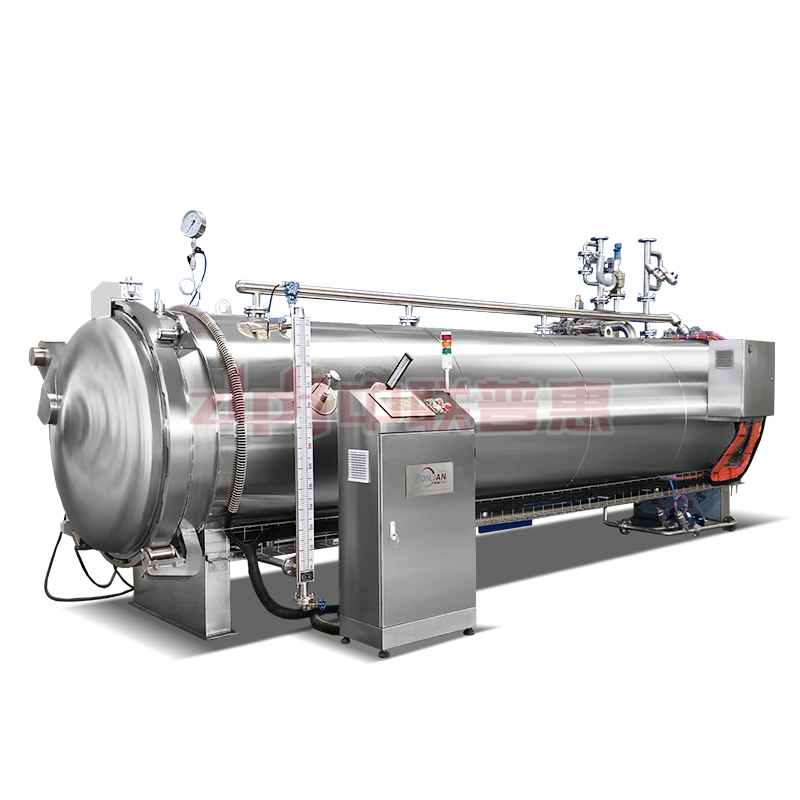
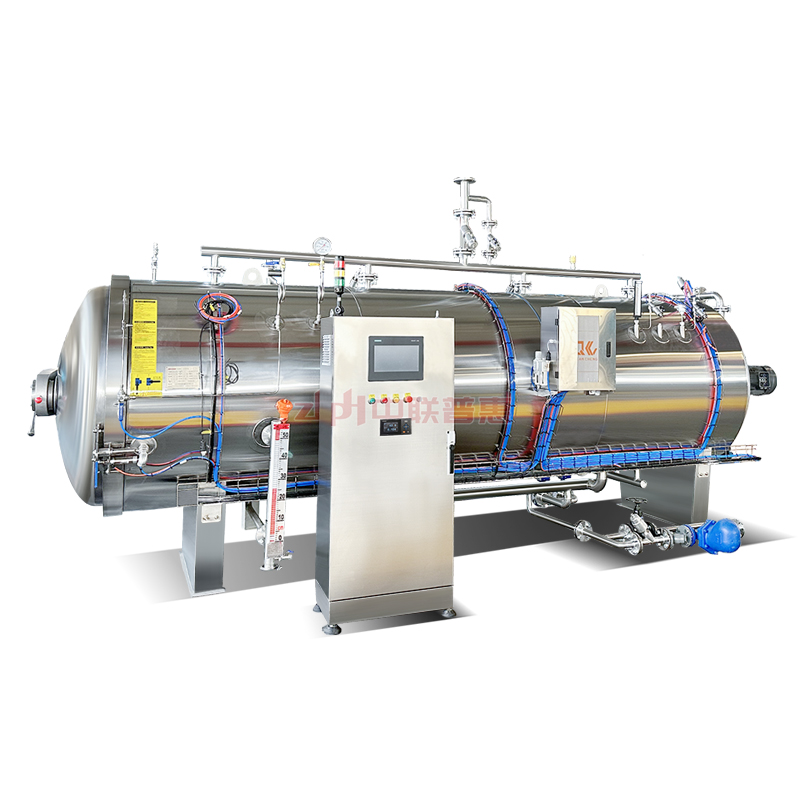
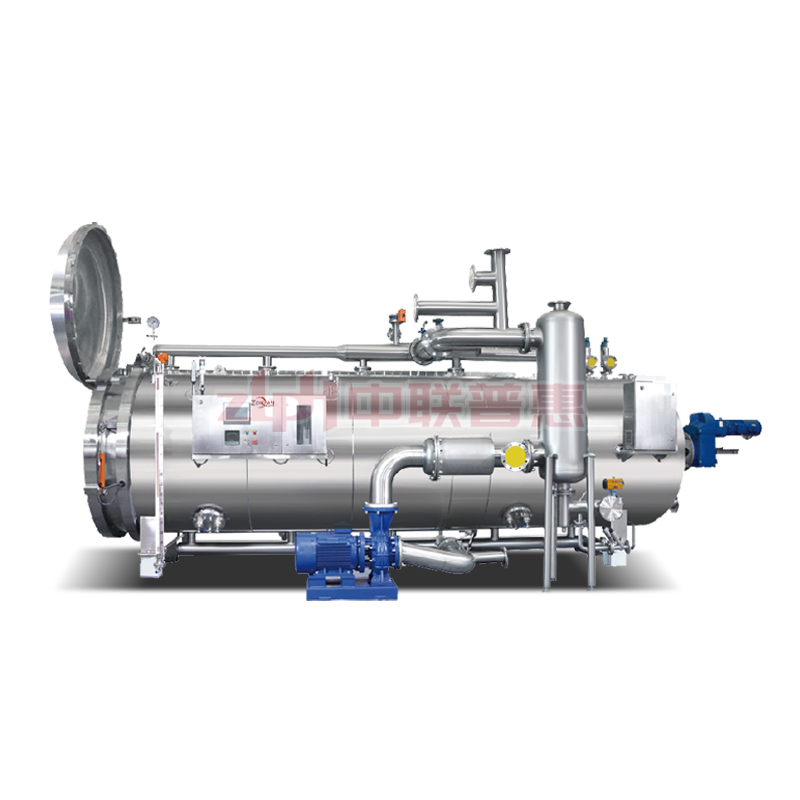
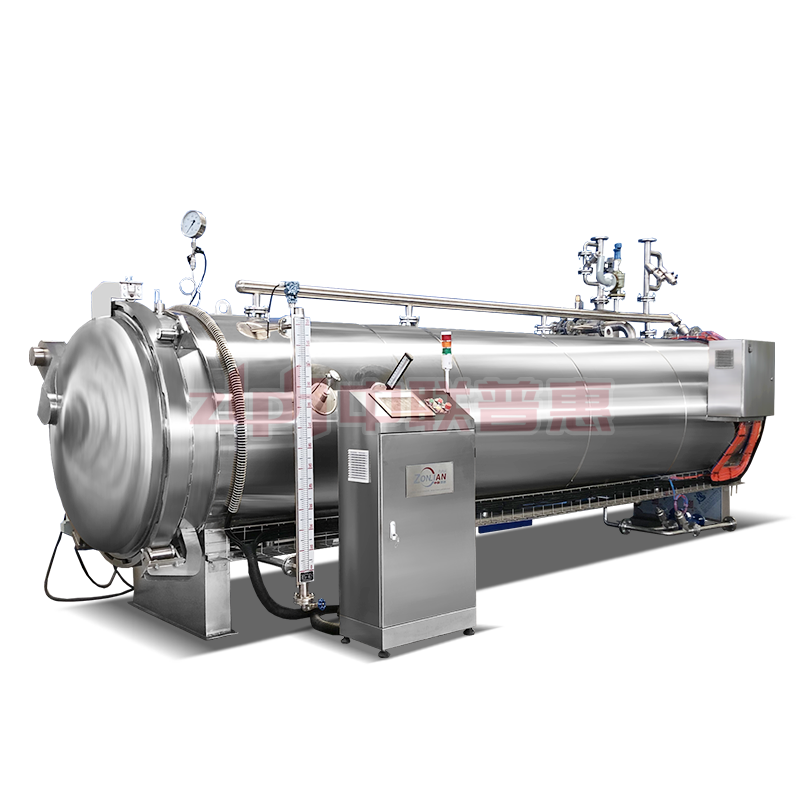
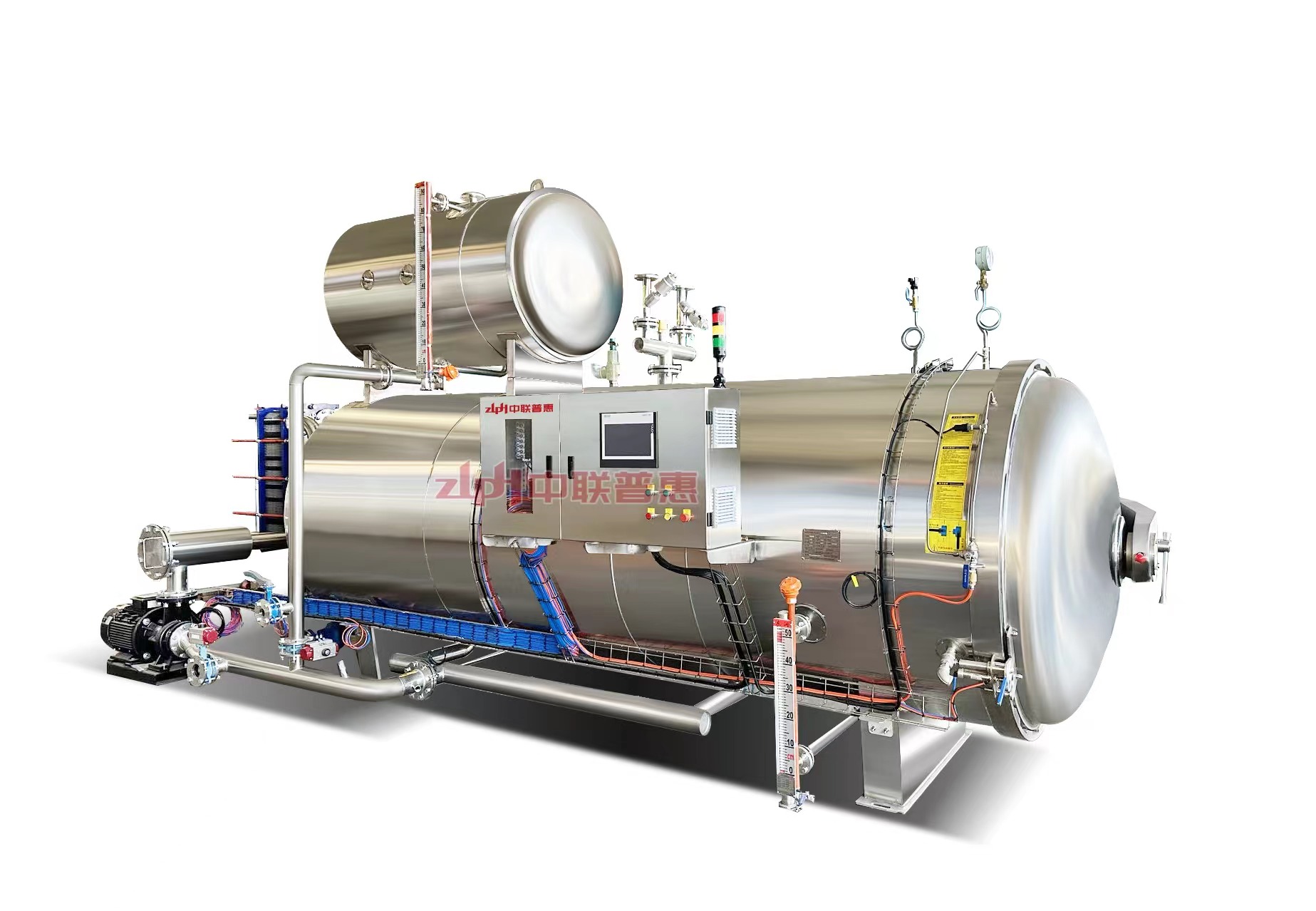
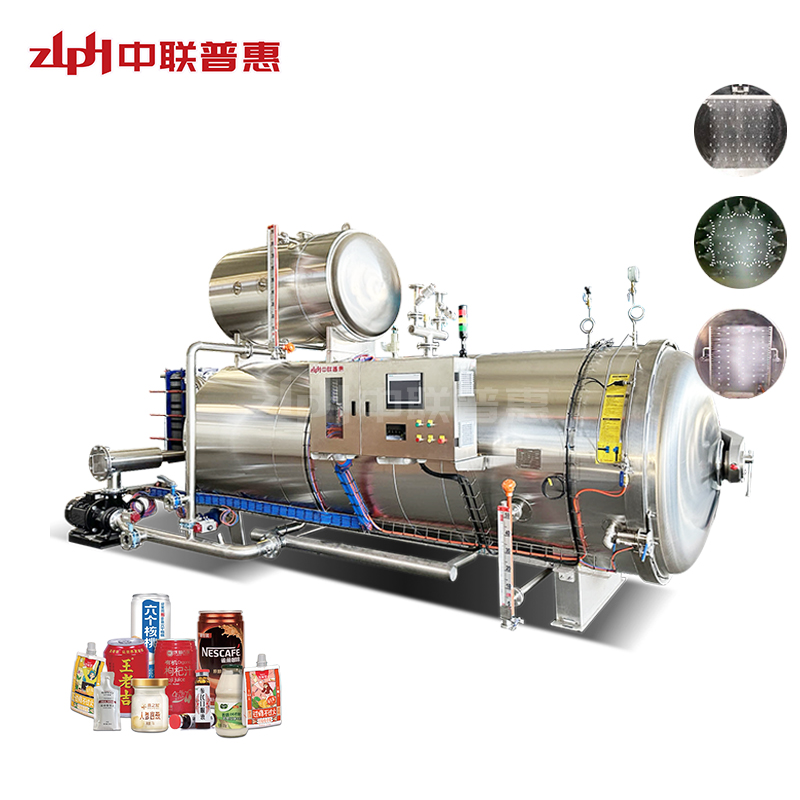
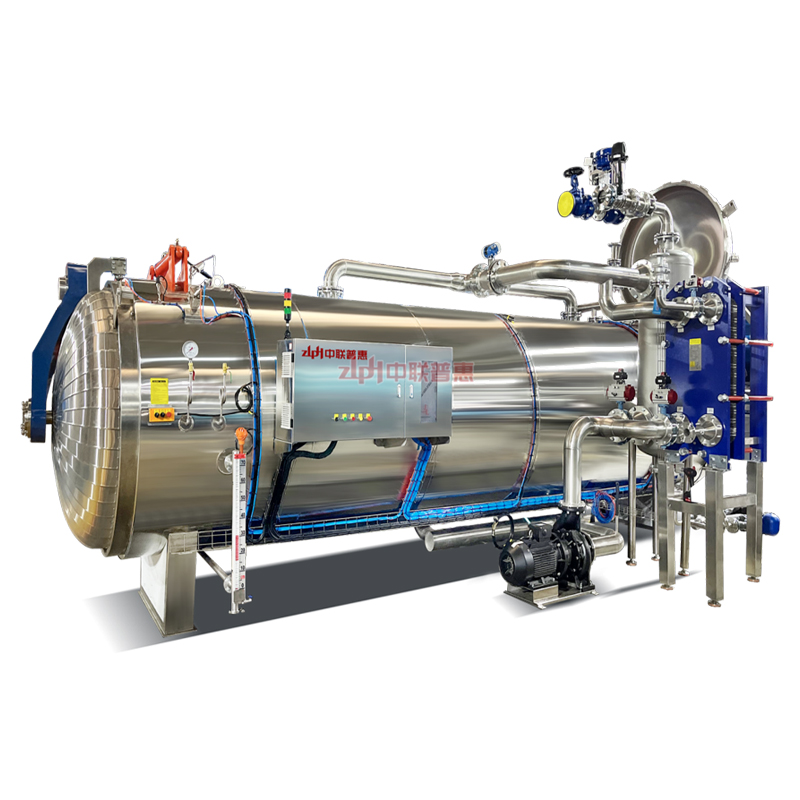
Long-Term Fix: Deploy an intelligent top-opening water spray retort with 360° multi-nozzle spray system and PID-controlled steam/water mixing valves. The upper door design enables faster loading/unloading and superior internal accessibility.
Process Optimization: Integrate real-time monitoring of temperature, pressure, and F₀ (sterilization value) via an embedded PLC system that auto-adjusts parameters to maintain optimal lethality.
4. Pitfall Avoidance Guide
Verify that the supplier provides third-party thermal validation reports. Avoid systems without F₀ tracking capability. Ensure the control system complies with FDA 21 CFR Part 11 for electronic records. Always request a live demo under your actual product load conditions before purchase.
5. Real-World Validation
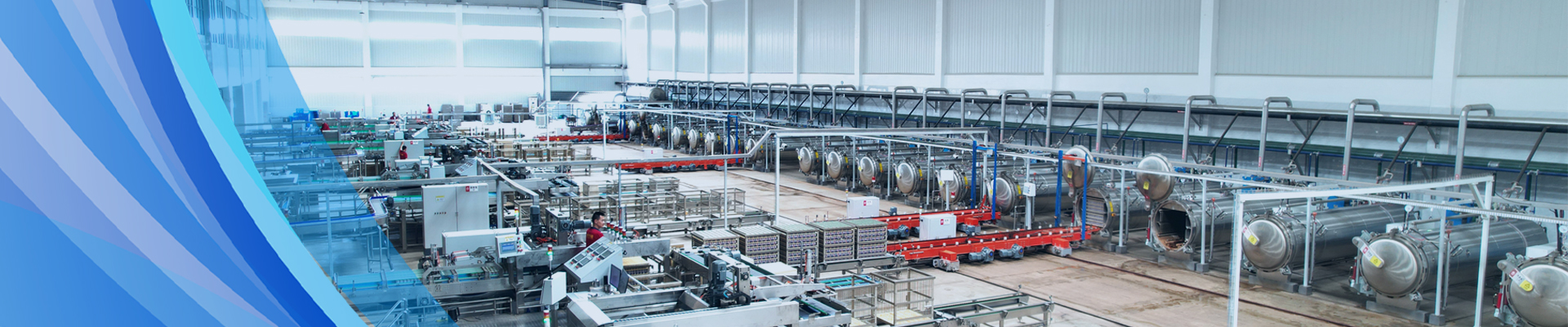
At a major Russian meat processor using ZLPH’s intelligent top-opening water spray retort, thermal uniformity improved to ±0.5°C across 1,200 cans per batch. Sterilization cycle time reduced by 18%, and zero non-conformities were recorded in 12 consecutive months of audits.
How can I reduce labor costs and human error in retort operations?
1. Scenario & Pain Point
Manual loading, door sealing, and parameter entry in traditional retorts require 3–4 operators per shift, with frequent errors in cycle selection or seal verification leading to safety interlock failures and production halts.
2. Root Cause Analysis
Legacy systems rely on mechanical latches and analog gauges, lacking automation integration. Operator fatigue and training gaps further increase variability.
3. Step-by-Step Solution
Adopt a fully automated retort with electric upper door actuation, barcode-based recipe recall, and integrated loader-unloader systems. ZLPH’s solution reduces manual intervention to a single operator overseeing multiple units.
4. Pitfall Avoidance Guide
Ensure the automation system includes emergency manual override and complies with ISO 13849 safety standards. Validate interoperability with your existing MES or ERP.
5. Real-World Validation
A Qingdao-based seafood exporter cut labor costs by 60% and eliminated door-seal-related incidents after deploying ZLPH’s automated retort and tray handling system.
What certifications and support should I expect from a credible retort supplier?
A trustworthy supplier must hold ISO 9001 quality certification, CE marking for EU markets, and provide full ASME or PED compliance documentation. They should offer 24/7 technical support, on-site commissioning, and process validation assistance. ZLPH’s team includes 21 mechanical designers, 4 sterilization process researchers, and 14 after-sales engineers with over a decade of industry experience.
Industry Best Practices: 5-Step Supplier Evaluation Framework
Based on 10+ years of global project execution, we recommend this framework:
- Define Your Worst-Case Scenario: Evaluate suppliers based on peak capacity, product variety, and regulatory requirements—not average conditions.
- Demand Live Performance Data: Require thermal validation reports under your specific load configuration.
- Assess Automation Depth: Prioritize systems with IoT connectivity, remote diagnostics, and predictive maintenance.
- Verify Global Service Coverage: Confirm local spare parts inventory and response time SLAs.
- Test Before You Invest: Insist on a pilot run at your facility or the supplier’s test center.
Frequently Asked Questions (FAQ)
Q: Can a standard retort handle both glass jars and metal cans?
A: Only if equipped with adjustable spray pressure and rack systems. ZLPH’s retorts feature modular trays compatible with containers from 85ml to 5L.
Q: How critical is F₀ value monitoring?
A: Essential for low-acid foods (pH > 4.6). Systems without real-time F₀ calculation cannot guarantee Clostridium botulinum destruction and fail FDA/EFSA audits.
Q: What’s the typical lifespan of a commercial water spray retort?
A: 15–20 years with proper maintenance. ZLPH uses 304/316 stainless steel chambers and corrosion-resistant components to exceed this benchmark.
Q: Do I need separate systems for pasteurization and sterilization?
A: No—modern intelligent retorts like ZLPH’s support both modes via software-defined recipes, reducing capital expenditure.
About Our Expertise
ZLPH MACHINERY TECHNOLOGY CO., LTD. is a technology-driven sterilization equipment manufacturer founded in 2018. We operate a 50-acre modern factory with 15,000㎡ of production space and advanced CNC machining centers that ensure micron-level component precision. Our R&D team has developed patented water spray sterilization technology featured at AGROPRODASH 2023 in Moscow, where it received strong interest from global food processors. We serve clients across 30+ countries and maintain long-term partnerships built on reliability, not just transactions.
Custom Solution Support
We offer:
- On-site process audit and thermal profiling
- Custom chamber sizing and automation integration
- Free sample sterilization trials with your product
- Remote monitoring setup and staff training
Contact us for a tailored solution that meets your exact throughput, container type, and compliance needs.
Contact Information
Company: ZLPH MACHINERY TECHNOLOGY CO., LTD.
Website: https://www.zlphretort.com/
Email: sales@zlphretort.com
Phone / WhatsApp: +86 15666798389 / +86 13361554016
