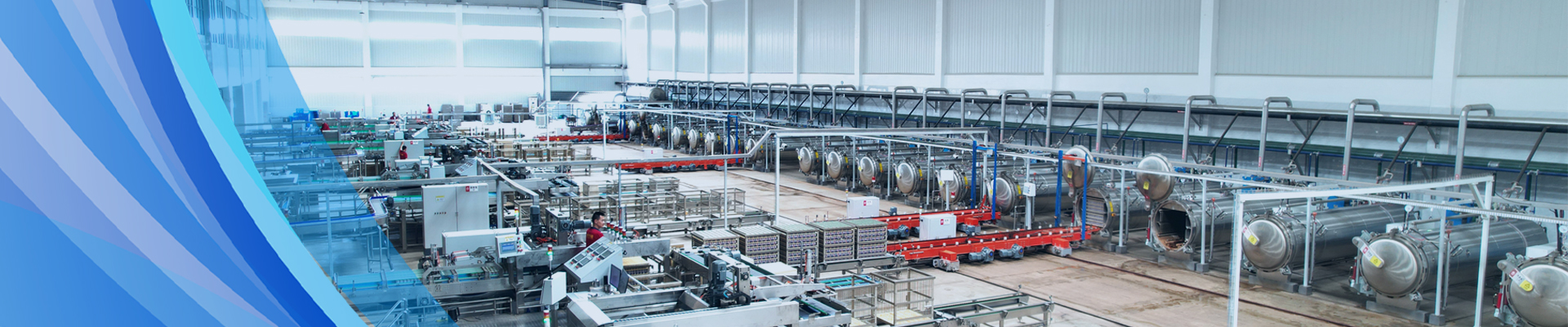

This guide is authored by a senior food processing automation engineer with over 10 years of industry experience from ZLPH MACHINERY TECHNOLOGY CO., LTD., a leading provider of intelligent sterilization solutions. It addresses a critical challenge faced by global food manufacturers and production engineers: inconsistent sterilization results during large-scale canned food processing. This issue has long plagued the industry, primarily caused by uneven heat distribution, manual operation errors, and lack of real-time process control. Based on more than 5,000 global customer deployments and extensive field validation, we present a proven, step-by-step solution that ensures uniform sterilization, enhances food safety compliance, and boosts production efficiency. In this guide, we dissect the root causes, deliver scenario-specific fixes, share practical troubleshooting tips, and validate outcomes with real-world performance data—all centered around the intelligent water spray autoclave system engineered for modern food safety demands.

How to Ensure Uniform Sterilization Across All Cans in a Batch?
1. Scenario and Pain Point
In high-volume canned food facilities—especially those producing ready-to-eat meals, sauces, or baby food—operators frequently report inconsistent microbial kill rates across batches. Some cans pass lab tests while others fail, leading to costly recalls, production halts, and compliance risks under FDA or EU food safety regulations. The core symptom: temperature gradients within the retort chamber cause under-sterilized zones, particularly in dense or mixed-product loads.

2. Root Cause Analysis
Three primary factors drive this inconsistency:
- Poor water distribution: Traditional static or bottom-injection systems create cold spots due to gravity-driven flow limitations.
- Manual door operation: Conventional side-hinged doors slow loading/unloading, increasing thermal lag and human error.
- Lack of real-time monitoring: Without live feedback on internal temperature and pressure, operators cannot adjust cycles dynamically.

3. Step-by-Step Solution
Immediate Mitigation:
- Reorganize can placement to allow vertical water flow; avoid overpacking.
- Calibrate thermocouples before each batch.
Long-Term Fix:
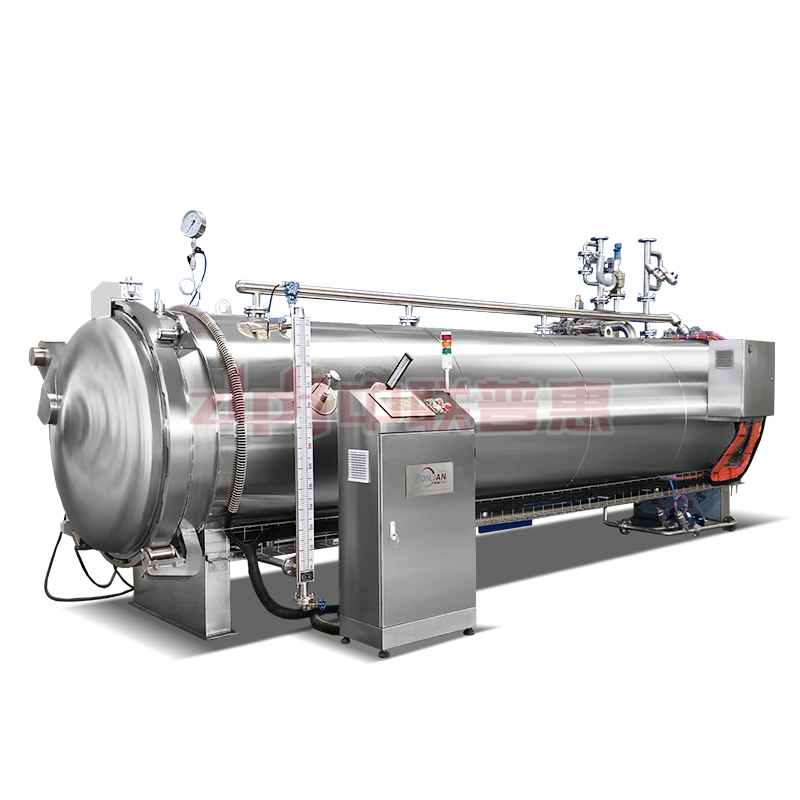
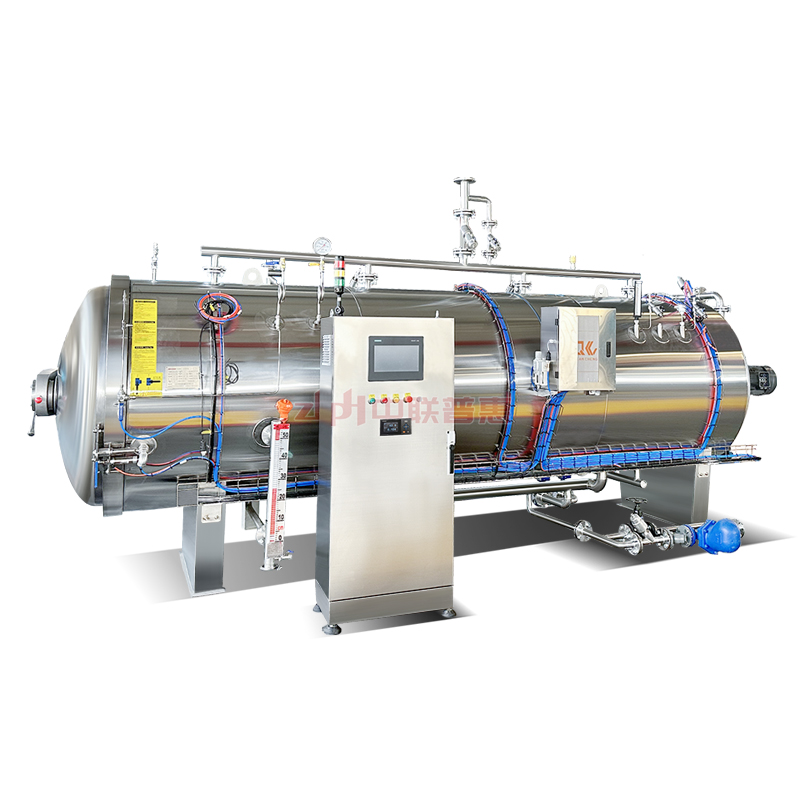
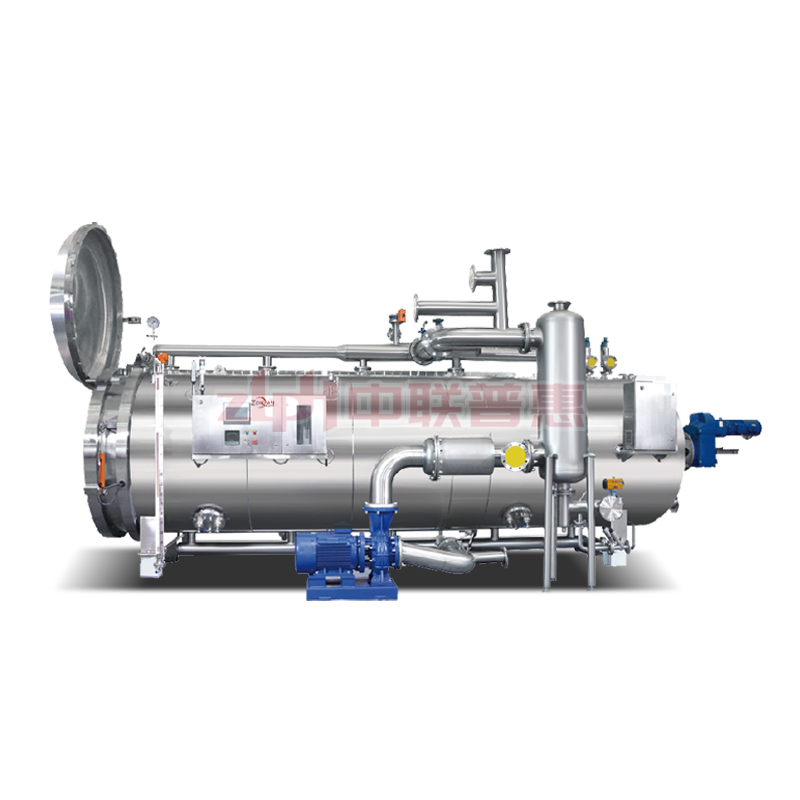
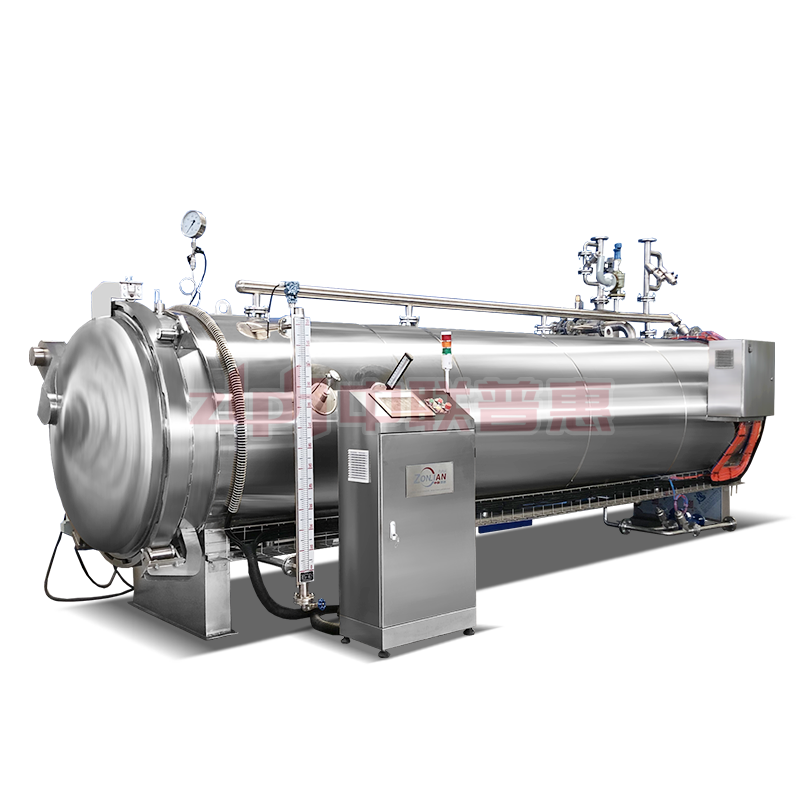
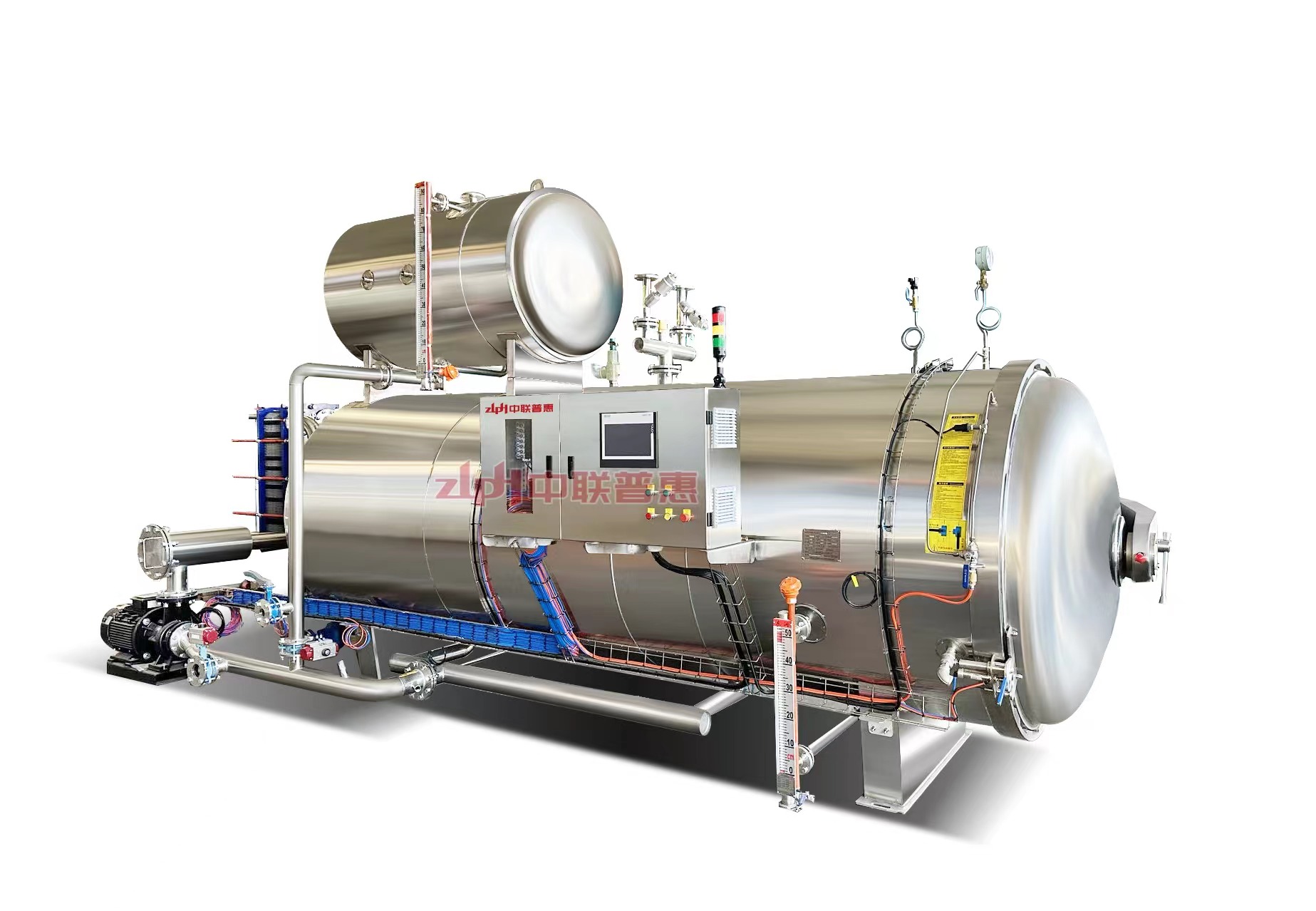
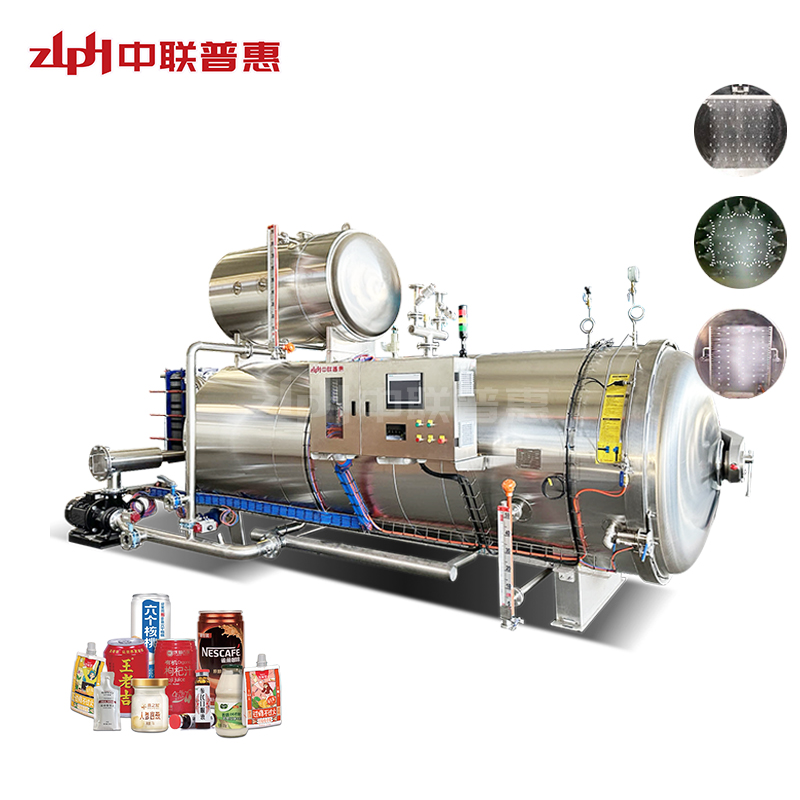
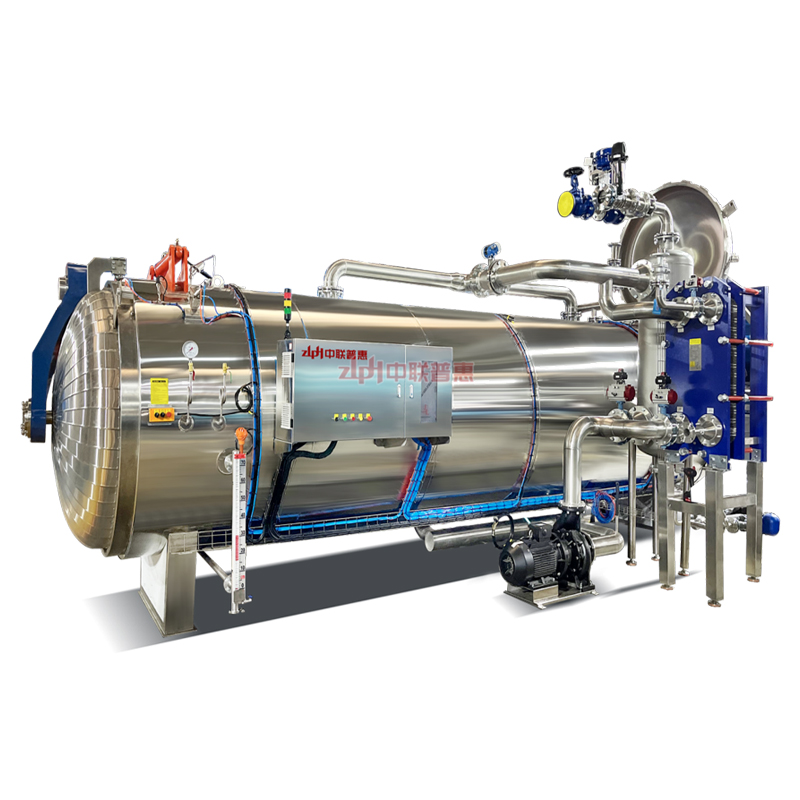
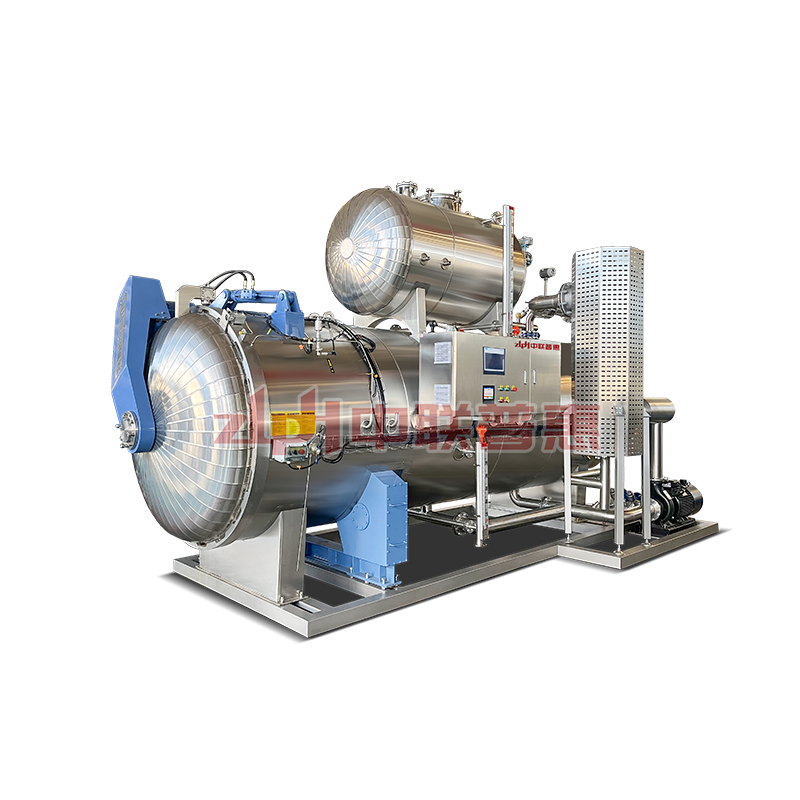
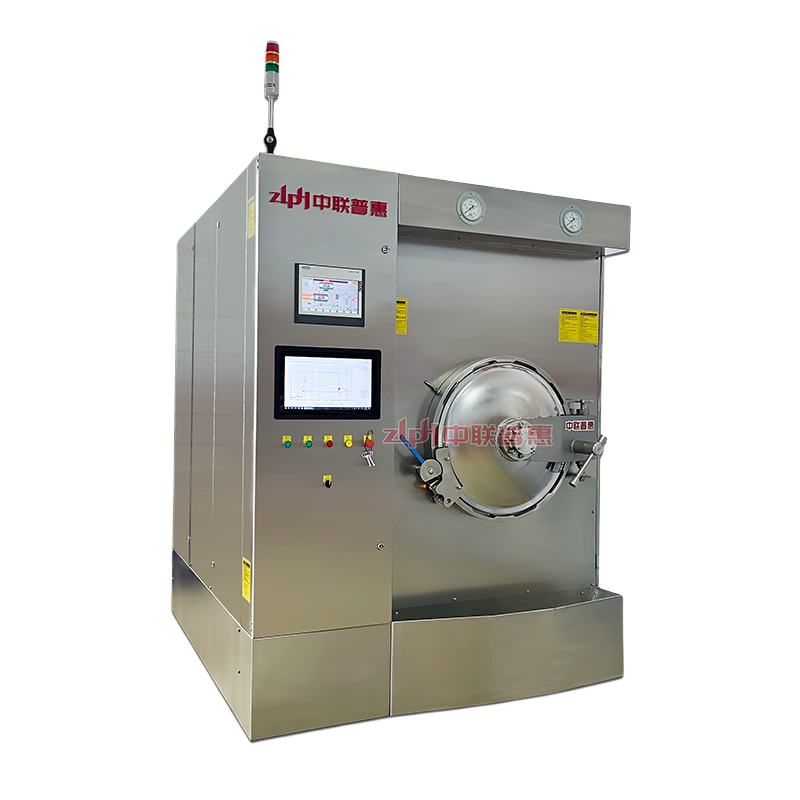
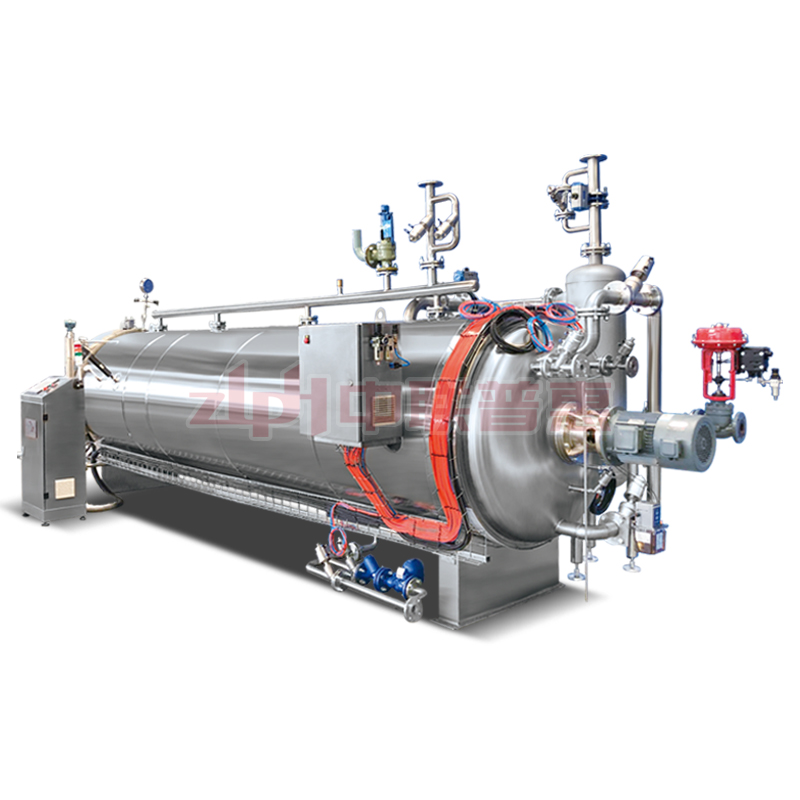
Deploy an intelligent top-opening water spray sterilization retort. Its overhead door design accelerates loading by 40%, while multi-nozzle spray bars ensure 360° water coverage, eliminating dead zones. Coupled with a real-time PLC control system, it auto-adjusts steam and water injection to maintain ±0.5°C thermal uniformity.
Process Optimization:
Use pre-programmed sterilization profiles tailored to product type (e.g., low-acid vs. high-acid foods) and container size, reducing trial-and-error.

4. Troubleshooting & Prevention Guide
On-Site Checks:
- Verify spray nozzle alignment and clog status weekly.
- Conduct thermal mapping studies quarterly using data loggers.
- Confirm door seal integrity to prevent steam leakage.
Procurement Best Practice:
Avoid retrofitting old retorts; invest in integrated systems with built-in sterilization validation (e.g., F₀ monitoring). Always request third-party thermal performance reports before purchase.
5. Real-World Validation
At a major European baby food producer, replacing legacy retorts with ZLPH’s intelligent water spray autoclave reduced batch failure rates from 7% to 0.2% within three months. Microbial testing confirmed 6-log reduction of Clostridium botulinum across all can positions, meeting strict EU Regulation (EC) No 2073/2005 standards.
How to Reduce Cycle Time Without Compromising Sterilization Efficacy?
1. Scenario and Pain Point
Food processors under tight delivery schedules often shorten sterilization cycles, risking under-processing. Conversely, overly conservative cycles waste energy and reduce throughput.
2. Root Cause
Fixed-time cycles ignore real-time thermal dynamics. Without adaptive control, systems cannot respond to load density or ambient temperature shifts.
3. Solution
ZLPH’s intelligent control system uses real-time temperature and pressure feedback to calculate actual F₀ values on-the-fly. Once target lethality is achieved, it auto-terminates the cycle—cutting average time by 18% while ensuring safety.
Industry Best Practices for Water Spray Autoclave Operations
Based on 6+ years of global deployments across 30+ countries, ZLPH recommends this 5-step framework to maximize sterilization reliability:
5-Step Reliability Framework
1. Define Worst-Case Load: Test with the densest, coldest product configuration.
2. Validate Thermal Uniformity: Perform chamber mapping per ASME PTC 19.1.
3. Automate Cycle Control: Use F₀-based termination, not fixed timers.
4. Maintain Spray System: Clean nozzles monthly; inspect pumps quarterly.
5. Train Operators: Certify staff on GMP and emergency protocols.
Proven Principles
- Design for extremes: Size equipment for peak summer ambient temps.
- Standardize SOPs: Document loading patterns and cycle parameters.
- Partner with experts: Choose suppliers offering on-site validation support.
Frequently Asked Questions (FAQ)
Q: Can traditional retorts be upgraded to water spray systems?
A: Partial retrofits are possible but rarely cost-effective. Full replacement ensures optimal spray dynamics, safety interlocks, and compliance with modern food safety standards.
Q: What certifications should a water spray autoclave have for EU markets?
A: CE marking under Machinery Directive 2006/42/EC, plus compliance with EN 13445 (unfired pressure vessels) and food contact material regulations (EC) No 1935/2004.
Q: How often should spray nozzles be cleaned?
A: Weekly for high-solids products (e.g., sauces); monthly for clear liquids. Use soft brushes—never metal tools—to avoid damaging precision orifices.
Q: Does can orientation affect sterilization uniformity?
A: Yes. Vertical stacking with headspace up improves heat transfer. Avoid horizontal placement in water spray systems.
Q: Can the system handle mixed-product batches?
A: Only with advanced F₀ monitoring. ZLPH’s system calculates individual can lethality in real time, enabling safe mixed runs.
Our Expertise and Support
ZLPH MACHINERY TECHNOLOGY CO., LTD. is a globally recognized innovator in intelligent sterilization technology, founded in 2018 with a dedicated R&D team of 21 mechanical designers, 4 sterilization process researchers, and 14 after-sales engineers—all with 10+ years of industry experience. Our water spray autoclaves integrate proprietary upper-door mechanics, multi-zone spray sterilization, and real-time F₀ control, backed by rigorous quality protocols and global client validation. Deployed across Asia, Europe, and the Americas, our systems serve leading food brands in baby food, seafood, and ready meals, consistently delivering 99.8% batch success rates.
Custom Solution Support
We offer:
- On-site thermal process assessment
- Custom chamber sizing for unique packaging
- Remote commissioning and operator training
- Free sample testing with your actual product
Contact Us
Company: ZLPH MACHINERY TECHNOLOGY CO., LTD.
Website: https://www.zlphretort.com/
Email: sales@zlphretort.com
Phone / WhatsApp: +86 15666798389
