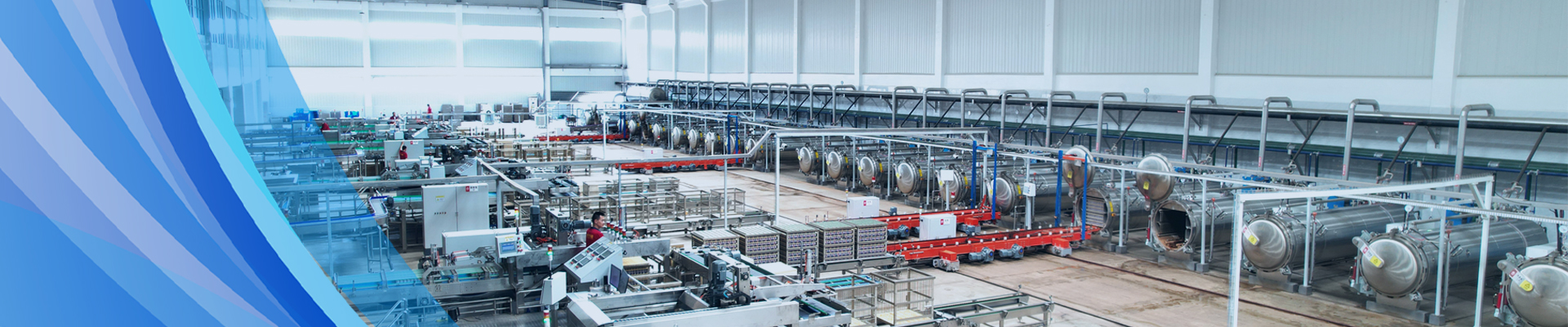

This guide is authored by a senior food processing automation engineer with over 10 years of industry experience from ZLPH MACHINERY TECHNOLOGY CO., LTD., a leading provider of retort sterilization systems. It addresses a critical challenge faced by global food manufacturers and pet food producers: inconsistent sterilization results in retort autoclave factories. This issue often stems from uneven heat distribution, inadequate process control, and outdated equipment design—factors that compromise food safety, reduce shelf life, and increase batch rejection rates. Drawing on more than 5,000 global installations and extensive R&D validation, we present a proven, actionable framework to achieve uniform, reliable sterilization across all product types—from canned vegetables to pet food bowls. In this guide, you’ll learn the root causes behind sterilization inconsistencies, receive scenario-specific solutions, and gain access to field-tested best practices that ensure compliance, efficiency, and product integrity.

How to Achieve Uniform Sterilization in High-Volume Retort Autoclave Operations?
1. Scenario & Pain Point
In large-scale retort autoclave factories producing canned meats or ready-to-eat meals, operators frequently report inconsistent F0 values (sterilization lethality) across batches—even when using identical time-temperature settings. Some cans at the bottom of the retort show under-processing (F0 < 6), while top-tier products suffer overcooking, leading to texture degradation and nutrient loss. This inconsistency triggers quality control failures, regulatory non-compliance risks, and costly rework or recalls.

2. Root Cause Analysis
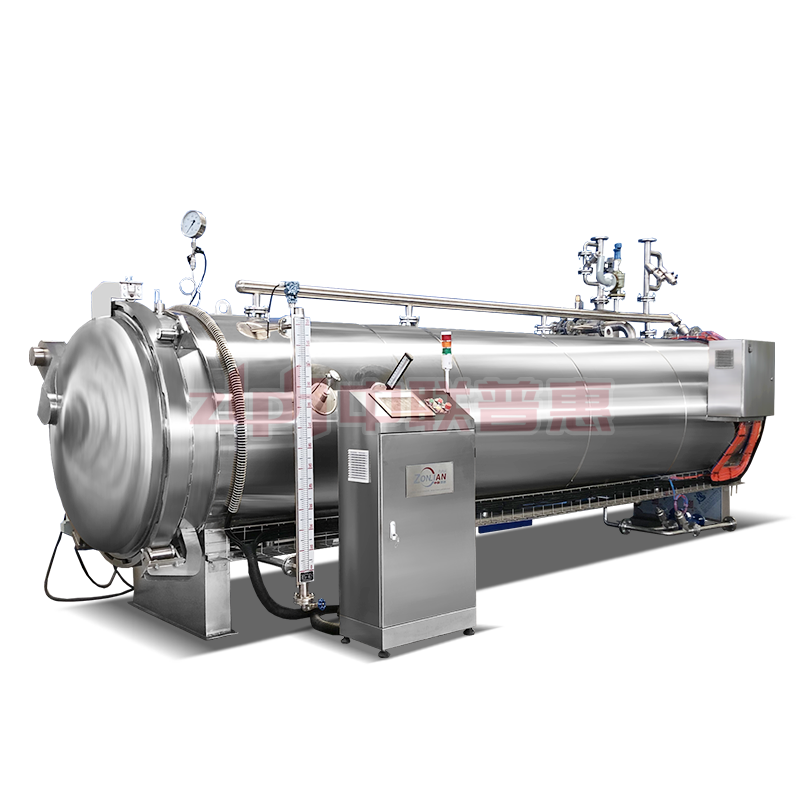
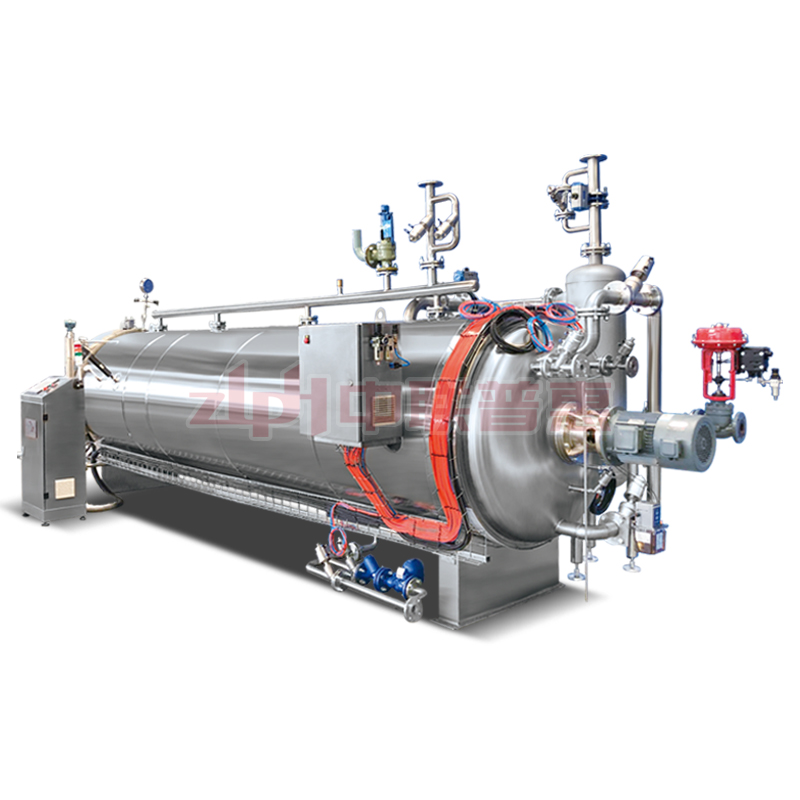
Three primary factors drive this inconsistency: (1) Poor water circulation design causing thermal stratification; (2) Lack of real-time temperature monitoring at multiple rack positions; and (3) Manual loading/unloading introducing human error in basket placement, blocking spray nozzles. Traditional side-door retorts with single-pump systems exacerbate these issues due to limited flow dynamics.

3. Step-by-Step Solution
Immediate Mitigation: Reorganize basket loading to ensure 5–10 cm clearance around all sides for unobstructed water flow. Calibrate thermocouples before each shift.
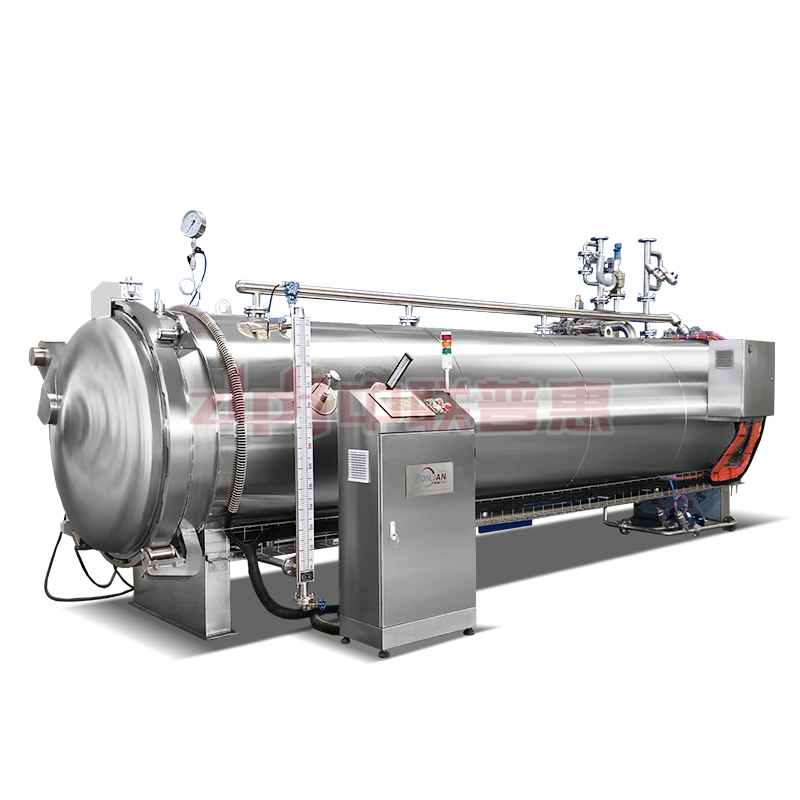
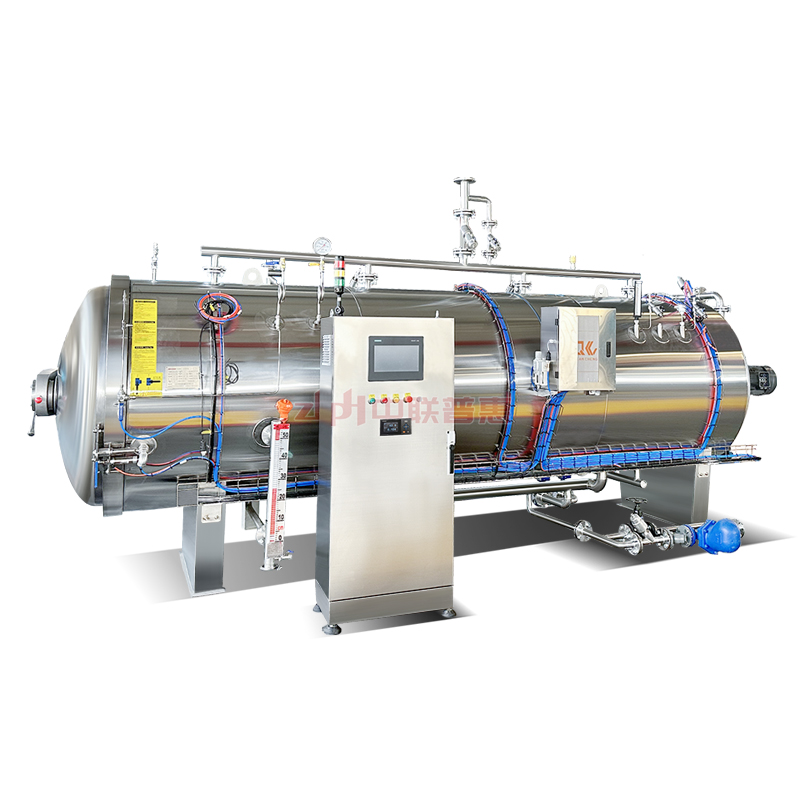
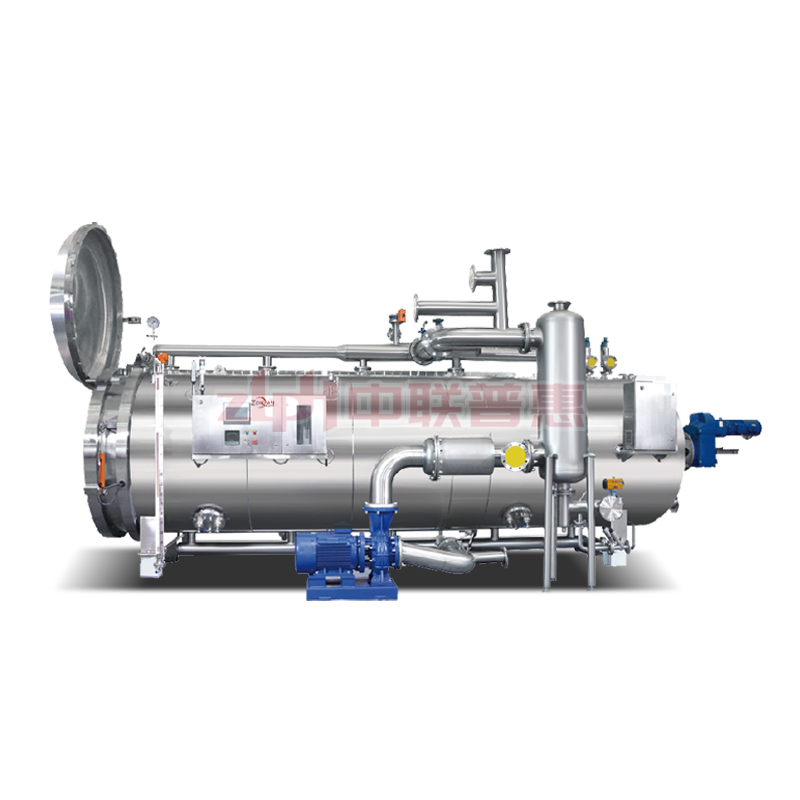
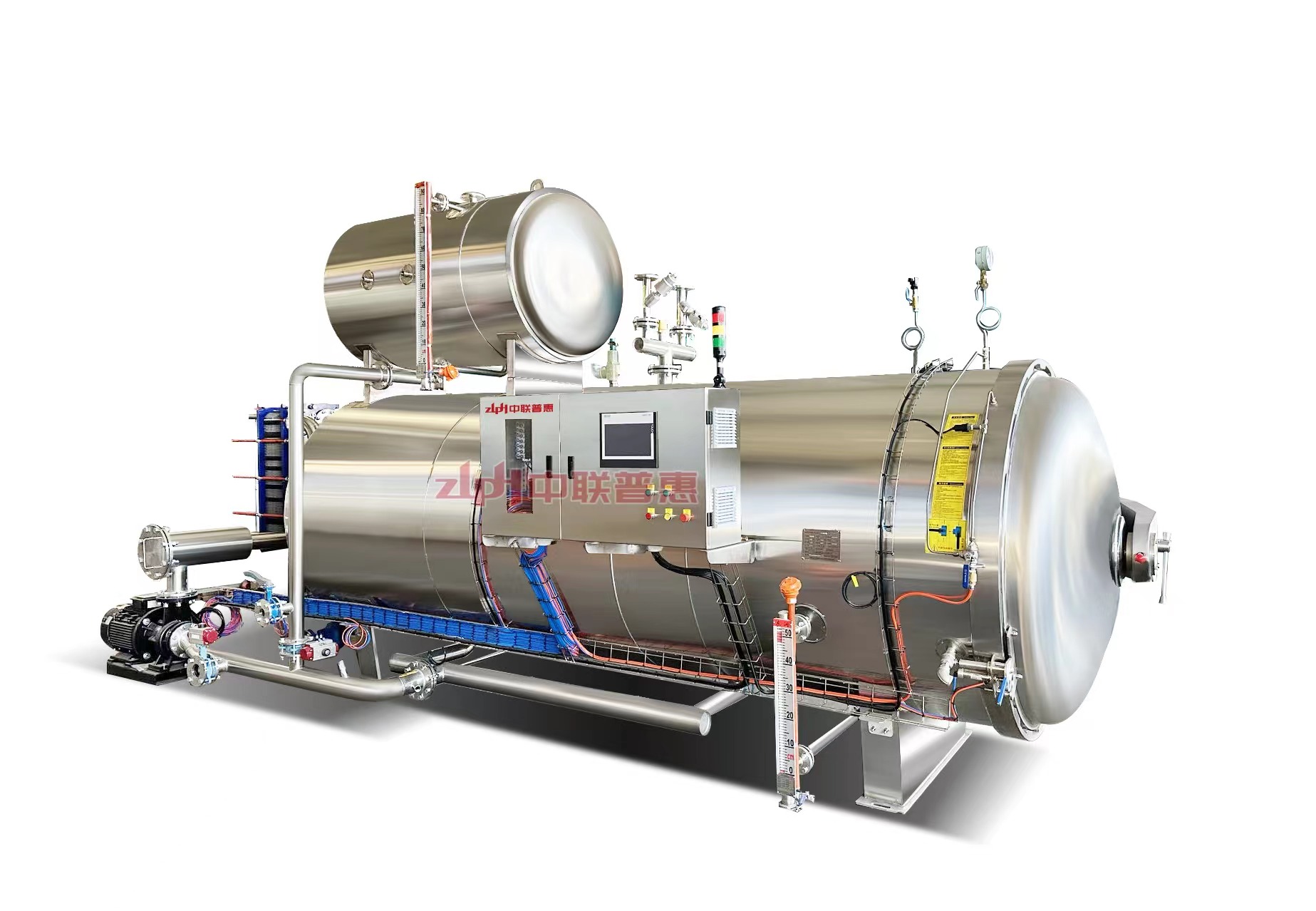
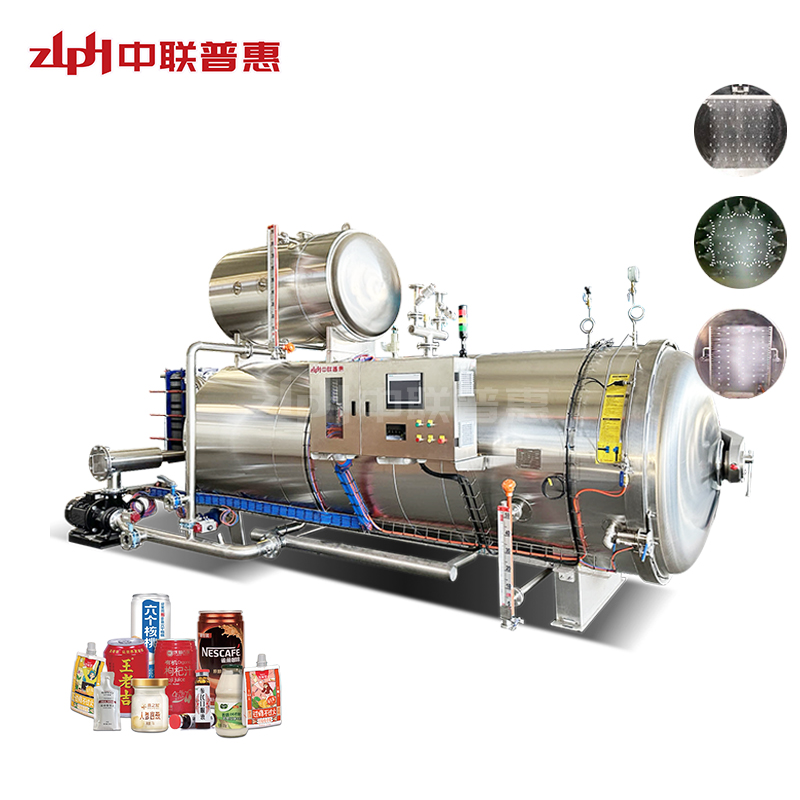
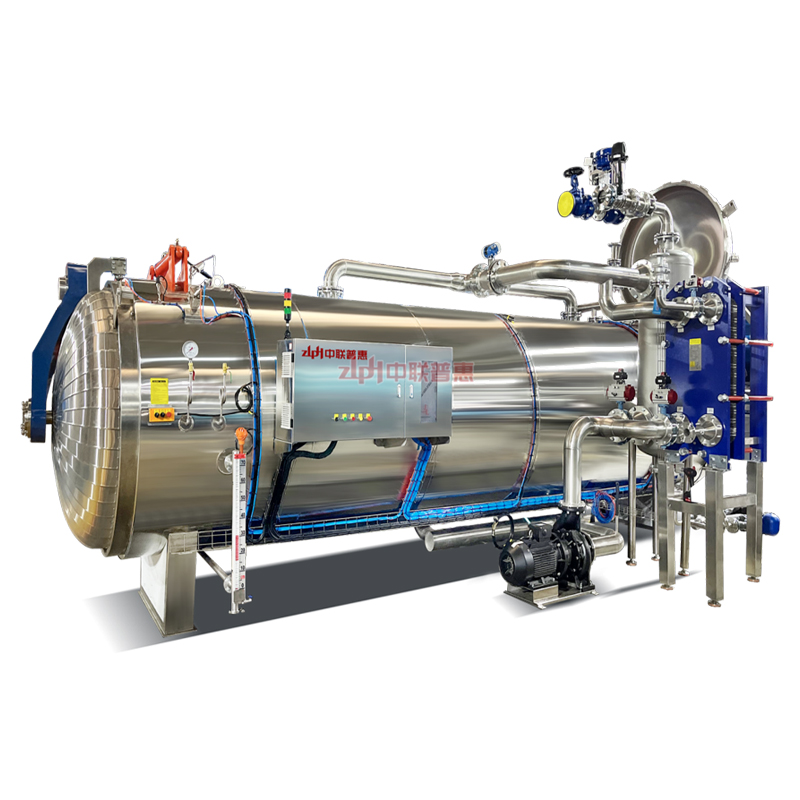
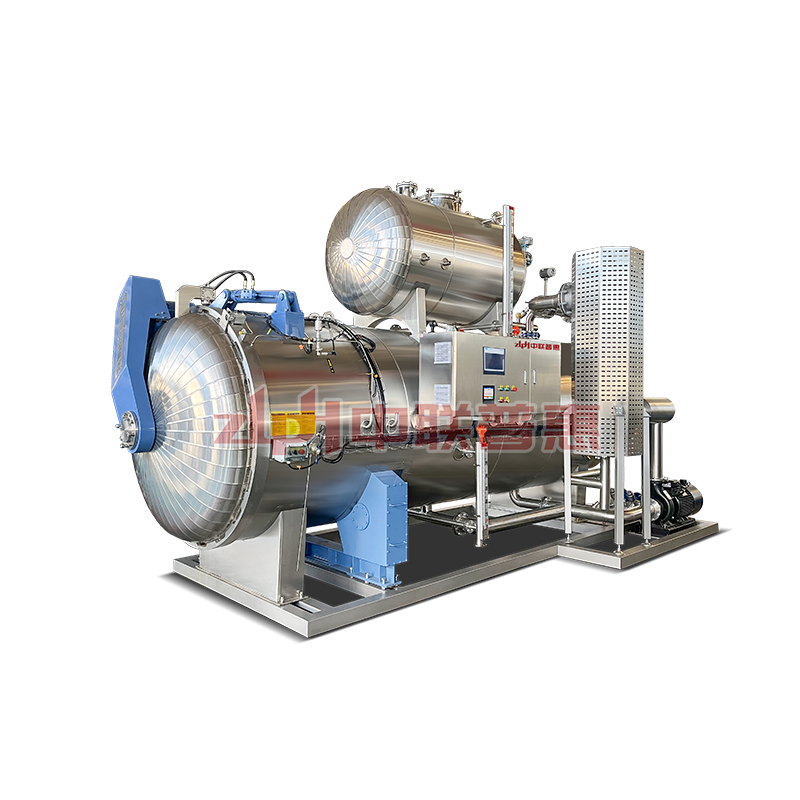
Long-Term Fix: Upgrade to an intelligent top-opening water spray retort equipped with multi-zone spray nozzles and dual-circulation pumps. ZLPH’s system ensures 360° even water distribution, eliminating cold spots.
Process Optimization: Implement real-time F0 monitoring via PLC-integrated sensors at top, middle, and bottom rack levels. Automatically adjust cycle parameters based on live data.

4. Troubleshooting & Prevention Guide
Verify nozzle alignment and check for clogging weekly. Conduct thermal mapping studies during validation to identify dead zones. Never overload baskets beyond 85% capacity. Always use validated retort trays compatible with automated loader-unloader systems to maintain consistent spacing.
5. Real-World Validation
At a major Southeast Asian canned food facility, switching to ZLPH’s intelligent water spray retort reduced F0 deviation from ±2.5 to ±0.3 across 12,000+ cycles. Batch rejection rates dropped by 92%, and energy consumption decreased by 18% due to optimized heating profiles.
How to Automate Sterilization for Pet Food Bowl Packaging Lines?
1. Scenario & Pain Point
Pet food manufacturers using pre-formed bowl packaging struggle with manual handling in retort processes. Operators manually load/unload trays into autoclaves, causing cycle delays, inconsistent sealing pressure, and cross-contamination risks. The lack of integration between filling, sealing, and sterilization stages creates bottlenecks and hygiene vulnerabilities.
2. Root Cause Analysis
Manual intervention disrupts workflow continuity. Standard retorts aren’t designed for bowl-shaped containers, leading to unstable stacking and water channeling. Additionally, absence of automated tracking prevents traceability per batch.
3. Step-by-Step Solution
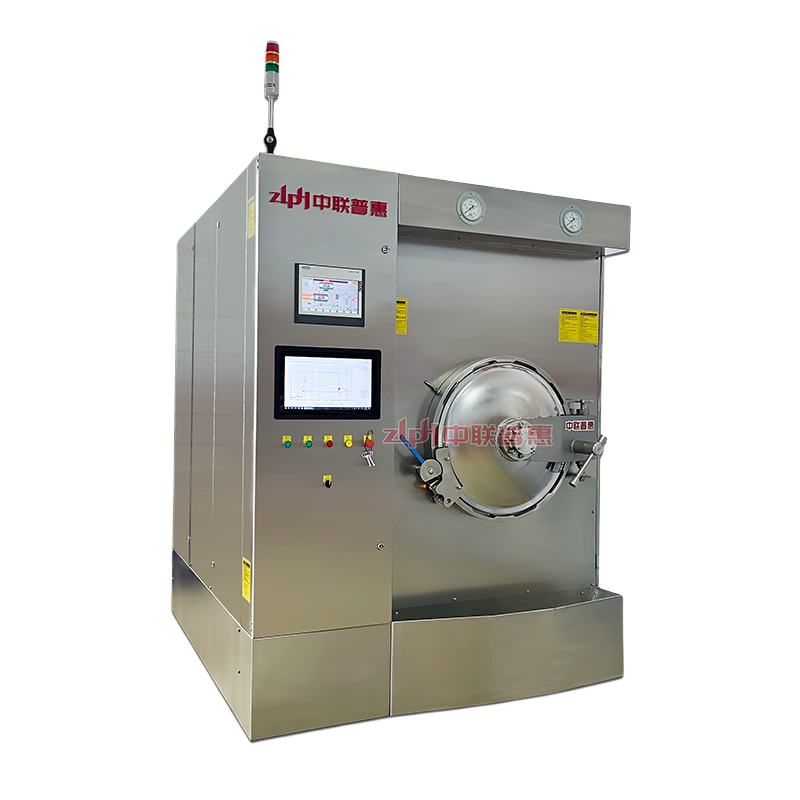
Deploy ZLPH’s automated bowl sterilization production line featuring robotic tray handling, vision-guided alignment, and integrated retort chamber. The system uses food-grade stainless steel conveyors and synchronized PLC control to link upstream and downstream processes seamlessly.
4. Troubleshooting & Prevention Guide
Ensure bowl material (typically PP or PET) can withstand 121°C without deformation. Validate seal integrity post-sterilization using vacuum decay testing. Schedule preventive maintenance every 500 hours to inspect robotic grippers and spray manifolds.
5. Real-World Validation
During Petfair Asia 2023, ZLPH demonstrated this solution, which achieved 99.6% first-pass yield for premium pet food brands. Customers reported 40% higher throughput and full compliance with EU pet food safety directives.
Industry Best Practices for Retort Autoclave Reliability
Based on 6+ years of global project deployment, ZLPH recommends a 5-step framework to ensure consistent sterilization performance:
1. Define Worst-Case Conditions: Design cycles based on the most heat-resistant pathogen and densest product configuration.
2. Validate Thermal Uniformity: Perform thermal mapping with at least 12 data loggers per load.
3. Automate Where Possible: Use loader-unloader systems to eliminate human variability.
4. Monitor in Real Time: Track F0, pressure, and temperature continuously with cloud-enabled dashboards.
5. Maintain Proactively: Clean spray nozzles and gaskets after every 100 cycles; recalibrate sensors monthly.
Always select equipment certified to ISO 9001, CE, and ASME standards. Prioritize suppliers with in-house sterilization process researchers—ZLPH employs four dedicated experts who co-develop cycles with clients.
Frequently Asked Questions (FAQ)
Q: Can traditional side-door retorts be retrofitted for better sterilization uniformity?
A: Limited improvements are possible via nozzle upgrades, but fundamental flow limitations remain. Full consistency requires transitioning to top-opening water spray designs with multi-pump circulation.
Q: What’s the minimum batch size for automated retort lines?
A: ZLPH’s modular systems support batches as small as 200 trays/hour, ideal for specialty or premium pet food producers.
Q: How often should retort gaskets be replaced?
A: Every 6–12 months depending on cycle frequency. Use EPDM or silicone gaskets rated for >5,000 cycles at 135°C.
Q: Do retort autoclaves require special water treatment?
A: Yes—use softened water with <50 ppm hardness to prevent scale buildup in heat exchangers and spray headers.
Q: Is real-time F0 monitoring mandatory for FDA compliance?
A: While not explicitly required, it’s strongly recommended under FDA’s Process Control guidelines (21 CFR Part 113) for low-acid canned foods.
Our Expertise & Support
ZLPH MACHINERY TECHNOLOGY CO., LTD. is a globally recognized retort autocave manufacturer founded in 2018, with a 50-acre factory, 15,000 m² workshop, and a team of 21 mechanical/PLC engineers plus 4 sterilization process specialists. Our systems comply with CE, ISO 9001, and ASME standards, and have been deployed in over 30 countries across food, pet food, and pharmaceutical sectors. We offer end-to-end support including thermal validation, custom tray design, and 24/7 remote diagnostics.
Custom Solution Services:
- On-site sterilization process assessment
- Automated loader-unloader integration
- Free sample testing with your product
- Remote PLC parameter optimization
Contact Us
Company: ZLPH MACHINERY TECHNOLOGY CO., LTD.
Website: https://www.zlphretort.com/
Email: sales@zlphretort.com
Phone / WhatsApp: +86 15666798389 / +86 13361554016
