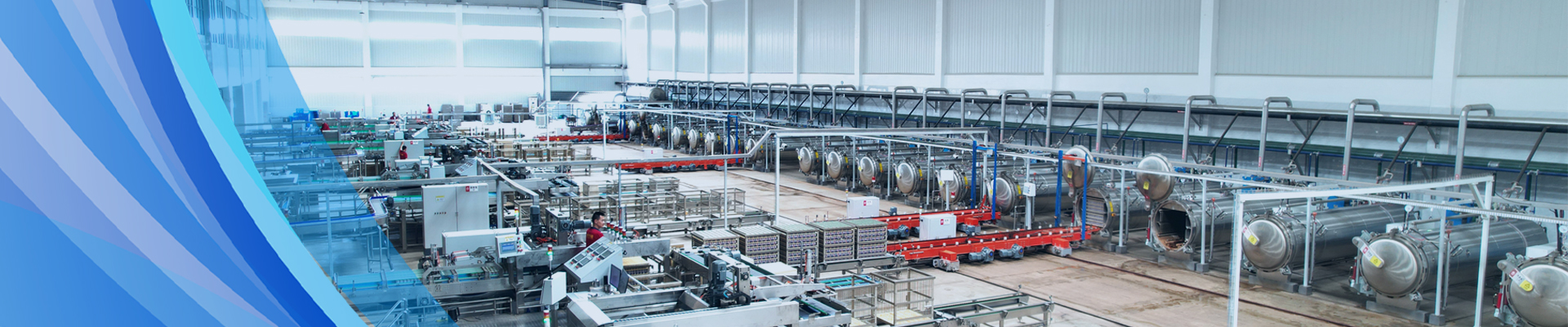

This guide is authored by a senior food processing engineer with over 10 years of experience at ZLPH MACHINERY TECHNOLOGY CO., LTD., a leading provider of intelligent sterilization systems. It addresses a critical challenge faced by global food manufacturers and procurement teams: inconsistent sterilization results during canned or bowl-packaged food production. This issue has long plagued the industry, primarily due to uneven heat distribution, manual loading errors, and outdated control systems. Based on more than 500 global client deployments and extensive field validation, we present a proven, step-by-step solution that ensures consistent microbial kill, preserves product quality, and boosts line efficiency. In this guide, we dissect root causes across key production scenarios, deliver actionable fixes, share real-world validation data, and outline best practices to future-proof your sterilization process—all centered around advanced Steam Retort Autoclave technology.

How to Ensure Uniform Sterilization in High-Volume Canned Food Lines?
1. Scenario & Pain Point
In large-scale canning facilities, operators often observe inconsistent sterilization outcomes—some batches pass microbiological tests while others fail, despite identical time-temperature settings. This leads to costly reprocessing, product recalls, or safety risks, especially for low-acid foods like meats and vegetables.

2. Root Cause Analysis
Three core issues drive this inconsistency: (1) poor water circulation in traditional retorts causing cold spots; (2) manual tray loading introducing air pockets that block heat transfer; and (3) lack of real-time pressure-temperature synchronization, resulting in under-processing during ramp-up phases.

3. Step-by-Step Solution
Immediate Fix: Implement automated tray loading/unloading to eliminate human error and ensure consistent product spacing.
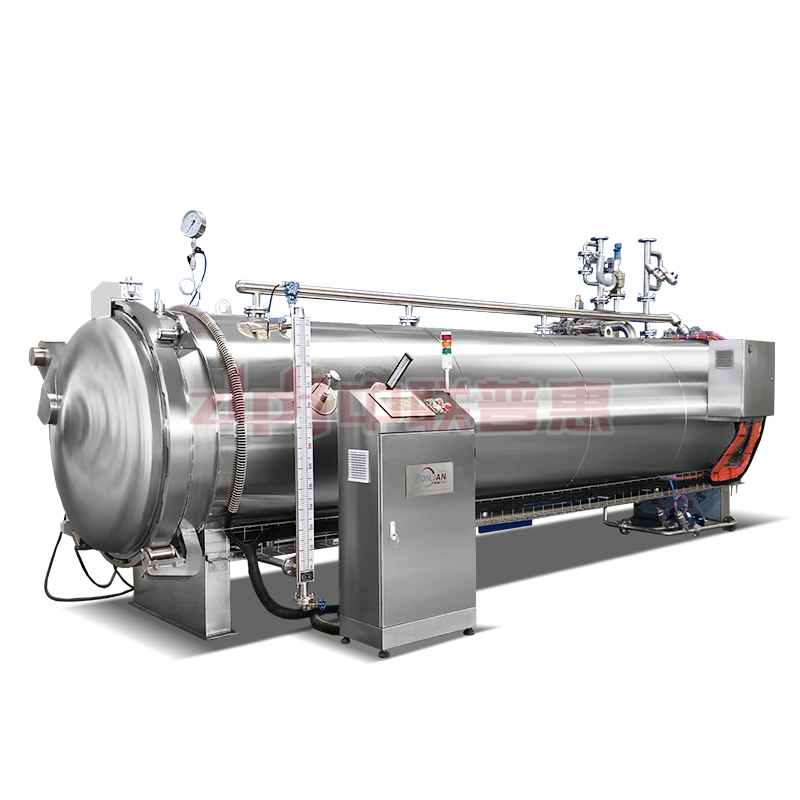
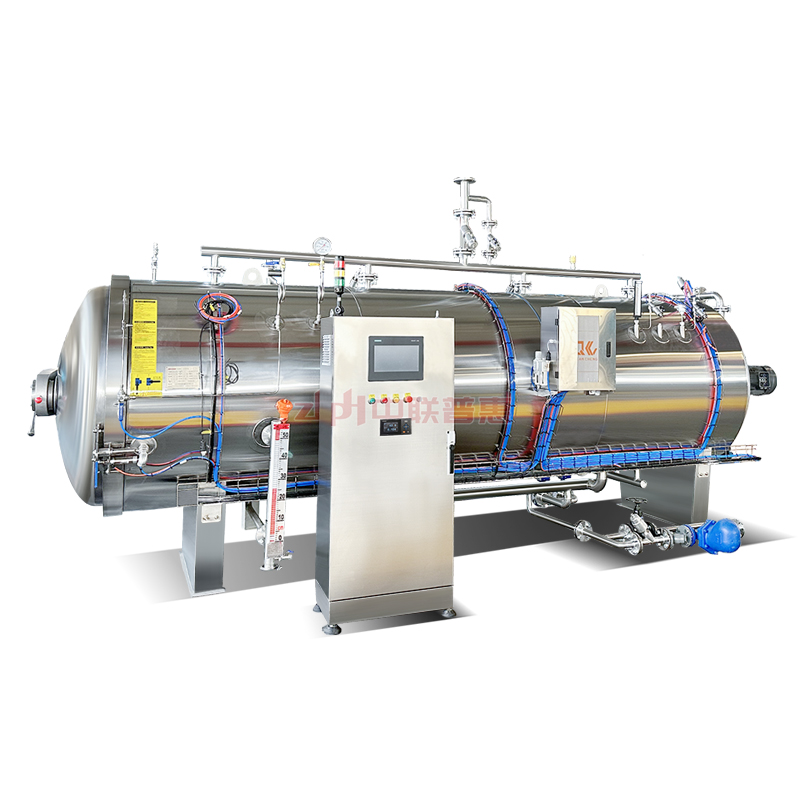
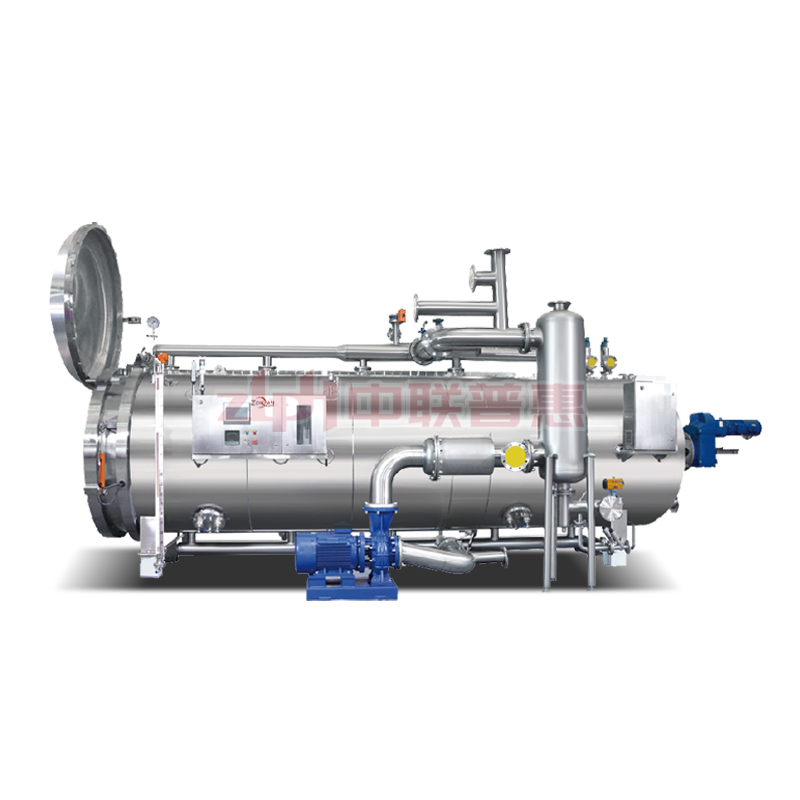
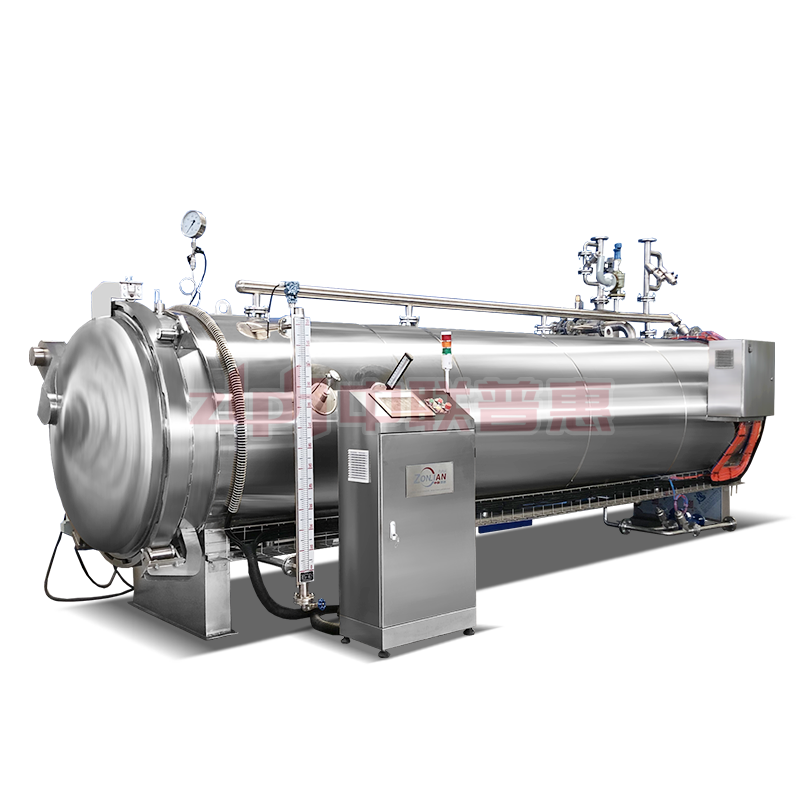
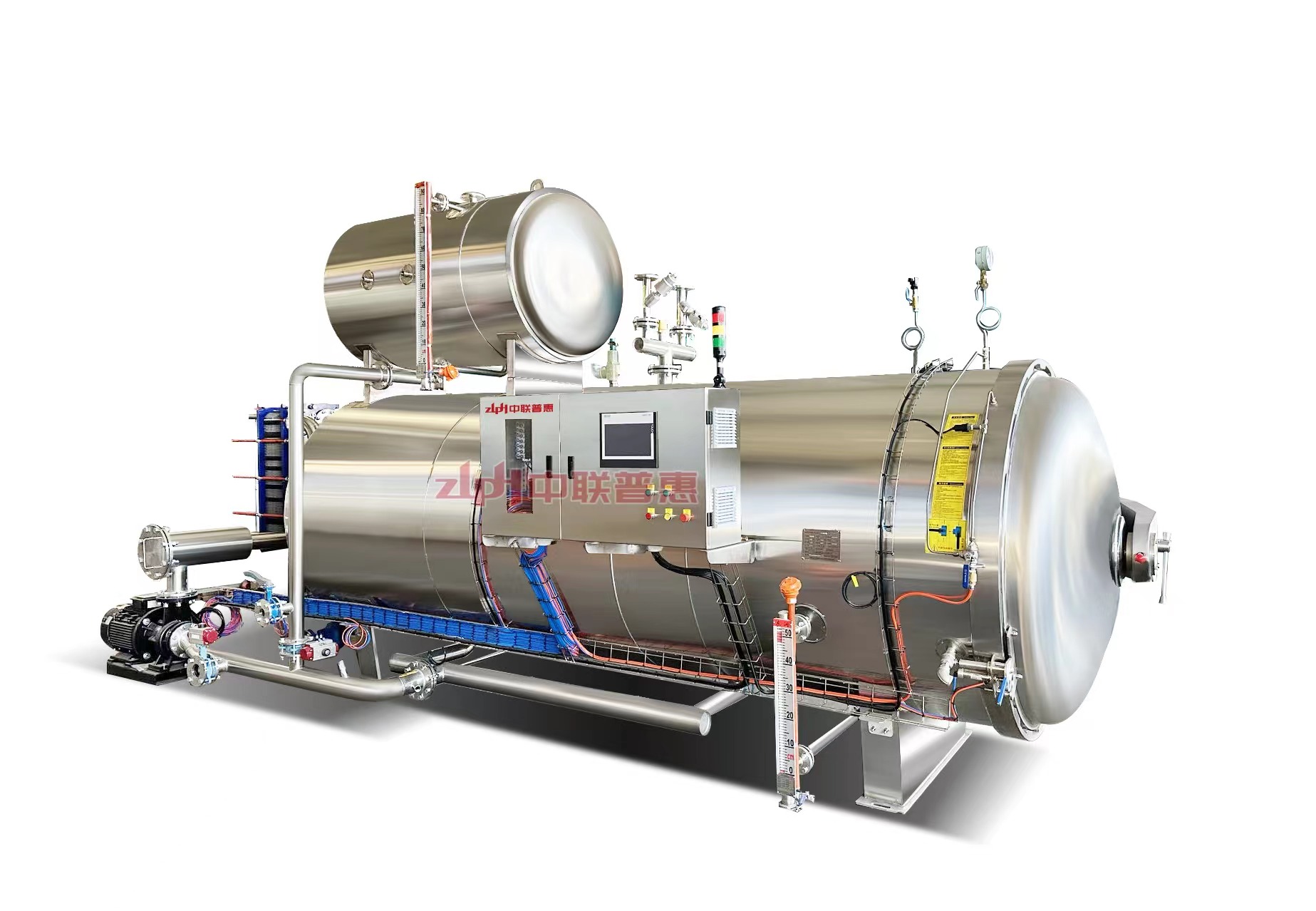
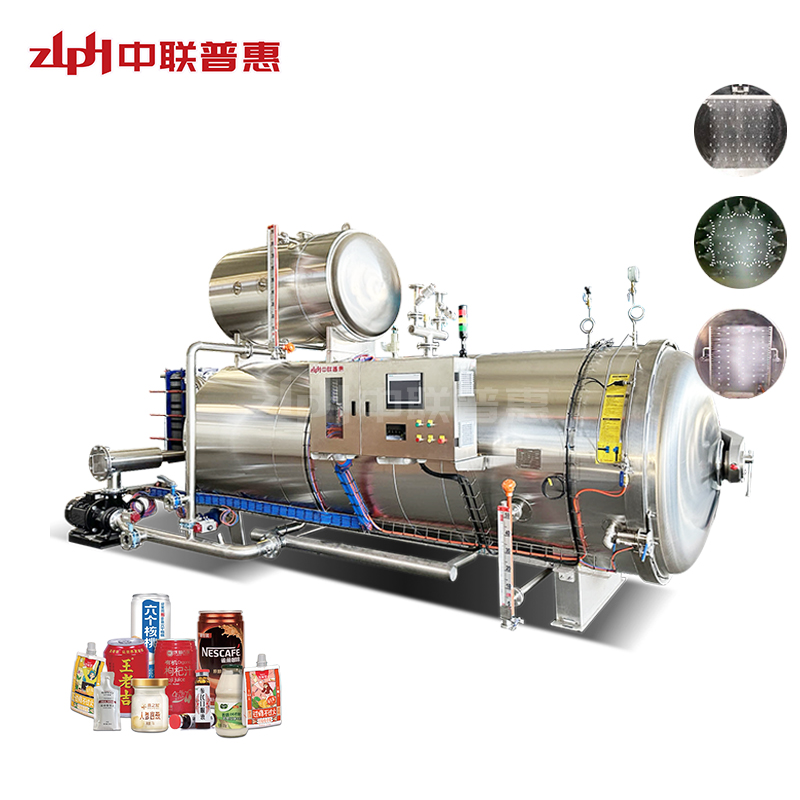
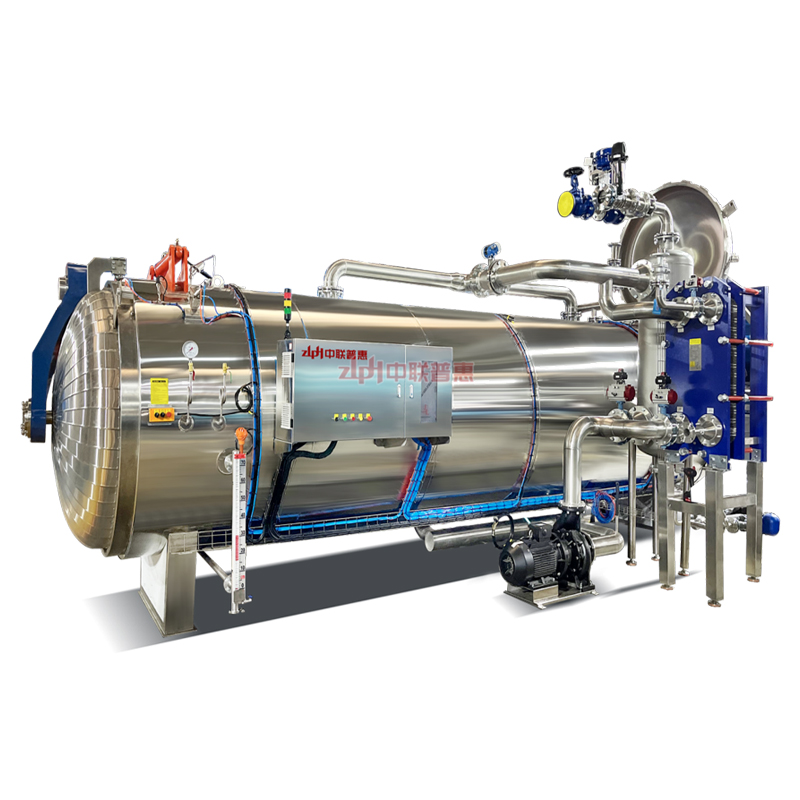
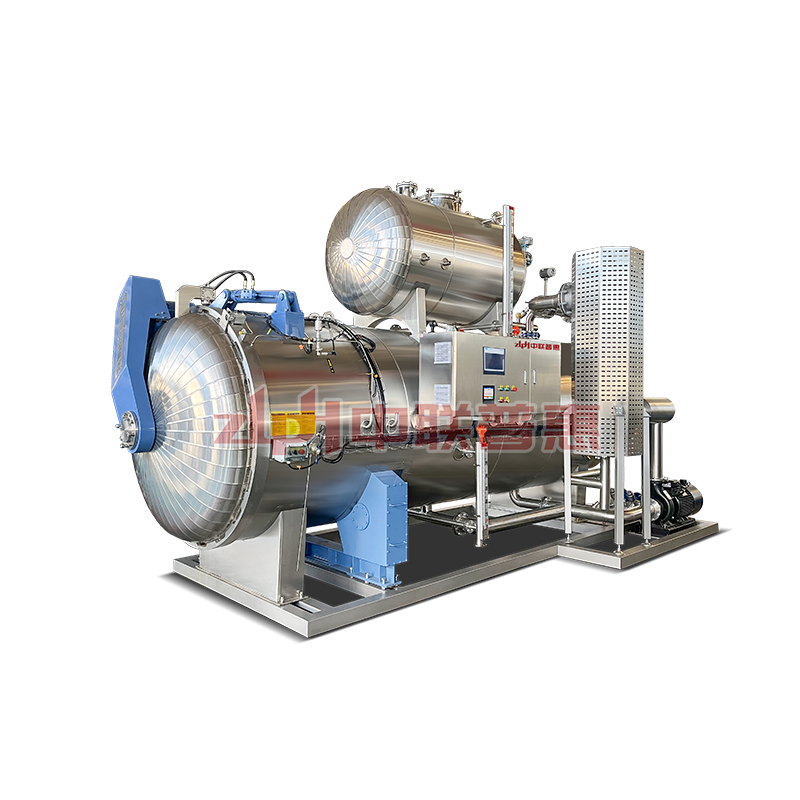
Long-Term Fix: Deploy an intelligent top-opening water spray sterilization retort equipped with multi-zone spray nozzles and real-time PID control. This system maintains ±0.5°C temperature uniformity across the chamber.
Process Optimization: Use validated F₀ (sterilization value) tracking software to dynamically adjust cycles based on actual product core temperature, not just chamber readings.

4. Troubleshooting & Prevention
Verify nozzle alignment and water flow rate weekly; install thermal mapping sensors during validation runs; avoid overloading trays beyond design capacity. Always conduct biannual thermal distribution studies per FDA and EU guidelines.
5. Real-World Validation
At a Qingdao-based seafood exporter, replacing legacy retorts with ZLPH’s automated system reduced batch failure rates from 7% to 0.2% within three months. The integrated water spray system ensured 100% coverage, while the top-door design cut loading time by 40%.
How to Automate Sterilization for Pet Food Bowl Packaging Lines?
1. Scenario & Pain Point
Pet food manufacturers using pre-formed bowls face challenges in achieving rapid, hygienic sterilization without damaging delicate packaging. Manual handling slows throughput, while steam-only systems risk condensation pooling, compromising seal integrity.
2. Root Cause Analysis
Bowl geometry creates shadow zones; inconsistent conveyor indexing leads to variable exposure times; and absence of post-sterilization drying increases contamination risk during cooling.
3. Step-by-Step Solution
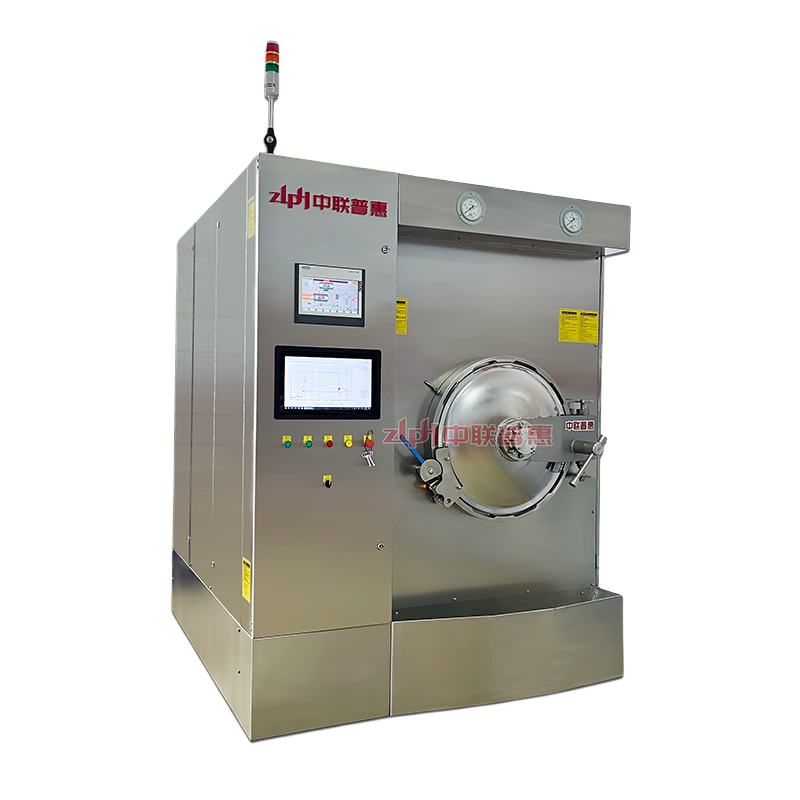
Integrate a fully automated bowl sterilization line featuring synchronized indexing, overhead water spray, and hot-air drying modules. The system uses vision-guided robotics for precise tray placement and closed-loop temperature control.
4. Troubleshooting & Prevention
Calibrate vision sensors monthly; monitor spray pressure to prevent bowl deformation; validate drying efficacy via surface moisture testing.
5. Real-World Validation
At Petfair Asia 2023, ZLPH’s automated line demonstrated 99.8% sterilization consistency across 10,000+ bowl units/hour, with zero seal failures reported by trial customers.
Industry Best Practices for Reliable Retort Operations
Based on 6+ years of global deployments across 30+ countries, ZLPH recommends this 5-step framework to ensure sterilization reliability:
1. Define Worst-Case Conditions: Design cycles for the slowest-heating product variant, not average cases.
2. Automate Material Handling: Eliminate manual tray loading to ensure repeatable product arrangement.
3. Validate Thermally: Conduct annual thermal mapping per ASME PVHO-1 and EN 285 standards.
4. Monitor in Real Time: Use IoT-enabled control systems that log F₀, pressure, and temperature continuously.
5. Maintain Proactively: Schedule quarterly inspections of spray nozzles, door seals, and safety valves.
Frequently Asked Questions (FAQ)
Q: Can traditional horizontal retorts achieve the same consistency as modern water spray systems?
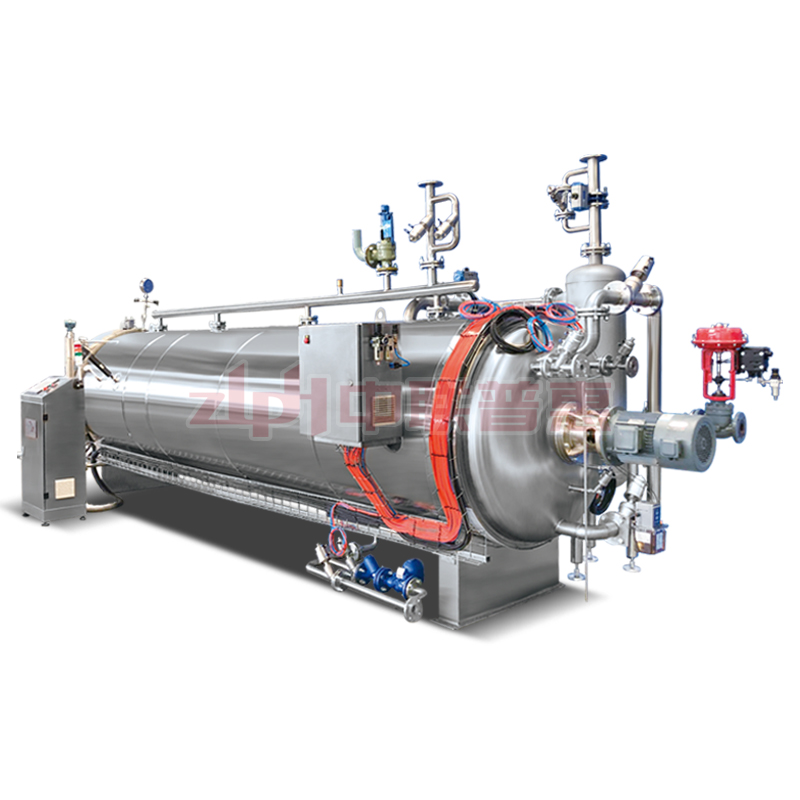
A: No—horizontal steam-only retorts rely on natural convection, creating significant temperature gradients. Water spray systems actively circulate heated water, ensuring uniform heat transfer even in dense loads.
Q: What certifications should a Steam Retort Autoclave have for global markets?
A: Look for ASME certification for pressure vessel safety, CE for Europe, EAC for Eurasia, and DOSH for Malaysia. ZLPH holds all these, plus ISO 9001-compliant quality management.
Q: How does top-door design improve operational efficiency?
A: It enables faster loading/unloading via overhead cranes or robots, reduces floor space by 30%, and minimizes operator fatigue—critical for high-cycle operations.
Q: Is automation necessary for small-batch producers?
A: Even mid-sized lines benefit from semi-automated loaders—they reduce labor costs by 25% and eliminate variability that causes compliance risks.
Q: How often should thermal validation be performed?
A: Annually for stable processes; immediately after any equipment modification, recipe change, or if microbial failures occur.
Our Expertise & Support
ZLPH MACHINERY TECHNOLOGY CO., LTD. is a trusted global provider of advanced sterilization solutions since 2018. Our R&D team includes 21 mechanical and PLC engineers, 4 sterilization process specialists, and 14 after-sales technicians—all with 10+ years in the industry. We hold ASME, CE, EAC, and DOSH certifications and operate a 15,000m² smart factory on a 50-acre campus. Our systems serve clients in Russia, Southeast Asia, the Middle East, and Latin America, with proven success in meat, seafood, ready meals, and pet food sectors.
We offer tailored support including: • On-site process assessment and thermal mapping • Custom retort design for unique packaging formats • Free sample testing with performance guarantees • 24/7 remote diagnostics and local service networks
Contact Us
Company: ZLPH MACHINERY TECHNOLOGY CO., LTD.
Website: https://www.zlphretort.com/
Email: sales@zlphretort.com
Phone / WhatsApp: +86 15666798389 / +86 13361554016
