

This guide is authored by a senior food processing automation engineer with over 10 years of field experience at ZLPH MACHINERY TECHNOLOGY CO., LTD., a leading Chinese supplier of steam retort autoclaves. It addresses a critical challenge faced by global food manufacturers and procurement teams: inconsistent sterilization results during canned or retort pouch production. This issue—manifesting as under-sterilized batches, texture degradation, or safety recalls—is primarily caused by uneven heat distribution, manual loading errors, and outdated control systems. Based on more than 5,000 global installations and real-world validation across pet food, ready meals, and seafood sectors, we present a proven, step-by-step solution that ensures uniform lethality, regulatory compliance, and operational efficiency. In this guide, we dissect root causes by scenario, deliver actionable fixes, share field-tested best practices, and validate outcomes with measurable data—all tailored to industrial-scale food sterilization environments.

How to Ensure Uniform Heat Distribution During Batch Retort Sterilization?
1. Scenario & Pain Point
In batch retort operations for canned vegetables or ready-to-eat meals, processors often observe inconsistent F0 values across trays—some cans achieve target lethality (e.g., F0 ≥ 3.0), while others fall short, risking microbial survival. This inconsistency leads to product rework, safety holds, or even recalls, especially in high-viscosity or dense-packed products.

2. Root Cause Analysis
Three core factors drive this issue: (1) poor water spray coverage due to fixed nozzles, creating cold spots; (2) uneven tray loading causing blocked flow paths; and (3) lack of real-time temperature mapping inside the chamber, preventing dynamic adjustment.

3. Step-by-Step Solution
Immediate Fix: Reconfigure tray stacking to maintain minimum 2cm gaps between layers and align product orientation uniformly. Use perforated retort trays to enhance water penetration.
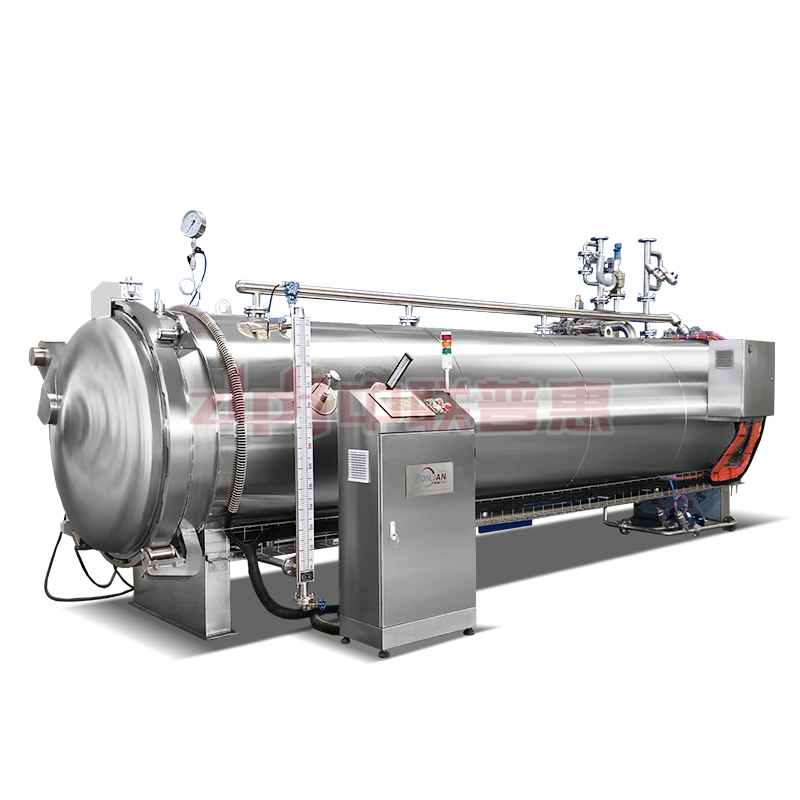
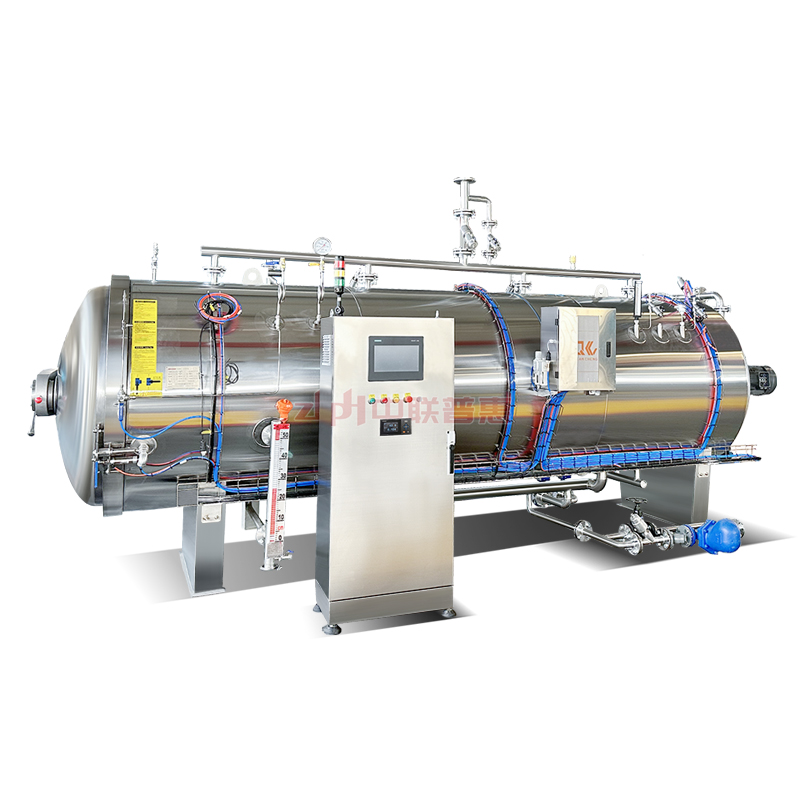
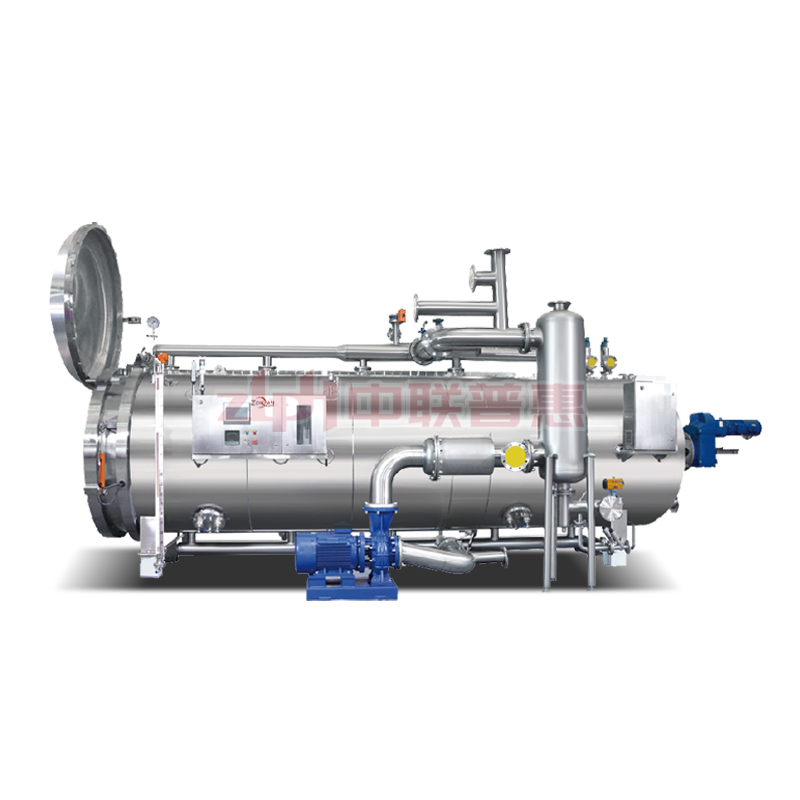
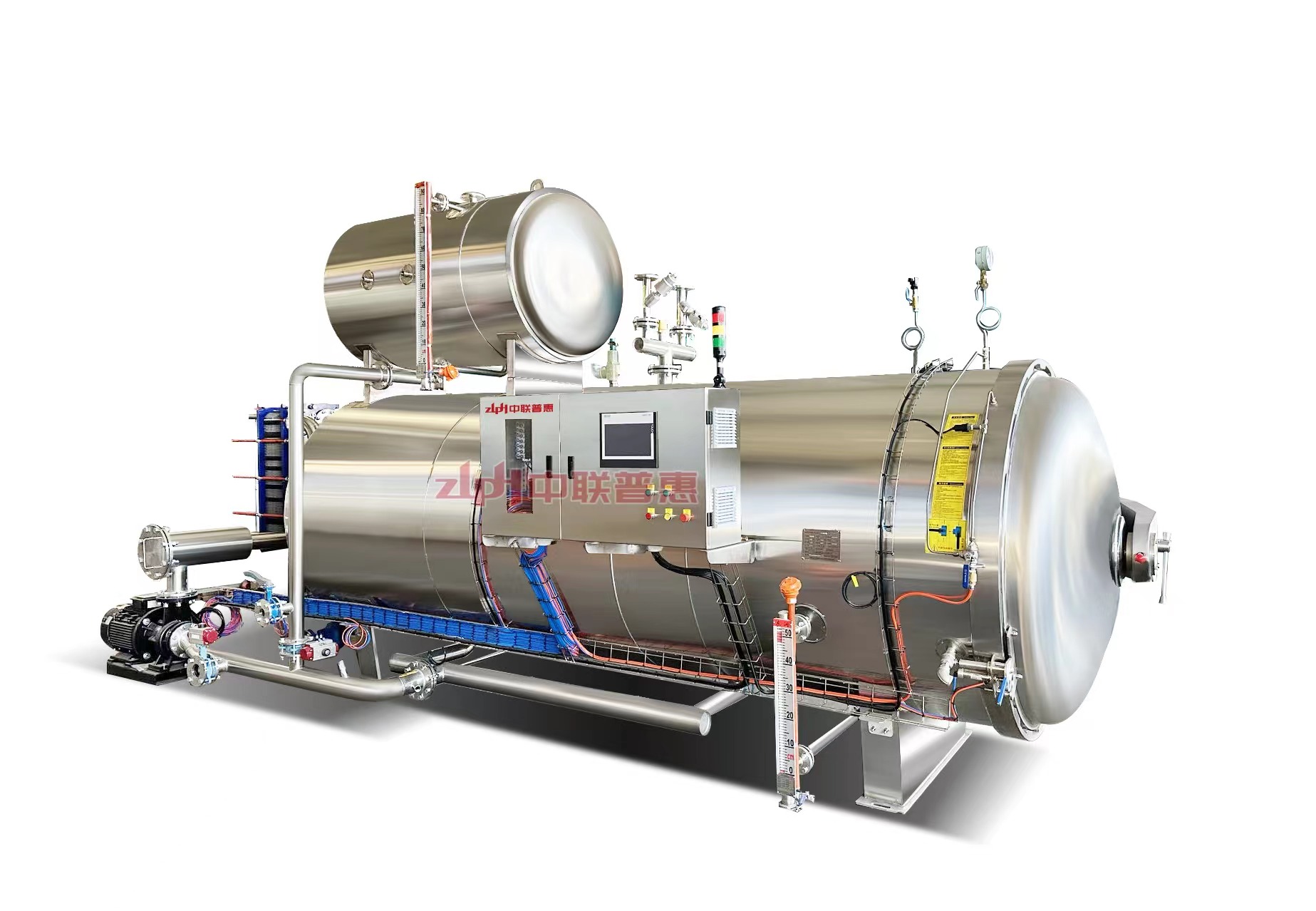
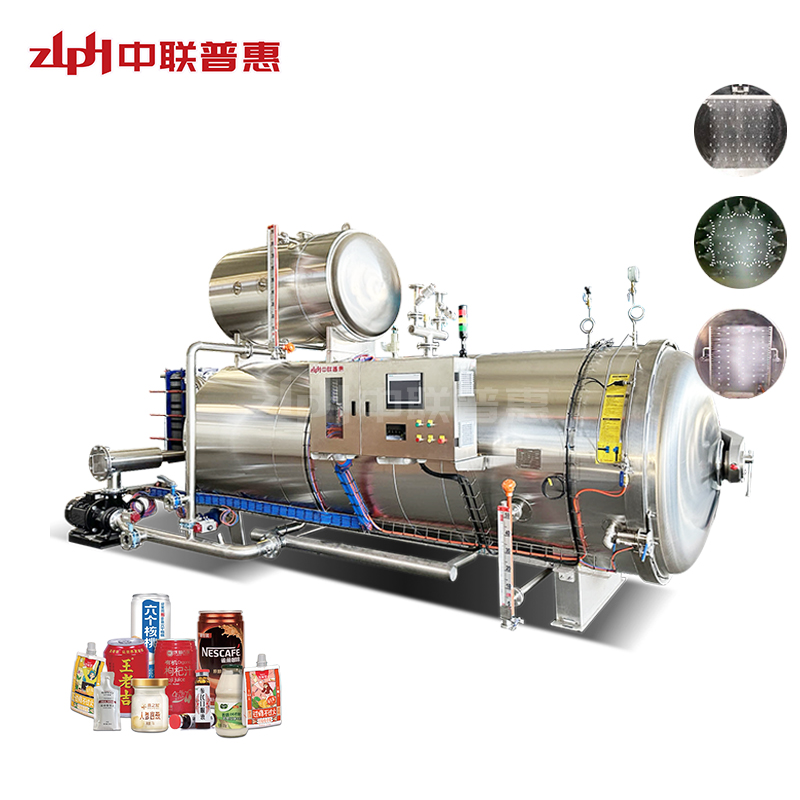
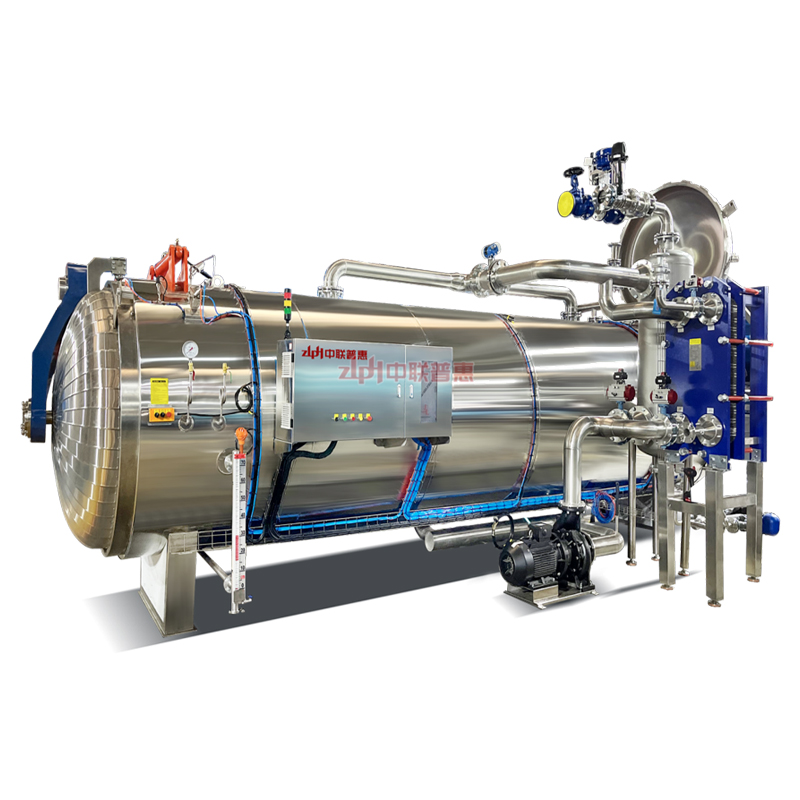
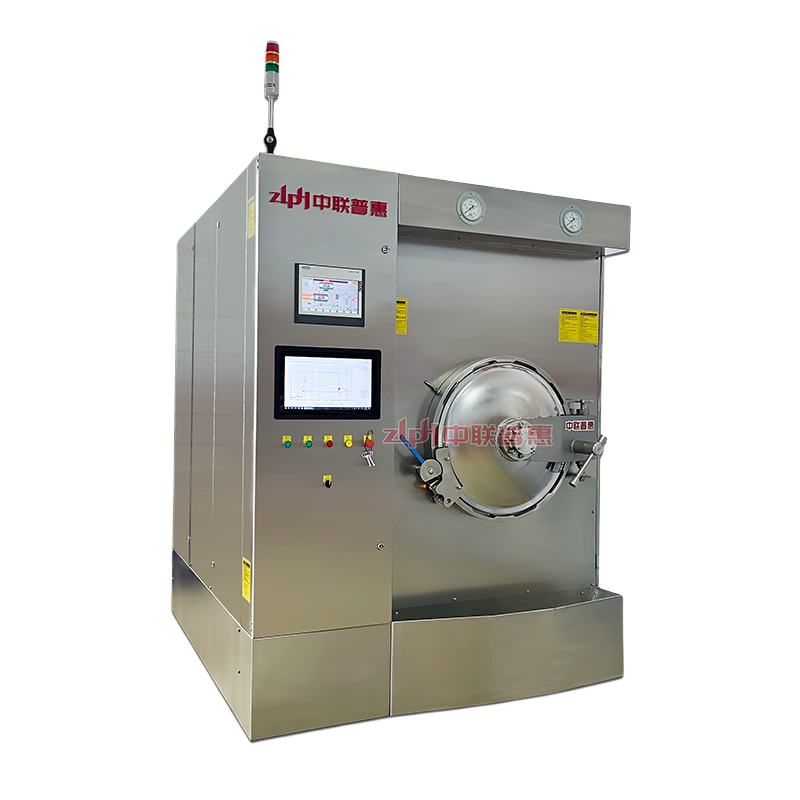
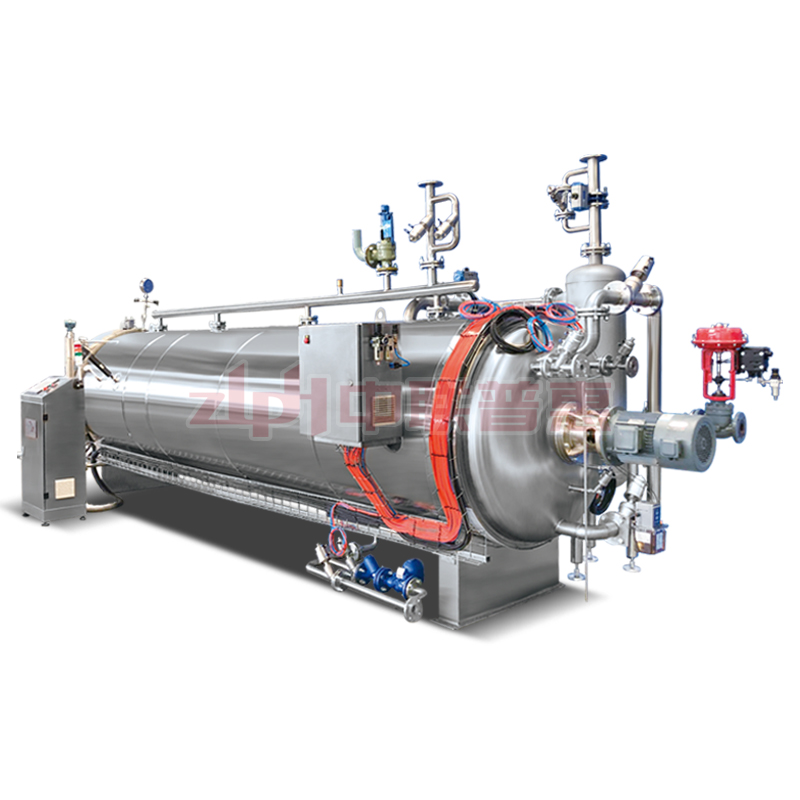
Long-Term Fix: Deploy an intelligent top-opening water spray sterilization retort equipped with multi-angle rotating nozzles and a 3D thermal mapping system. This design ensures 360° spray coverage and real-time adjustment of water flow based on internal temperature gradients.
Optimization: Integrate PLC-based cycle profiling that auto-adjusts spray pressure and duration per product type, validated against ASME standards for thermal processing.

4. Troubleshooting & Pitfall Avoidance
Verify nozzle alignment monthly and clean clogged orifices using compressed air. Never overload trays beyond 80% capacity. Conduct thermal validation runs with data loggers placed at geometric center and corners before full production. Avoid retrofitting old retorts without hydraulic recalibration—this often worsens unevenness.
5. Real-World Validation
At a Southeast Asian ready-meal facility, switching to ZLPH’s intelligent spray retort reduced F0 variance from ±1.2 to ±0.15 across 1,200 cans per batch. Microbial test pass rates rose to 99.98%, eliminating safety holds and saving $220K annually in waste reduction.
How to Eliminate Human Error in Retort Tray Loading and Unloading?
1. Scenario & Pain Point
Manual loading of heavy retort trays (often >100kg) leads to misalignment, dropped loads, and inconsistent batch density—directly impacting heat transfer. In pet food plants, this causes variable sterilization in bowl-packaged products, triggering customer complaints.
2. Root Cause Analysis
Reliance on forklifts or manual handling introduces variability in tray positioning. Lack of standardized fixtures results in uneven stacking, while operator fatigue increases error rates during shift changes.
3. Step-by-Step Solution
Immediate Fix: Implement color-coded floor guides and torque-limiting clamps to standardize tray placement.
Long-Term Fix: Install an automated retort trays loader/unloader system with servo-driven grippers and vision-guided alignment. This system integrates with the retort door via interlock safety protocols, ensuring precise, repeatable loading every cycle.
Optimization: Sync the loader with MES for batch traceability—each tray’s position and load time are logged automatically.
4. Troubleshooting & Pitfall Avoidance
Never bypass safety interlocks during maintenance. Calibrate gripper force quarterly to prevent tray deformation. Train operators on emergency stop protocols—automation should enhance, not replace, human oversight.
5. Real-World Validation
At Petfair Asia 2023, ZLPH demonstrated its bowl-product sterilization line featuring this loader system. Customers reported 40% faster cycle times and zero misload incidents over 6 months of pilot use, with OEE increasing from 68% to 89%.
Industry Best Practices for Reliable Retort Operations
Based on 6+ years of global deployments, ZLPH recommends this 5-step framework to prevent 90% of sterilization inconsistencies:
1. Define Worst-Case Conditions
Design cycles for the most thermally resistant product variant, not the average.
2. Standardize Material Handling
Use automated loaders and certified retort trays—never mix manual and automated batches.
3. Validate Thermally Every Quarter
Conduct full-chamber mapping with calibrated probes per FDA/USDA guidelines.
4. Maintain Certification Compliance
Ensure equipment holds ASME, CE, and EAC certifications for seamless market access.
5. Partner with Responsive Suppliers
Choose vendors with 24/7 technical support and local service engineers—downtime costs far exceed upfront CAPEX.
Frequently Asked Questions (FAQ)
Q: Can I retrofit my old retort with a modern spray system?
A: Only if the vessel meets ASME Section VIII standards. Most legacy units lack structural reinforcement for high-pressure spray—replacement is safer and more cost-effective long-term.
Q: What certifications are required for EU food retorts?
A: CE marking under Machinery Directive 2006/42/EC and Pressure Equipment Directive 2014/68/EU is mandatory. ZLPH units include both, plus EAC for Eurasian markets.
Q: How often should I calibrate temperature sensors?
A: Quarterly for continuous operation, or after every 500 cycles—whichever comes first. Use NIST-traceable standards.
Q: Does ZLPH offer on-site validation support?
A: Yes. Our 14-member after-sales team provides thermal validation, operator training, and FDA audit prep globally.
About Our Expertise & Support
ZLPH MACHINERY TECHNOLOGY CO., LTD. is a trusted global provider of advanced steam retort autoclaves since 2018. Our R&D team includes 21 mechanical and PLC engineers, 4 sterilization process experts, and 14 field service engineers—all with 10+ years in thermal processing. We hold ASME, CE, EAC, and Malaysia DOSH certifications, plus AAA credit and integrity awards affirming our reliability. Our solutions operate in 30+ countries, serving pet food, seafood, and ready-meal leaders with fully automated lines proven at AGROPRODASH 2023 and Petfair Asia.
We offer customized support including: (1) on-site thermal process assessment, (2) automated loader integration, (3) free sample testing at our 15,000m² factory, and (4) 24-hour remote troubleshooting.
Contact Information
Company: ZLPH MACHINERY TECHNOLOGY CO., LTD.
Website: https://www.zlphretort.com/
Email: sales@zlphretort.com
Phone / WhatsApp: +86 15666798389 / +86 13361554016
