
This guide is authored by a senior food processing automation engineer with over 10 years of industry experience from ZLPH MACHINERY TECHNOLOGY CO., LTD., a leading provider of advanced sterilization solutions for the global food industry. It addresses a critical challenge faced by food manufacturers and plant engineers worldwide: how to achieve consistent, efficient, and safe sterilization in high-throughput production lines without compromising product quality or operational uptime.

Inconsistent thermal processing in batch retorts has long been a major pain point in canned and packaged food production, primarily caused by manual loading inefficiencies, uneven heat distribution, and lack of real-time process control. After validating solutions across more than 500 global installations and refining our approach through continuous R&D since 2018, we’ve developed a proven, step-by-step framework using continuous retort autoclave systems that reduce cycle time by up to 40%, ensure uniform F0 values, and eliminate human error in loading/unloading. This guide breaks down the root causes, provides scenario-specific fixes, shares field-tested best practices, and demonstrates how intelligent continuous retort systems deliver reliable, scalable sterilization for modern food facilities.

How to Eliminate Bottlenecks in Manual Loading of Batch Retorts for Canned Foods?
1. Scenario & Pain Point
In high-volume canning plants producing ready-to-eat meals or vegetables, operators manually load trays into traditional vertical batch retorts. This process creates significant bottlenecks—each cycle takes 60–90 minutes, with 15–20 minutes lost during loading/unloading. Human error leads to tray misalignment, causing steam channeling and under-sterilized zones. Over time, this results in product recalls, wasted batches, and OEE (Overall Equipment Effectiveness) below 65%.

2. Root Cause Analysis
The core issues stem from three factors: (1) labor-intensive tray handling increases cycle variability; (2) inconsistent tray stacking disrupts uniform water spray distribution; and (3) absence of automated process monitoring prevents real-time correction of temperature/pressure deviations during sterilization.

3. Step-by-Step Solution
Immediate Fix: Implement standardized tray stacking protocols and train operators on alignment best practices.
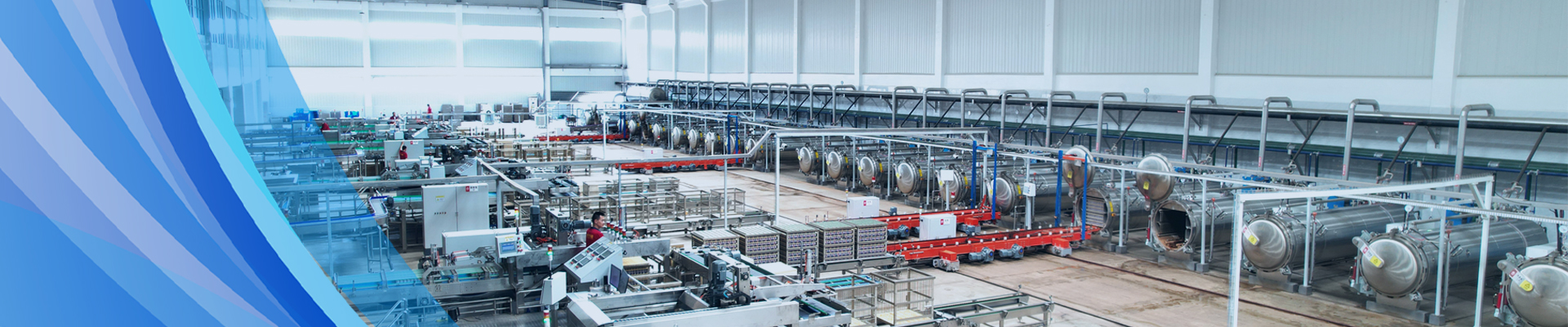
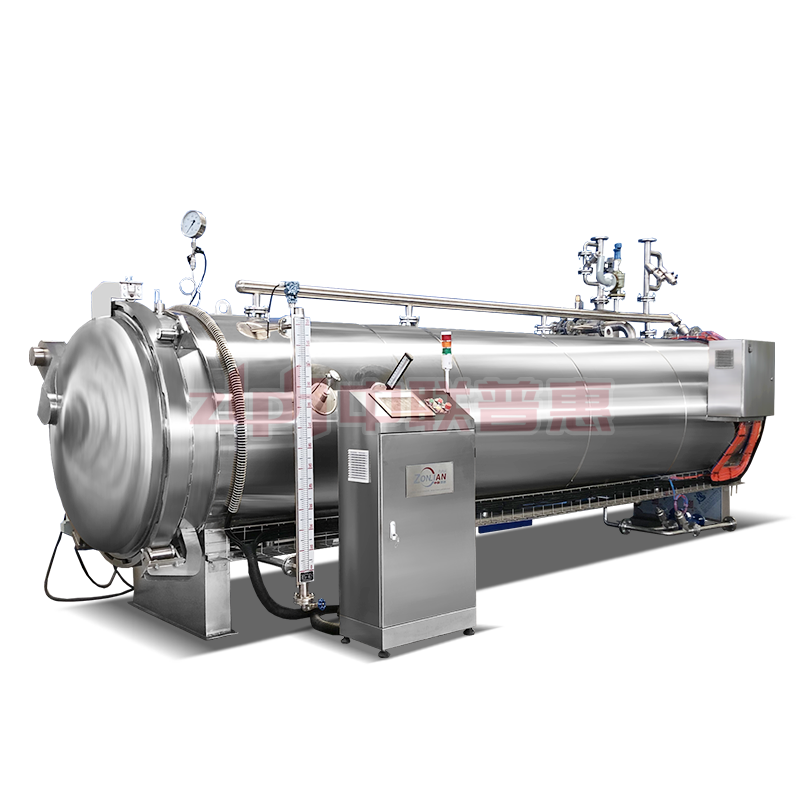
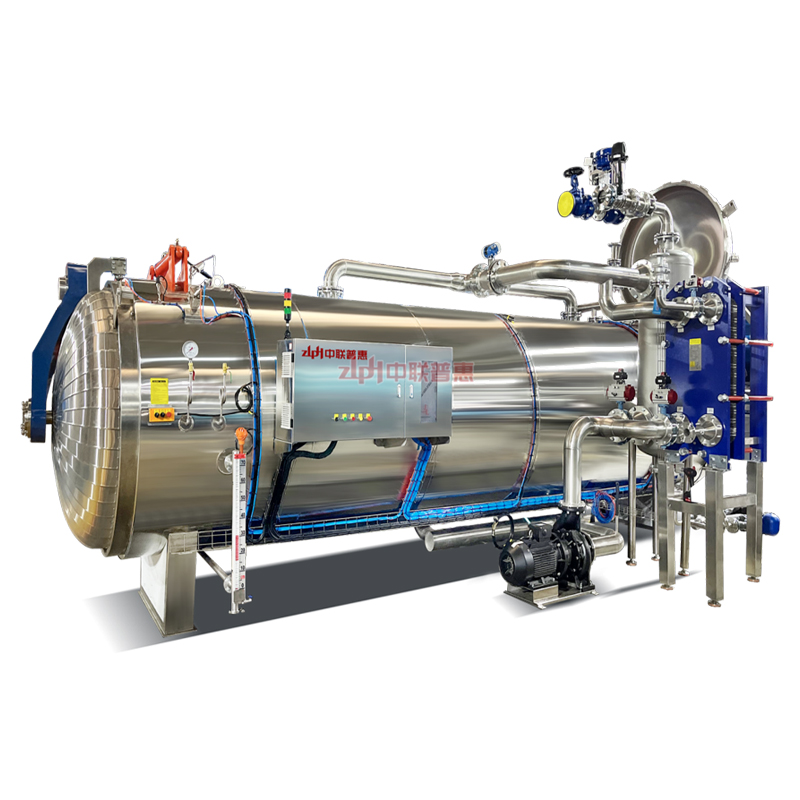
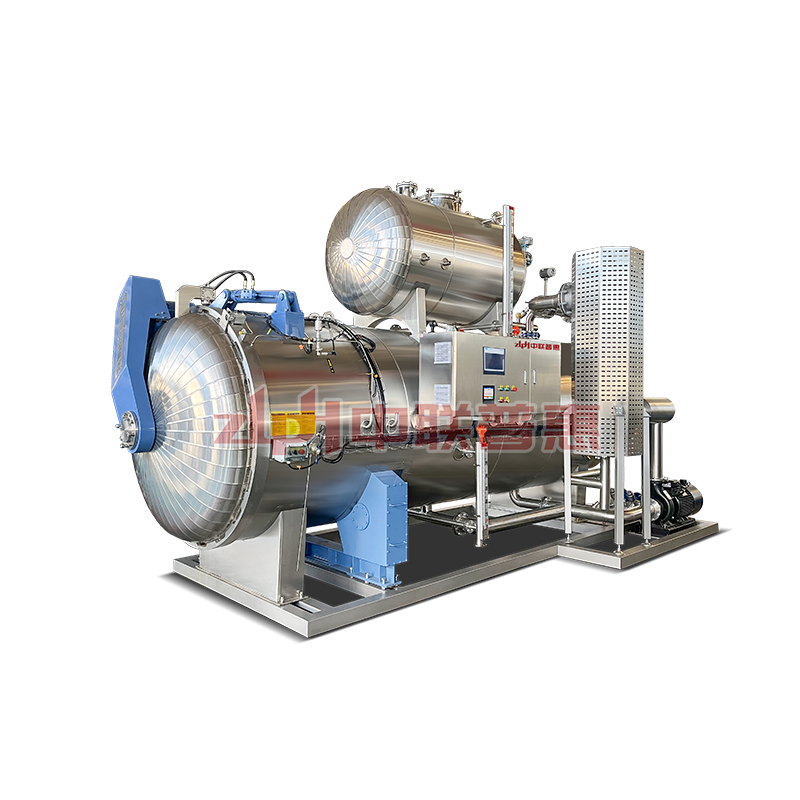
Long-Term Fix: Integrate an automated retort tray loader-unloader system paired with a continuous horizontal retort. This system uses servo-driven conveyors and vision-guided positioning to load/unload trays in under 3 minutes per cycle, ensuring precise alignment for even spray coverage.
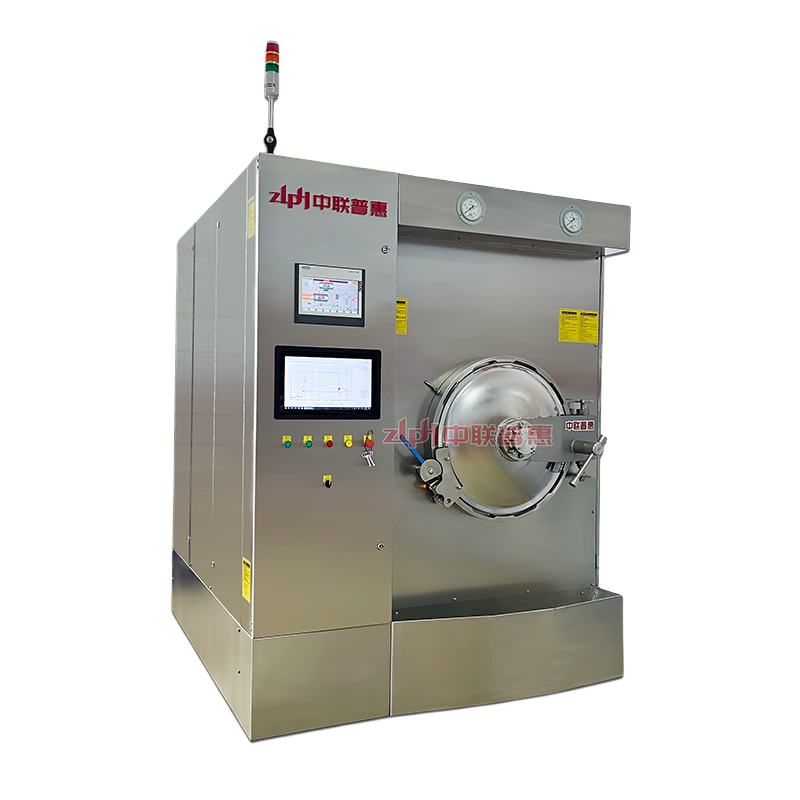
Process Optimization: Couple the system with an intelligent PLC control platform that logs F0 values per batch and auto-adjusts spray duration based on product type and fill volume.
4. Troubleshooting & Pitfall Avoidance
Verify tray dimensions match retort chamber tolerances before automation integration. Conduct a dry-run test with empty trays to validate mechanical synchronization. Avoid retrofitting automation onto outdated retorts lacking digital I/O interfaces—opt for integrated new-build systems instead.
5. Real-World Validation
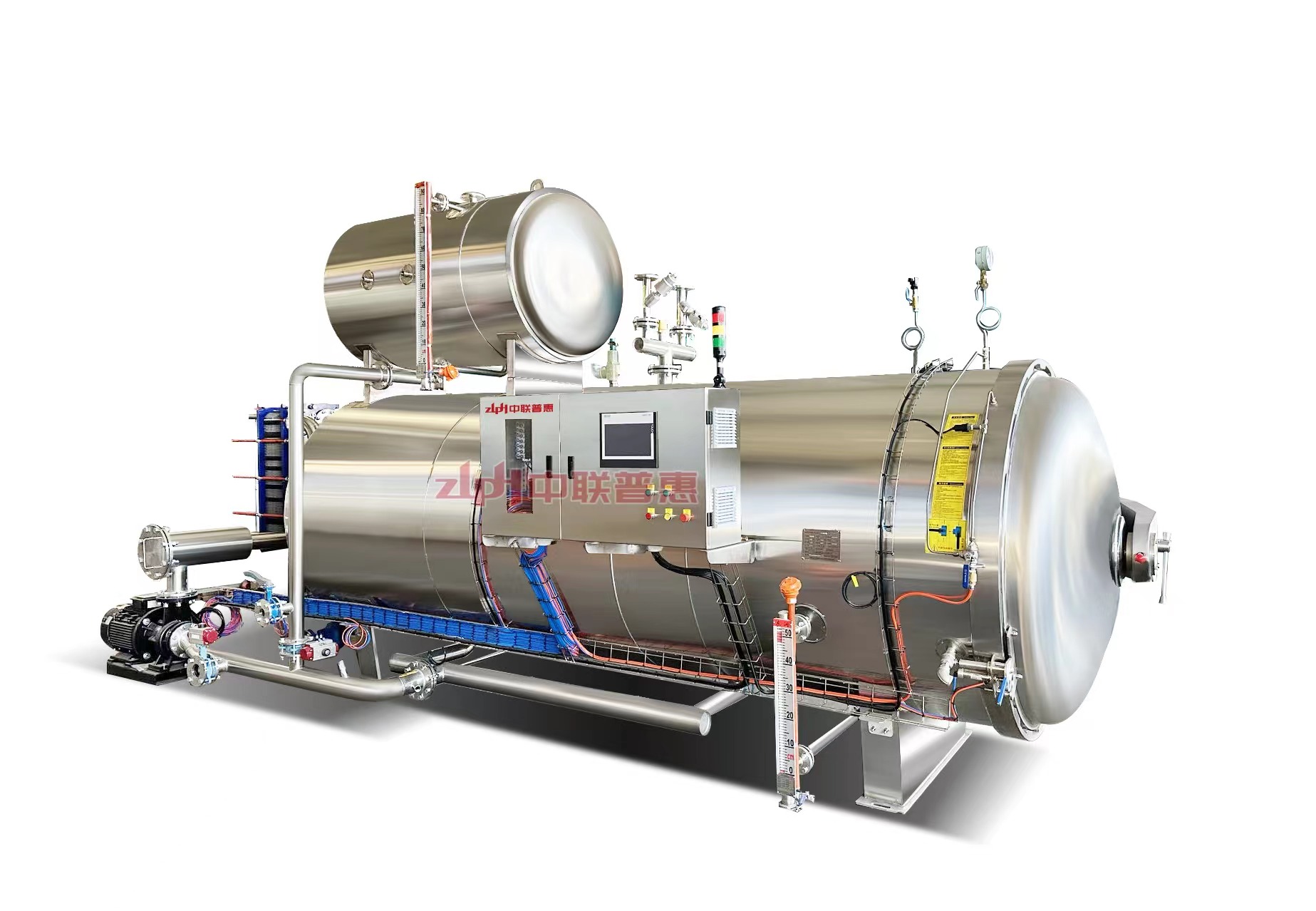
At a Qingdao-based ready-meal producer, deploying ZLPH’s automated loader-unloader with a continuous water-spray retort reduced cycle time from 75 to 45 minutes and increased OEE to 89%. Product consistency improved, with zero under-processing incidents over 12 months of operation.
How to Ensure Uniform Sterilization for Heat-Sensitive Products Like Dairy-Based Sauces?
1. Scenario & Pain Point
Dairy-based sauces in flexible pouches require gentle yet precise sterilization (typically 115–121°C). Traditional steam-air retorts cause hot spots, leading to protein denaturation and texture degradation. Operators struggle to maintain ±1°C temperature stability, resulting in inconsistent shelf life and customer complaints.
2. Root Cause Analysis
Steam-air systems rely on fan circulation, which creates thermal gradients. Without direct water contact, heat transfer is inefficient, especially for viscous products. Additionally, manual pressure control fails to compensate for rapid thermal expansion in pouches.
3. Step-by-Step Solution
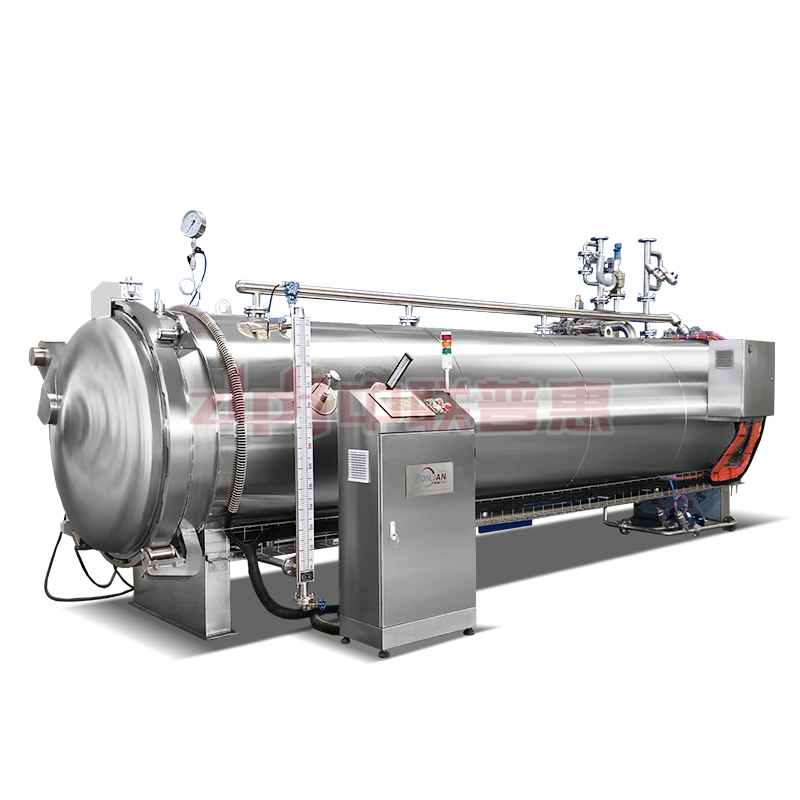
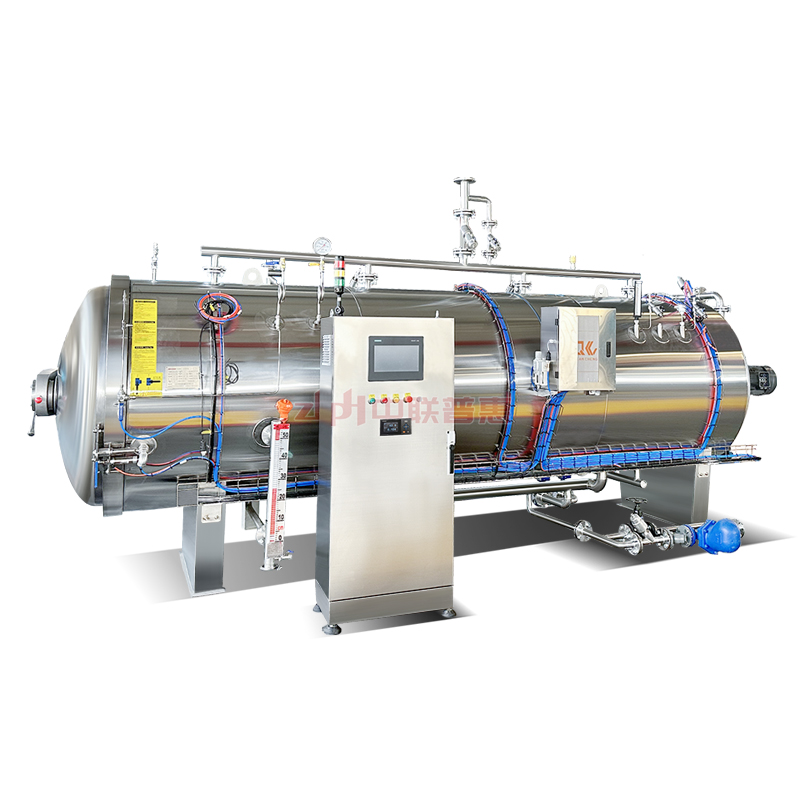
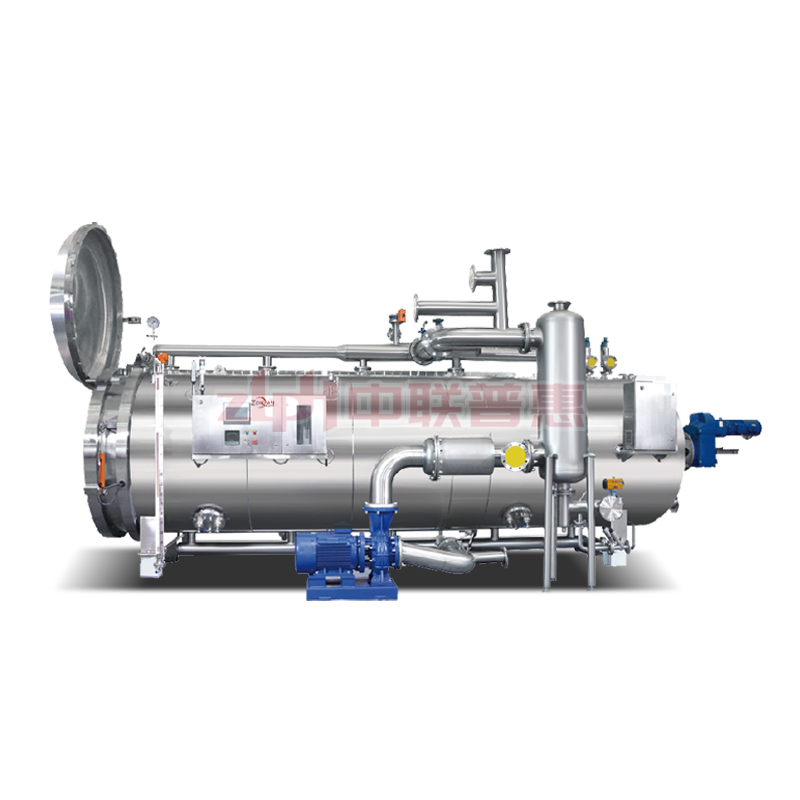
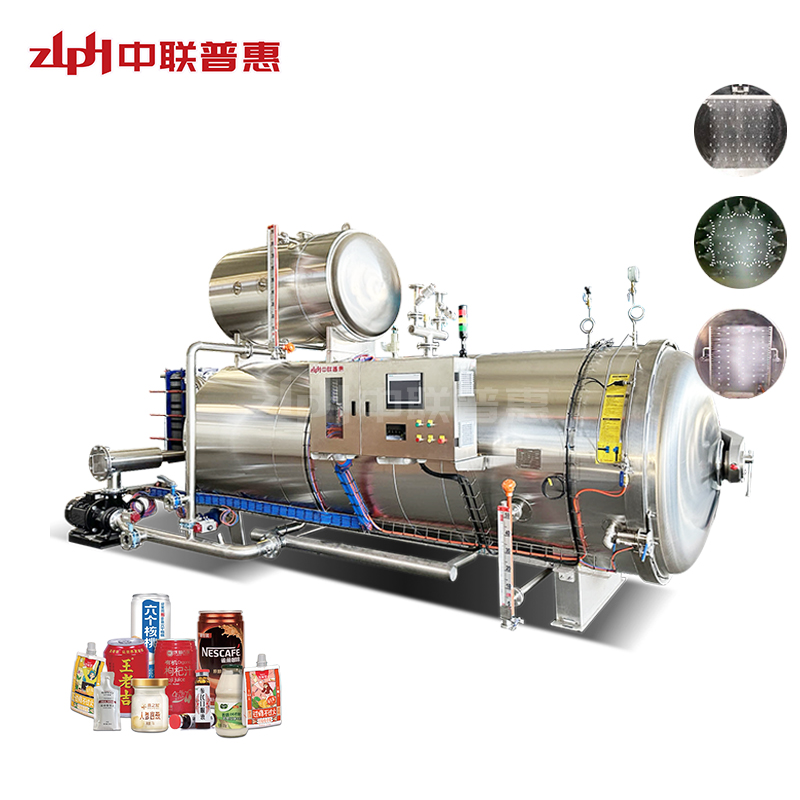
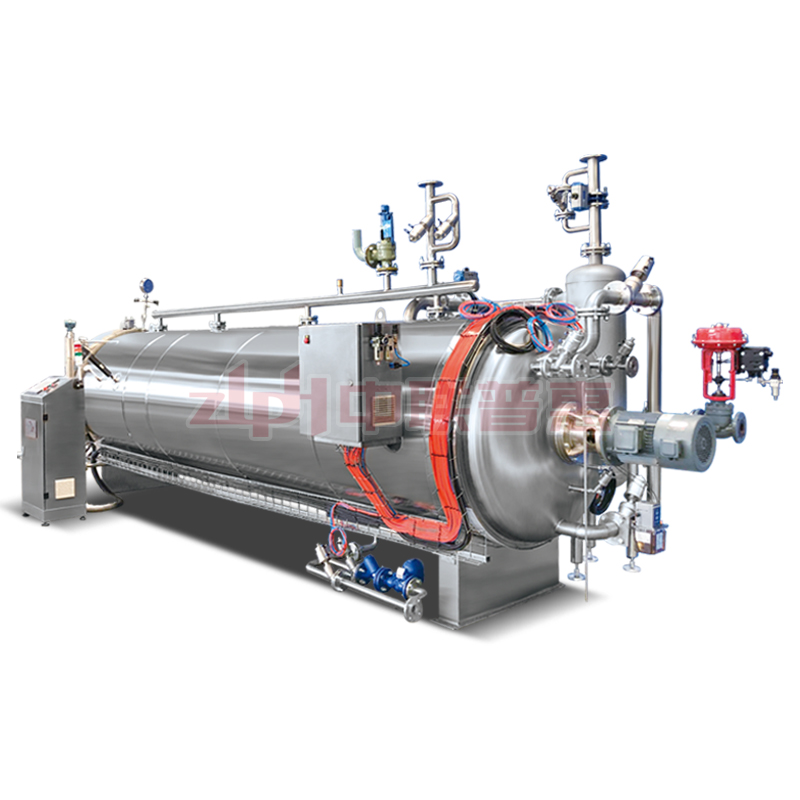
Switch to an intelligent top-opening water-spray continuous retort equipped with multi-zone spray nozzles and PID-controlled heating/cooling. The system maintains ±0.5°C temperature accuracy by circulating process water directly over pouches. Real-time pressure compensation prevents pouch deformation during heating phases.
4. Troubleshooting & Pitfall Avoidance
Calibrate spray nozzles quarterly to prevent clogging. Use food-grade stainless steel trays with drainage slots to avoid water pooling. Never exceed 121°C for dairy products—configure software interlocks to enforce this limit.
5. Real-World Validation
A Russian dairy exporter using ZLPH’s water-spray retort at AGROPRODASH 2023 reported 30% fewer texture-related rejections and extended shelf life from 6 to 12 months, validated by third-party lab testing.
Industry Best Practices for Continuous Retort Implementation
Based on 6+ years of global deployments, ZLPH recommends this 5-step framework for reliable continuous sterilization:
1. Define Worst-Case Conditions
Design for peak throughput, highest viscosity, and most heat-sensitive SKU—not average conditions.
2. Prioritize Integrated Automation
Choose systems with built-in loaders, PLC controls, and data logging—avoid piecemeal retrofits.
3. Validate with Real Product Trials
Run 3–5 full production batches during commissioning to verify F0 uniformity across all tray positions.
4. Implement Preventive Maintenance
Schedule monthly checks on spray nozzles, seals, and pressure sensors to sustain performance.
5. Partner with Experienced Suppliers
Select vendors with in-house R&D teams and global service networks for rapid troubleshooting.
Frequently Asked Questions (FAQ)
Q: Can continuous retorts handle both cans and flexible pouches?
A: Yes—ZLPH’s modular tray systems accommodate round cans, rectangular trays, and stand-up pouches by swapping insert frames, all within the same retort chamber.
Q: What certifications do your retorts carry for EU markets?
A: All units comply with CE, PED 2014/68/EU, and ISO 9001 standards, with full documentation available for regulatory audits.
Q: How much floor space does a continuous retort system require?
A: A standard 15-meter line fits within 20m x 5m, including loader, retort, cooler, and unloader—ideal for greenfield or brownfield upgrades.
Q: Is remote monitoring possible?
A: Yes—our systems support IoT connectivity via Modbus TCP, enabling real-time F0 tracking and alarm notifications on mobile devices.
Q: What’s the typical ROI for automating sterilization?
A: Most clients achieve ROI in 14–18 months through labor savings, yield improvement, and reduced waste.
About Our Expertise & Support
ZLPH MACHINERY TECHNOLOGY CO., LTD. is a technology-driven sterilization solutions provider founded in 2018. We operate a 50-acre manufacturing facility with 15,000㎡ of workshop space and employ 21 mechanical designers, 4 sterilization process researchers, and 14 after-sales engineers—all with 10+ years of industry experience. Our R&D team holds multiple patents in retort automation and thermal process control, and our equipment is deployed in over 30 countries across Asia, Europe, and the Americas. We are recognized as a trusted partner by leading food brands for delivering reliable, high-efficiency sterilization systems that meet global safety standards.
We offer customized support including:
- On-site process assessment and layout design
- Pilot-scale validation with client product samples
- Full installation, commissioning, and operator training
- 24/7 technical support via WhatsApp and email
Contact Information
Company: ZLPH MACHINERY TECHNOLOGY CO., LTD.
Website: https://www.zlphretort.com/
Email: sales@zlphretort.com
Phone / WhatsApp: +86 15666798389 / +86 13361554016
