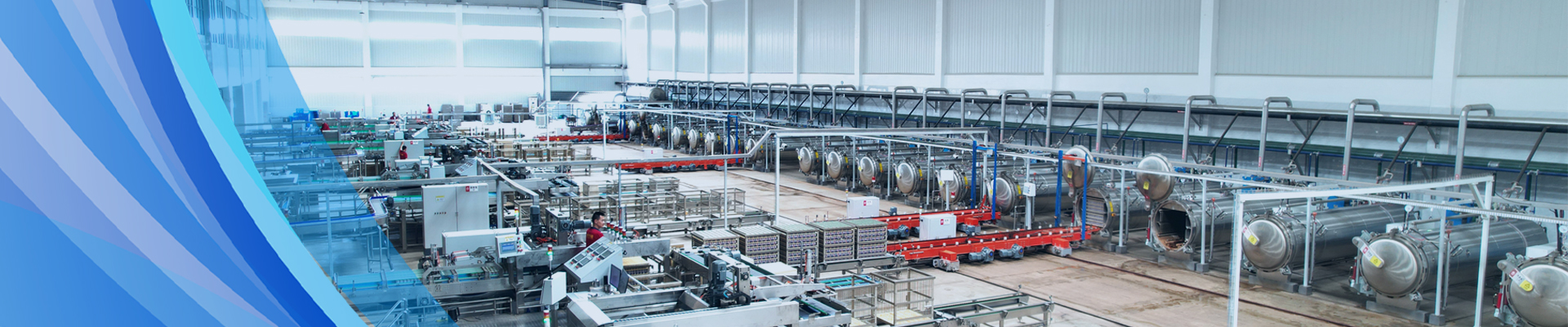

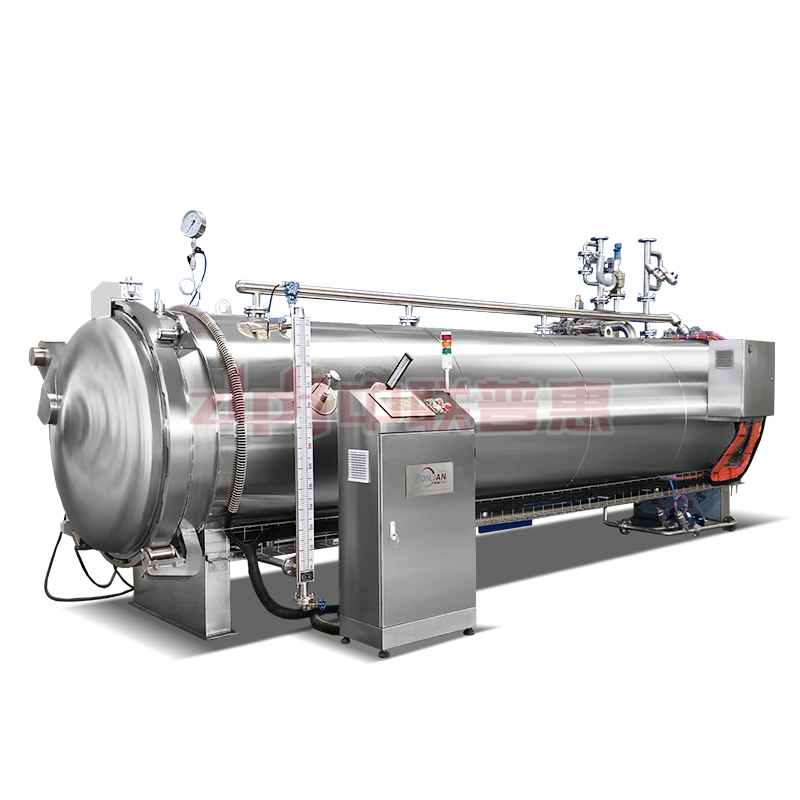
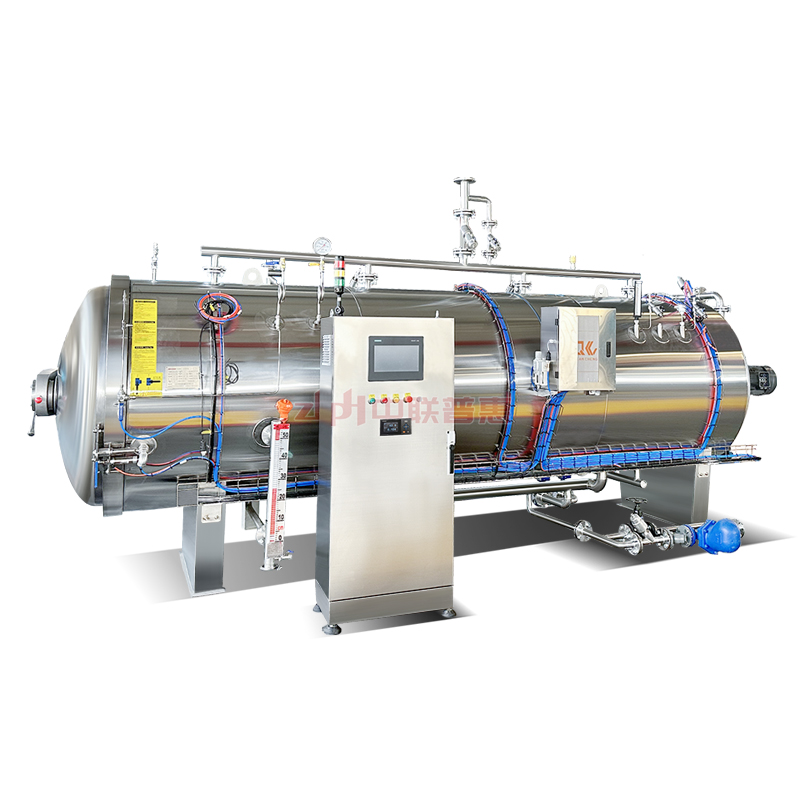
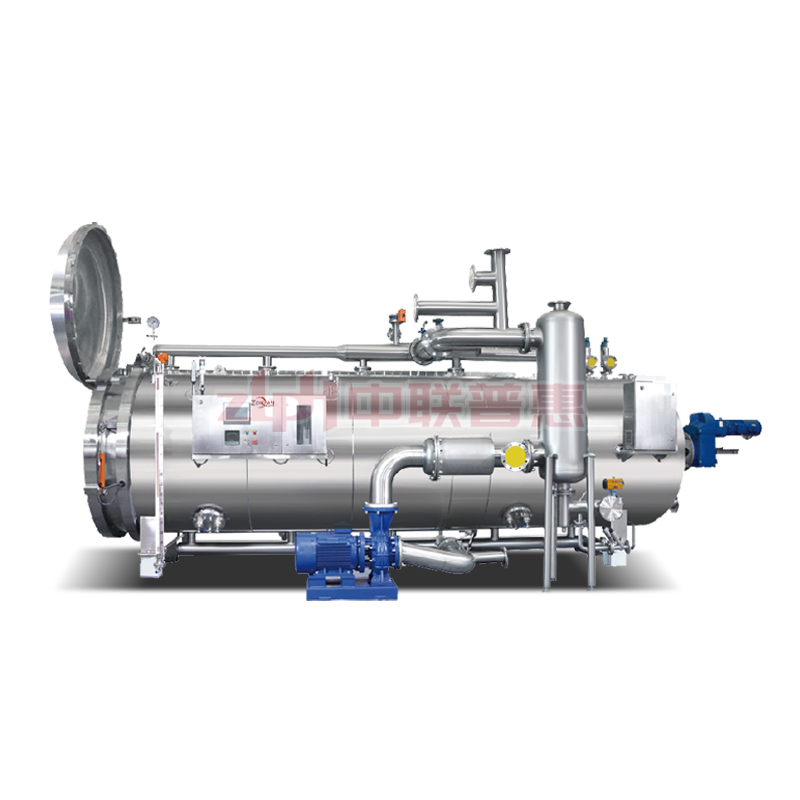
This guide is authored by a senior food processing engineer with over 12 years of experience at ZLPH MACHINERY TECHNOLOGY CO., LTD., a globally recognized provider of industrial retort sterilization systems. It addresses a critical challenge faced by food manufacturers worldwide: inconsistent sterilization results during large-scale production. This issue often stems from three primary causes—uneven heat distribution, inadequate process validation, and improper equipment sizing for specific product loads. Drawing on more than 500 global installations and extensive field testing across diverse food categories (including canned vegetables, ready-to-eat meals, and pet food), we present a proven, step-by-step methodology to achieve uniform, compliant, and efficient sterilization. The solution not only ensures microbial safety but also preserves product quality and reduces energy consumption. In this guide, we dissect the root causes behind sterilization variability, offer scenario-specific corrective actions, share practical troubleshooting protocols, and validate outcomes with real-world performance data—all aligned with international food safety standards such as FDA 21 CFR Part 113 and ISO 11133.

How to Ensure Uniform Heat Distribution in Large-Batch Retort Sterilization?
1. Scenario and Pain Point
In high-volume canning facilities, operators frequently observe under-sterilized zones in the center of stacked trays or overcooked edges near chamber walls. This thermal inconsistency leads to product recalls, texture degradation, and compliance risks—especially when processing low-acid foods requiring strict F₀ value control.

2. Root Cause Analysis
The core issues include: (a) poor steam circulation due to suboptimal basket design or overloading; (b) insufficient air removal during come-up time, creating insulating air pockets; and (c) lack of real-time temperature monitoring at multiple points within the load.

3. Step-by-Step Solution
Immediate Mitigation: Reconfigure loading patterns to maintain ≥5 cm spacing between containers and avoid dense stacking. Use perforated trays to enhance steam penetration.
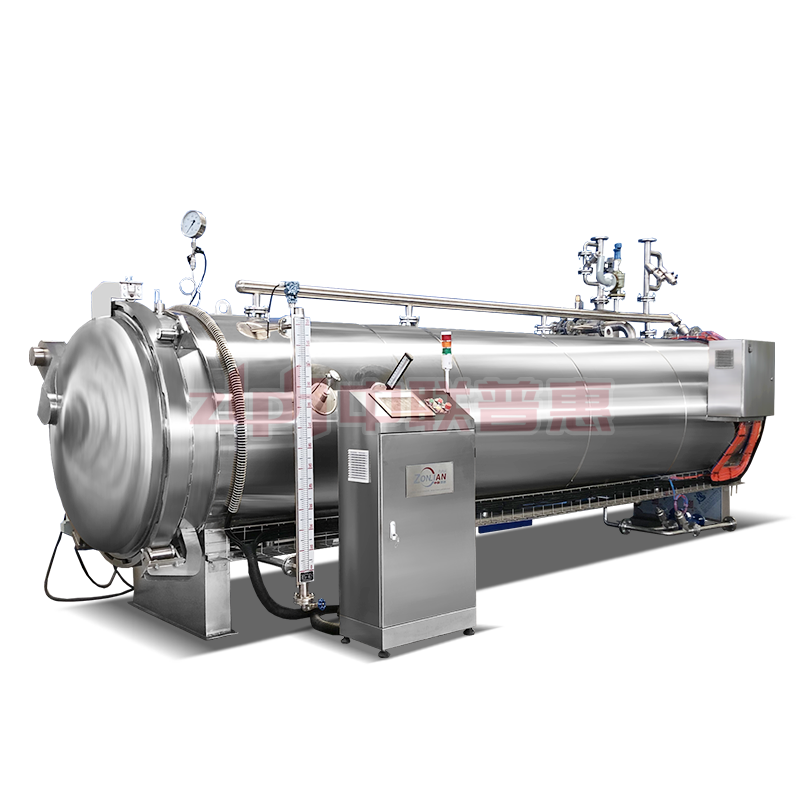
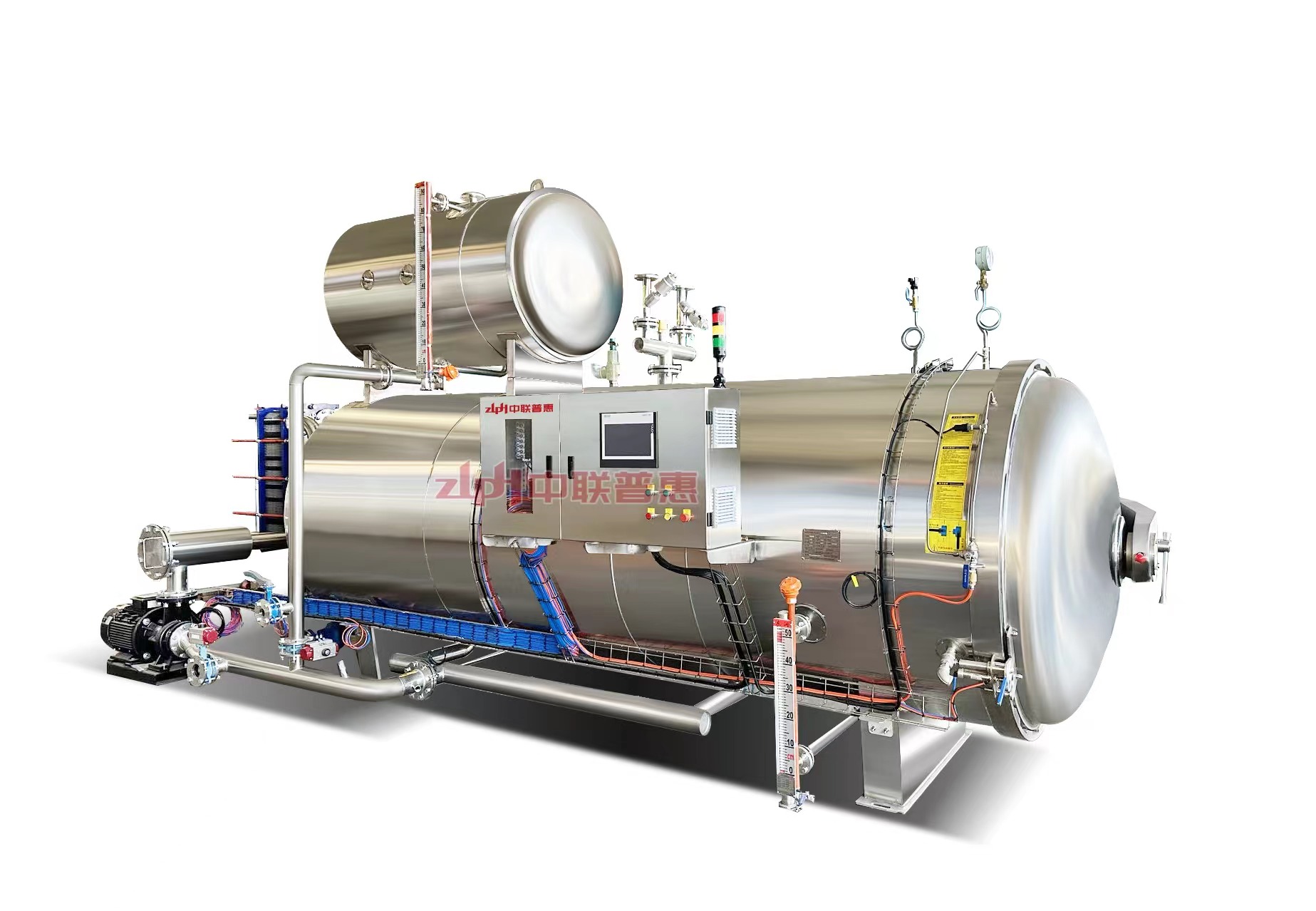
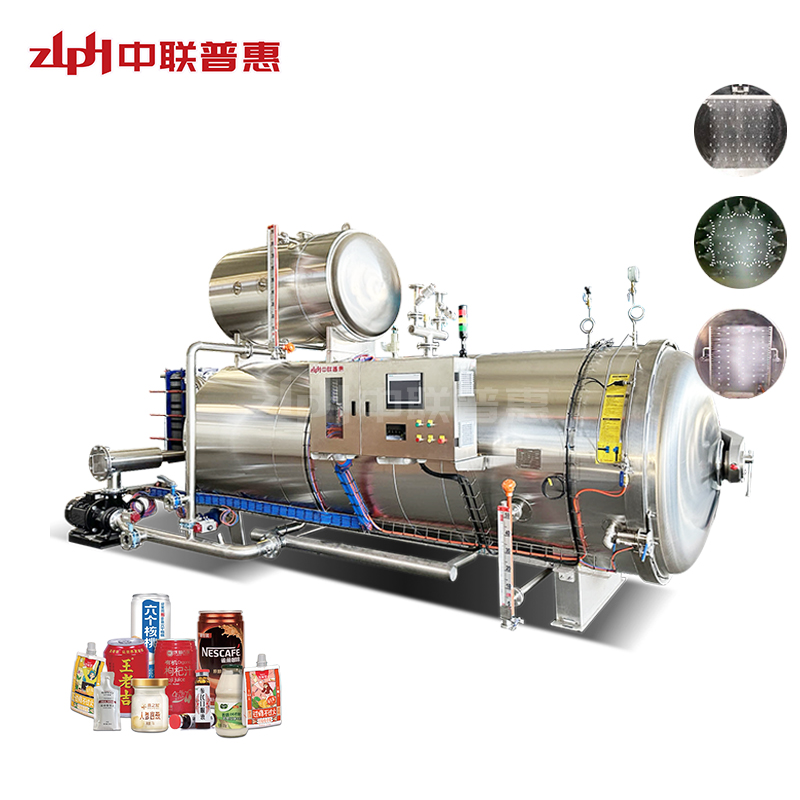
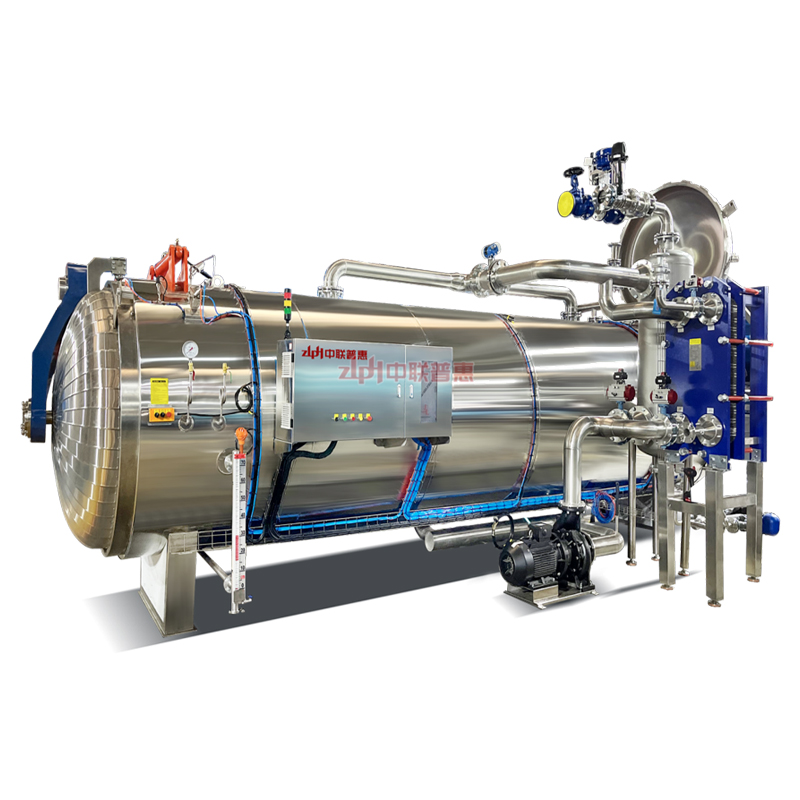
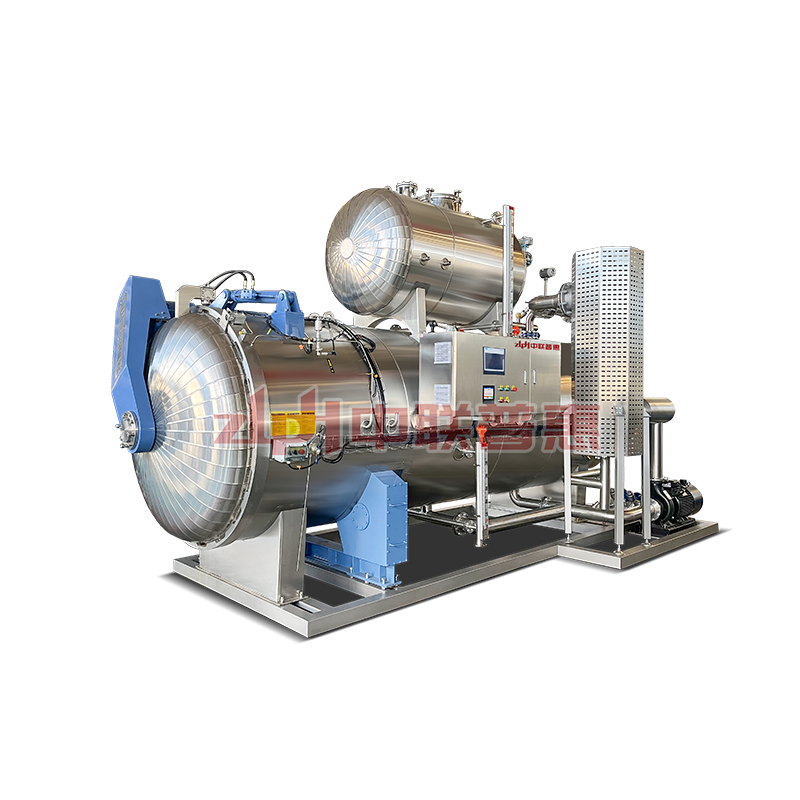
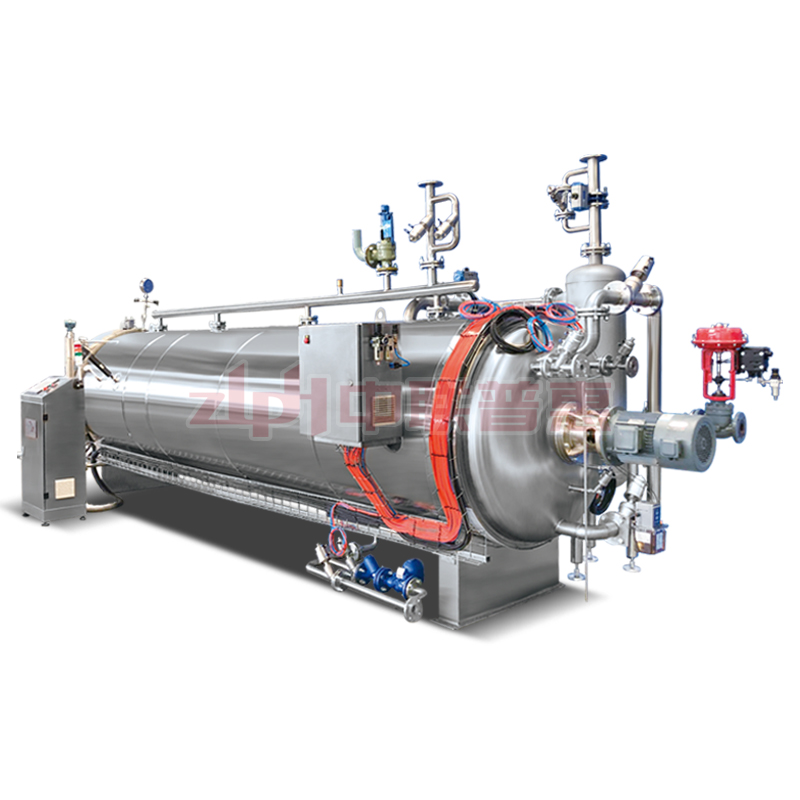
System Upgrade: Deploy ZLPH’s forced-circulation retort autoclaves equipped with dual-directional steam injectors and vacuum-assisted air removal systems, ensuring rapid and homogeneous heat transfer.
Process Optimization: Implement multi-point temperature mapping during validation runs using wireless dataloggers placed at cold spots (e.g., geometric center, bottom layer). Adjust come-up time and venting cycles based on empirical data.

4. Troubleshooting & Prevention Guide
Verify that the retort’s steam inlet and exhaust valves operate synchronously during the come-up phase. Conduct weekly calibration of temperature sensors against NIST-traceable standards. Never exceed 80% of chamber volume capacity to maintain adequate steam flow dynamics.
5. Validation Results
At a Southeast Asian ready-meal producer, replacing a static steam retort with ZLPH’s circulation model reduced F₀ deviation from ±8 minutes to ±1.2 minutes across 1,200 cans per batch. Product shelf life increased by 40%, and energy use dropped by 18% due to shorter cycle times.
How to Validate Sterilization Processes for New Product Formulations?
1. Scenario and Pain Point
When launching a new line of plant-based meat analogs in flexible pouches, R&D teams struggle to establish validated sterilization parameters because traditional methods (e.g., thermal death time calculations) fail to account for variable heat transfer in non-rigid packaging.
2. Root Cause Analysis
Key challenges involve unpredictable pouch deformation during pressurization, inconsistent fill levels affecting thermal mass, and the absence of standardized validation protocols for novel food matrices.
3. Step-by-Step Solution
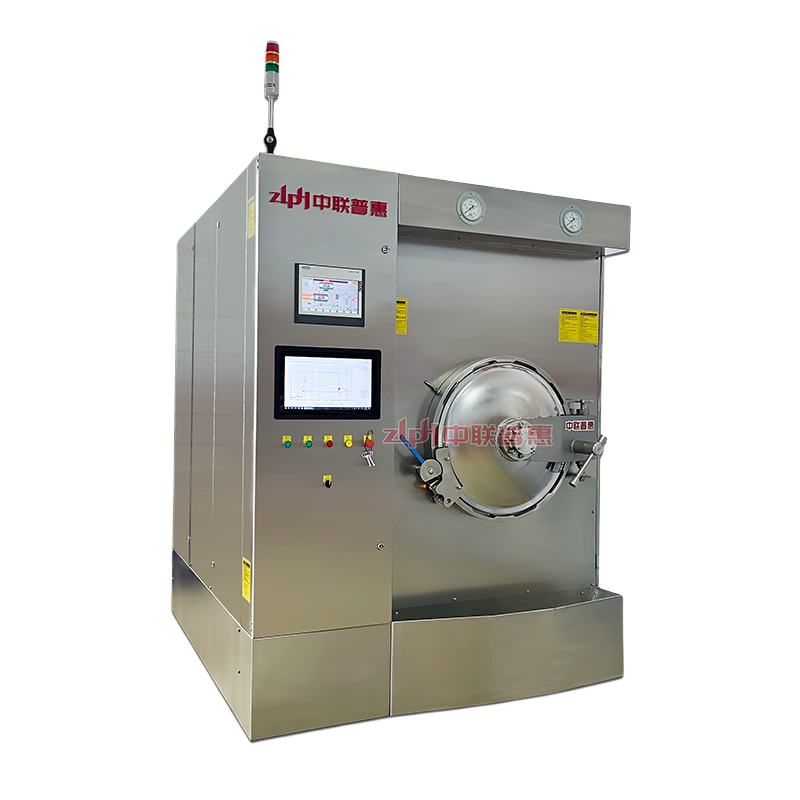
Conduct pilot-scale trials using ZLPH’s lab-scale retort with integrated pressure-temperature profiling. Perform heat penetration studies with thermocouples inserted into actual product units. Apply the Ball Formula adjusted for pouch geometry and product viscosity. Cross-validate results with microbiological challenge tests using Clostridium sporogenes spores.
4. Troubleshooting & Prevention Guide
Always standardize fill weight tolerance to ±2%. Use rigid support frames during sterilization to prevent pouch collapse. Document all validation data in compliance with HACCP and FDA guidelines.
5. Validation Results
A European alternative protein brand achieved full regulatory approval within 6 weeks using this approach, with zero post-launch deviations in commercial production batches.
What to Do When Retort Cycles Exceed Target Time Due to Scale Buildup?
1. Scenario and Pain Point
After six months of continuous operation, a tomato sauce cannery notices a 22% increase in cycle duration, raising energy costs and bottlenecking throughput.
2. Root Cause Analysis
Mineral deposits from hard water accumulate on heat exchanger surfaces and chamber walls, acting as thermal insulators that reduce heat transfer efficiency by up to 35%.
3. Step-by-Step Solution
Install an automated CIP (Clean-in-Place) system with citric acid-based descaling cycles every 72 hours. Retrofit the retort with stainless steel 316L internal components resistant to scaling. Monitor heat transfer coefficients in real time via IoT-enabled sensors.
4. Troubleshooting & Prevention Guide
Test feedwater hardness monthly; if >150 ppm CaCO₃, pre-treat with reverse osmosis. Never skip post-cycle drainage—standing condensate accelerates scale formation.
5. Validation Results
Post-retrofit, the facility restored original cycle times and saved $28,000 annually in energy and maintenance.
Industry Best Practices for Retort Autoclave Reliability
Based on 12+ years of global deployment across 500+ food processing plants, we recommend this 5-step framework to ensure consistent, compliant sterilization:
1. Define Worst-Case Conditions
Validate processes using the slowest-heating product variant under maximum load density.
2. Standardize Loading Protocols
Use color-coded racks and digital checklists to enforce spacing and orientation rules.
3. Implement Predictive Maintenance
Schedule ultrasonic thickness testing of chamber walls annually and replace gaskets after 5,000 cycles.
4. Digitize Process Records
Adopt cloud-based batch reporting with automatic F₀ calculation and audit trails.
5. Partner with Certified Vendors
Choose suppliers with ASME BPVC Section VIII certification and on-site validation support capabilities.
Frequently Asked Questions (FAQ)
Q: Can I use a water-immersion retort for glass jar sterilization?
A: Yes—but only with precise pressure ramp control to prevent implosion. ZLPH’s models feature programmable pressure curves that match thermal expansion rates of glass, reducing breakage by 92%.
Q: What’s the minimum F₀ required for low-acid canned foods?
A: FDA mandates F₀ ≥ 2.52 for Clostridium botulinum destruction, but most commercial operations target F₀ = 3–6 for safety margins.
Q: How often should I recalibrate retort temperature sensors?
A: Every 3 months per ISO 11133, or after any major maintenance event involving the control system.
Q: Are ZLPH retorts compatible with Industry 4.0 integration?
A: All models since 2023 include OPC UA and MQTT protocols for seamless MES/SCADA connectivity.
Q: What certifications do your retorts carry for EU markets?
A: CE marking under Machinery Directive 2006/42/EC, PED 2014/68/EU, and compliance with EN 13445 pressure vessel standards.
About Our Expertise and Support
ZLPH MACHINERY TECHNOLOGY CO., LTD. is a leading global manufacturer of industrial retort autoclaves, with 15 years of specialized experience in thermal food processing. Our 50-acre facility houses a 15,000 m² production workshop equipped with CNC machining centers, robotic welding stations, and full-scale test bays for performance validation. We hold ISO 9001:2015 certification and have delivered over 500 sterilization systems to 40+ countries, serving Fortune 500 food brands and emerging CPG innovators alike. Our engineering team includes former FDA process authorities and thermal modeling specialists who co-develop solutions with clients—from pilot trials to full-scale deployment.
Custom Solution Services Include:
- On-site thermal process assessment and F₀ mapping
- Custom chamber design for non-standard container geometries
- Integration with existing factory automation systems
- Free sample sterilization trials at our demonstration center
Contact Information
Company: ZLPH MACHINERY TECHNOLOGY CO., LTD.
Website: https://www.zlphretort.com/
Email: sales@zlphretort.com
Phone / WhatsApp: +86 15666798389 / +86 13361554016
