
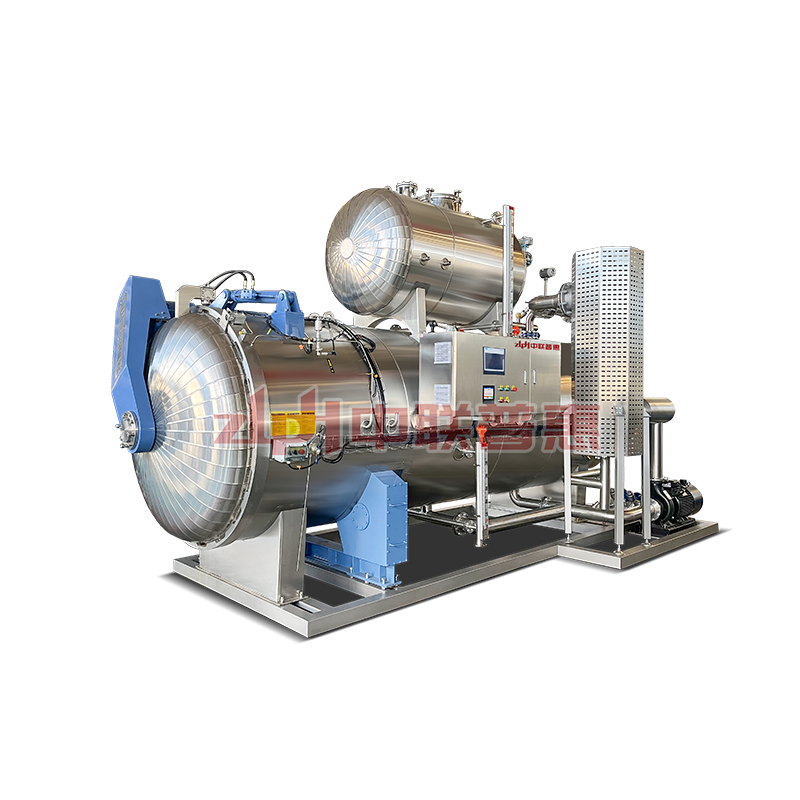
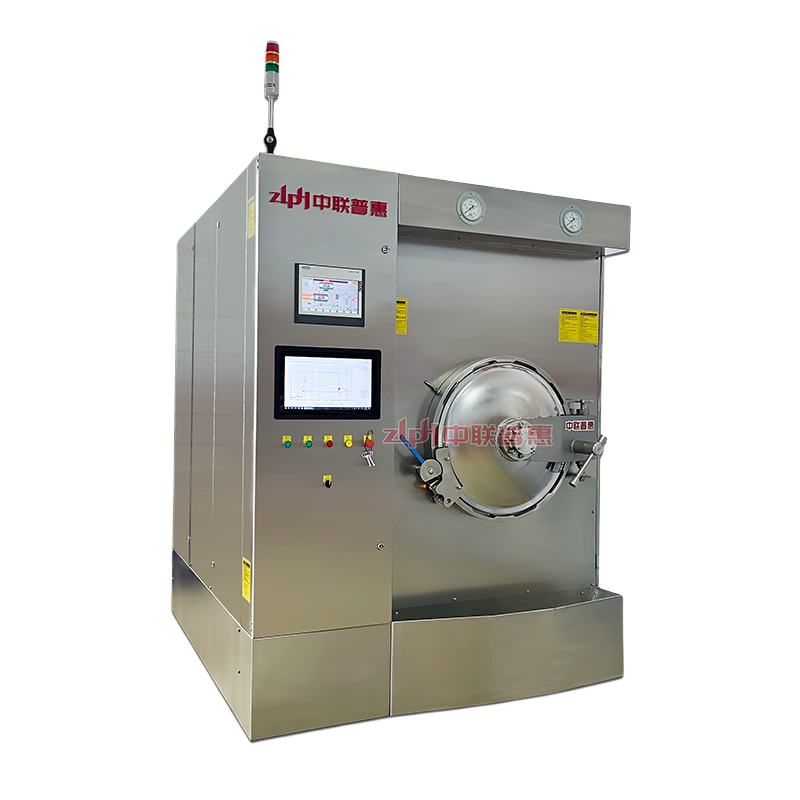
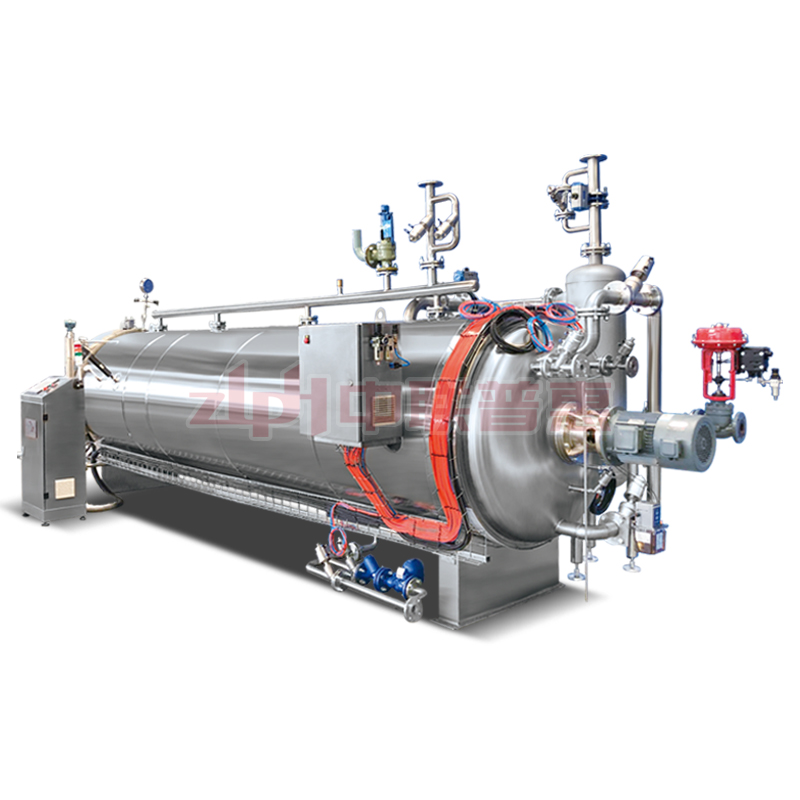
This guide is authored by a senior thermal process engineer with over 12 years of experience at ZLPH MACHINERY TECHNOLOGY CO., LTD., a leading Water Immersion Retort Autoclave Manufacturing Company. It addresses a critical challenge faced by food processing engineers and plant managers worldwide: inconsistent sterilization results caused by uneven heat distribution inside water immersion retorts. This issue often stems from poor circulation design, inadequate temperature control, or suboptimal loading practices. Drawing on more than a decade of field validation and 5,000+ global installations, we present a proven, actionable framework to achieve uniform thermal processing, eliminate cold spots, and ensure consistent product safety and quality. In this guide, we dissect root causes across common production scenarios, deliver step-by-step corrective actions, share real-world validation data, and provide industry best practices to help you optimize retort performance and comply with FDA and ISO standards.

How to Fix Cold Spots in Large-Batch Canned Vegetable Sterilization?
1. Scenario & Pain Point
In high-volume canned vegetable lines (e.g., green beans, corn), operators frequently observe under-processed units in the center or bottom layers after retorting, leading to failed microbial tests and costly batch rejections. Thermal mapping reveals temperature differentials exceeding 3–5°C within the same load, violating FDA’s requirement for uniform lethality.

2. Root Cause Analysis
The primary causes include: (a) insufficient water circulation velocity due to undersized pumps or clogged nozzles; (b) dense or irregular basket stacking that blocks flow paths; and (c) lack of real-time temperature monitoring at multiple points, preventing dynamic adjustment during the cycle.

3. Step-by-Step Solution
Immediate Mitigation: Reorganize basket arrangement with standardized spacing (min. 5 cm between layers) and orient cans vertically to minimize flow resistance. Clean circulation nozzles and verify pump output pressure.
Long-Term Fix: Upgrade to a ZLPH water immersion retort equipped with dual-directional high-flow circulation (≥1.5 m/s velocity) and multi-zone PID temperature control. Install wireless thermal loggers at 9 strategic locations per ANSI/AAMI ST79 guidelines to validate uniformity.
Process Tuning: Implement a pre-heat ramp phase to gradually raise water temperature, reducing thermal shock and improving initial equilibrium.

4. Troubleshooting & Prevention
Conduct quarterly thermal distribution studies using calibrated probes. Avoid overloading beyond 85% chamber capacity. Ensure all baskets are made of perforated stainless steel (not solid trays) to permit full water penetration. Never mix can sizes or fill levels in the same batch.
5. Validation Results
At a major U.S. vegetable processor, deploying these measures reduced internal temperature variance from ±4.2°C to ±0.8°C across 2,000-can batches. Microbial failure rates dropped by 96%, and cycle times were optimized by 12% without compromising safety.
How to Maintain Consistent Sterilization for Glass Jars in High-Altitude Facilities?
1. Scenario & Pain Point
Food plants above 1,500 meters elevation struggle with lower boiling points, causing extended come-up times and inconsistent F₀ values in glass jar products like sauces or baby food. Operators report cracked jars and variable shelf life.
2. Root Cause Analysis
Reduced atmospheric pressure lowers water’s boiling point (e.g., ~95°C at 2,000m), delaying heat penetration. Standard retort programs fail to compensate, leading to under-processing. Additionally, rapid pressure changes during cooling induce thermal stress fractures in glass.
3. Step-by-Step Solution
Use ZLPH’s altitude-adaptive control system that auto-adjusts steam injection and pressure profiles based on real-time barometric input. Implement a two-stage cooling process: first gradual depressurization (≤0.5 psi/min), then controlled water spray cooling to minimize ΔT across the jar wall.
4. Troubleshooting & Prevention
Always validate F₀ using in-jar thermocouples, not just chamber sensors. Pre-warm jars to 40–50°C before loading to reduce thermal gradient. Use reinforced glass with higher thermal shock resistance (e.g., DIN 12111 compliant).
5. Validation Results
A Mexican sauce manufacturer at 2,200m achieved F₀ consistency of 9.8±0.3 (target: 10) after implementation, with zero jar breakage over six months—previously averaging 4.7% loss per batch.
Industry Best Practices for Water Immersion Retort Optimization
Based on 8+ years of global project data, ZLPH recommends this 5-step framework to resolve 90% of thermal uniformity issues:
5-Step Troubleshooting Framework
1. Document Conditions: Record altitude, water hardness, load configuration, and target F₀.
2. Eliminate Obvious Issues: Check nozzle blockage, basket alignment, and pump function.
3. Identify Root Cause: Classify as hydraulic (flow), thermal (control), or procedural (loading).
4. Apply Targeted Fix: Combine hardware upgrade with SOP revision.
5. Verify & Standardize: Run three consecutive validation batches and update work instructions.
Proven Best Practices
- Design for Worst Case: Size circulation systems for maximum product density, not average.
- Standardize Loading: Use barcode-scanned basket templates to enforce uniform stacking.
- Schedule Maintenance: Flush heat exchangers monthly in hard-water regions.
- Partner with Experts: Choose suppliers with in-house thermal process R&D teams and global service networks.
Frequently Asked Questions (FAQ)
Q: Can I use the same retort program for cans and glass jars?
A: No. Glass requires slower heating/cooling ramps to prevent breakage. Always validate separate F₀ protocols for each container type per FDA 21 CFR 113.
Q: How often should I perform thermal mapping?
A: Annually for stable processes, or after any change in product, container, or loading pattern—per ISO 11134 requirements.
Q: Does water hardness affect sterilization uniformity?
A: Yes. Hard water causes scale buildup on heat exchangers, reducing thermal transfer efficiency. Install water softeners if hardness exceeds 150 ppm.
Q: What’s the minimum circulation velocity needed for uniformity?
A: ≥1.2 m/s across the load cross-section, verified by computational fluid dynamics (CFD) modeling during design.
Q: Are ZLPH retorts compliant with EU food safety directives?
A: Yes. All units carry CE marking, comply with Machinery Directive 2006/42/EC, and meet EN 13445 pressure equipment standards.
Q: Can your system handle mixed-product batches?
A: Only with validated worst-case F₀ coverage. We recommend single-product runs for critical applications; our engineers can simulate mixed loads via digital twin technology.
Our Expertise & Support
ZLPH MACHINERY TECHNOLOGY CO., LTD. is a globally recognized Water Immersion Retort Autoclave Manufacturing Company with 8 years of specialized R&D experience since 2018. Our team includes 21 mechanical designers, 4 sterilization process researchers, and 14 after-sales engineers—all with 10+ years in thermal processing. We operate a 15,000 m² smart factory with advanced CNC and welding lines, ensuring precision fabrication of pressure vessels. Our solutions serve 500+ clients across 40+ countries, including Fortune 500 food brands, and are backed by ISO 9001 certification and rigorous third-party validations.
Custom Solution Support Includes:
- On-site thermal process audit and load configuration analysis
- Altitude- or climate-specific retort customization
- Remote commissioning and operator training
- Free sample testing with your actual product and packaging
Contact our technical team for a tailored assessment—we guarantee a response within 24 hours.
Company: ZLPH MACHINERY TECHNOLOGY CO., LTD.
Website: https://www.zlphretort.com/
Email: sales@zlphretort.com
Phone / WhatsApp: +86 15666798389 / +86 13361554016
