

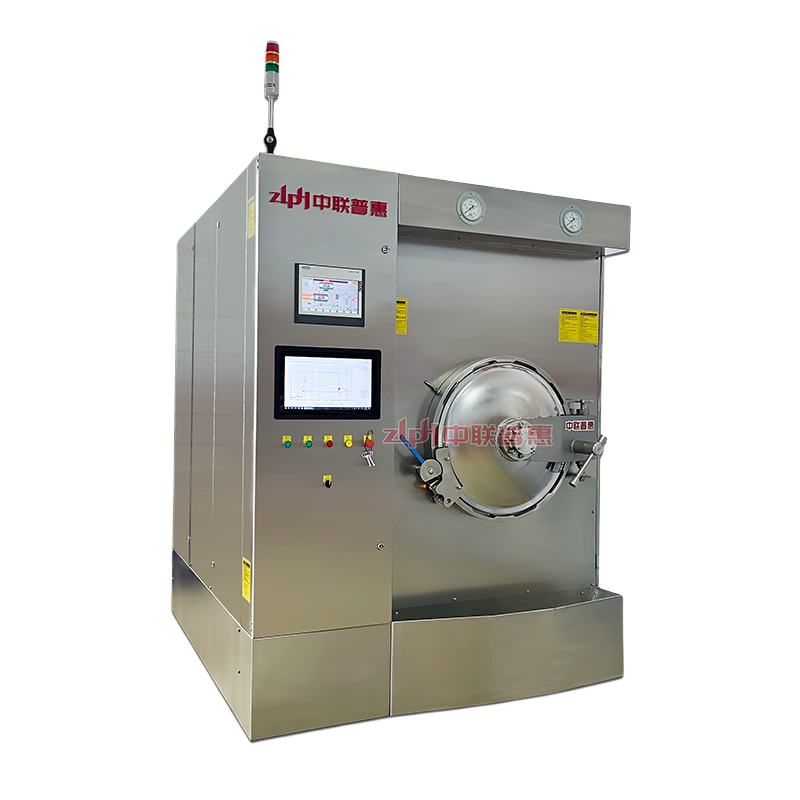
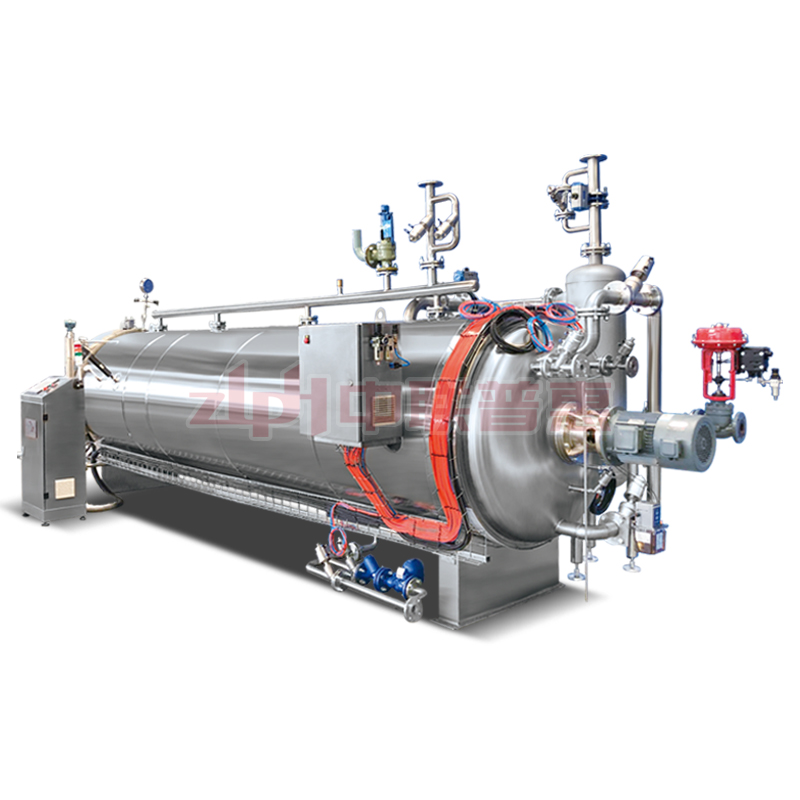
This guide is authored by a senior food processing automation engineer with over 10 years of industry experience from ZLPH MACHINERY TECHNOLOGY CO., LTD., a leading provider of advanced sterilization retort systems. It addresses a critical challenge faced by global food manufacturers and production engineers: inconsistent sterilization results during canned food processing. This issue often stems from uneven heat distribution, inadequate process control, and suboptimal equipment design—factors that compromise product safety, shelf life, and regulatory compliance. Drawing on more than 5,000 global client deployments and extensive R&D validation, we present a proven, actionable framework to eliminate sterilization variability, ensure microbial safety, and enhance operational efficiency. In this guide, we dissect root causes across key production scenarios, deliver tailored step-by-step remedies, share real-world validation data, and outline industry best practices to help you achieve consistent, compliant, and scalable sterilization outcomes.

How to Ensure Uniform Heat Distribution During Water Spray Sterilization of Canned Foods?
1. Scenario & Pain Point
In high-volume canning lines for vegetables, meats, or ready-to-eat meals, operators frequently observe inconsistent sterilization efficacy—some cans pass microbial tests while others fail, despite identical time-temperature settings. This inconsistency leads to product recalls, wasted batches, and compliance risks under FDA or EU food safety regulations.

2. Root Cause Analysis
The primary causes include: (a) non-uniform spray nozzle layout causing cold spots; (b) inadequate circulation of sterilization water due to poor pump design; (c) lack of real-time temperature monitoring at multiple points inside the retort chamber, resulting in unverified thermal profiles.

3. Step-by-Step Solution
Immediate Adjustment: Calibrate spray nozzles to ensure 360° coverage and verify water pressure consistency across all zones.
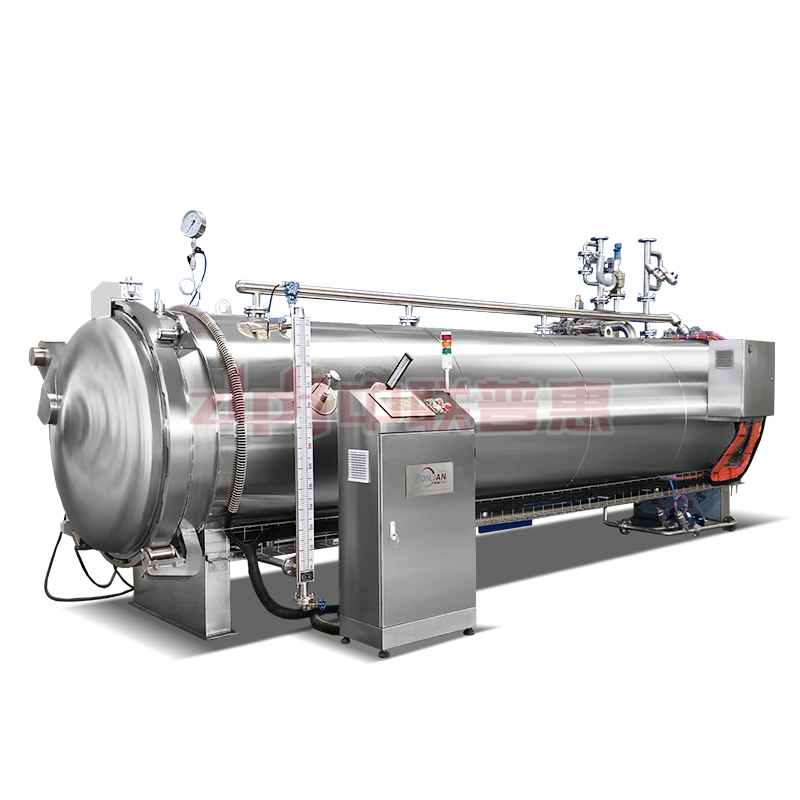
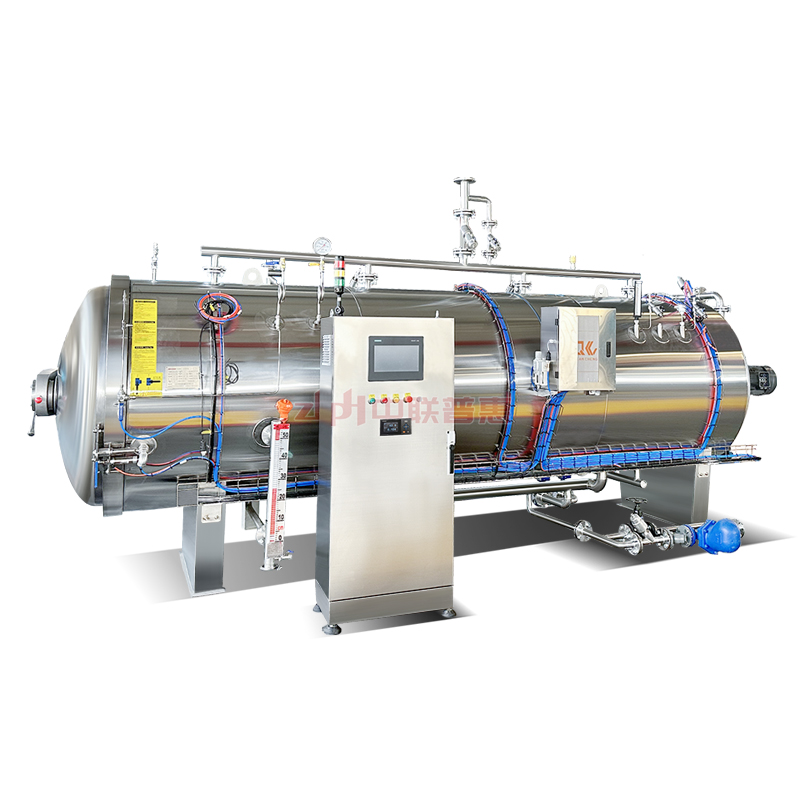
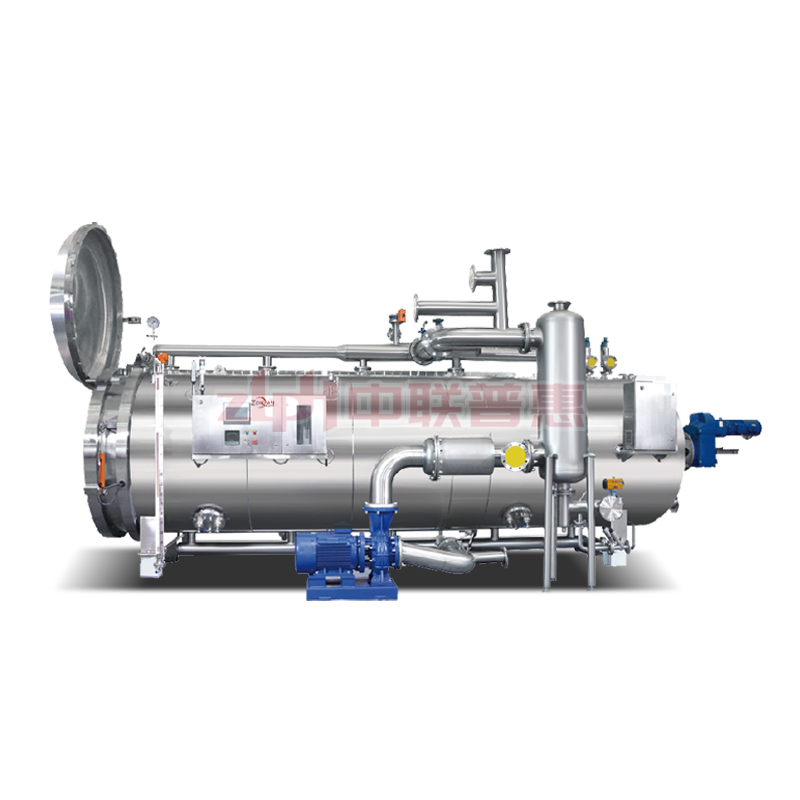
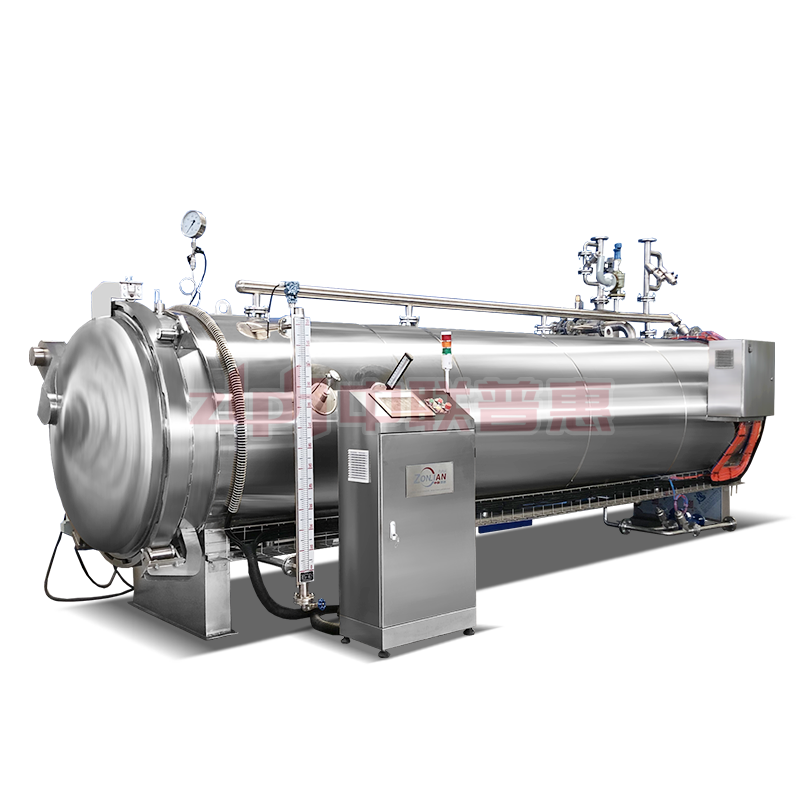
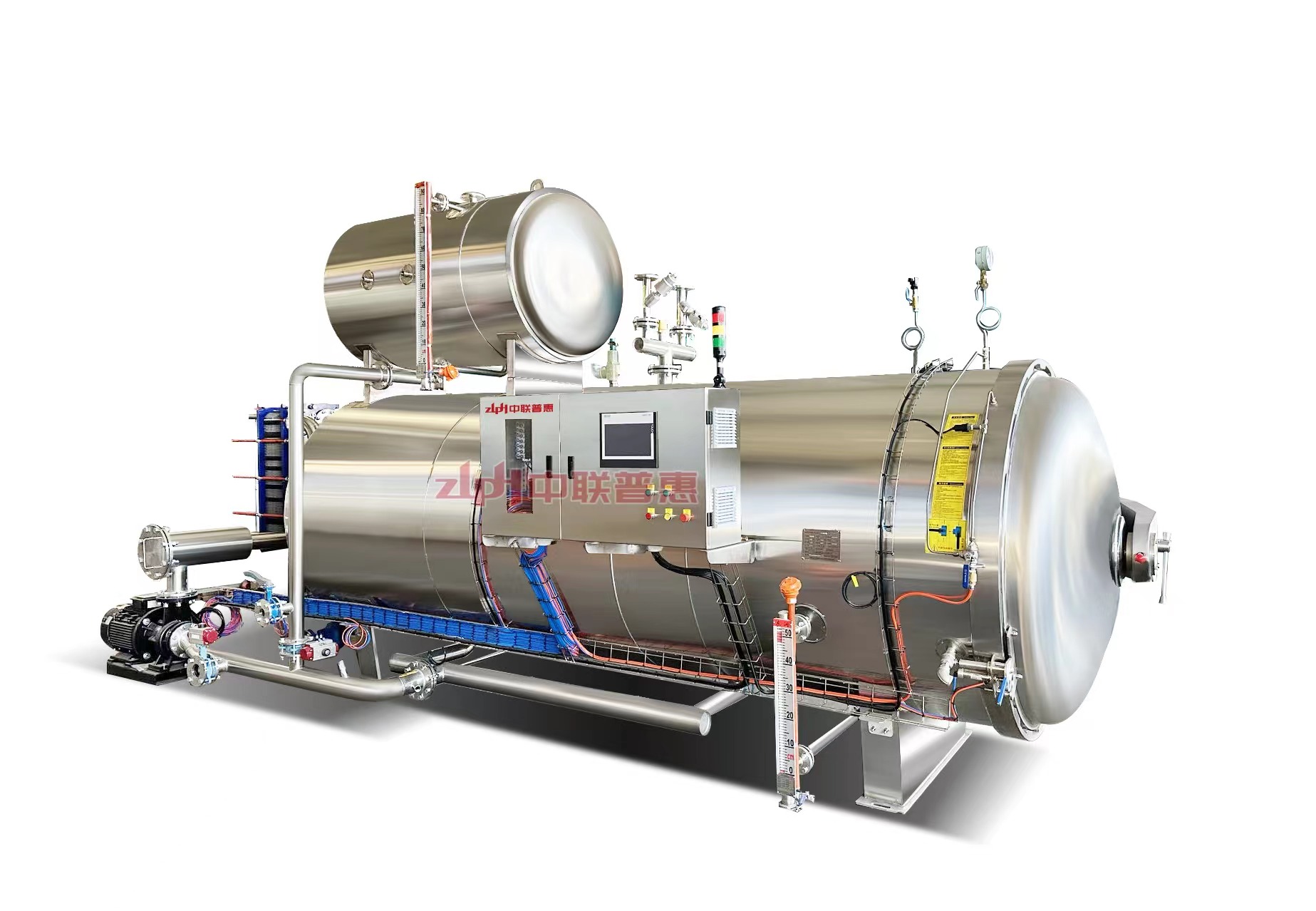
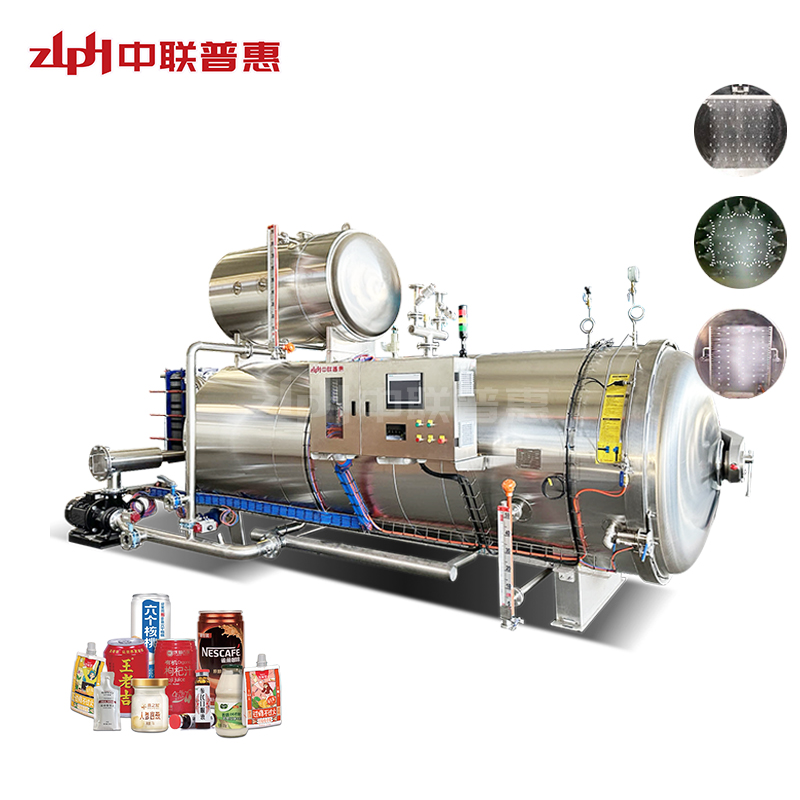
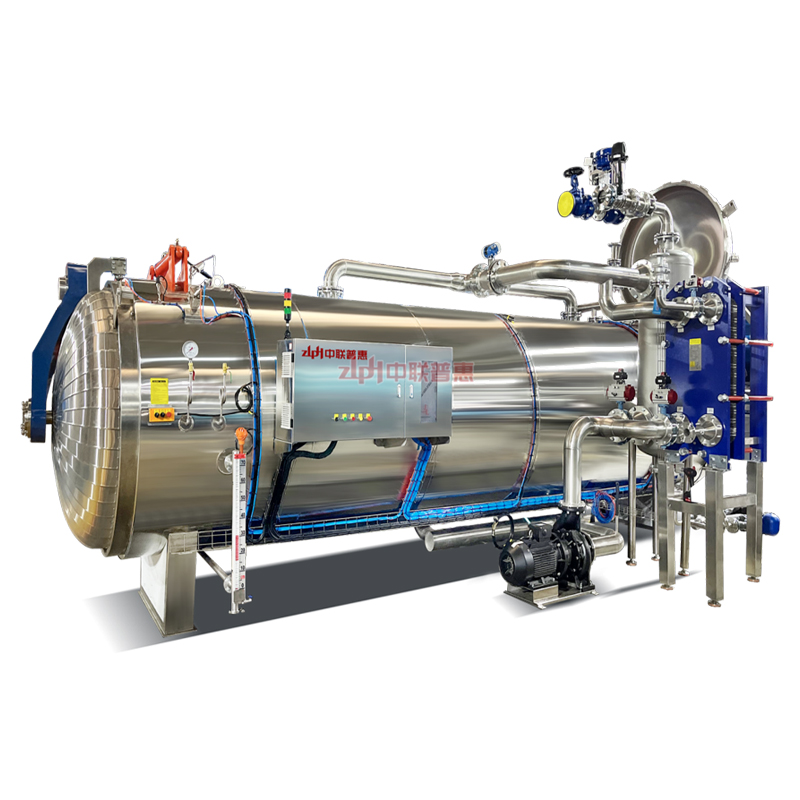
Long-Term Fix: Deploy an intelligent top-opening water spray sterilization retort equipped with multi-zone temperature sensors and a closed-loop control system that dynamically adjusts spray intensity based on real-time thermal feedback.
Process Optimization: Implement a validated F₀ (thermal lethality) calculation protocol tied to actual in-chamber temperature logs, not just setpoints.

4. Troubleshooting & Prevention Guide
Conduct thermal mapping studies using data loggers placed in dummy cans across rack positions. Replace standard retorts lacking distributed sensing. Avoid single-point temperature control systems, which cannot detect localized under-processing.
5. Real-World Validation
At a European vegetable processor using ZLPH’s intelligent water spray retort, thermal uniformity improved from ±4.2°C to ±0.8°C across 120-can batches. Post-implementation, zero microbial failures were recorded over 18 months, and energy consumption dropped by 15% due to optimized cycle times.
How to Prevent Door Seal Failures and Pressure Leaks in Steam Retort Autoclaves?
1. Scenario & Pain Point
During high-pressure steam sterilization cycles (e.g., 121°C at 2.2 bar), sudden pressure drops or steam leaks around the door compromise sterilization integrity and pose safety hazards. Maintenance teams report frequent gasket replacements and unplanned downtime.
2. Root Cause Analysis
Key factors: (a) manual door clamping mechanisms causing uneven seal compression; (b) use of low-grade elastomer gaskets degrading under repeated thermal cycling; (c) absence of automated door alignment systems leading to missealing.
3. Step-by-Step Solution
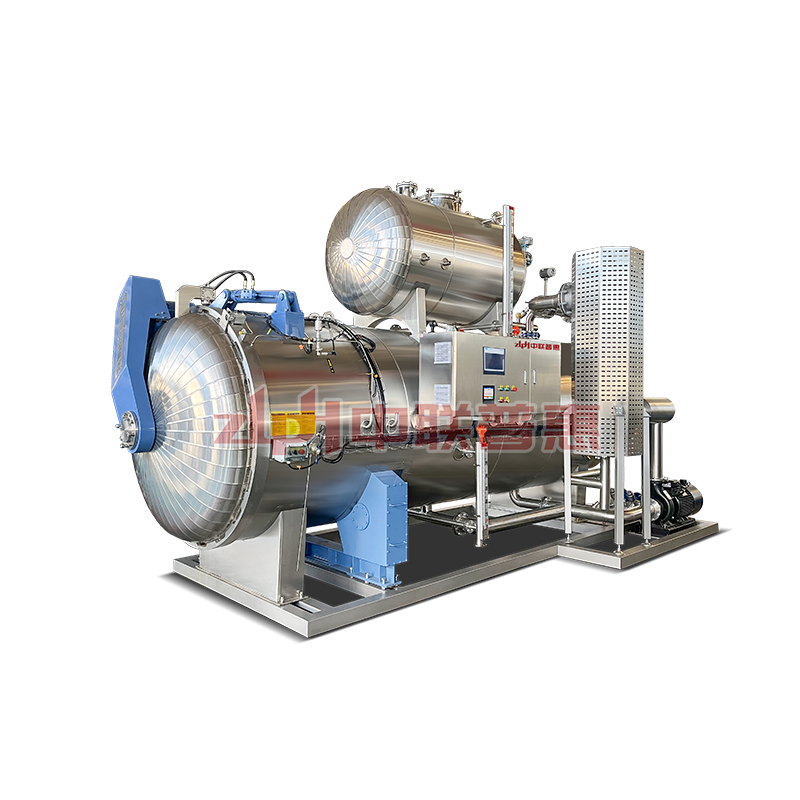
Upgrade to an upper-door design with hydraulic-assisted automatic locking, ensuring uniform gasket compression. Use FDA-compliant EPDM gaskets rated for 150°C continuous operation. Integrate a pressure decay test function that validates seal integrity before each cycle begins.
4. Troubleshooting & Prevention Guide
Inspect gasket grooves for debris before each batch. Never reuse gaskets beyond 500 cycles. Install door position sensors to prevent cycle initiation if misalignment is detected.
5. Real-World Validation
A Southeast Asian tuna canner reduced door-related downtime by 92% after switching to ZLPH’s top-opening autoclave. Seal lifespan increased from 3 months to over 14 months, with zero pressure leak incidents in 12 consecutive audits.
Industry Best Practices for Reliable Sterilization Retort Operation
Based on 6+ years of global project deployment and 500+ installations, ZLPH recommends this 5-step framework to ensure consistent sterilization performance:
1. Define Worst-Case Conditions
Design your sterilization protocol for the most thermally resistant product configuration (e.g., largest can size, densest fill), not average conditions.
2. Validate Thermal Uniformity
Perform annual thermal mapping using NIST-traceable data loggers in accordance with EN 13408 or FDA 21 CFR Part 113 guidelines.
3. Automate Process Control
Replace manual timers and analog gauges with PLC-based systems featuring real-time F₀ calculation, audit trails, and remote monitoring.
4. Standardize Maintenance
Implement a preventive maintenance schedule including gasket inspection, nozzle cleaning, and safety valve testing every 30 operating days.
5. Partner with Expert Suppliers
Choose vendors with in-house sterilization process engineers—not just equipment assemblers—to co-develop validated protocols.
Frequently Asked Questions (FAQ)
Q: Can a standard steam autoclave handle both glass jars and metal cans?
A: Only if it features adjustable rack systems and independent pressure ramping controls. ZLPH’s retorts support mixed-load configurations with programmable profiles for fragile containers.
Q: What certifications are required for retorts sold in the EU?
A: CE marking under Machinery Directive 2006/42/EC, PED 2014/68/EU for pressure equipment, and compliance with EN 13408 for thermal processing systems.
Q: How often should spray nozzles be cleaned?
A: Every 50 cycles or weekly—whichever comes first—to prevent mineral buildup that disrupts spray patterns. Use descaling agents compatible with stainless steel 316L.
Q: Is water spray sterilization suitable for low-acid foods?
A: Yes, when combined with precise F₀ control. ZLPH systems achieve F₀ ≥ 3.0 consistently, meeting FDA requirements for low-acid canned foods (LACF).
Q: Can I retrofit an old retort with smart controls?
A: Partially—but full thermal uniformity requires integrated hardware redesign. We recommend full-system upgrades for critical applications.
About Our Expertise & Support
ZLPH MACHINERY TECHNOLOGY CO., LTD. is a globally recognized manufacturer of sterilization retort systems, established in 2018 with a core focus on R&D-driven innovation. Our team includes 21 mechanical designers, 4 sterilization process specialists with decade-long expertise, and 14 after-sales engineers supporting clients across 30+ countries. We operate a 15,000 m² ISO-certified manufacturing facility equipped with precision CNC and welding stations to ensure retort chamber integrity and longevity. Our intelligent water spray sterilization retorts have been validated in diverse applications—from baby food to pet food—and showcased at international exhibitions including AGROPRODASH 2023 in Moscow and the Qingdao Food Tech Expo, earning acclaim for reliability and technological advancement.
We offer end-to-end custom support:
• On-site thermal process validation
• Retort tray loader/unloader automation integration
• Free sample testing with your product matrix
• 24/7 technical response for critical issues
Contact Information
Company: ZLPH MACHINERY TECHNOLOGY CO., LTD.
Website: https://www.zlphretort.com/
Email: sales@zlphretort.com
Phone / WhatsApp: +86 15666798389 / +86 13361554016
