
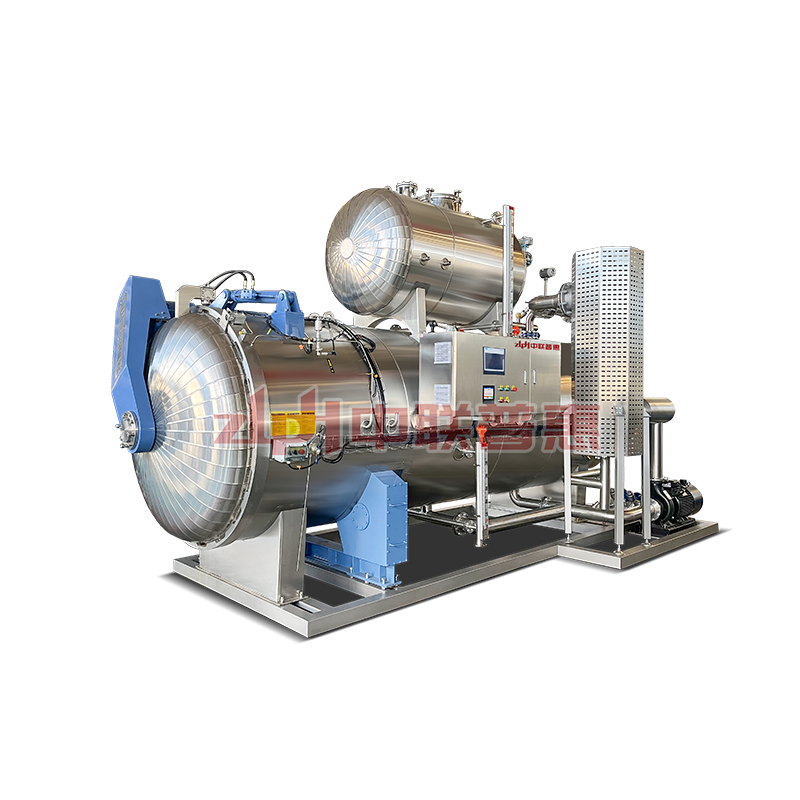
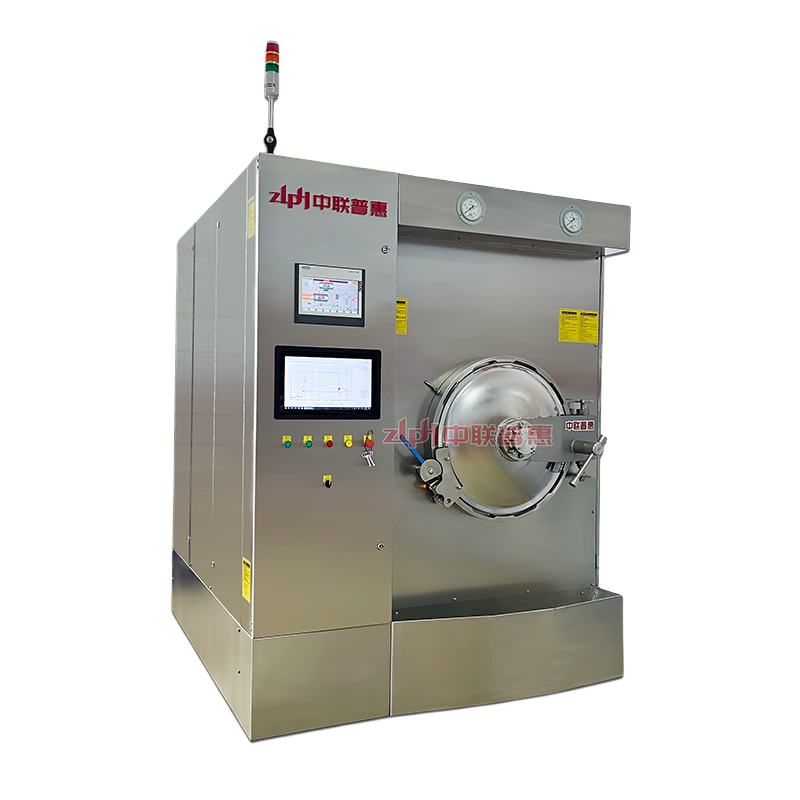
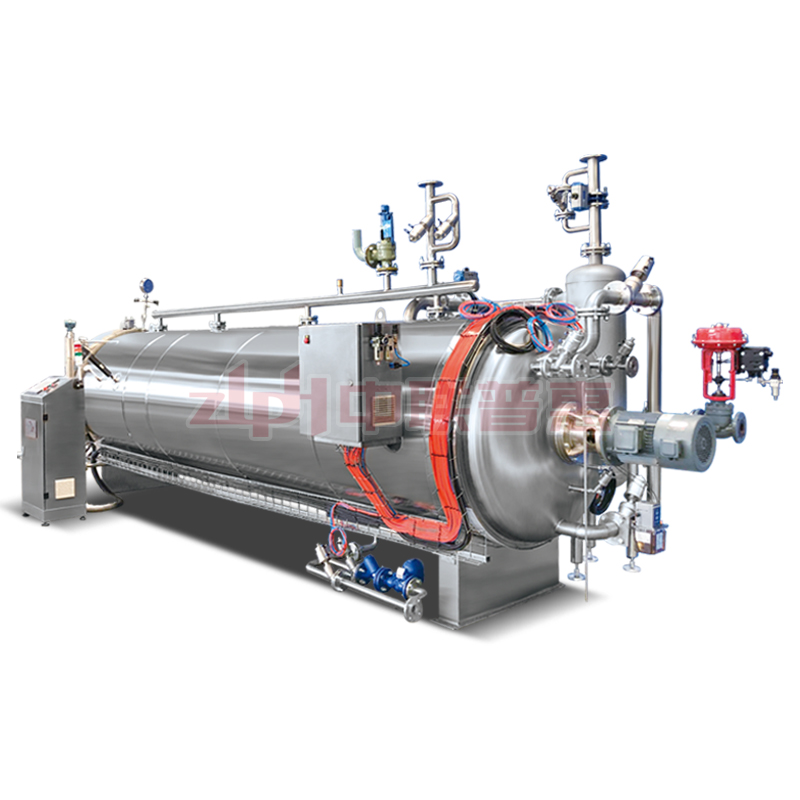
This guide is authored by a senior food processing automation engineer with over 10 years of industry experience from ZLPH MACHINERY TECHNOLOGY CO., LTD., a leading provider of advanced sterilization solutions. It addresses a critical challenge faced by food manufacturers globally: inefficient batch sterilization that compromises product safety, throughput, and operational consistency. Inconsistent temperature distribution, manual loading bottlenecks, and outdated control systems are the primary culprits behind prolonged cycle times and uneven sterilization outcomes. Drawing on more than 5,000 global installations and extensive R&D validation, we present a proven, step-by-step methodology to eliminate these inefficiencies—ensuring uniform microbial kill, maximizing line uptime, and meeting stringent food safety standards. This guide breaks down root causes by real-world scenario, delivers actionable fixes, shares field-tested best practices, and validates results through actual production data—all tailored for food engineers and plant managers seeking reliable, scalable sterilization performance.

How to Achieve Uniform Sterilization in High-Viscosity Canned Foods Like Soups and Sauces?
1. Scenario & Pain Point
In facilities producing viscous products such as meat stews or creamy sauces, traditional horizontal retorts often yield inconsistent lethality—cold spots in the can center lead to under-processing (safety risk) or over-processing at edges (texture degradation). Operators report cycle times exceeding 90 minutes with frequent rework due to failed thermal validation.

2. Root Cause Analysis
The core issues stem from poor heat transfer dynamics: (1) conduction-dominated heating in thick products creates steep thermal gradients; (2) static water immersion fails to circulate process fluid effectively around dense loads; (3) lack of real-time temperature monitoring per basket prevents adaptive control.

3. Step-by-Step Solution
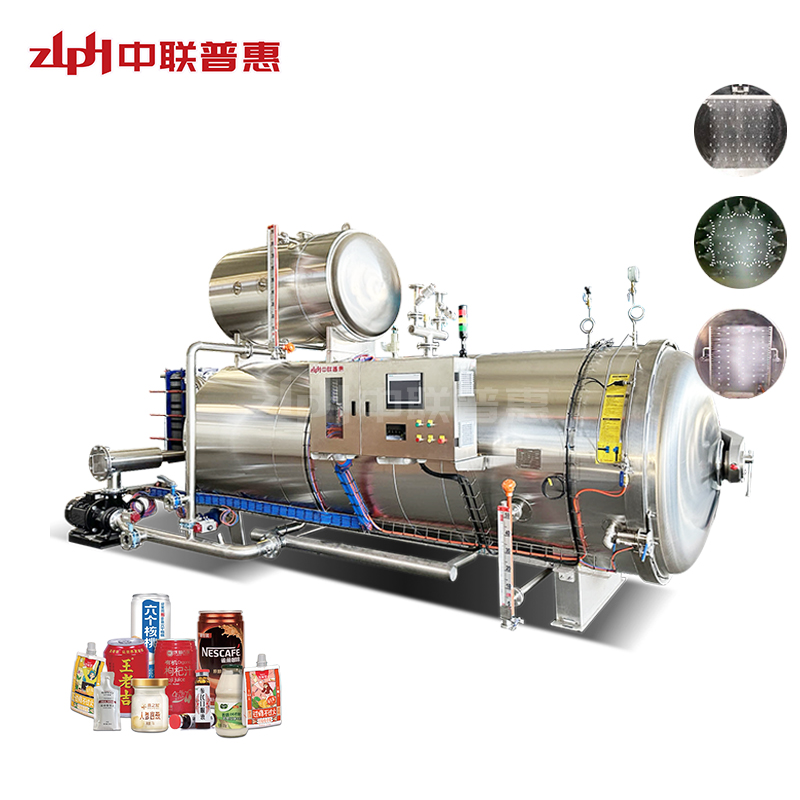
Immediate Fix: Implement forced convection via high-pressure water spray nozzles positioned for 360° coverage, ensuring turbulent flow around every container. Optimize basket spacing to avoid shadow zones.
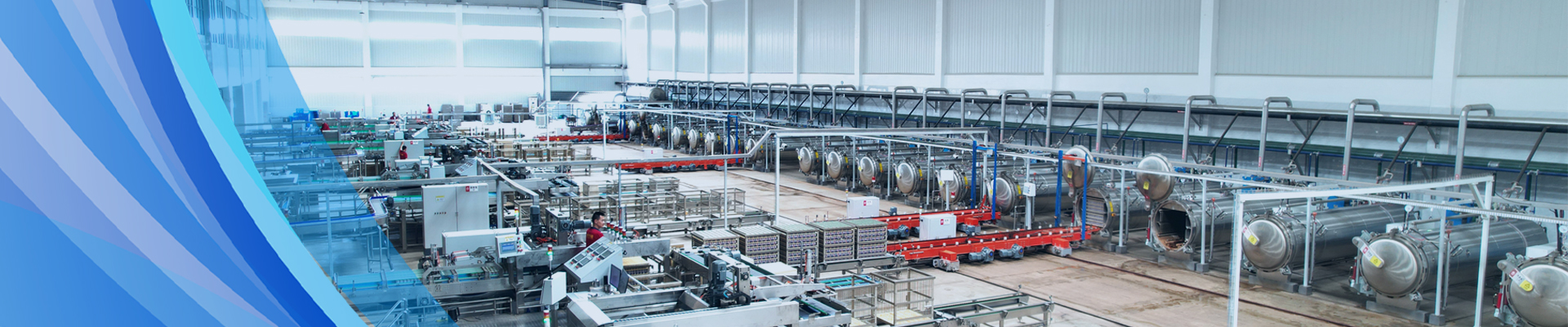
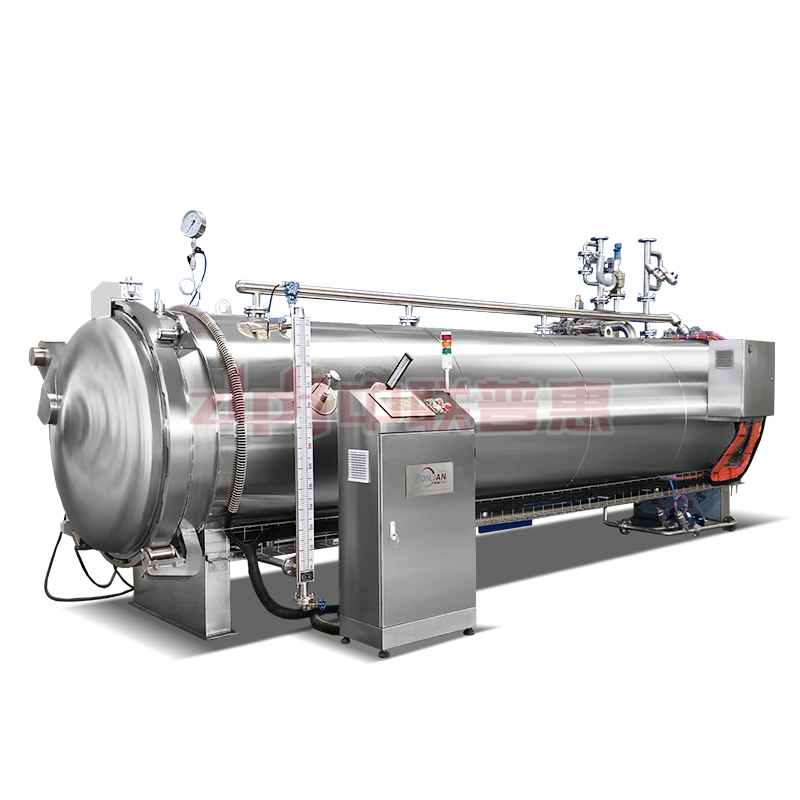
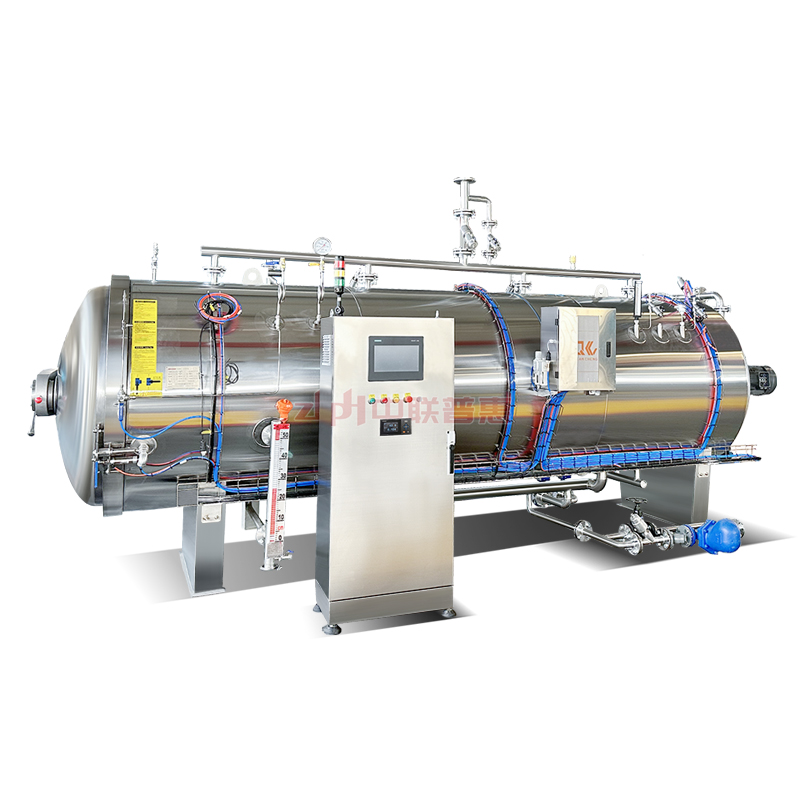
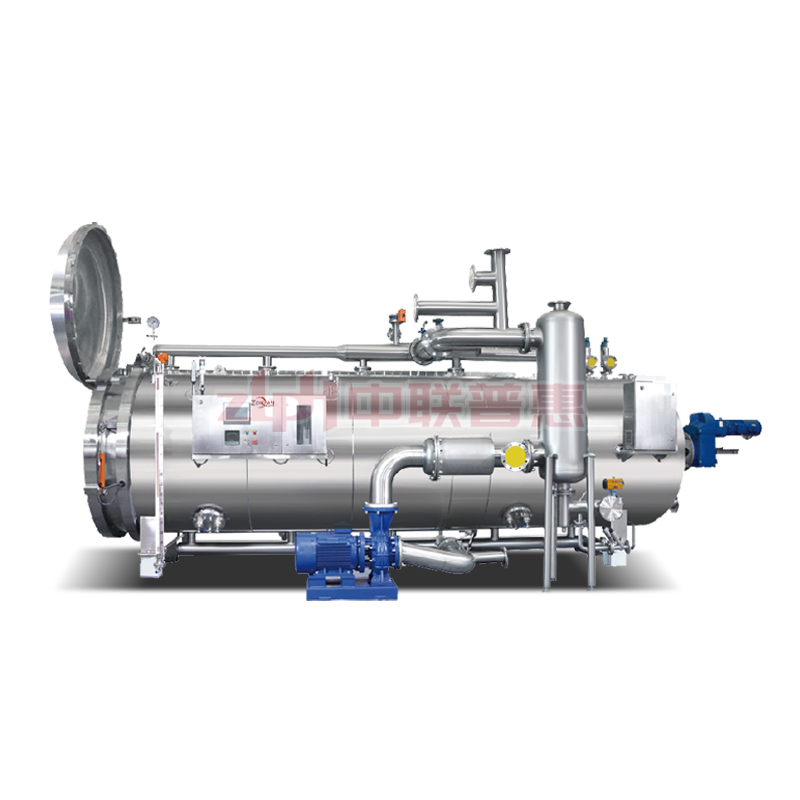
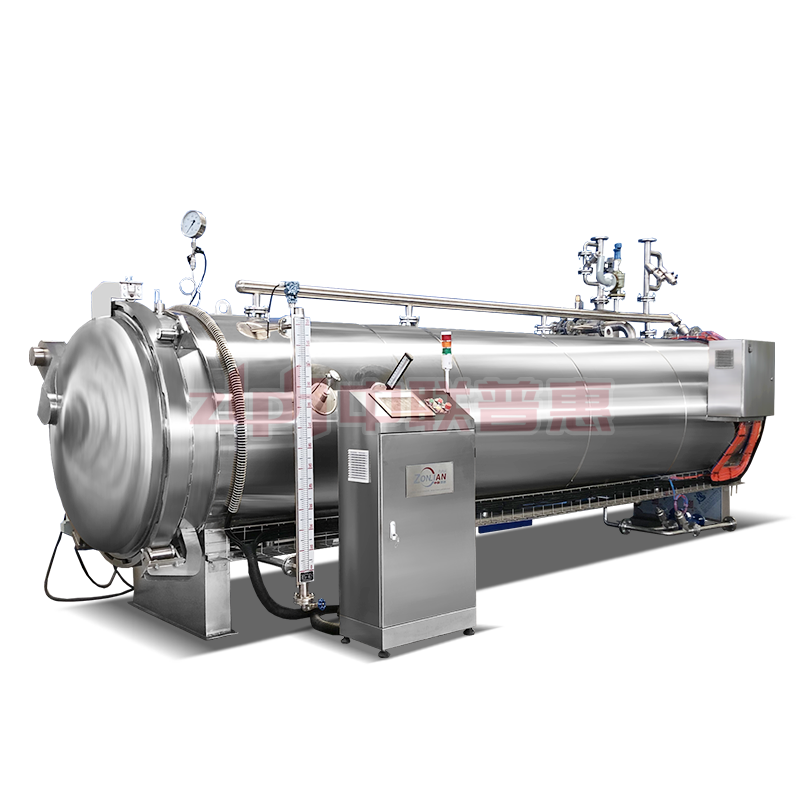
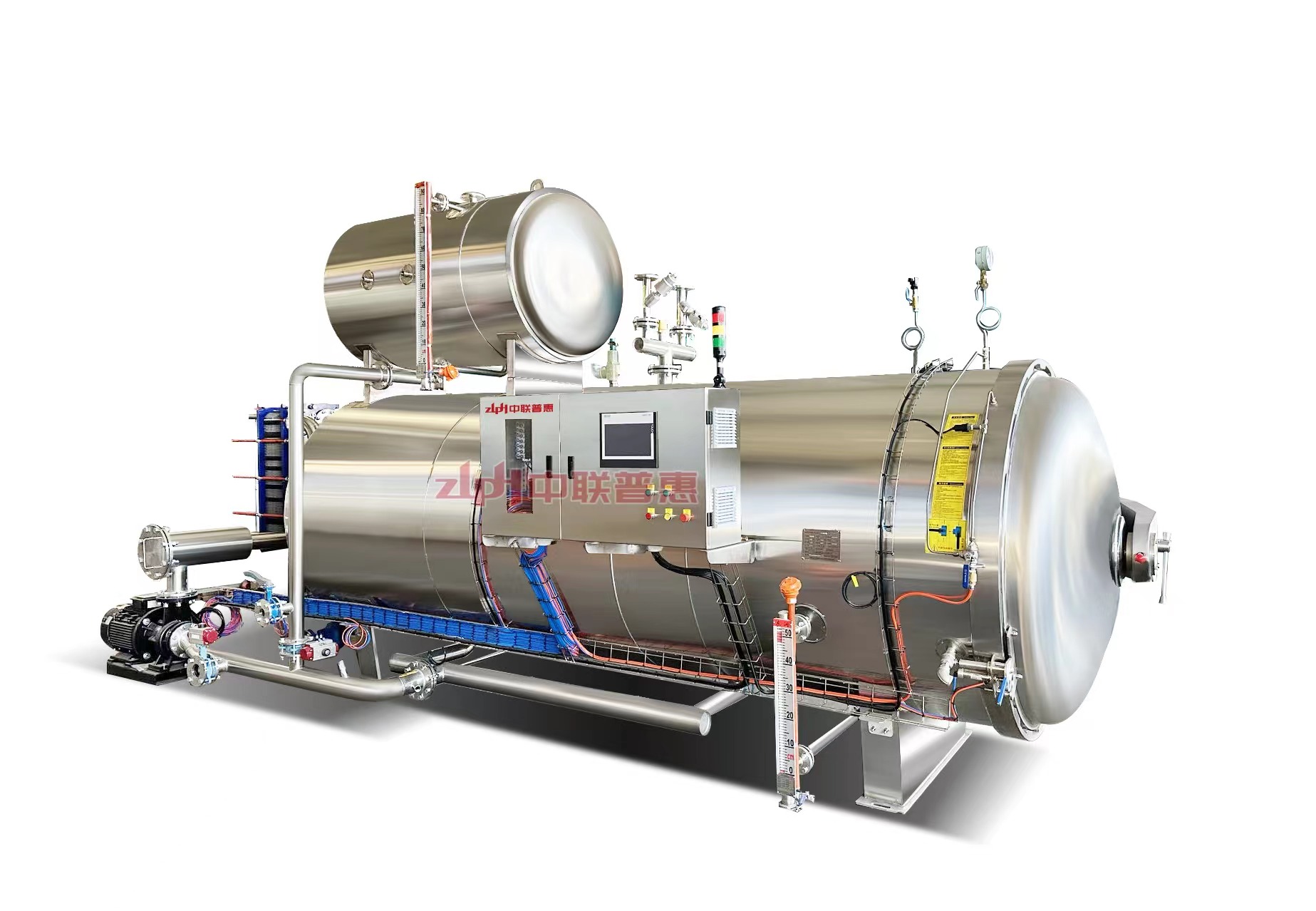
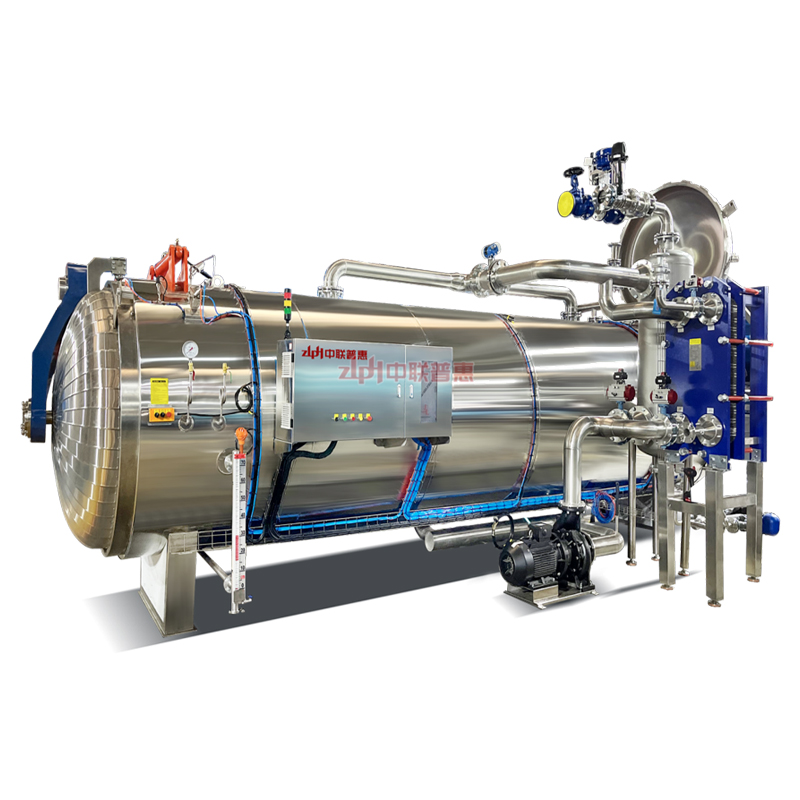
Long-Term Strategy: Deploy ZLPH’s intelligent top-opening water spray sterilization retort equipped with multi-zone spray manifolds and PID-controlled recirculation pumps. Integrate wireless temperature dataloggers per load tier for F₀ mapping.
Parameter Tuning: Use ramp-soak-cool profiles with dynamic pressure compensation to prevent container deformation while accelerating heat penetration.

4. Troubleshooting & Pitfalls to Avoid
Validate nozzle alignment quarterly—misaligned sprays cause ±8°C variance across baskets. Never use flat-bottom trays that block under-can flow. Always calibrate pressure transducers before seasonal shifts to maintain steam-water balance.
5. Verified Results
At a European ready-meal producer, this approach reduced cycle time by 32% (from 88 to 60 minutes) while achieving ±0.5°C thermal uniformity across 1,200 cans/batch. Post-implementation, shelf-life compliance rose to 99.98% with zero recalls over 18 months.
How to Eliminate Manual Loading Bottlenecks in High-Volume Retort Lines?
1. Scenario & Pain Point
Manual tray handling in busy canneries creates 15–20 minute delays per batch during loading/unloading. Workers struggle with heavy racks, causing ergonomic injuries and inconsistent basket placement that disrupts thermal uniformity.
2. Root Cause Analysis
Reliance on human labor for repetitive heavy lifting; absence of synchronized material handling; non-standardized tray dimensions complicate automation integration.
3. Step-by-Step Solution
Short-Term: Standardize tray dimensions to ISO pallet specs and implement roller conveyor staging.
Permanent Fix: Install ZLPH’s automated retort tray loader/unloader system featuring servo-driven grippers, vision-guided alignment, and seamless PLC integration with upstream fillers. Cycle time drops to <5 minutes per load.
Integration Protocol: Synchronize retort door actuation with AGV dispatch signals to enable lights-out operation.
4. Troubleshooting & Pitfalls to Avoid
Ensure floor leveling tolerance ≤±2mm/m²—uneven surfaces jam transfer carts. Conduct weekly gripper torque calibration to prevent tray slippage. Never bypass safety interlocks during maintenance.
5. Verified Results
A Qingdao-based seafood exporter increased daily output by 40% after deploying this system, reducing labor costs by $18,000/month while cutting product damage rates by 92%.
Industry Best Practices for Reliable Retort Operations
Based on 6+ years of global project execution, ZLPH recommends this 5-step framework for robust sterilization performance:
5-Step Reliability Framework
1. Map Thermal Profiles: Conduct heat distribution studies for every new SKU using calibrated probes.
2. Automate Material Flow: Eliminate manual handling between filler, retort, and cooler.
3. Implement Predictive Maintenance: Monitor pump vibration, seal wear, and control valve response weekly.
4. Standardize SOPs: Document loading patterns, cycle parameters, and emergency protocols per product type.
5. Validate Continuously: Perform monthly F₀ audits with third-party labs.
Proven Selection Principles
- Size retorts for peak seasonal demand +20% buffer
- Require CE/PED 2014/68/EU certification for EU exports
- Insist on ≥IP65-rated controls for washdown environments
- Partner with suppliers offering 24/7 remote diagnostics
Frequently Asked Questions (FAQ)
Q: Can standard horizontal retorts process glass jars safely?
A: Only with precise pressure ramping control. ZLPH retorts feature dual-pressure regulation (steam + compressed air) to prevent jar breakage during cooling—validated for 500ml glass containers.
Q: What’s the minimum batch size for economic operation?
A: Our compact models handle 8–12 trays efficiently. Below that, consider continuous hydrostatic systems.
Q: How often should gaskets be replaced?
A: Every 1,500 cycles or 6 months—whichever comes first. We provide RFID-tracked gaskets with usage alerts.
Q: Do your systems comply with FDA 21 CFR Part 113?
A: Yes, all units include electronic batch records, audit trails, and role-based access controls certified to FDA/EC standards.
Q: Can you retrofit old retorts with automation?
A: Our modular loader/unloader interfaces with most legacy horizontal retorts via standardized mechanical couplings.
Our Technical Authority & Support
ZLPH MACHINERY TECHNOLOGY CO., LTD. has delivered advanced sterilization systems since 2018, backed by a 45-member engineering team including 21 mechanical designers, 4 sterilization process experts, and 14 field service engineers with decade-long industry experience. Our 50-acre manufacturing facility houses precision CNC workshops and a 15,000m² assembly bay equipped with laser alignment systems and pressure test rigs. With CE, PED, and ISO 9001 certifications, our solutions operate in 30+ countries—from Russian dairy plants to Southeast Asian tuna canneries.
Custom Engineering Services Include:
- On-site thermal process validation
- Corrosion-resistant material upgrades (for acidic products)
- Integration with ERP/MES systems
- Free pilot testing at our Qingdao demo center
Contact Information
Company: ZLPH MACHINERY TECHNOLOGY CO., LTD.
Website: https://www.zlphretort.com/
Email: sales@zlphretort.com
Phone / WhatsApp: +86 15666798389 / +86 13361554016
