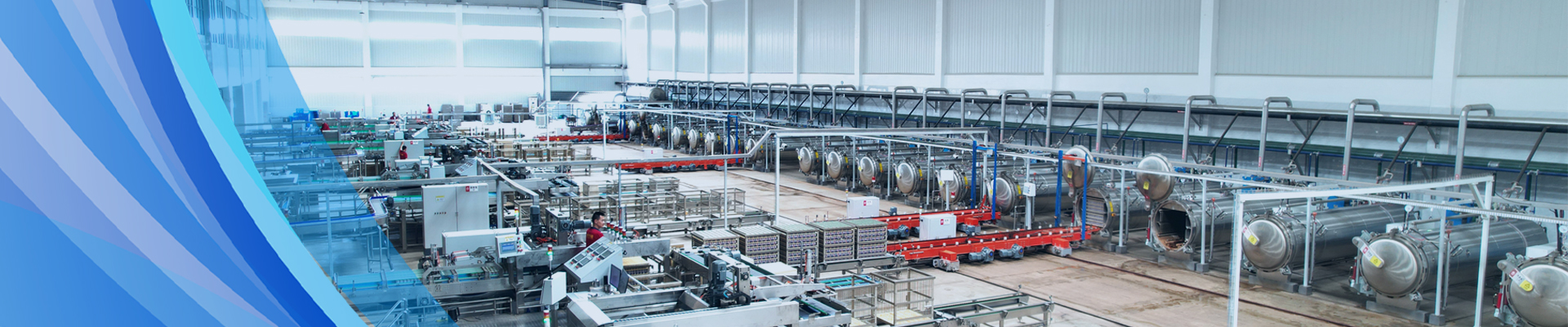

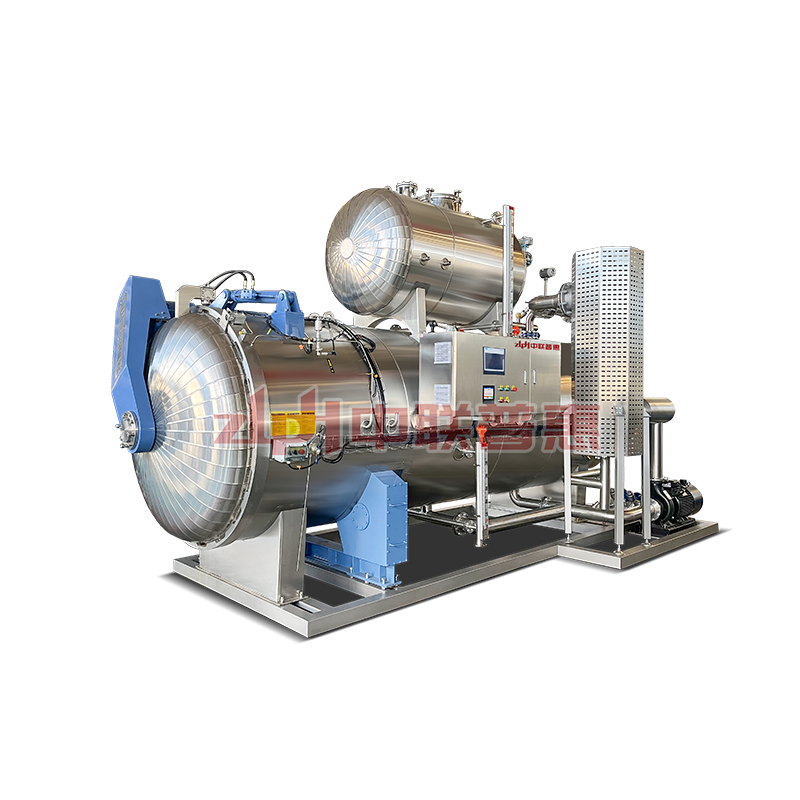
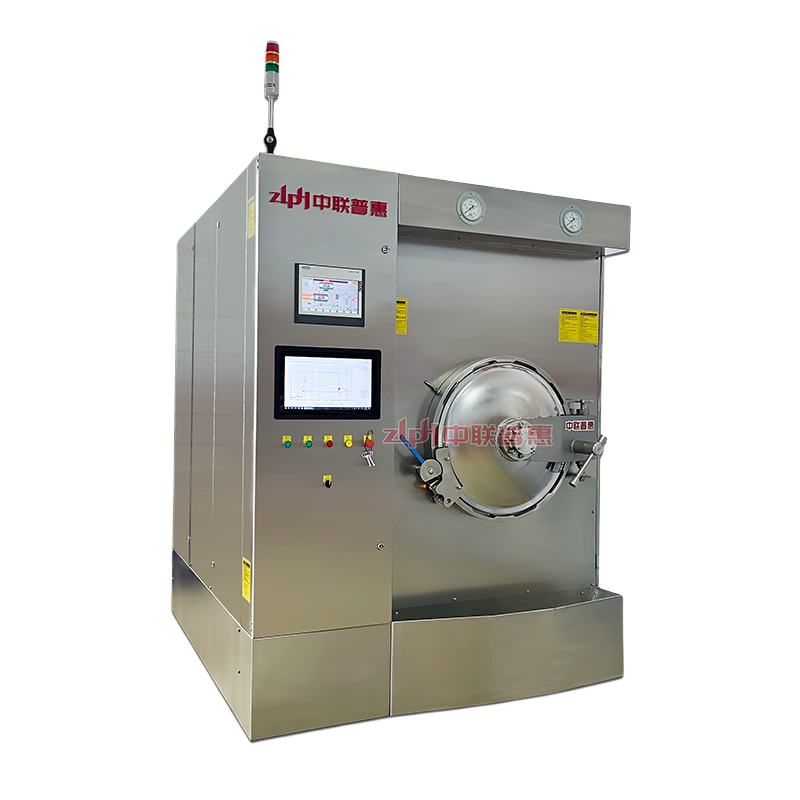
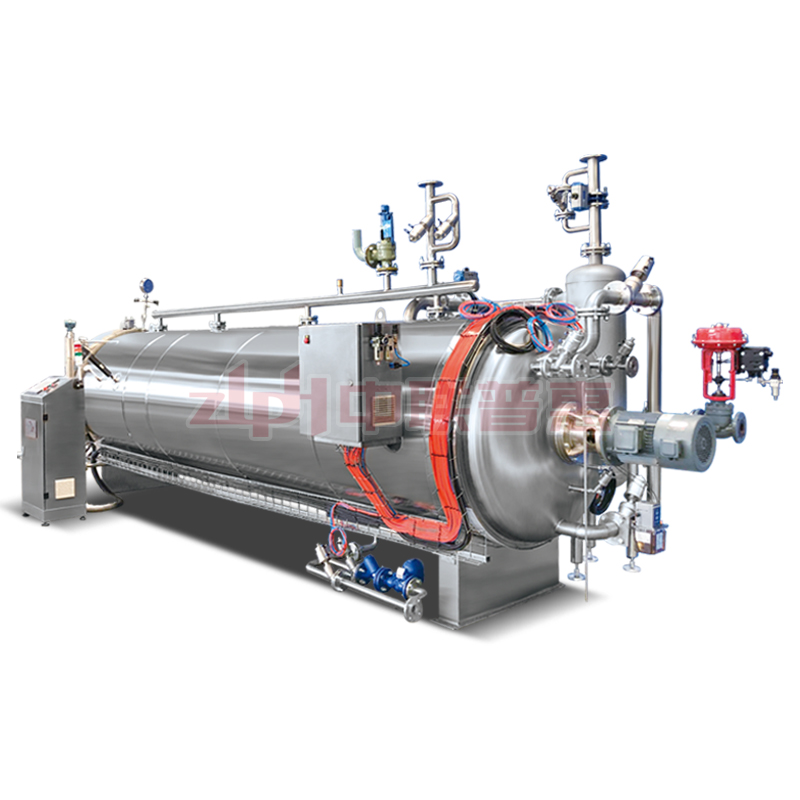
This guide is authored by a senior food processing automation engineer with over 10 years of industry experience from ZLPH MACHINERY TECHNOLOGY CO., LTD., a leading global provider of intelligent retort sterilization systems. It addresses a critical challenge faced by food manufacturers and procurement teams worldwide: inconsistent or inefficient sterilization during canned food production, which compromises product safety, shelf life, and operational throughput.

Inconsistent thermal processing in retort autoclaves has long plagued the food canning industry, primarily due to uneven heat distribution, manual loading inefficiencies, and lack of real-time process control. After validating solutions across more than 500 global installations and refining our approach through continuous R&D since 2018, we’ve developed a proven, step-by-step methodology that ensures uniform sterilization, reduces cycle time by up to 30%, and eliminates human error in loading/unloading. This guide breaks down the root causes, offers scenario-specific fixes, shares field-tested best practices, and provides actionable troubleshooting steps—all grounded in real-world deployments and international compliance standards.

How to Ensure Uniform Sterilization in Large-Batch Canned Food Production?
1. Scenario & Pain Point
In high-volume canning facilities producing vegetables, meats, or ready-to-eat meals, operators often report inconsistent F0 values across batches—some cans under-sterilized (risking microbial survival), others overcooked (degrading texture and nutrition). This leads to product recalls, wasted inventory, and failed audits under FDA or EU food safety regulations.

2. Root Cause Analysis
Three primary factors contribute: (1) poor water spray distribution in traditional retorts, causing cold spots; (2) manual tray loading leading to uneven basket stacking and blocked circulation; (3) absence of real-time temperature/pressure monitoring, preventing dynamic process adjustment.

3. Step-by-Step Solution
Immediate Fix: Audit current loading patterns and ensure consistent spacing between cans using standardized retort trays. Install temporary temperature loggers at multiple basket positions to map thermal variance.
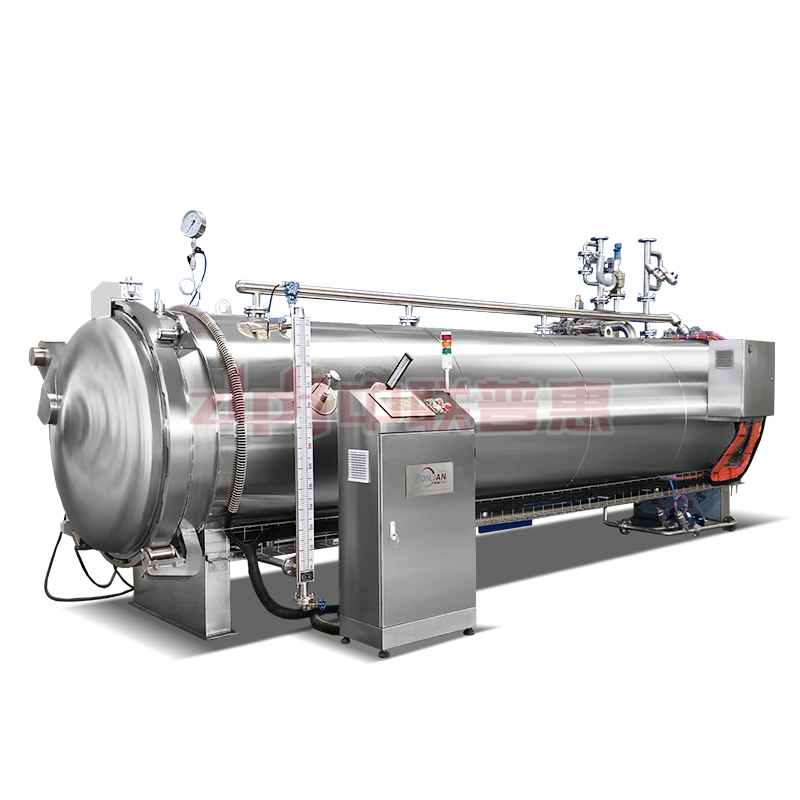
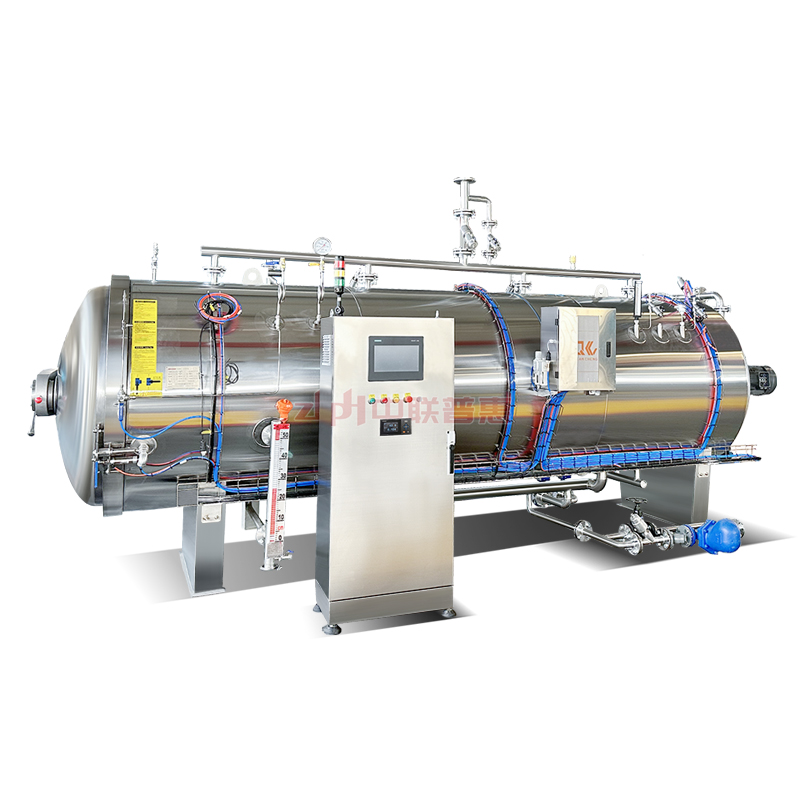
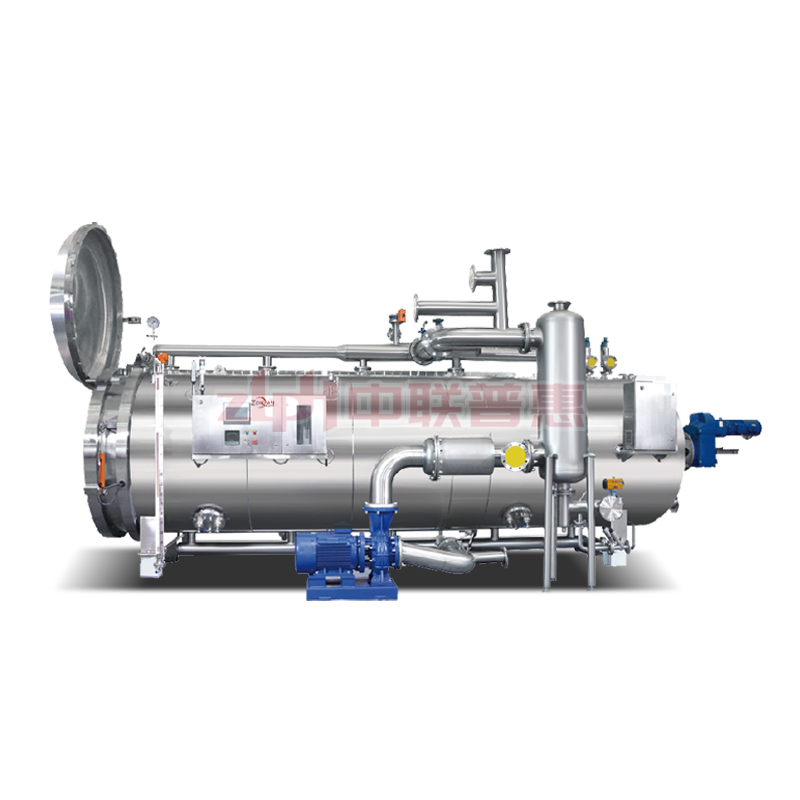
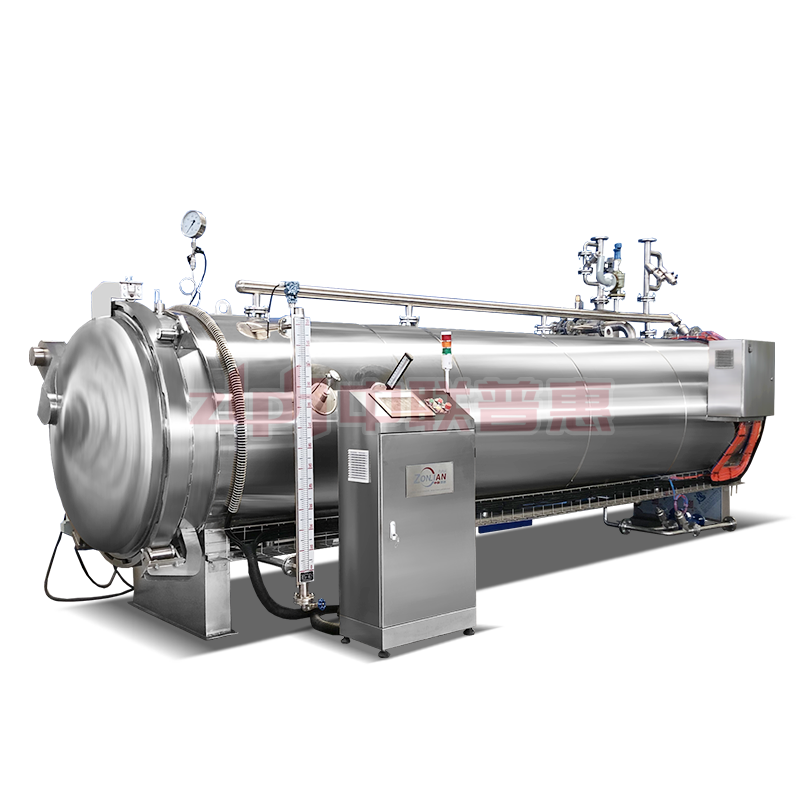
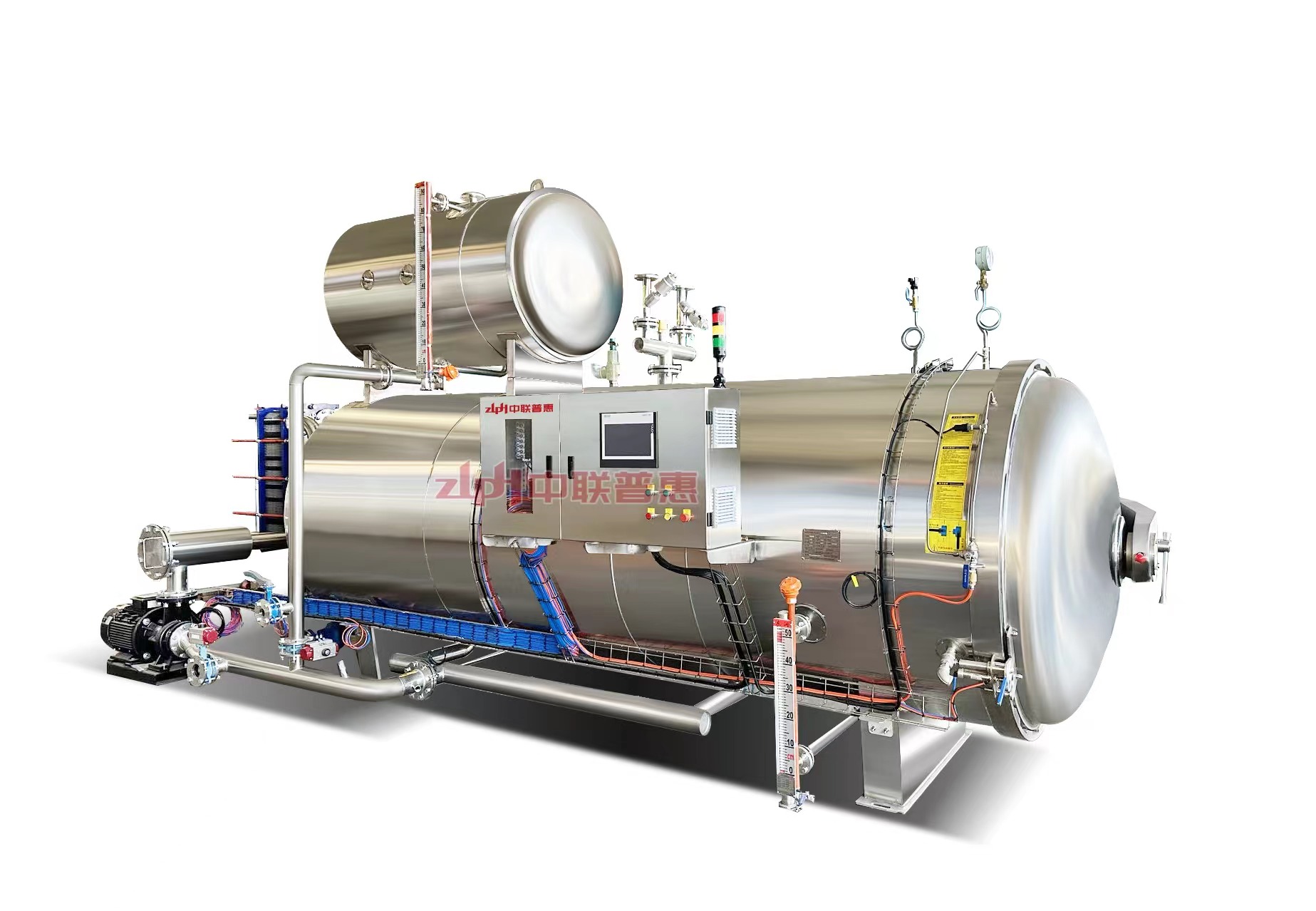
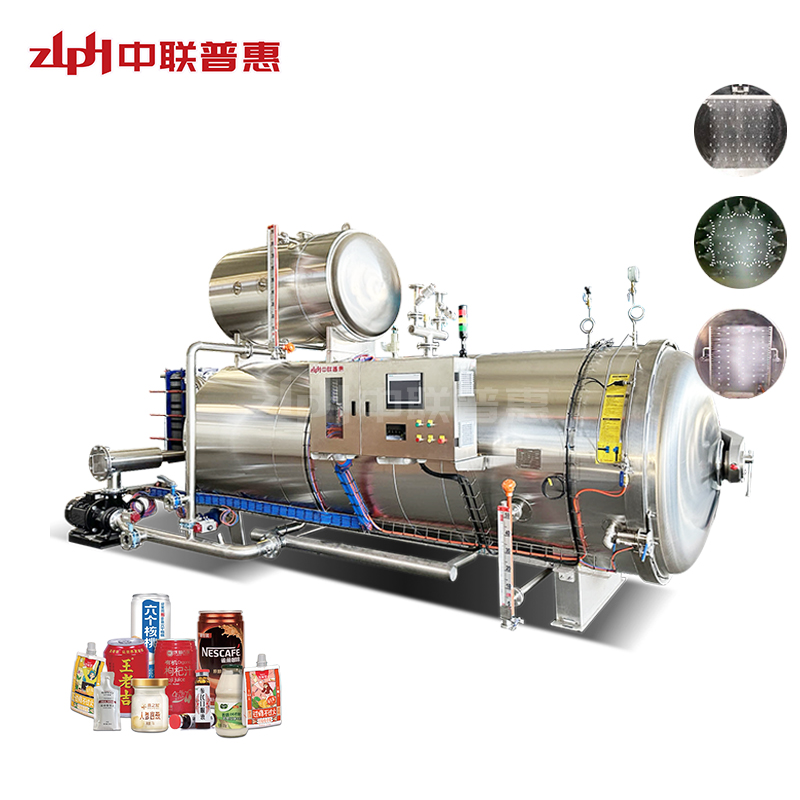
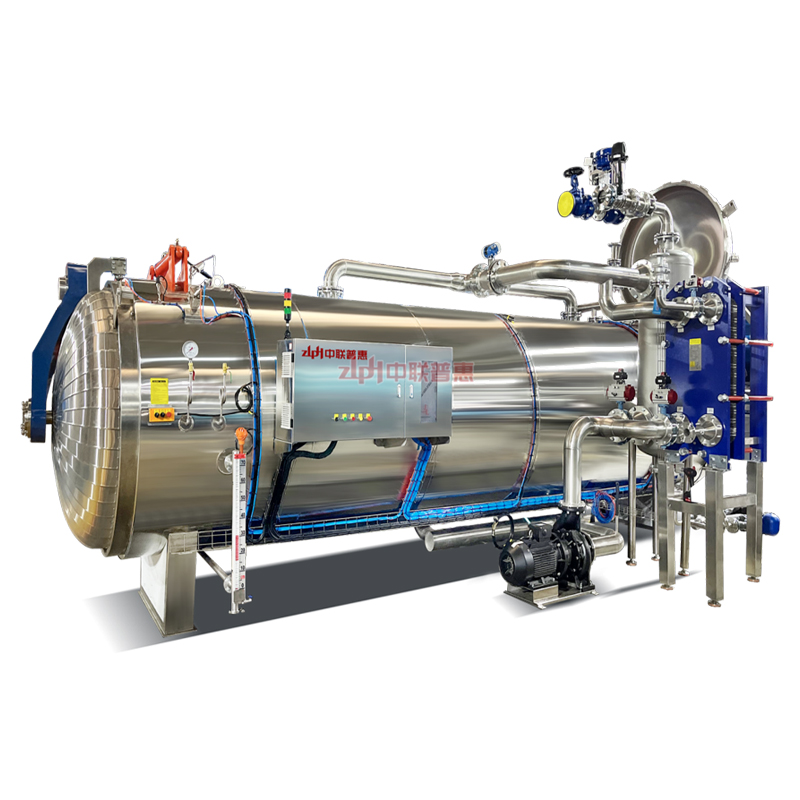
Long-Term Fix: Deploy an intelligent top-opening water spray retort equipped with multi-zone spray nozzles and a PLC-controlled circulation system. Pair it with an automated retort tray loader/unloader to guarantee uniform basket configuration every cycle.
Process Optimization: Enable real-time monitoring via the integrated HMI system to track temperature, pressure, and F0 accumulation. Set automatic alarms for deviations beyond ±0.5°C tolerance.
4. Troubleshooting & Pitfall Avoidance
Verify nozzle alignment and water flow rate quarterly. Never overload baskets—even minor overpacking disrupts convection. Always validate sterilization profiles using third-party thermal mapping before full-scale production. Avoid retrofitting old steam retorts for water spray use without hydraulic recalibration.
5. Field Validation
At a Southeast Asian ready-meal plant, replacing a legacy steam retort with ZLPH’s intelligent water spray system reduced F0 deviation from ±8 to ±1.2, cut cycle time by 27%, and eliminated two annual recall incidents. The automated loader also decreased labor dependency by 60%.
How to Reduce Labor Costs and Human Error in Retort Loading?
1. Scenario & Pain Point
Manual loading of heavy retort trays is physically demanding, slow, and prone to misalignment—causing jams, uneven heating, and workplace injuries. In regions with rising labor costs or shortages, this becomes a bottleneck.
2. Root Cause Analysis
Reliance on unskilled labor, lack of standardized handling tools, and absence of automation integration lead to inconsistent tray placement and extended downtime.
3. Step-by-Step Solution
Implement a servo-driven retort tray loader/unloader system synchronized with the retort door cycle. The system uses vision-assisted positioning to align trays within ±1mm accuracy, ensuring optimal water flow paths.
4. Troubleshooting & Pitfall Avoidance
Ensure floor leveling meets ±2mm/m² tolerance before installation. Train operators only on emergency stop and override—not manual intervention during auto cycles. Conduct weekly calibration checks on gripper alignment.
5. Field Validation
A Russian dairy exporter reduced loading time from 18 to 6 minutes per batch and reported zero tray-related jams over 12 months after deploying ZLPH’s automated system at AGROPRODASH 2023.
Industry Best Practices for Retort System Reliability
Based on 7+ years of global deployments, we recommend this 5-step framework:
1. Define Worst-Case Conditions: Design for peak ambient temperature, highest viscosity product, and maximum batch size—not average conditions.
2. Automate Critical Interfaces: Integrate loading, sterilization, and cooling into one controlled workflow.
3. Certify for Target Markets: Ensure equipment holds CE, EAC, ASME, and local food safety certifications upfront.
4. Validate Thermally: Perform full thermal mapping per ASTM F2546 before commercial launch.
5. Plan Preventive Maintenance: Schedule quarterly checks on seals, pumps, and control valves.
Frequently Asked Questions (FAQ)
Q: Can I retrofit my old steam retort for water spray sterilization?
A: Only if the vessel design supports internal spray manifolds and high-flow recirculation. Most legacy units lack structural reinforcement—replacement is safer and more cost-effective long-term.
Q: What certifications should a retort supplier have for EU markets?
A: Mandatory CE marking under PED 2014/68/EU, plus compliance with Machinery Directive 2006/42/EC. ZLPH holds both, along with EAC for Eurasia and ASME for North America.
Q: How does top-opening design improve efficiency?
A: It enables faster loading/unloading (no side clearance needed), integrates seamlessly with overhead conveyors, and reduces footprint by 25% versus horizontal models.
Q: Is automated loading worth the investment for small plants?
A: Yes—if you run >3 shifts/week. ROI typically occurs within 14 months via labor savings, yield improvement, and reduced downtime.
Our Proven Capability & Support
ZLPH MACHINERY TECHNOLOGY CO., LTD. is a trusted global supplier of advanced retort sterilization systems, founded in 2018 with a 21-member R&D team specializing in mechanical design, PLC programming, and sterilization science. Our 50-acre facility houses a 15,000m² workshop with precision manufacturing equipment, ensuring micron-level component accuracy. We hold ASME, CE, EAC, DOSH, and Special Equipment Manufacturing Licenses, backed by AAA credit and integrity certifications.
We offer tailored support including: (1) on-site process assessment, (2) custom retort design for unique products, (3) installation & commissioning, and (4) free sample testing with thermal validation reports.
Contact Us
Company: ZLPH MACHINERY TECHNOLOGY CO., LTD.
Website: https://www.zlphretort.com/
Email: sales@zlphretort.com
Phone / WhatsApp: +86 15666798389 / +86 13361554016
