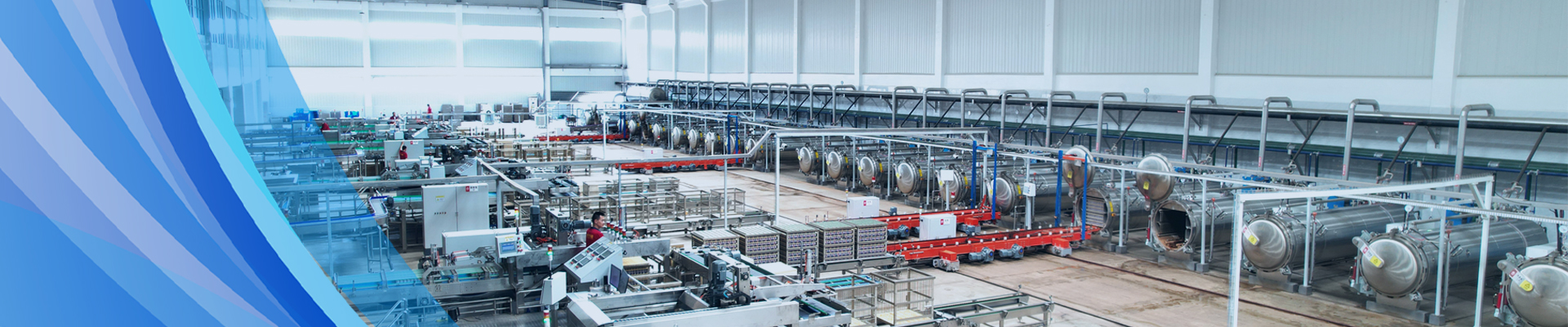

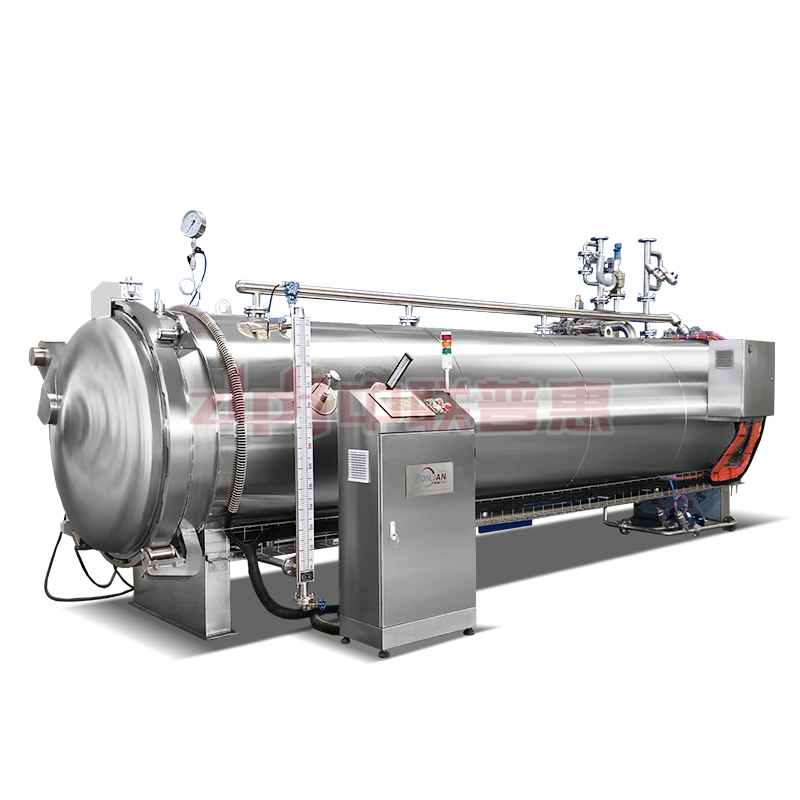
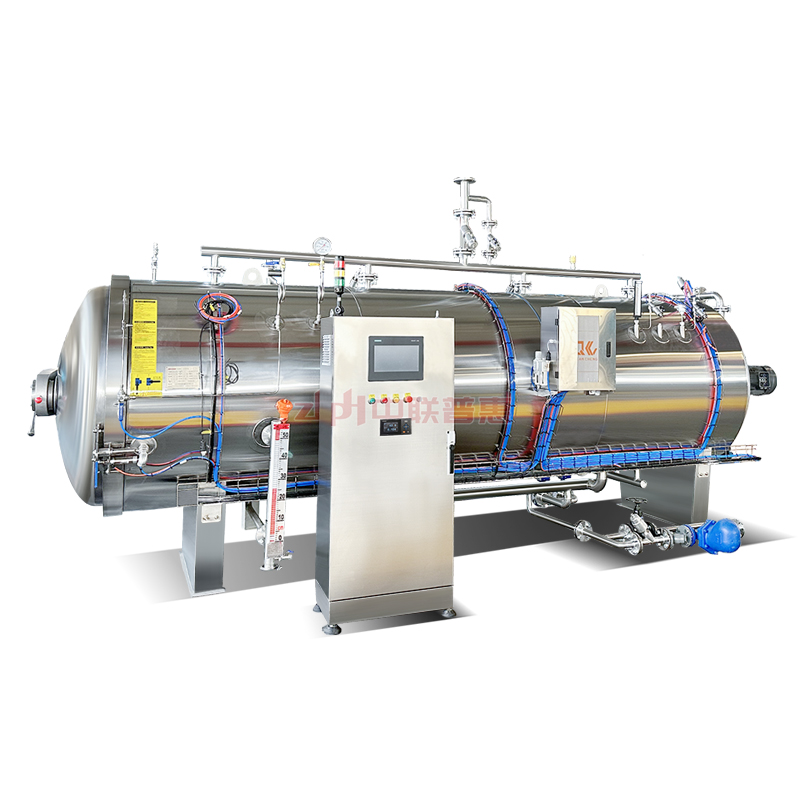
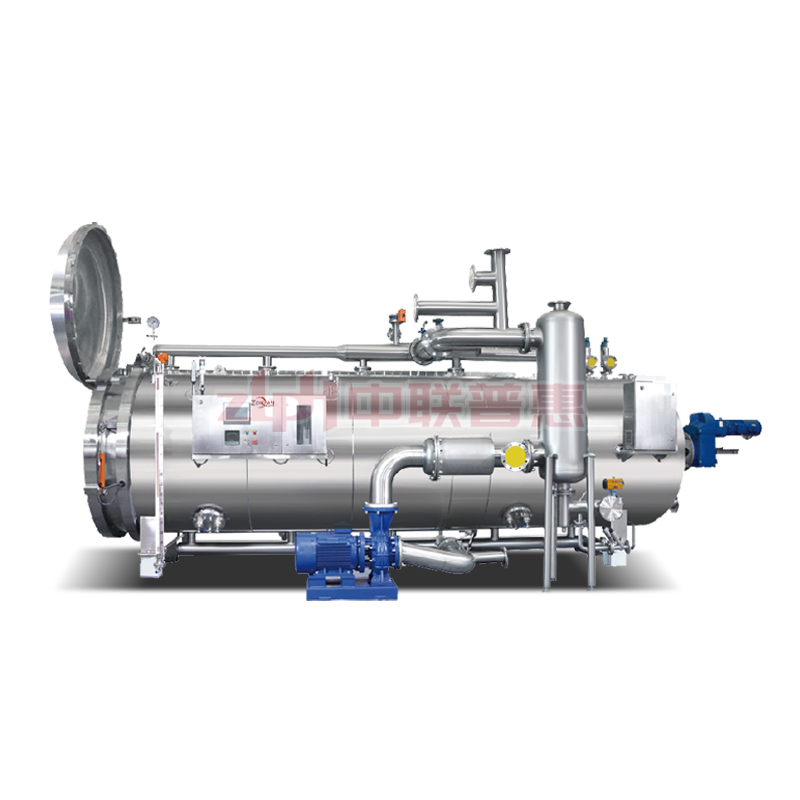
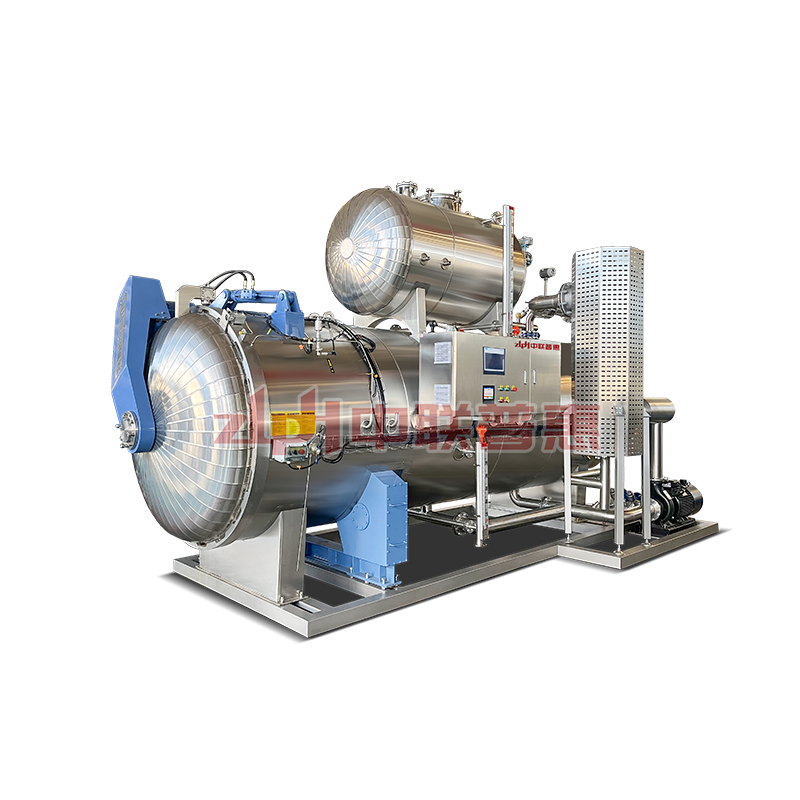
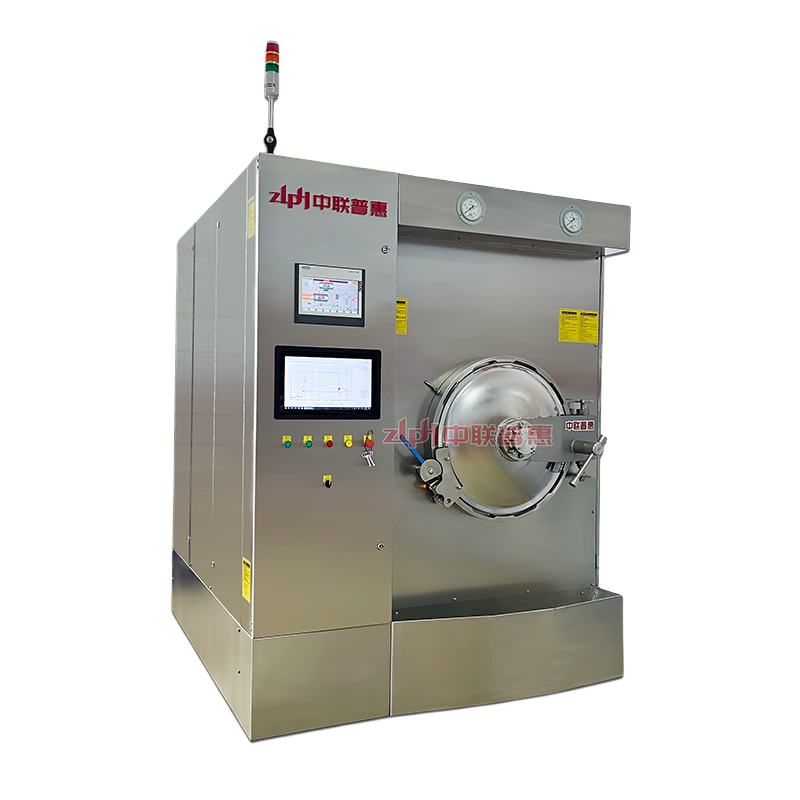
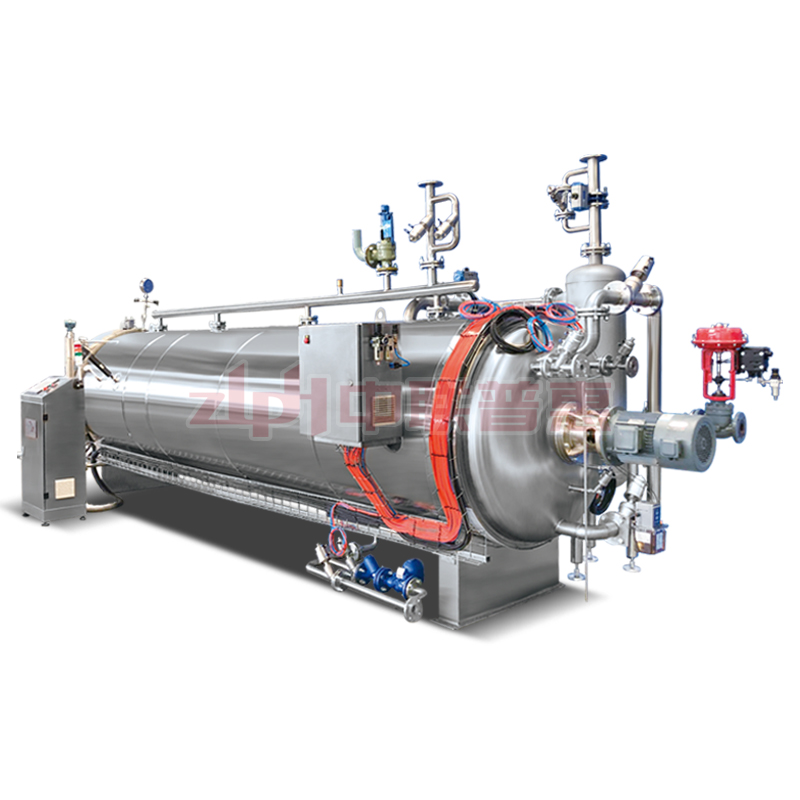
This guide is authored by senior food processing engineers from ZLPH MACHINERY TECHNOLOGY CO., LTD., a leading provider of industrial sterilization systems with over 6 years of R&D experience and 5,000+ global installations. It addresses a critical challenge faced by food manufacturers worldwide: inconsistent sterilization results in high-volume production lines using horizontal retort autoclaves. This issue often stems from uneven heat distribution, inadequate process control, and suboptimal equipment design—factors that compromise product safety, shelf life, and regulatory compliance. Drawing on extensive field data and validated case studies across meat, seafood, and ready-to-eat meal sectors, we present a step-by-step, actionable framework to achieve uniform thermal processing, reduce batch rejection rates, and ensure consistent F₀ (sterilization value) delivery. The solution integrates advanced engineering design, precise automation, and real-time monitoring—core strengths of ZLPH’s horizontal retort systems—proven to eliminate hot/cold spots and stabilize cycle performance under demanding industrial conditions.

How to Ensure Uniform Heat Distribution in Horizontal Retort Autoclaves During Mass Production?
1. Scenario & Pain Point
In large-scale canning facilities producing ready meals or canned meats, operators frequently observe inconsistent microbial kill rates across batches—even when using identical time-temperature settings. Some containers near the chamber walls achieve full sterilization, while those in the center remain under-processed, leading to spoilage complaints, regulatory non-compliance, and costly recalls.

2. Root Cause Analysis
Three primary factors contribute to this inconsistency: (1) Poor steam circulation due to inadequate spray nozzle layout or low-pressure injection; (2) Lack of real-time temperature mapping inside the retort chamber, preventing dynamic adjustment; (3) Use of outdated mechanical controls instead of PLC-based automation, resulting in delayed response to thermal fluctuations.

3. Step-by-Step Solution
Immediate Mitigation: Reconfigure basket loading patterns to allow sufficient spacing between containers for steam penetration. Conduct a thermal validation study using data loggers to identify cold zones.
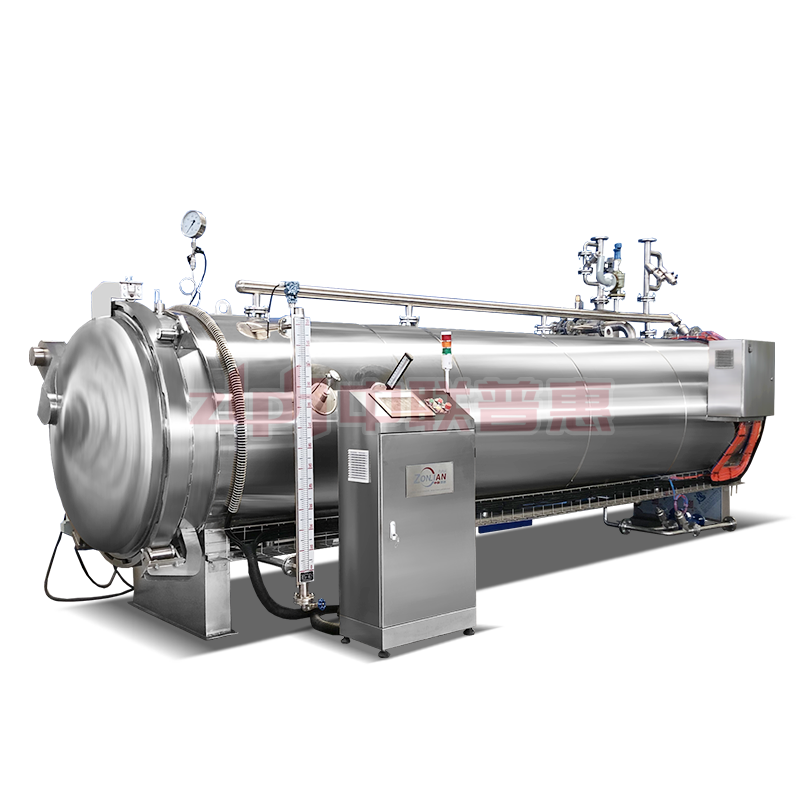
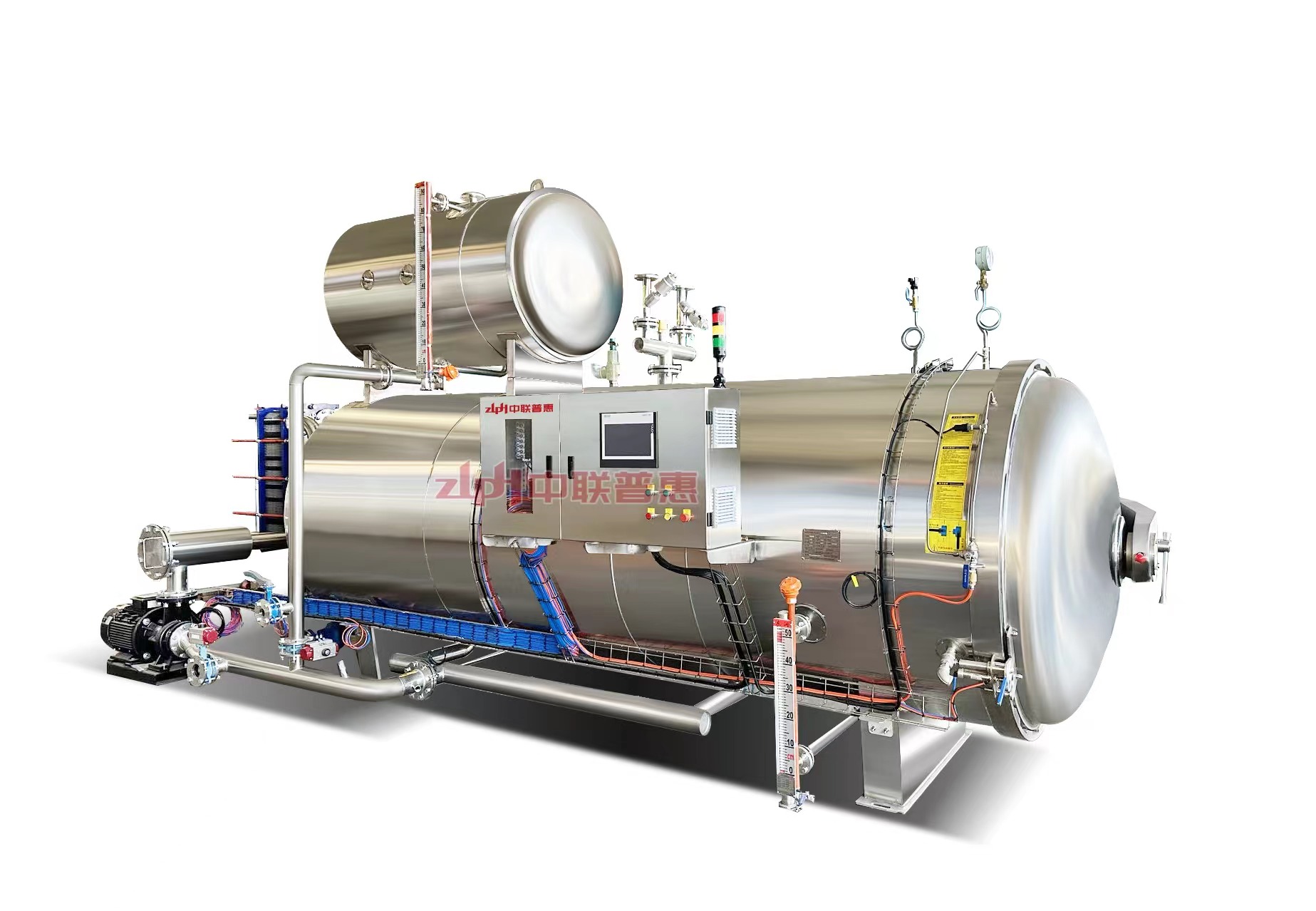
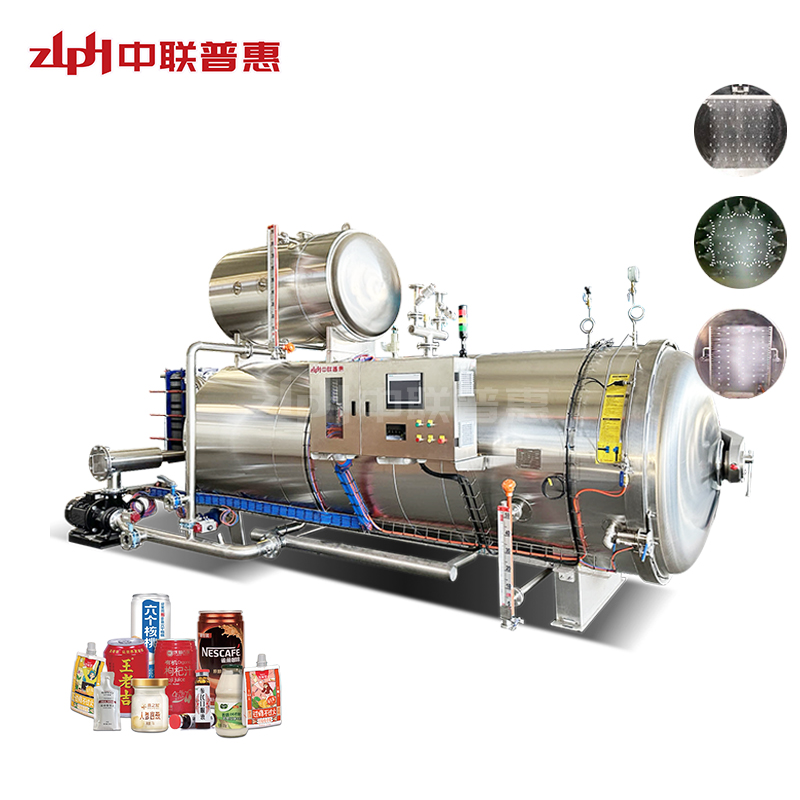
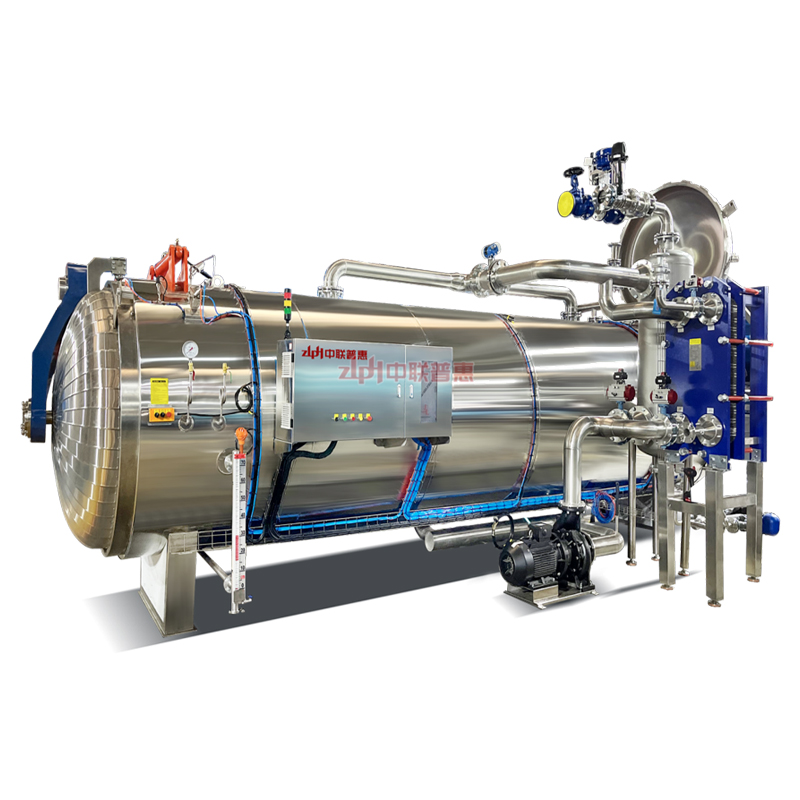
Long-Term Fix: Deploy ZLPH’s horizontal retort autoclaves featuring 360° multi-point spray systems powered by high-efficiency centrifugal pumps, ensuring turbulent steam flow throughout the chamber. Integrated PLC control with PID algorithms automatically adjusts steam/cooling water valves to maintain ±0.5°C temperature stability.
Process Optimization: Implement F₀-based control logic that calculates cumulative lethality in real time, terminating cycles only when all zones reach target sterilization values—not just preset time.

4. Troubleshooting & Prevention Guide
Verify nozzle alignment and pressure during maintenance; clogged nozzles disrupt flow symmetry. Always perform thermal mapping during commissioning and annually thereafter per FDA and EU guidelines. Avoid overloading baskets—exceeding 85% capacity impedes convection. Choose retorts with stainless steel chambers and mirror-polished interiors to minimize heat absorption variance.
5. Validation Results
At a Southeast Asian ready-meal plant processing 20,000 cans/hour, switching to ZLPH’s horizontal retort reduced F₀ deviation from ±8.2 to ±1.3 across all positions. Batch rejection dropped by 92%, and energy consumption fell by 18% due to optimized cycle times—validated by third-party microbiological testing.
How to Prevent Container Deformation During Rapid Cooling in Retort Processing?
1. Scenario & Pain Point
Flexible pouches or thin-walled metal cans often bulge, leak, or collapse during post-sterilization cooling—especially when using fast-cooling protocols to boost throughput. This damages packaging integrity and triggers customer returns.
2. Root Cause Analysis
Rapid pressure drop without synchronized internal-external equalization causes differential stress on containers. Traditional systems cool too aggressively without counter-pressure control, exceeding material yield limits.
3. Step-by-Step Solution
Use ZLPH’s dual-mode cooling system: initial slow cooling under controlled overpressure (1.5–2.0 bar), followed by gradual depressurization matched to internal product temperature decay. The system’s back-pressure regulator maintains equilibrium, preventing deformation even for delicate retort pouches.
4. Troubleshooting & Prevention Guide
Always validate cooling curves against container specifications. Never skip the “hold under pressure” phase before initiating cooling. Monitor seal integrity post-process via vacuum decay testing.
5. Validation Results
A European pet food manufacturer reported zero pouch deformation after adopting this protocol, increasing line speed by 25% without quality trade-offs.
Industry Best Practices for Reliable Horizontal Retort Operation
Based on 6+ years of global deployments, ZLPH recommends this 5-step framework for robust sterilization performance:
1. Define Worst-Case Conditions
Design cycles for the most thermally resistant product variant and densest load configuration—not average cases.
2. Automate with Redundancy
Use dual temperature sensors per zone and PLC systems with fail-safe logic to prevent under-processing during sensor drift.
3. Validate Thermally
Conduct annual thermal distribution and heat penetration studies per ASTM F2577 and EN 13409 standards.
4. Maintain Proactively
Schedule quarterly checks on steam traps, pressure relief valves, and spray manifolds to sustain performance.
5. Partner with Expert Support
Choose suppliers offering remote diagnostics and on-site process engineers—critical for rapid troubleshooting.
Frequently Asked Questions (FAQ)
Q: Can standard vertical retorts be replaced with horizontal models for higher throughput?
A: Yes—horizontal retorts offer 30–50% faster loading/unloading and better space utilization in linear production lines, ideal for continuous operations.
Q: What certifications do ZLPH retorts hold for EU and North American markets?
A: All units comply with CE, ISO 9001, and ASME BPVC Section VIII, with optional 3-A and FDA 21 CFR Part 113 validation support.
Q: How often should thermal validation be performed?
A: Initially at installation, then annually—or whenever product, packaging, or loading patterns change significantly.
Q: Do ZLPH systems support IoT integration for remote monitoring?
A: Yes—via optional cloud platform with real-time F₀ tracking, alarm notifications, and audit-ready electronic batch records.
Q: What’s the typical lead time for a custom horizontal retort?
A: 8–12 weeks from order confirmation, including factory acceptance testing (FAT) with client participation.
Our Expertise & Solution Support
ZLPH MACHINERY TECHNOLOGY CO., LTD. is a globally recognized innovator in food sterilization technology since 2018. Our team includes 21 mechanical and PLC engineers, 4 sterilization process specialists, and 14 after-sales technicians—all with 10+ years of industry experience. We operate a 15,000 m² modern factory equipped with precision CNC machining centers and rigorous QA protocols, ensuring every retort meets exacting performance standards. Our solutions serve clients across 40+ countries in meat, seafood, dairy, and prepared foods, with documented success in eliminating sterilization variability and enhancing operational efficiency.
We offer tailored support including: (1) On-site thermal process assessment; (2) Custom chamber sizing and automation integration; (3) FAT/SAT execution with client teams; (4) Free pilot testing with your actual products. Contact us for a no-obligation consultation.
Contact Information
Company: ZLPH MACHINERY TECHNOLOGY CO., LTD.
Website: https://www.zlphretort.com/
Email: sales@zlphretort.com
Phone / WhatsApp: +86 15666798389 / +86 13361554016
