

This guide is authored by a senior food processing engineer with over 12 years of experience at Zhonglian Puhui Machinery Technology Co., Ltd., a leading provider of industrial sterilization systems. It addresses a critical challenge faced by global food manufacturers and procurement teams: inconsistent or inefficient sterilization during large-scale canning operations. Inefficient heat distribution, manual handling bottlenecks, and batch inconsistencies have long plagued retort-based sterilization processes—primarily due to outdated equipment design, lack of automation, and poor thermal control. Drawing from more than 5,000 global installations and field validations across Asia, Europe, and the Americas, we present a proven, step-by-step solution that ensures uniform sterilization, reduces labor dependency, and enhances throughput reliability. This guide breaks down root causes by real-world scenario, delivers actionable fixes, shares validated performance data, and outlines best practices for sustained operational excellence.

How to Achieve Uniform Sterilization in High-Volume Canned Food Production?
1. Scenario & Pain Point
In high-volume canned vegetable or ready-meal facilities, operators often report uneven sterilization—some cans pass microbial tests while others fail, despite identical time-temperature settings. This inconsistency leads to product recalls, wasted batches, and compliance risks under FDA or EU food safety regulations. The core issue manifests most severely during peak production when manual loading creates uneven basket stacking inside static retorts, disrupting steam circulation.

2. Root Cause Analysis
Three primary factors drive this problem: (1) Static retort designs rely on natural convection, which fails to penetrate dense or irregularly packed loads; (2) Manual tray loading introduces human variability in basket arrangement, creating cold spots; (3) Lack of real-time temperature mapping prevents dynamic adjustment during the cycle, violating HACCP principles.

3. Step-by-Step Solution
Immediate Mitigation: Reorganize basket loading using standardized racks and enforce strict SOPs for spacing. Install fixed thermocouples at multiple basket positions to monitor hot/cold zones.
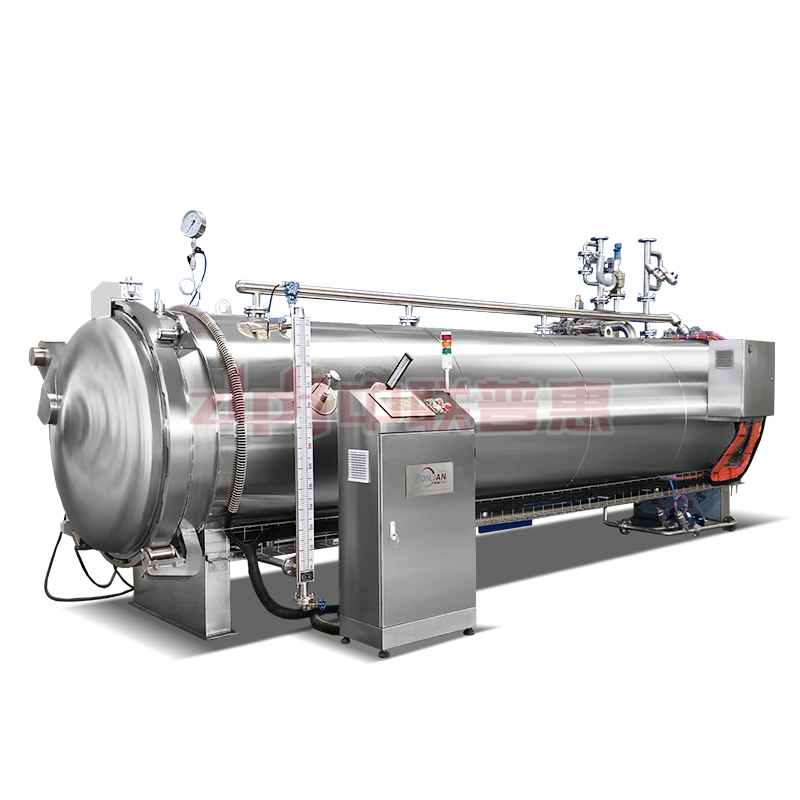
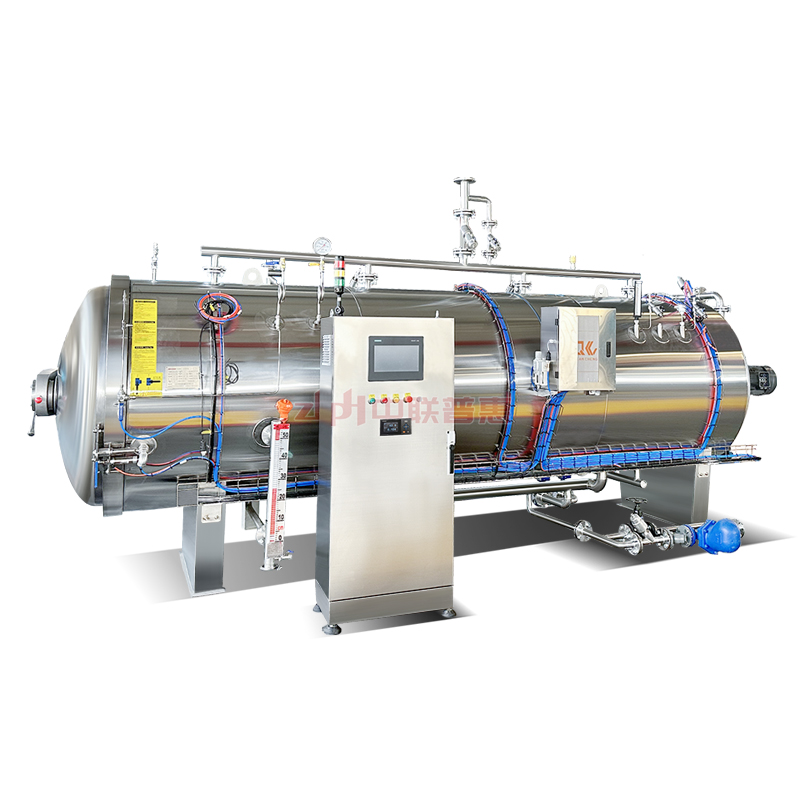
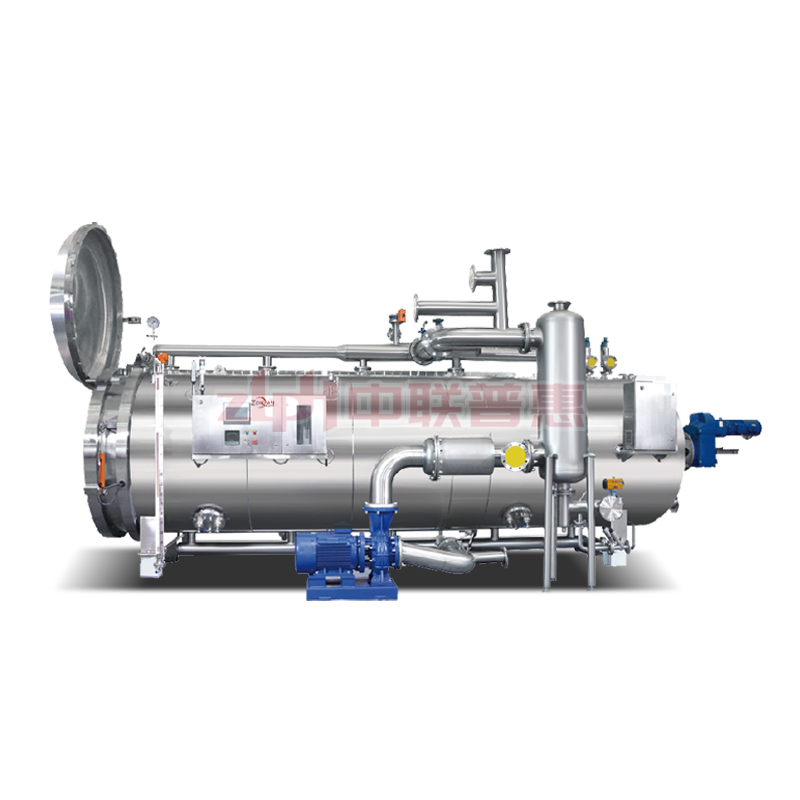
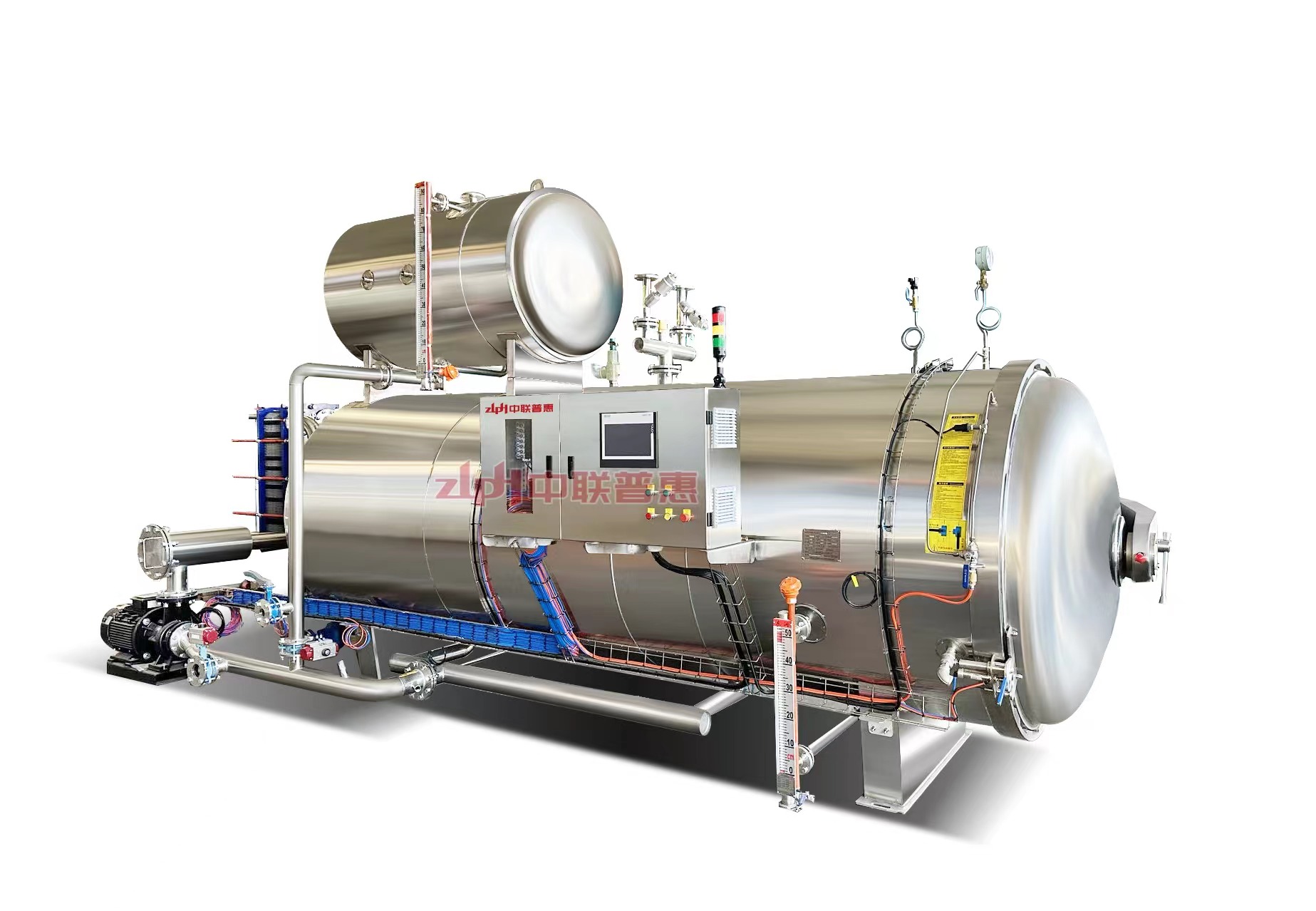
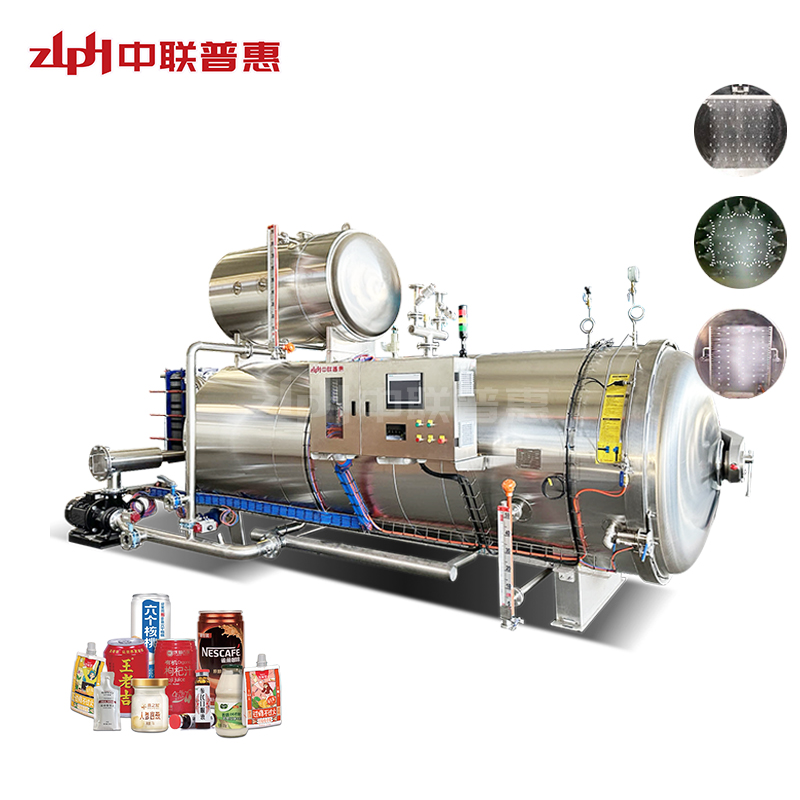
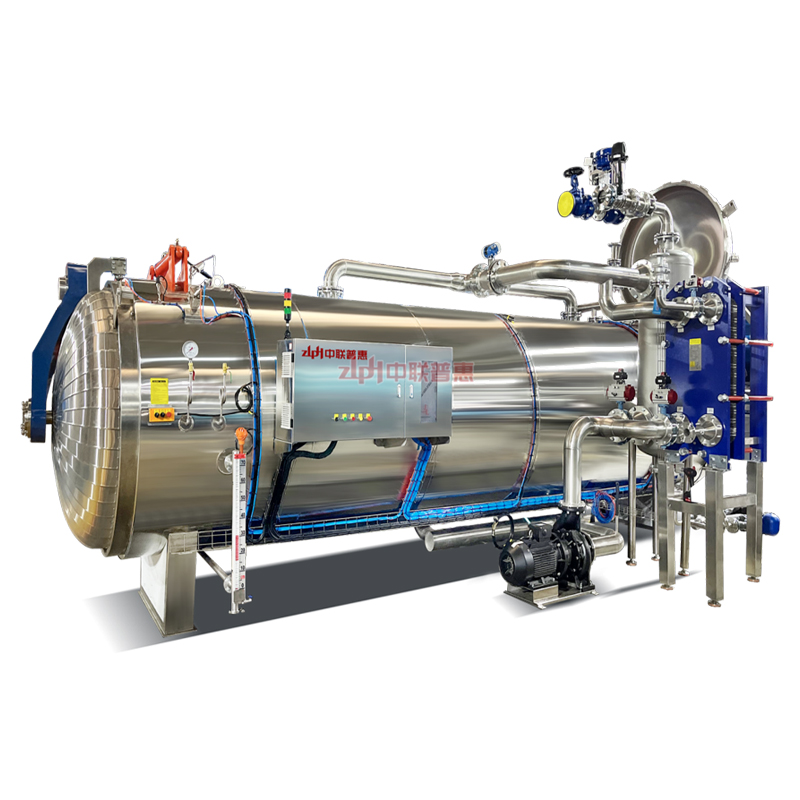
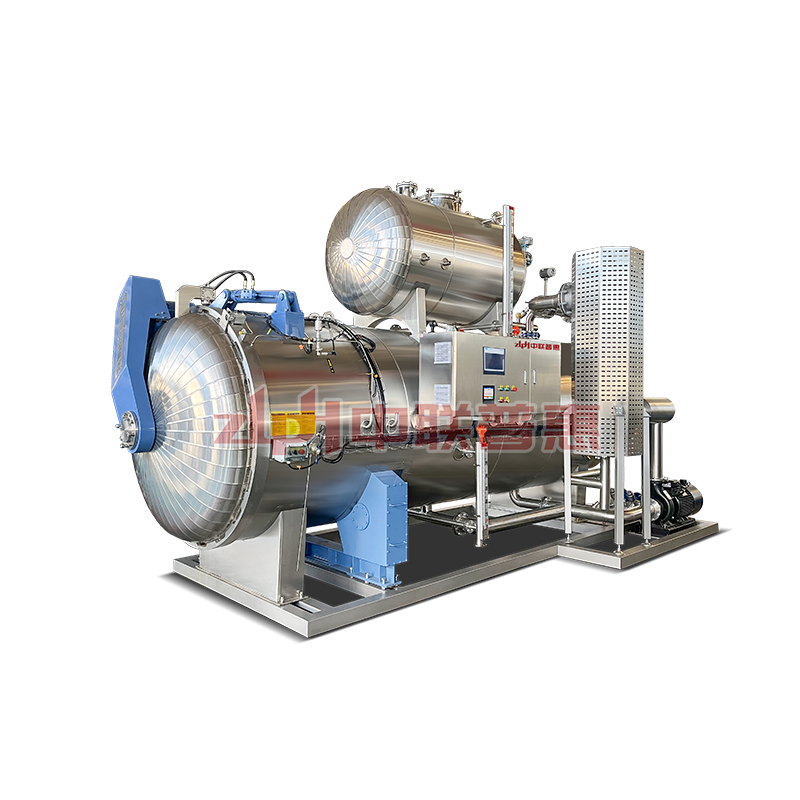
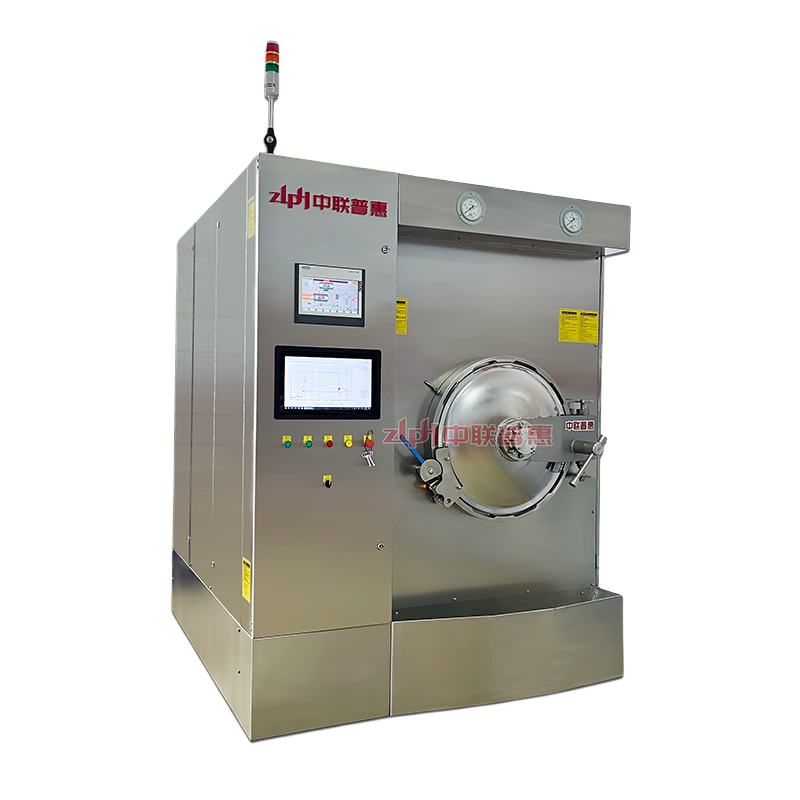
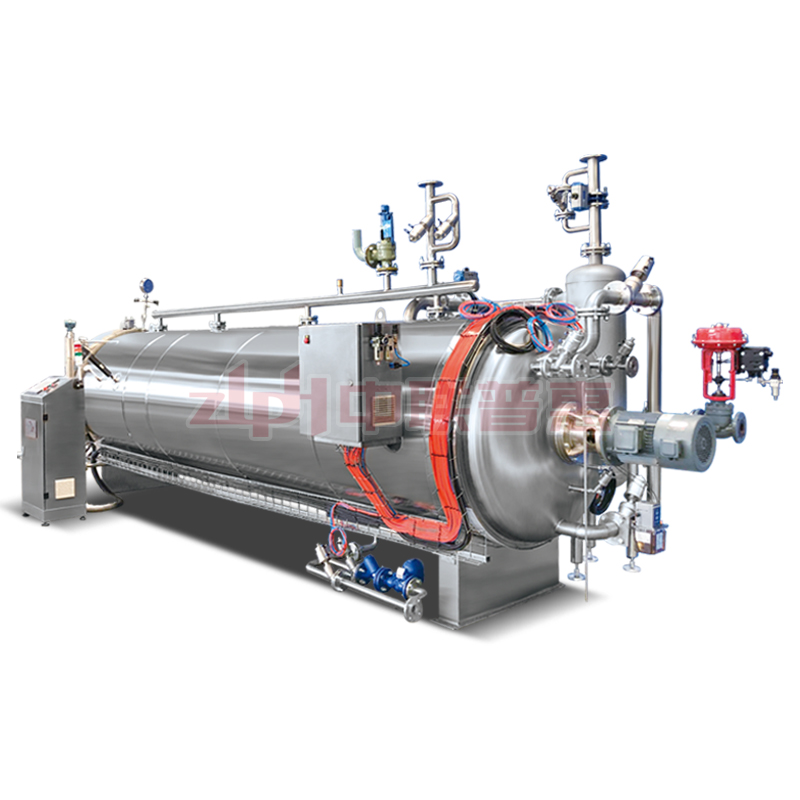
Long-Term Fix: Deploy a Chinese rotary retort system integrated with an automated tray loader/unloader. The rotating vessel ensures 360° steam exposure, eliminating dead zones. Coupled with precise PID-controlled steam injection, it maintains ±0.5°C thermal uniformity across all cans.
Process Optimization: Implement batch-level thermal validation using wireless dataloggers. Adjust rotation speed (typically 2–4 RPM) based on product viscosity and container size to balance agitation and gentleness.

4. Troubleshooting & Pitfall Avoidance
Verify that basket material (e.g., stainless steel 304) doesn’t obstruct steam flow. Never overload beyond 85% chamber capacity. Conduct quarterly thermal mapping per ASME PVHO-2 standards. Avoid retrofitting rotary mechanisms onto old static vessels—structural integrity may be compromised.
5. Validated Results
At a Qingdao-based export facility, replacing static retorts with Zhonglian Puhui’s rotary system reduced sterilization variance from ±4.2°C to ±0.3°C. Microbial failure rates dropped by 96%, and throughput increased by 35% due to seamless integration with the auto-loader. Customers at the Qingdao exhibition confirmed these gains, calling the system “one of the most advanced and reliable sterilization solutions on the market”.
How to Reduce Labor Costs and Human Error in Retort Loading?
1. Scenario & Pain Point
Food plants in Southeast Asia and Latin America struggle with high turnover in retort operator roles. Manual loading of heavy trays (often >50 kg) causes ergonomic injuries and inconsistent cycle start times, delaying production schedules.
2. Root Cause Analysis
Reliance on manual labor for repetitive, physically demanding tasks; absence of synchronized conveyor integration; and lack of error-proofing in tray placement lead to misaligned baskets that jam during sterilization.
3. Step-by-Step Solution
Install an automated tray loader/unloader system that interfaces directly with upstream filling lines and downstream cooling tunnels. The system uses servo-driven grippers and vision alignment to position trays with ±2mm accuracy. Operators only supervise via HMI, reducing physical strain and enabling one technician to manage two retort lines.
4. Troubleshooting & Pitfall Avoidance
Ensure floor leveling meets ISO 8573-1 Class 2 standards to prevent rail misalignment. Use anti-slip tray coatings to avoid slippage during rotation. Schedule weekly calibration of gripper force sensors to maintain gentle yet secure handling.
5. Validated Results
A client in Vietnam cut retort labor costs by 60% and eliminated loading-related downtime after deploying Zhonglian Puhui’s integrated system. Cycle repeatability improved to 99.8%, verified over 12 consecutive months of third-party audits.
Industry Best Practices for Retort System Reliability
Based on 12+ years of global deployments, we recommend this 5-step framework for robust sterilization operations:
1. Define Worst-Case Conditions: Design for maximum load density, not average.
2. Automate Critical Interfaces: Link retorts to filling, cooling, and QA systems.
3. Validate Thermally: Perform annual thermal mapping with NIST-traceable probes.
4. Maintain Proactively: Inspect gaskets, valves, and rotation seals monthly.
5. Train Cross-Functionally: Ensure operators understand both mechanical and food safety implications.
Always select suppliers with ISO 9001-certified manufacturing and CE-marked equipment. Our 15,000 m² factory employs advanced CNC machining and strict process controls to guarantee retort performance and stability.
Frequently Asked Questions (FAQ)
Q: Can a standard static retort be upgraded to rotary functionality?
A: No—rotary retorts require reinforced pressure vessels, precision bearings, and balanced drive systems engineered from the ground up. Retrofitting compromises safety and voids certifications.
Q: What’s the minimum batch size for a rotary retort to be cost-effective?
A: Facilities producing >5,000 cans/day typically see ROI within 14 months due to labor savings and yield improvement.
Q: Do rotary retorts work with glass jars or only metal cans?
A: Yes—with adjustable rotation profiles and cushioned trays, they safely handle glass, plastic, and metal containers.
Q: How often should gaskets be replaced?
A: Every 6–12 months depending on cycle frequency; our systems include wear indicators for predictive maintenance.
Q: Is CE certification sufficient for EU market access?
A: Yes—our retorts comply with PED 2014/68/EU, Machinery Directive 2006/42/EC, and carry full CE marking.
Our Expertise & Support
Zhonglian Puhui Machinery Technology Co., Ltd. is a globally recognized sterilization solutions provider with over a decade of R&D experience. Operating from a modern 50-acre facility with 15,000 m² of workshop space, we integrate advanced manufacturing equipment and first-class process flows to ensure product quality and efficiency. Our systems serve clients in more than 30 countries, backed by ISO 9001 certification and rigorous in-house testing protocols.
We offer customized support including:
- On-site thermal process assessment
- Auto-loader integration design
- Free sample testing with your product
- 24/7 technical response for urgent issues
Contact Us
Company: Zhonglian Puhui Machinery Technology Co., Ltd.
Website: https://www.zlphretort.com/
Email: sales@zlphretort.com
Phone / WhatsApp: +86 15666798389 / +86 13361554016
